
Skip to content
Start My 3 Free Days $0 today · cancel anytime

Plants Worksheets

39 plants worksheets. Teacher favorites: Animal and Plant Cells Worksheet and Flower Parts of a Plant Worksheet. How teachers use these

Plants Worksheets

39 plants worksheets. Teacher favorites: Animal and Plant Cells Worksheet and Flower Parts of a Plant Worksheet. How teachers use these

Worksheet
Worksheet5th GradeAnimal and Plant Cells Worksheet

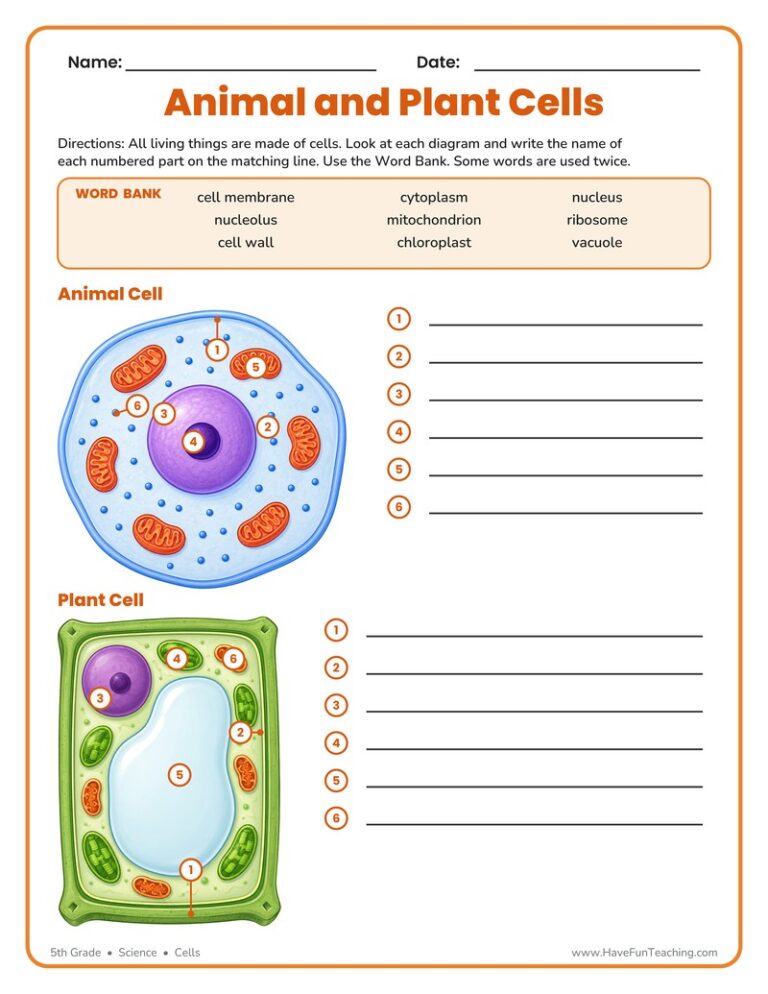
This Animal and Plant Cells Worksheet asks 5th grade students to label the organelles of an animal cell and a plant cell using a word bank. Answer key included for fast, no-prep science review.

Worksheet
Worksheet3rd GradeFlower Parts of a Plant Worksheet

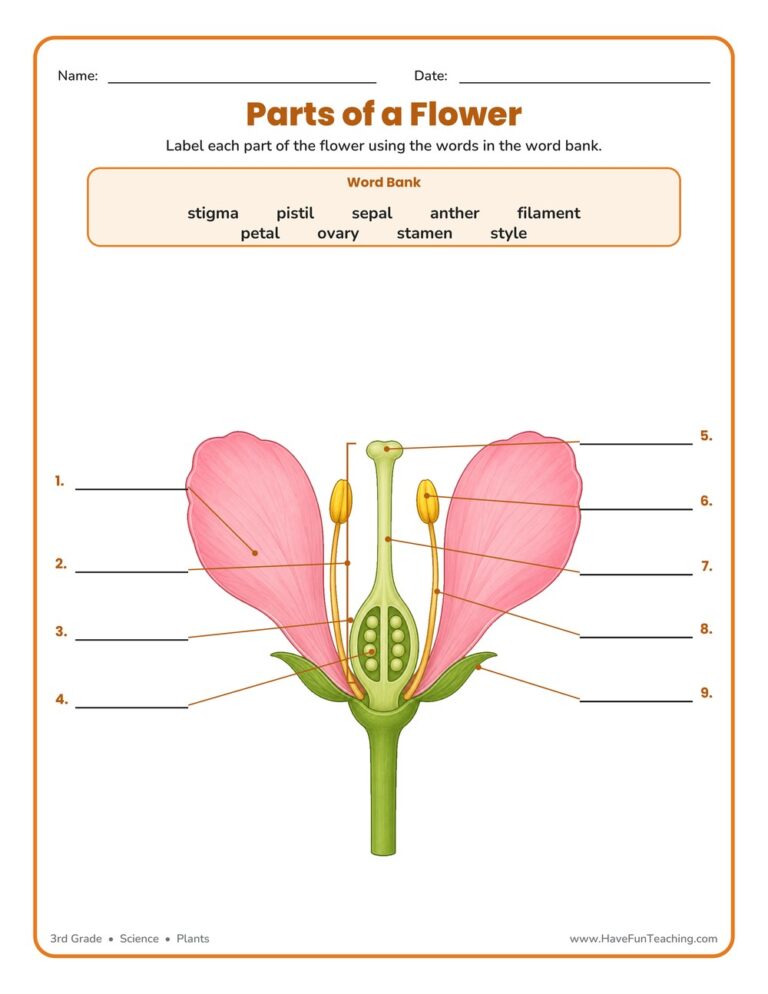
A third grade flower parts of a plant worksheet where students label the nine parts of a flower — petal, sepal, stamen, pistil, and more — using a word bank. Includes a complete answer key for quick, no-prep life science practice.

Worksheet
Worksheet2nd GradePlant Needs Worksheet

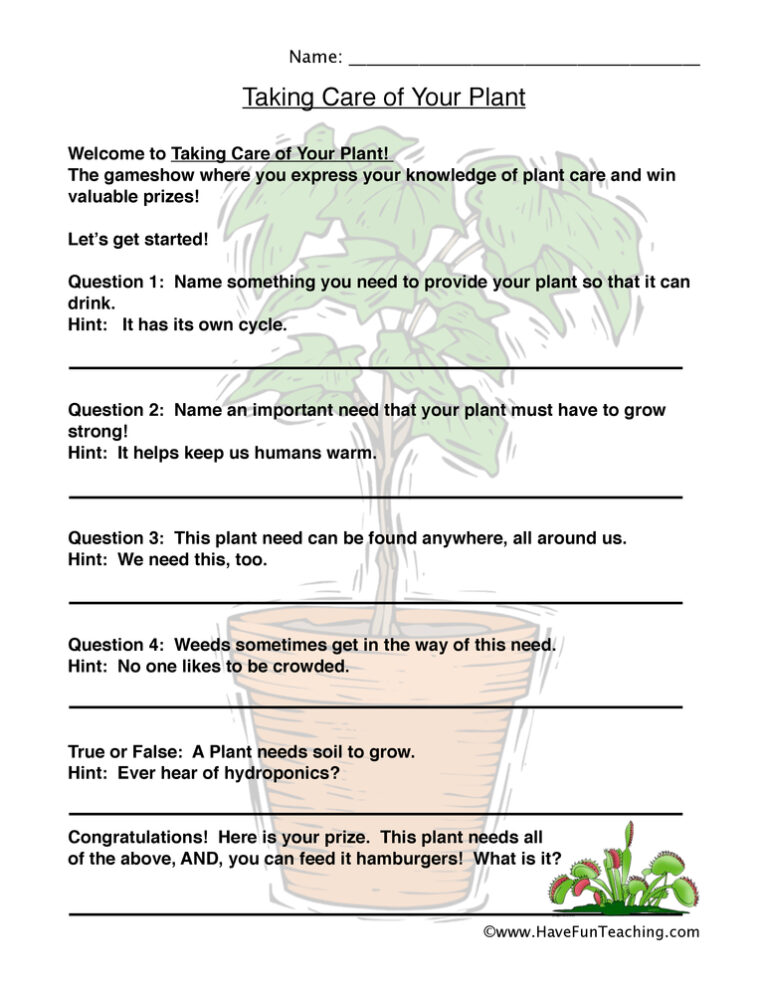
A hands-on plant needs worksheet where 2nd graders name the five things every plant must have, then match three pictures to the needs they show. Answer key included for quick, no-prep science practice.

Worksheet
Worksheet5th GradePhotosynthesis Diagram Worksheet

A photosynthesis diagram worksheet for 5th grade: students label four arrows for sunlight, carbon dioxide, water, and oxygen, then explain the process in writing. An answer key makes checking fast.

Worksheet
Worksheet1st GradeSeeds Plants Fill in the Blanks Worksheet

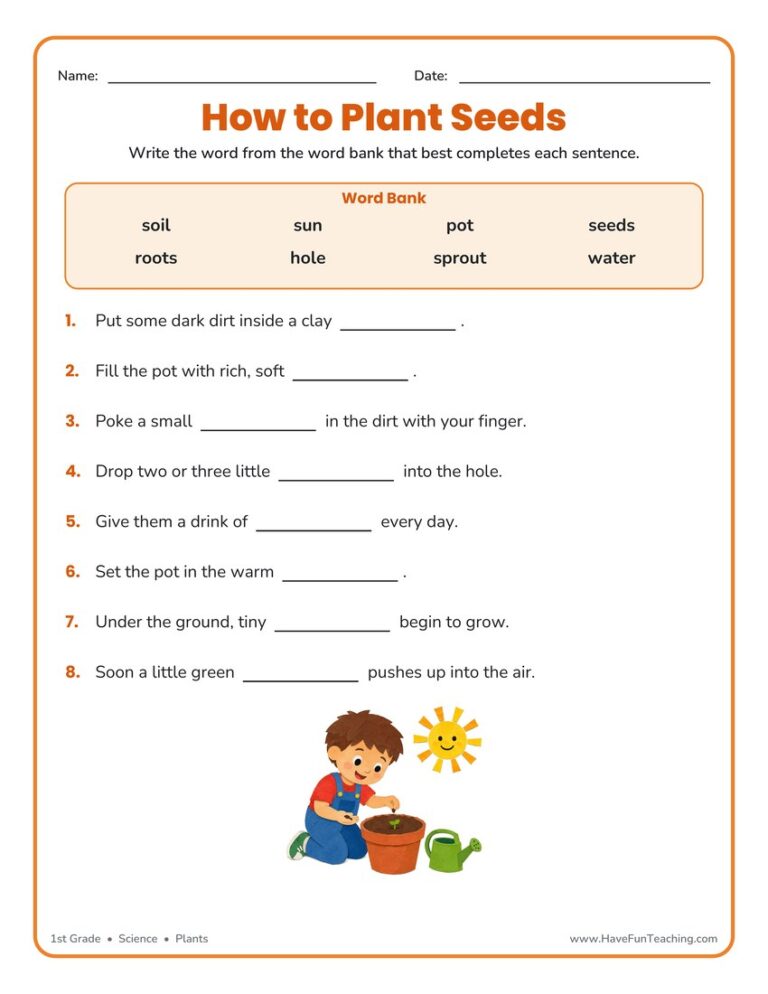
This Seeds Plants Fill in the Blanks Worksheet lets 1st graders use a word bank to complete eight sentences about how to plant a seed and help it grow. An answer key is included for quick, no-prep science practice.

Worksheet
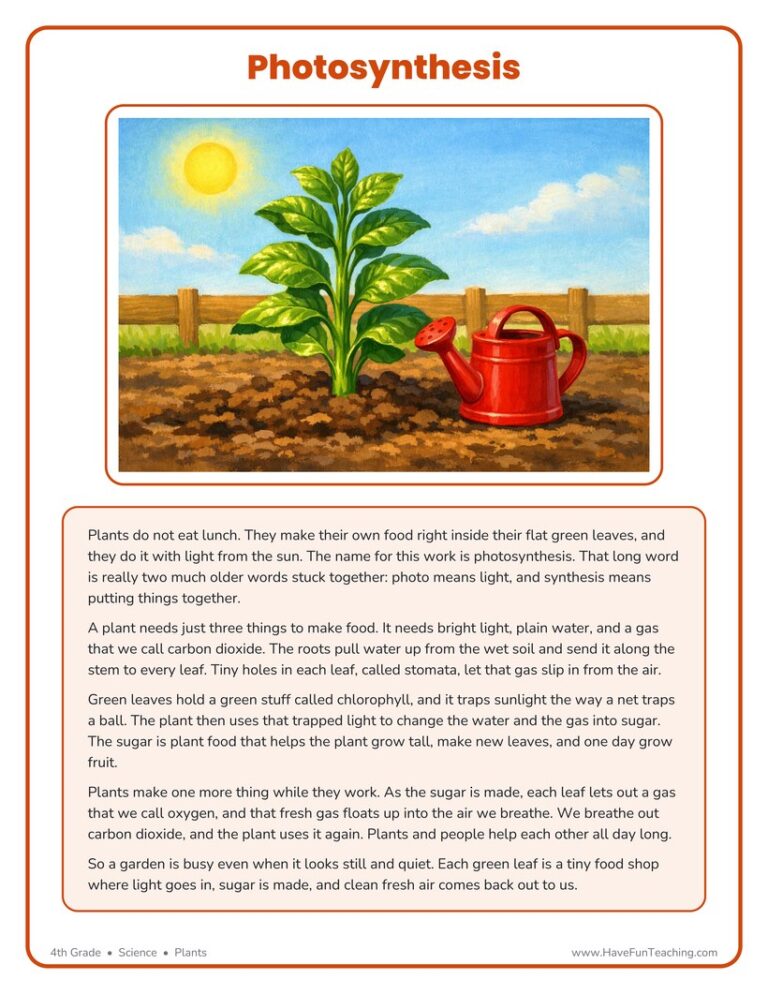
Worksheet4th GradePhotosynthesis Reading Worksheet

A 4th grade photosynthesis reading worksheet with an original nonfiction passage about how leaves make food, plus multiple choice, word bank, and written response questions. Answer key included for fast, no-prep science review.

Worksheet
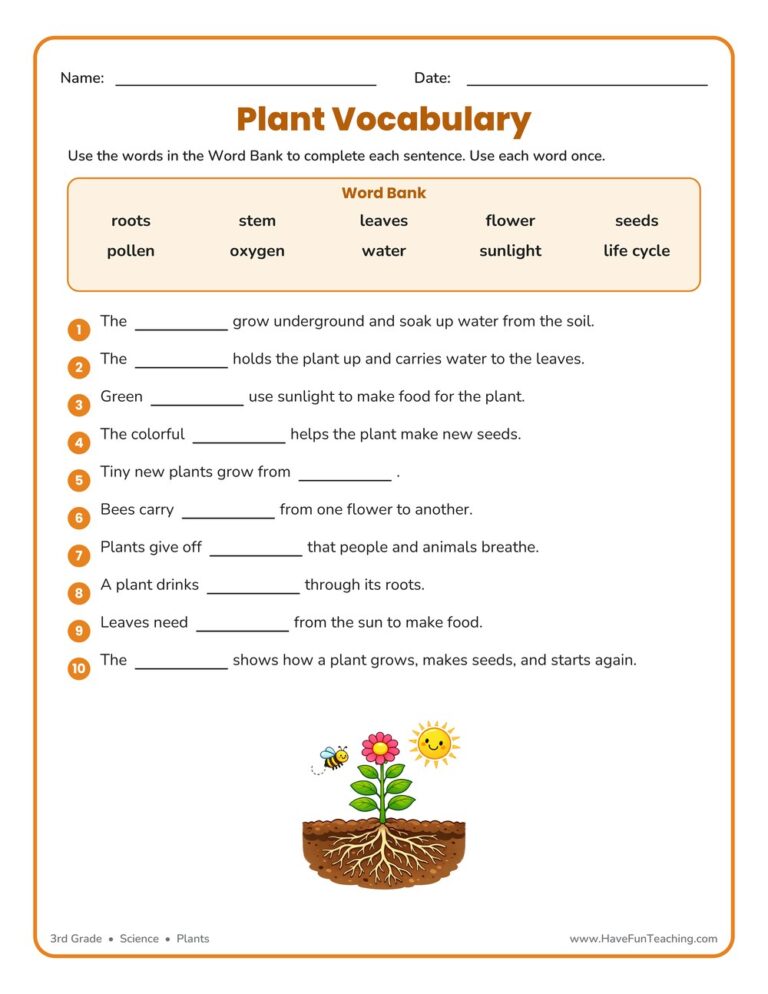
Worksheet3rd GradePlant Vocabulary Worksheet

This plant vocabulary worksheet gives 3rd graders a word bank of ten plant terms to complete ten science sentences about how plants grow. Answer key included for easy, no-prep practice.

Worksheet
Worksheet1st GradeImportance of Farming Worksheet

Use this Importance of Farming Worksheet to help 1st Grade students sort six farm foods into plants and animals and decide what farms really give people. Answer key included for fast, no-prep science practice.

Worksheet
Worksheet3rd GradeLife Cycle of Plants Matching Worksheet

This life cycle of plants matching worksheet has 3rd grade students match four pictures to the seed, sprout, seedling, and adult plant stages, then answer three questions in writing. Answer key included.

Worksheet
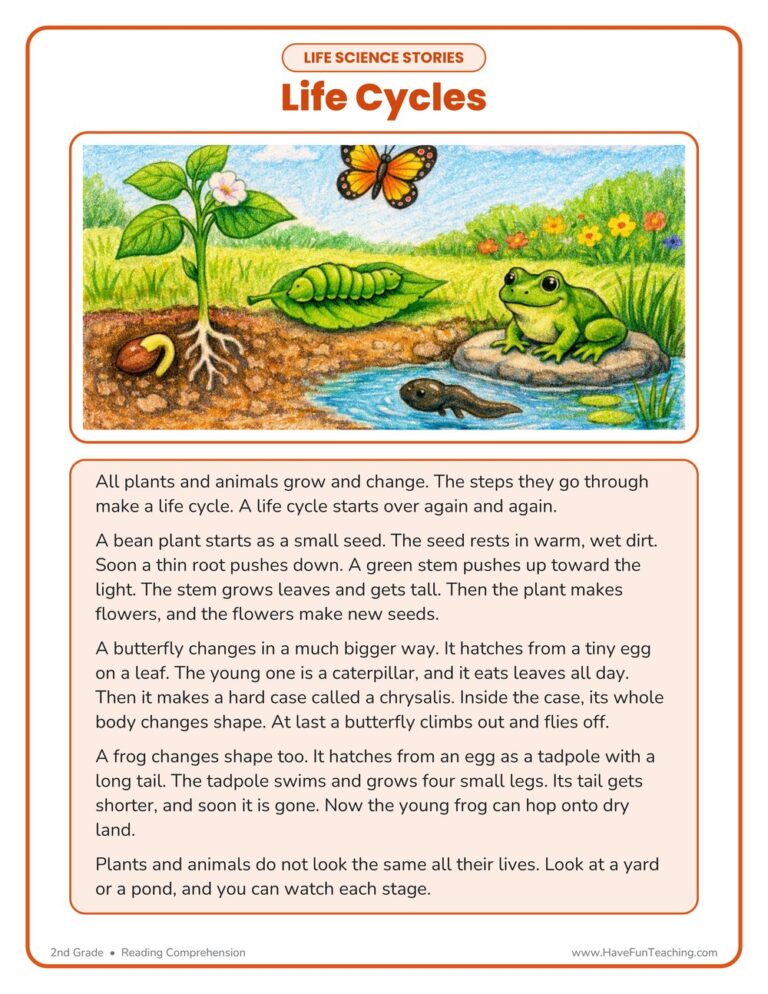
Worksheet2nd GradeLife Cycles Life Science Reading Comprehension Worksheet

This Life Cycles Life Science Reading Comprehension Worksheet gives 2nd Grade readers a non-fiction story about seeds, caterpillars, and tadpoles, plus bubble, word-bank, and writing questions. Answer key included for fast, no-prep practice.

Worksheet
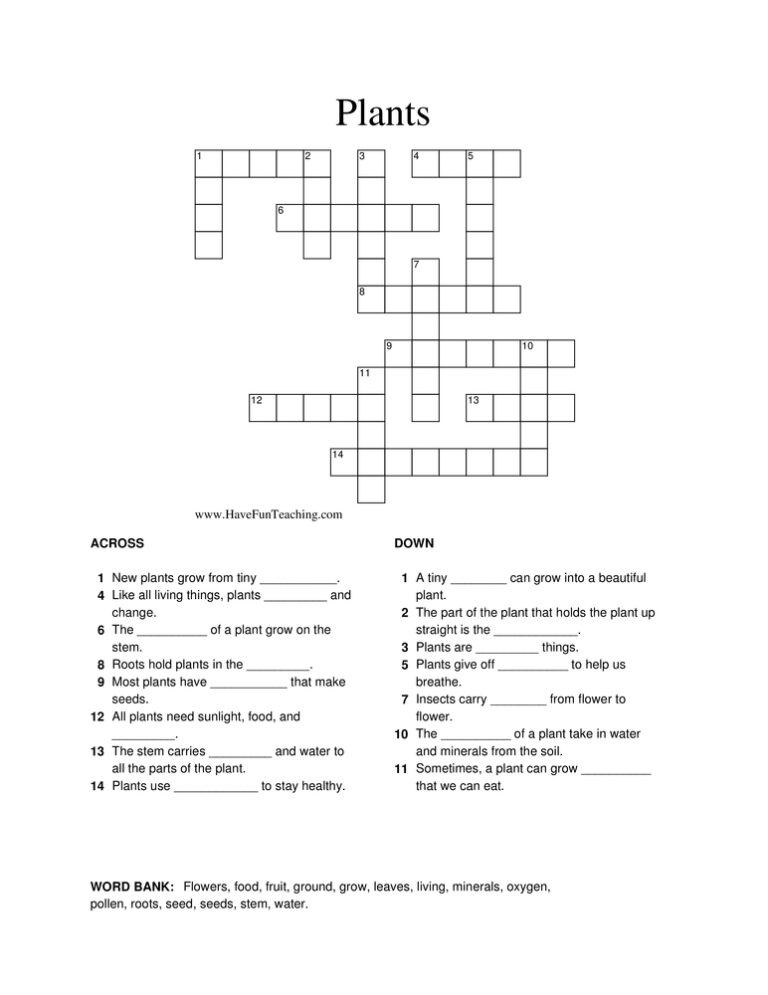
Worksheet3rd GradePlants Crossword Puzzle

A plants crossword puzzle worksheet that has 3rd graders match eight science clues to the parts a plant needs to live and grow. An answer key is included, so it is ready for quick, no-prep science review.

Worksheet
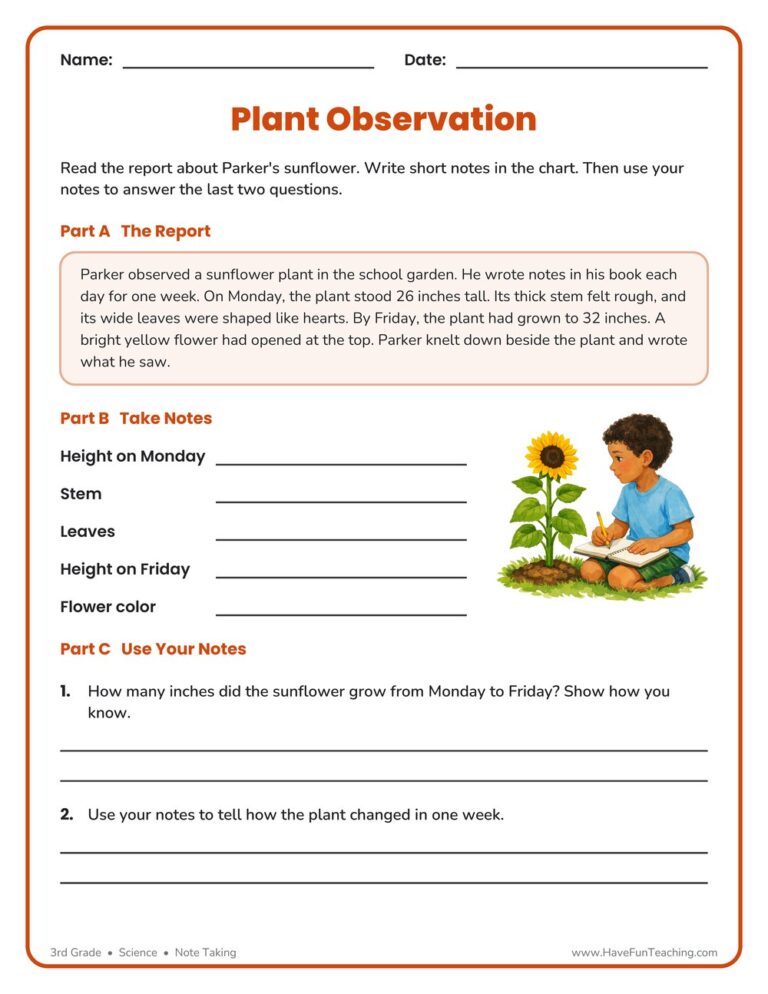
Worksheet3rd GradePlant Observation Worksheet

This plant observation worksheet gives 3rd graders a short sunflower report to read and a chart for taking clear, useful notes. An answer key is included, so checking work takes seconds.

Worksheet
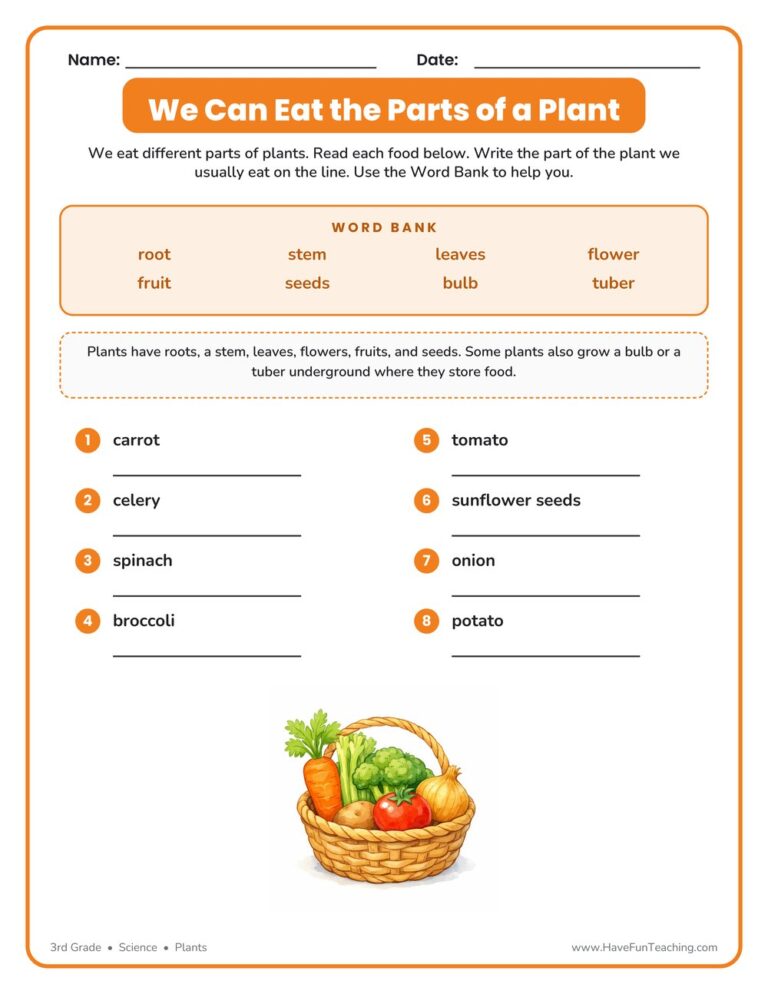
Worksheet3rd GradeEdible Parts of a Plant Worksheet

This edible parts of a plant worksheet asks 3rd graders to name which plant part we eat — root, stem, leaf, flower, fruit, seed, bulb, or tuber — for eight common foods. Includes an answer key for no-prep plant science practice.

Worksheet
Worksheet2nd GradePlant Parts Worksheet

This plant parts worksheet asks 2nd grade students to name the plant part each of six familiar foods comes from, using a word box. An answer key is included, so checking work takes seconds.

Worksheet
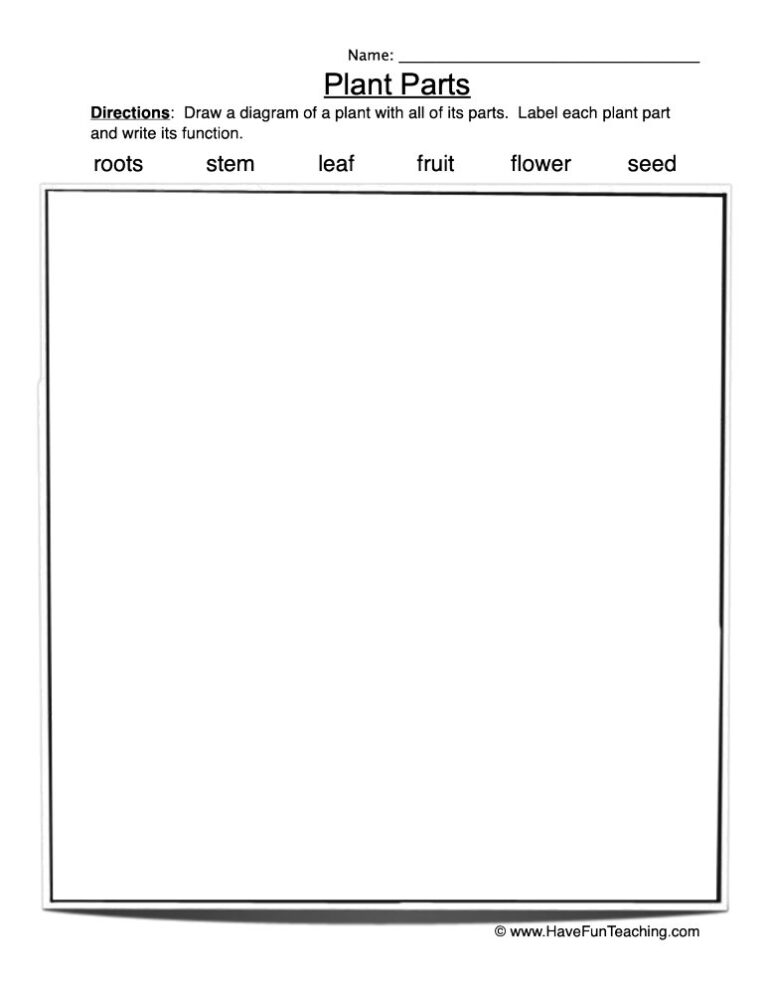
Worksheet2nd GradePlant Parts Drawing Worksheet

This Plant Parts Drawing Worksheet has 2nd Grade students match each plant part to its job, then draw and label a whole plant. An answer key is included, so checking plant vocabulary is quick and easy.

Worksheet
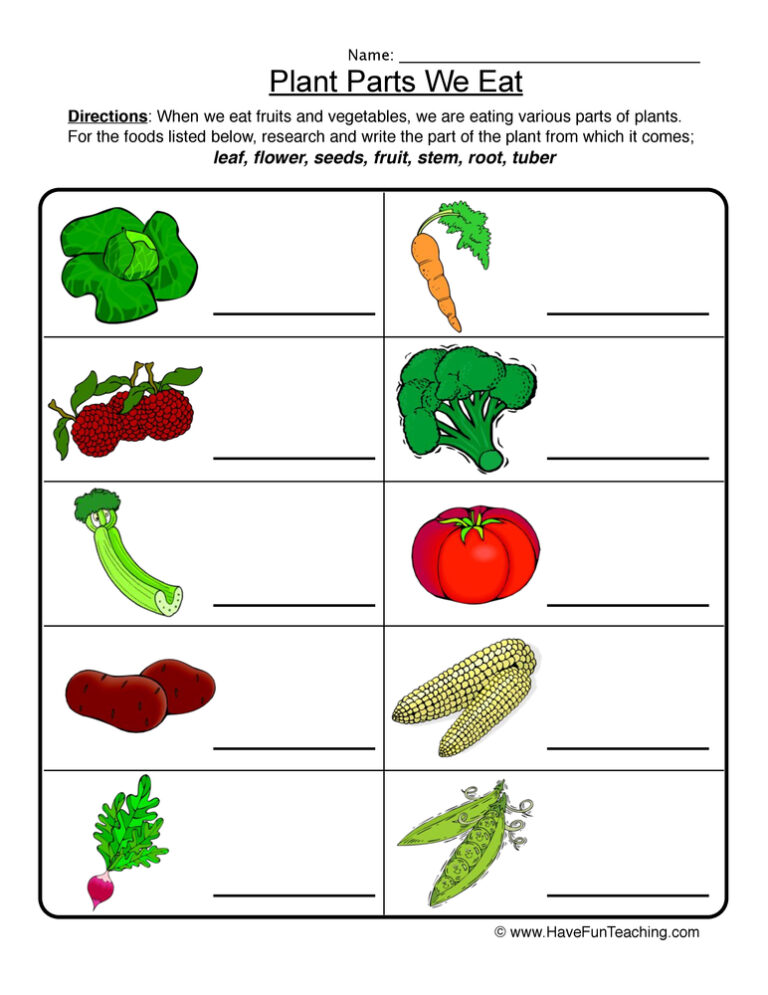
Worksheet1st GradePlant Parts We Eat Worksheet

This Plant Parts We Eat Worksheet helps 1st graders match eight foods to the plant part we eat, using a helpful word box. Includes an answer key for easy, no-prep plant science practice.

Worksheet
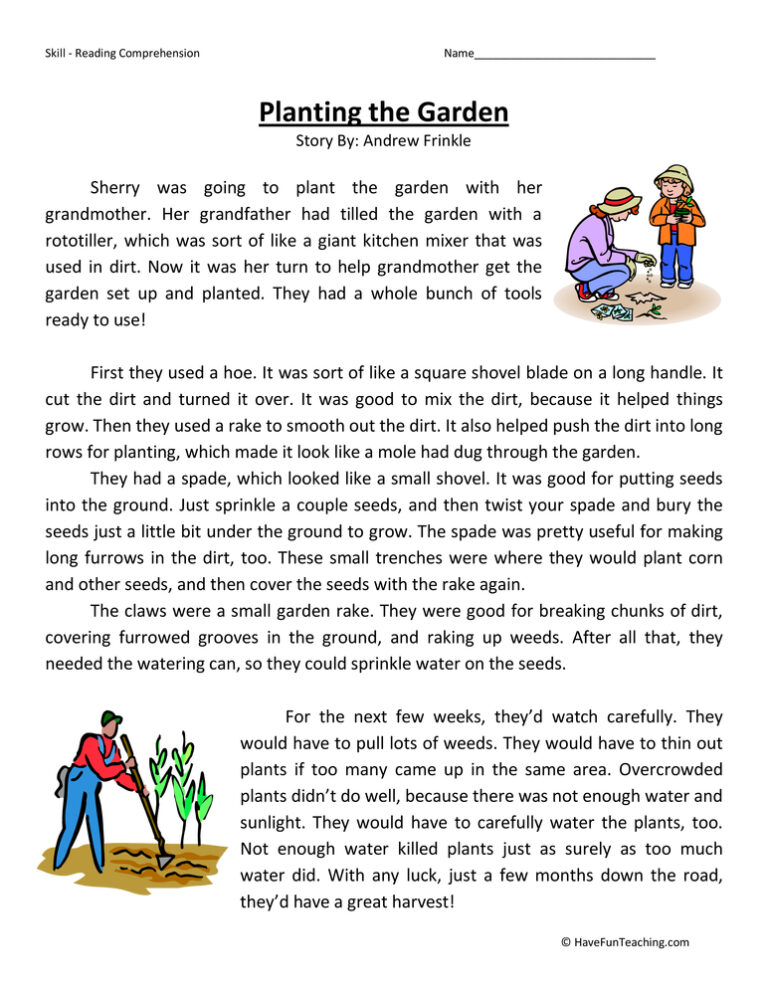
Worksheet4th GradePlanting Gardens Reading Comprehension Worksheet

A Planting Gardens Reading Comprehension Worksheet for 4th grade, built around an original garden story with multiple-choice, sequencing, and written-response questions. Answer key included for fast, no-prep comprehension practice.

Worksheet
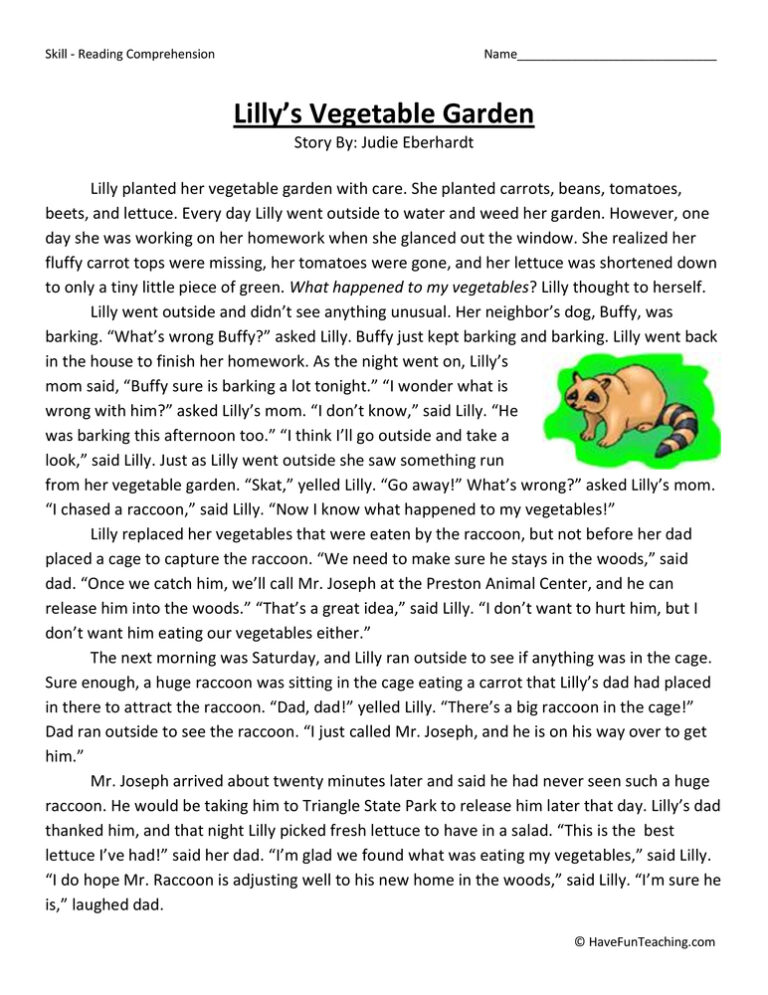
Worksheet3rd GradeLilly's Vegetable Garden Reading Comprehension Worksheet

In this Lilly's Vegetable Garden reading comprehension worksheet, third graders read a story about a tomato plant that will not grow, then answer four questions and cite two details in writing. Answer key included.

Worksheet
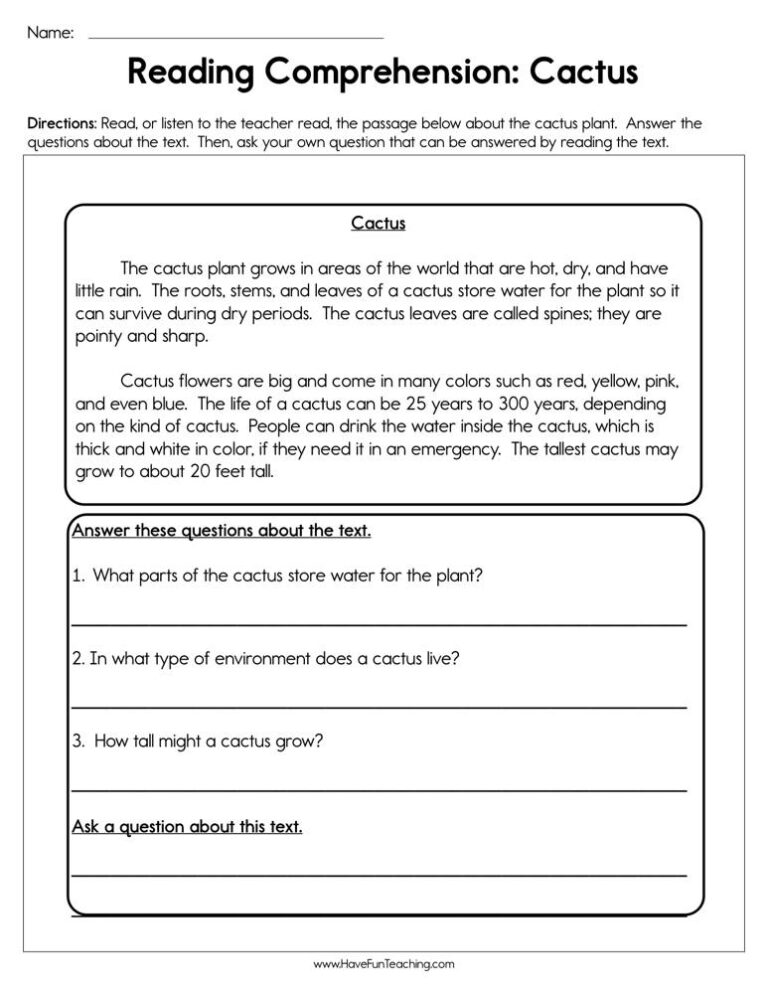
Worksheet1st GradeCactus Reading Comprehension Worksheet

This cactus reading comprehension worksheet gives 1st Grade readers a short nonfiction passage about desert plants and five text-based questions to answer. An answer key is included.

Worksheet
Worksheet1st GradePlant Riddles Worksheet

This Plant Riddles Worksheet gives 1st Grade students four three-clue riddles about plants and a word box to answer them from. An answer key is included.

From our teachers' playbook

From tiny seed to tall sunflower

What do kids learn about plants?

Young kids learn that plants are living things with needs: sunlight, water, air, space and nutrients from soil. They name the parts of a plant (roots, stem, leaves, flower, seeds) and what each part does. Then they follow the life cycle from seed → sprout → seedling → adult plant → flower → seed again. Older kids learn how plants make their own food through photosynthesis, explore flower parts like the petals and stamen, and compare plant and animal cells. The click is when a child realizes the carrot on their plate is a root and the broccoli is a bunch of tiny flowers!

Our favorite ways to teach plants

Nothing beats watching something grow. These moves turn your classroom into a garden lab.

Grow and observe

Plant bean seeds in clear cups so kids can see the roots, and have them draw and measure their plant every few days. Try one cup in the dark closet and one on the windowsill. Kids discover what plants need by watching, not just reading.

Why it works: going from real objects to pictures to symbols is a core recommendation of the U.S. Department of Education's elementary math guide.
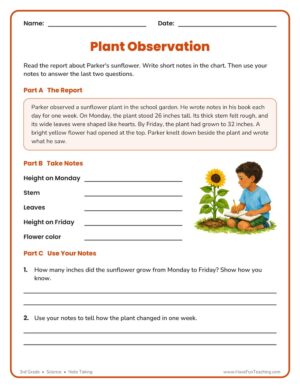
Plant Observation WorksheetTry it withPlant Observation WorksheetWorksheetsOpen it →

Label the plant

After pulling up a weed or a small plant from the schoolyard, kids draw it and label the roots, stem, leaves and flower. Then add a sentence about each part's job. Drawing a real plant makes the diagram stick.

Why it works: children learn more from words and pictures together than from words alone (Mayer, 2009).

Plant Parts Drawing WorksheetTry it withPlant Parts Drawing WorksheetWorksheetsOpen it →

Plant riddles

Read a riddle like "I hold the plant up and carry water to the leaves. What am I?" Kids write the answer on a whiteboard. Riddles are a fun, fast way to check vocabulary without it feeling like a test.

Why it works: a big review of study methods ranked quick self-quizzing among the most powerful ways to remember (Dunlosky and colleagues, 2013).

Plant Riddles WorksheetTry it withPlant Riddles WorksheetWorksheetsOpen it →

Plants: your questions

What do plants need to grow?

Plants need sunlight, water, air, nutrients from the soil and space to grow. Leave one out in a classroom experiment and kids can see the difference.

What are the parts of a plant for kids?

The main parts are roots, which take in water and hold the plant in place; the stem, which carries water and holds the plant up; leaves, which make food; and flowers, which make seeds.

How do you explain photosynthesis to kids?

Plants make their own food. Their leaves use sunlight, water and carbon dioxide from the air to make sugar, and they give off oxygen that we breathe.

What's a quick plant experiment for the classroom?

Grow beans in clear cups with a wet paper towel. Kids can watch roots and shoots appear within a week and record changes in a journal.



