Skip to content
Start My 3 Free Days $0 today · cancel anytime

Opposites Worksheets

22 opposites worksheets. Teacher favorites: Matching Opposites Worksheet and Antonyms Worksheet. How teachers use these

Opposites Worksheets

22 opposites worksheets. Teacher favorites: Matching Opposites Worksheet and Antonyms Worksheet. How teachers use these

Worksheet
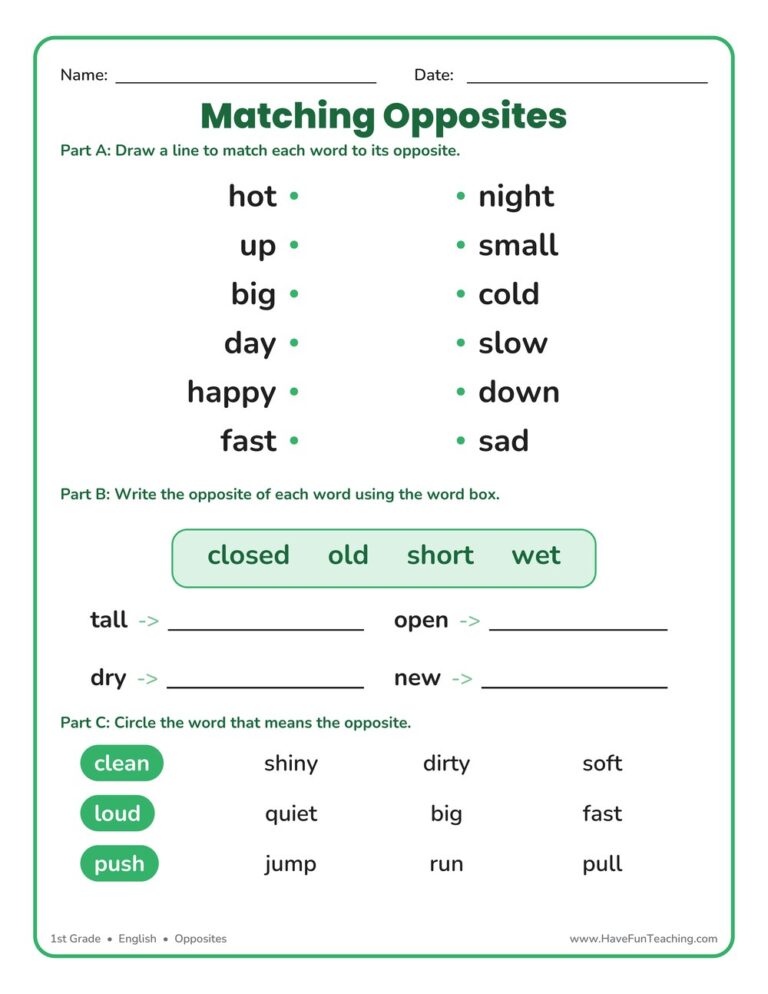
Worksheet1st GradeMatching Opposites Worksheet

This Matching Opposites Worksheet gives 1st grade students fun practice matching, writing, and choosing opposite words. An answer key is included to build early vocabulary and word skills with confidence.

Worksheet
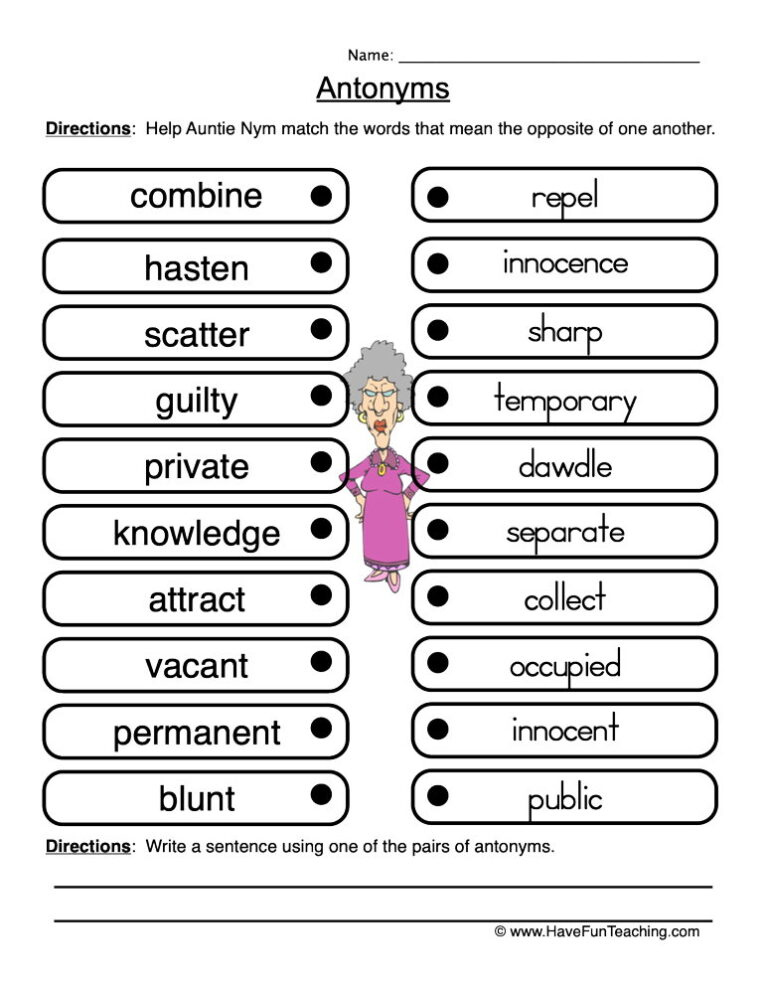
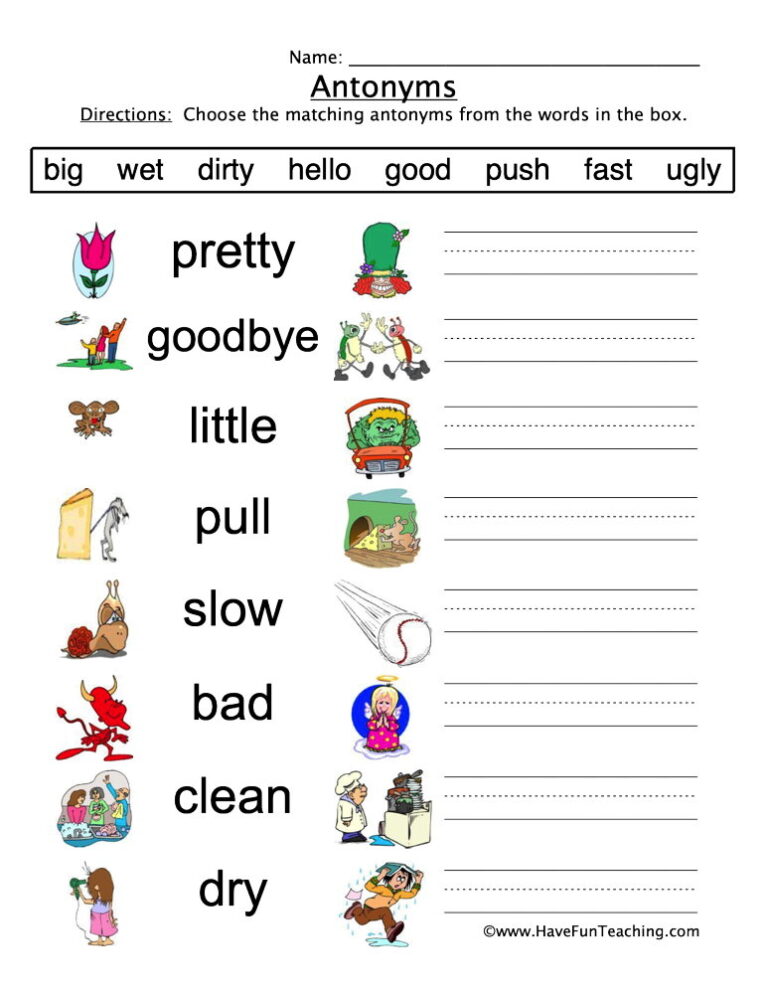
Worksheet4th GradeAntonyms Worksheet

This antonyms worksheet has 4th grade students rewrite sentences using the opposite word, then match three leftover words from the box. An answer key is included, so vocabulary practice checks itself.

Worksheet
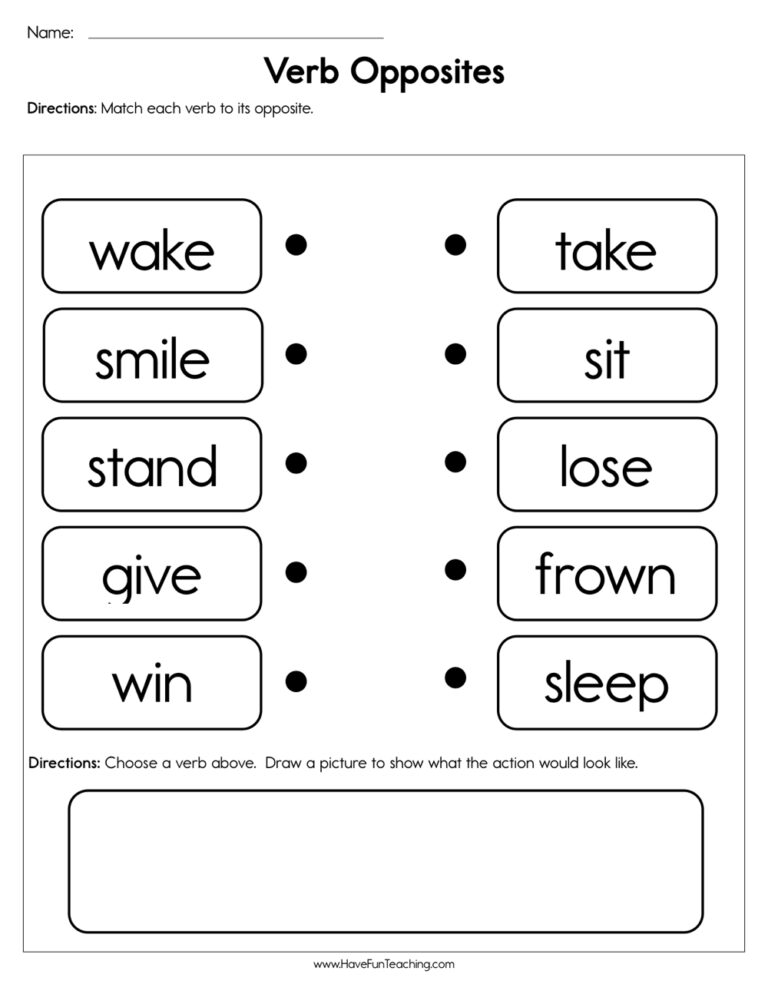
WorksheetKindergartenVerb Opposites Worksheet

Kindergarten students practice with this verb opposites worksheet by matching action words like push and pull, then circling opposites. An answer key is included to make checking quick.

Worksheet
Worksheet5th GradeAntonyms Pairs Worksheet

This Antonyms Pairs Worksheet gives 5th graders six academic word pairs to match, four sentences to complete, and two sentences to write. An answer key is included, so vocabulary practice takes no prep.

Worksheet
Worksheet4th GradeReplacing Antonym Worksheet

This replacing antonym worksheet gives 4th grade students seven items: rewrite four sentences using the opposite word, then supply three more antonyms. An answer key is included, so students build precise vocabulary fast.

Worksheet
Worksheet1st GradeOpposite Pairs Worksheet

This opposite pairs worksheet has 1st graders match eight word-box words to picture pairs like full and empty, then write each word. An answer key is included for fast, easy checking.

Worksheet
Worksheet2nd GradeAntonyms Crossword Puzzle

This antonyms crossword puzzle worksheet gives 2nd graders eight everyday opposite pairs to solve, with a word bank to guide them. An answer key is included, so checking work takes only seconds.

Worksheet
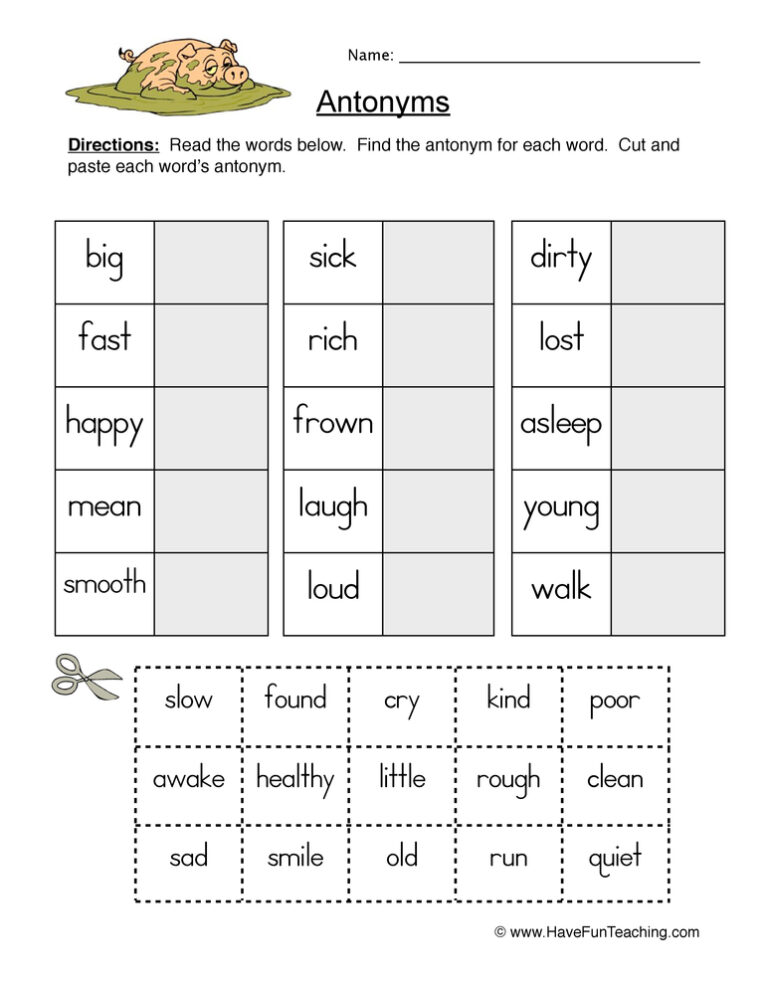
Worksheet2nd GradeAntonyms Cutting Worksheet

Students cut out six word cards and glue each one beside its opposite in this Antonyms Cutting Worksheet for 2nd grade. An answer key is included, so vocabulary practice checks itself in seconds.

Worksheet
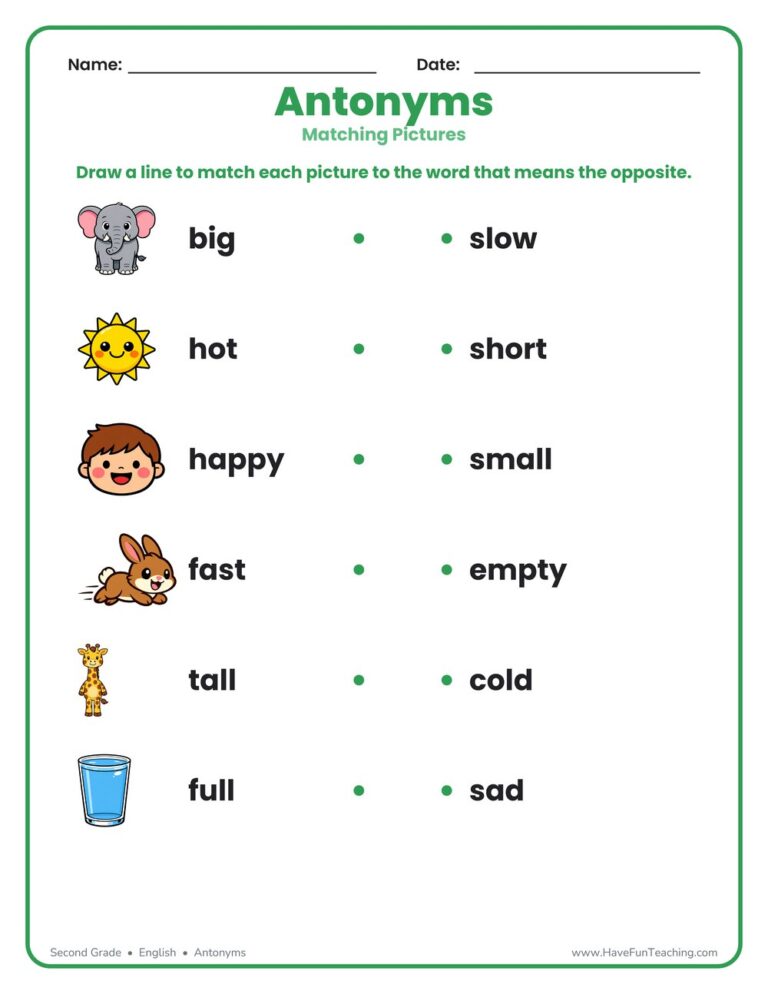
Worksheet2nd GradeAntonyms Matching Pictures Worksheet

The Antonyms Matching Pictures Worksheet gives second grade students six picture clues to match with their opposite words, plus an answer key, to build vocabulary and word skills.

Worksheet
WorksheetKindergartenOpposites Matching Worksheet

This opposites matching worksheet helps Kindergarten students connect five picture pairs like hot and cold, with a full answer key, building strong describing words through play.

Worksheet
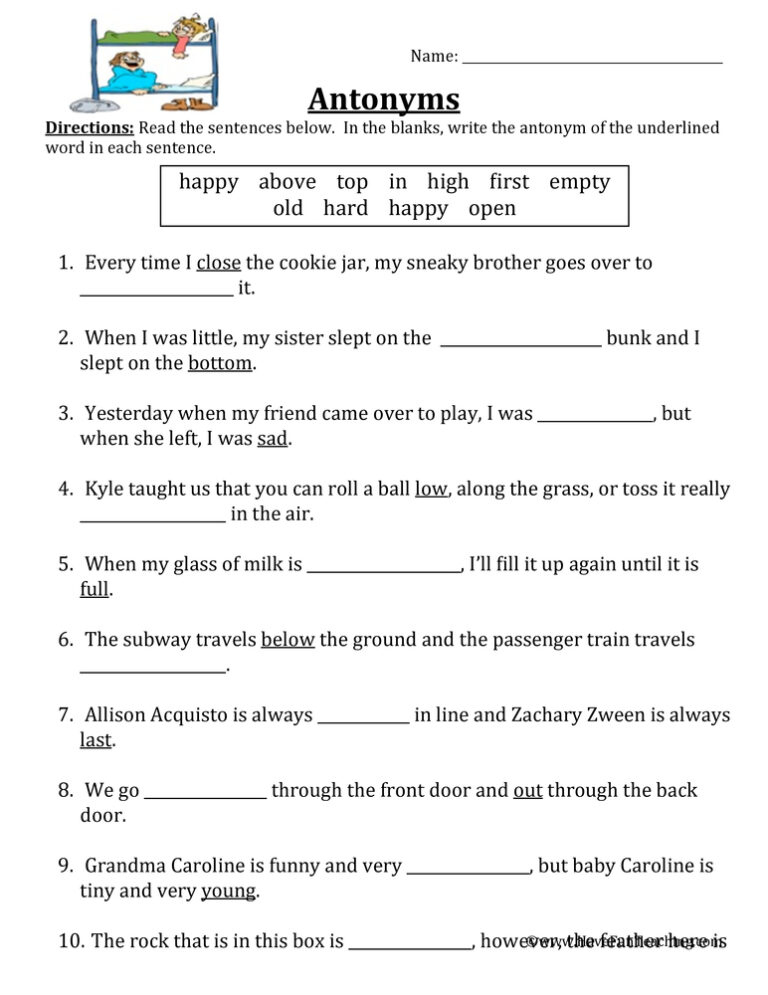
Worksheet2nd GradeAntonym Fill in the Blank Worksheet

Students use each underlined word to figure out its opposite and write it in the blank. This 2nd Grade antonym fill in the blank worksheet includes a word bank and an answer key, so vocabulary practice checks itself.

Worksheet
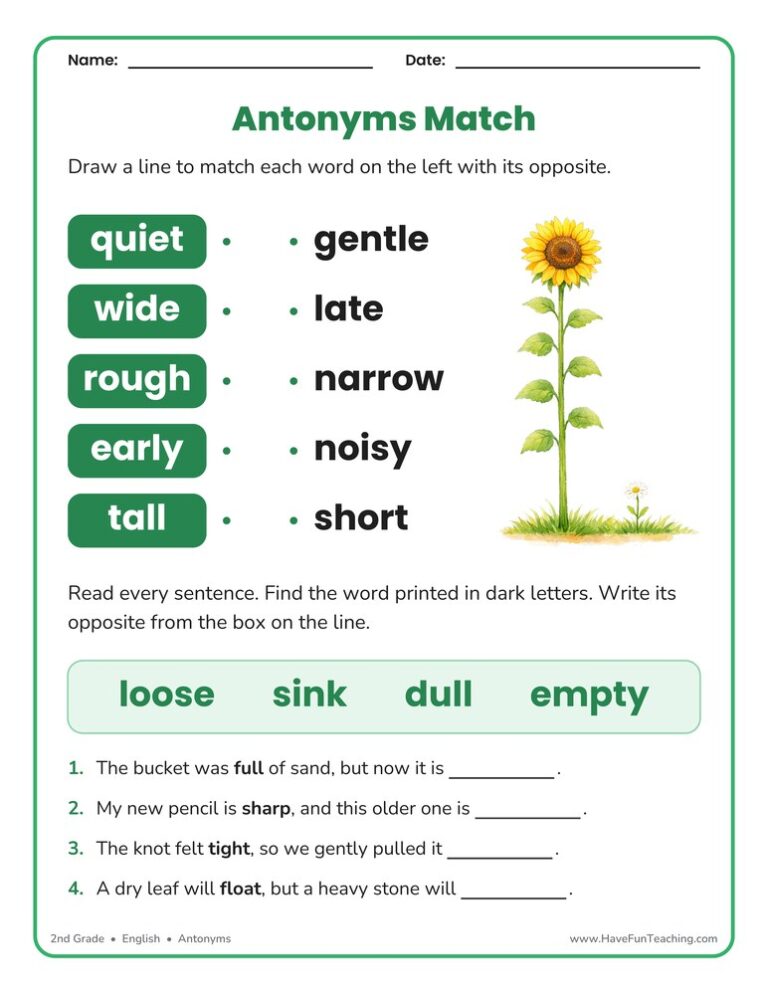
Worksheet2nd GradeAntonyms Game Worksheet

This antonyms game worksheet has 2nd Grade students match five opposite pairs, then fill four sentences from a word box. Answer key included, so checking the page takes seconds.

Worksheet
WorksheetKindergartenCircling Empty Full Examples Worksheet

This circling empty full examples worksheet lets kindergarten students find the full container in each row of pictures. An answer key is included, making it a quick, fun way to build early measurement words.

Worksheet
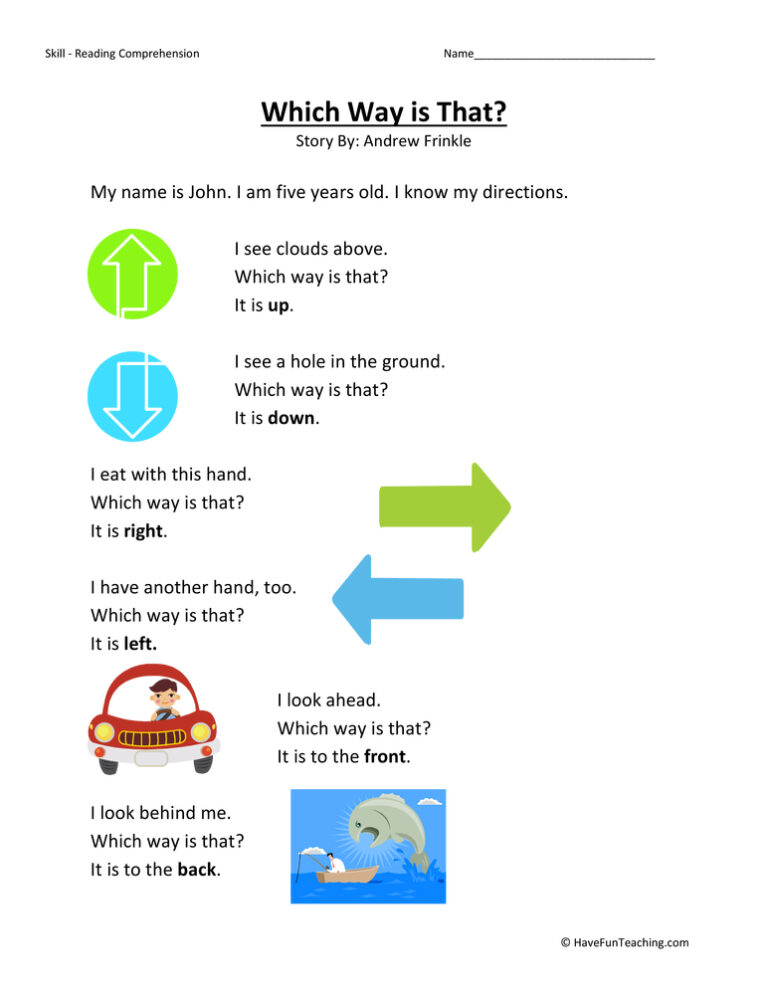
WorksheetKindergartenWhich Way is That Reading Comprehension Worksheet

In this which way is that reading comprehension worksheet, kindergarten students read a park story, answer five questions about up, down, left, right, front and back, and check work with the answer key.

Worksheet
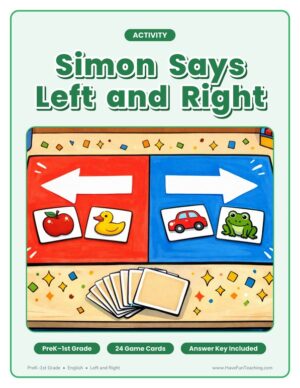
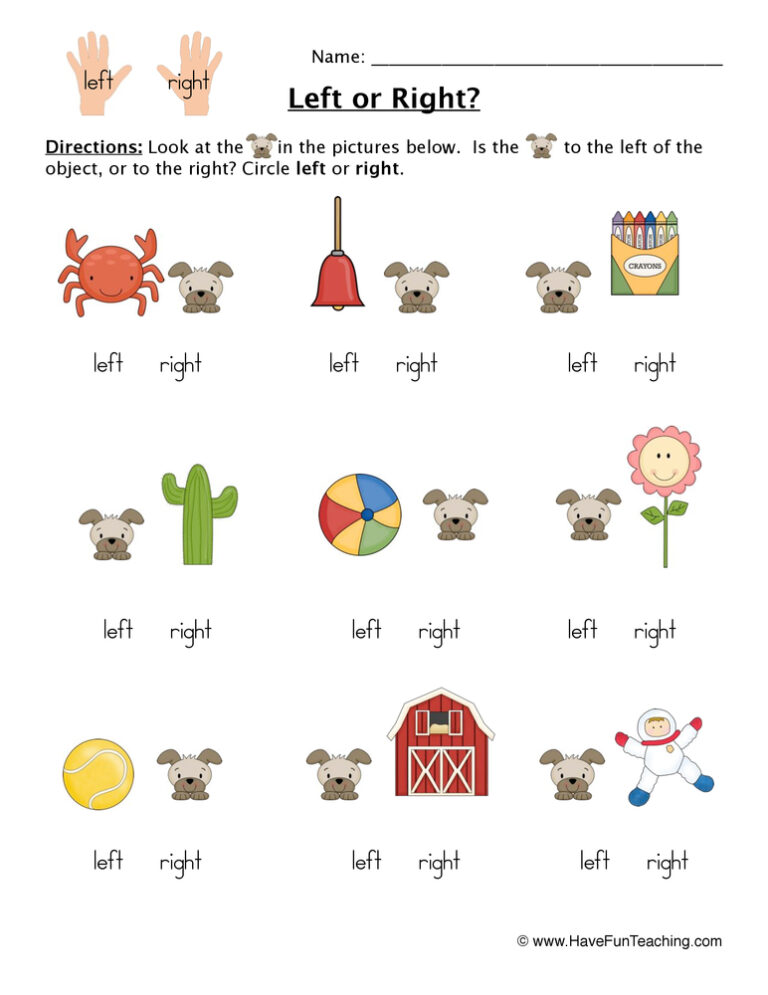
WorksheetKindergartenCircle Left or Right Worksheet

This circle left or right worksheet gives Kindergarten students eight picture cards for practicing left and right, with an answer key included so checking work is quick.

Worksheet
Worksheet2nd GradeAntonyms Word Bank Worksheet

This Antonyms Word Bank Worksheet gives 2nd graders six word-box blanks and five matching pairs of opposites. An answer key is included, so students get fast, confident vocabulary practice with almost no prep.

Worksheet
Worksheet4th GradeAntonyms Intermediate Matching Worksheet

This Antonyms Intermediate Matching Worksheet has 4th graders match eight word pairs, complete four context sentences, and write two sentences of their own. An answer key is included for fast, no-prep vocabulary practice.

Worksheet
Worksheet3rd GradeAntonyms List Worksheet

This antonyms list worksheet helps 3rd grade students sort words under their opposites and find antonyms in sentences. An answer key is included, making it easy to check vocabulary growth.

Worksheet
Worksheet3rd GradeAntonyms Word Search Worksheet

This Antonyms Word Search Worksheet has 3rd graders find six opposite words in a puzzle, then write the right one to complete six sentences. Answer key included for no-prep vocabulary practice.

Worksheet
Worksheet1st GradeWriting Empty Full Examples Worksheet

This writing empty full examples worksheet asks 1st graders to look at six containers and write full or empty for each. An answer key is included for fast checking.

From our teachers' playbook

Hot and cold, up and down, fun and fun

What do kids learn about opposites?

Opposites are word pairs that mean completely different things: big / small, full / empty, left / right. Preschoolers and kindergarteners learn them by doing and seeing, like stepping in and out of a hoop or comparing a full cup to an empty one. In 1st and 2nd grade kids learn the grown-up name, antonyms, and find opposites for adjectives and verbs, like open / close and push / pull. Older kids use antonyms to build vocabulary and spot contrast clues while reading. The click is when a child hears a new word and asks, "What's the opposite of that?"

Our favorite ways to teach opposites

Opposites are made for acting out. These moves get kids moving, matching and talking.

Act it out

Call out a word and kids act out its opposite: you say "tall," they crouch low; you say "fast," they move in slow motion. Bodies remember what ears forget, and it's a perfect brain break.

Why it works: in a well-known study, a few short sessions of a simple number board game measurably boosted young children's number skills (Ramani and Siegler, 2008).

Opposites ActivityTry it withOpposites ActivityActivitiesOpen it →

Picture pairs

Show two pictures side by side, like a happy face and a sad face, and have kids name both words. Then mix up a set of picture cards and let them find the matching opposites. Pictures make the meaning instant for young learners and English language learners.

Why it works: pairing a picture with each word gives kids two ways to remember it, a well-tested principle of how people learn (Mayer, 2009).

Opposites Flash CardsTry it withOpposites Flash CardsFlash CardsOpen it →

Opposites in sentences

Write a sentence like "The box is heavy" and model swapping in the opposite: "The box is light." Talk about how one word flipped the whole meaning. Then kids rewrite a few sentences with antonyms of their own.

Why it works: handing over the work step by step, from teacher to student, is one of the most widely used teaching frameworks (Pearson and Gallagher, 1983).

Opposites Lesson PlanTry it withOpposites Lesson PlanLesson PlansOpen it →

What's on this page

Teacher favorites right now: Matching Opposites Worksheet, Antonyms Worksheet and Verb Opposites Worksheet.

Opposites: your questions

What age do kids learn opposites?

Most children start understanding simple opposites like big and little or up and down around age 2 to 3. By preschool and kindergarten they can name many common pairs, and in early elementary they learn the word antonym.

What's the difference between opposites and antonyms?

They mean the same thing. Antonym is just the grammar word for a word that means the opposite of another word. Little kids say opposites; older kids learn to call them antonyms.

What are some easy opposites to teach first?

Start with ones kids can see and feel: big and small, hot and cold, up and down, in and out, open and close, happy and sad, full and empty.

How can I teach opposites at home?

Point them out during everyday moments: the door is open, now it's closed; the bath is full, now it's empty. Ask, "What's the opposite?" while you play, cook or read together.