
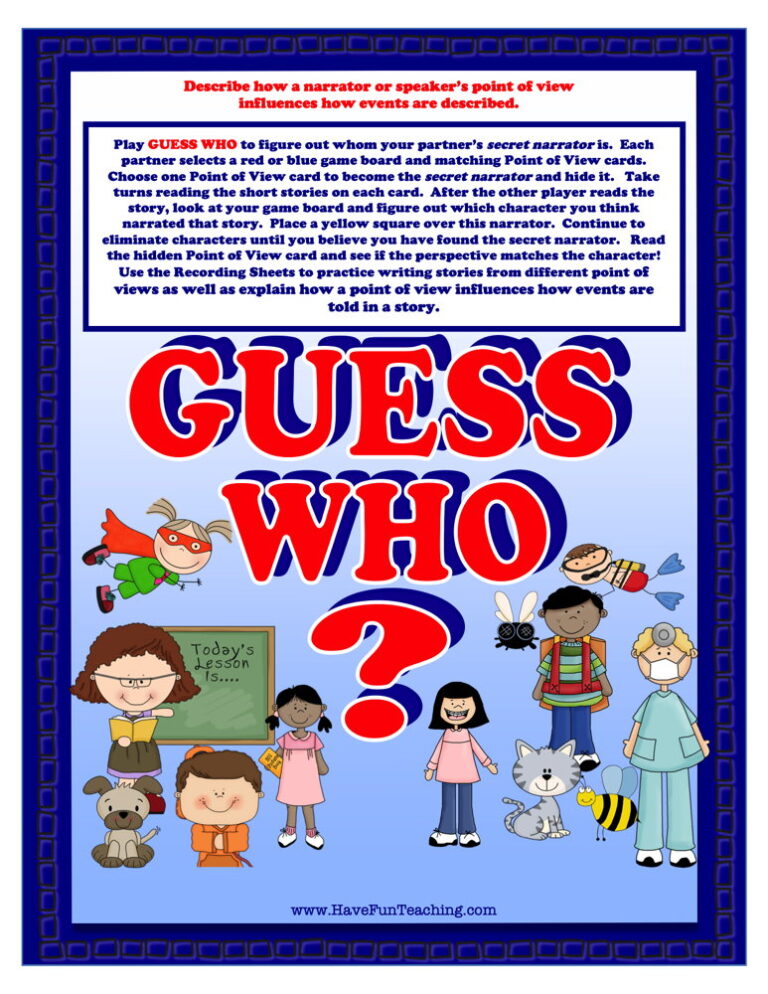
Using this Guess Who Point of View Activity, students identify their partner's "secret narrator" as the partner reads a text card.

Using this Finding Story Elements Activity, students help three superheroes defeat the evil villain Story Weaver and crack the code in a story. Use the boxes on the next pages to help them do their job!

Using this Compare and Contrast Graphic Organizer Activity, students organize their ideas using any of the provided graphic organizers in order to compare and contrast the structure of events, ideas, concepts, and information in two or more texts.
This Use the Text to Make Inferences Activity can be a great way to help them explore how to infer based on the text and what they already know. This is perfect for making inferences and drawing conclusions.

Using this Three Amigos Poetry Drama Prose Activity, students sort the word cards by genre (prose, poetry, and drama). Use the sorted cards to label and fill out a Venn Diagram.

Using these Thinking Maps for Reading Journeys Activity, students map out the important details in a text to show their thinking while building reading comprehension.

Using Vocabulary Jeopardy Activity, students determine the meaning of words and phrases as they are used in a text to build their use of vocabulary.
Using Book Vs Movie Compare and Contrast Activity, students make connections between the text of a story or drama and a visual presentation of the text.

Using Digging for Information Text Structure Activity, students describe the relationship between events, scientific concepts, or procedures in a text.

Using Hurricanes Reading Comprehension Activity, students refer to details to explain what the text says explicitly and when drawing inferences. This is perfect for making inferences and drawing conclusions.

Using Inference Chains Activity, students refer to details in a text when explaining what the text says explicitly and when drawing inferences. This is perfect for making inferences and drawing conclusions.
Using I've Read All These Books in Third Grade Activity, studentsread fictional texts to build reading comprehension skills while reading independently.

Using My Point of View Activity, students distinguish their own point of view from that of the narrator or those of the characters.

Using Describe Characters and Setting Activity, students explain how specific aspects of a text's illustrations contribute to what is conveyed by the words in a story.
Using Dictionary Dive Activity, students determine the meaning of unknown and multiple-meaning word and phrases choosing from a range of strategies.
Using this Find It In The Text Activity, students ask and answer questions to demonstrate understanding of a text, referring explicitly to the text as the basis for the answers.

Using What is the Main Topic? Activity,students identify the main topic of a multi-paragraph text as well as the focus of specific paragraphs within the text.

Using Unknown Words and Phrases Activity, students read independently or with a partner to collect unknown words and phrases to build their vocabulary and reading comprehension.

Using Authors Purpose Matching Activity, studentsmatch the text to the Author's Purpose activity card to explain why the author wrote the book.
Using this Cause and Effect Sequencing Activity, students explain the reasons why the situations were caused.