Skip to content
Start My 3 Free Days $0 today · cancel anytime

Anatomy Worksheets

36 anatomy worksheets. Teacher favorites: Animal and Plant Cells Worksheet and Label Skeletal System Worksheet. How teachers use these

Anatomy Worksheets

36 anatomy worksheets. Teacher favorites: Animal and Plant Cells Worksheet and Label Skeletal System Worksheet. How teachers use these

Worksheet
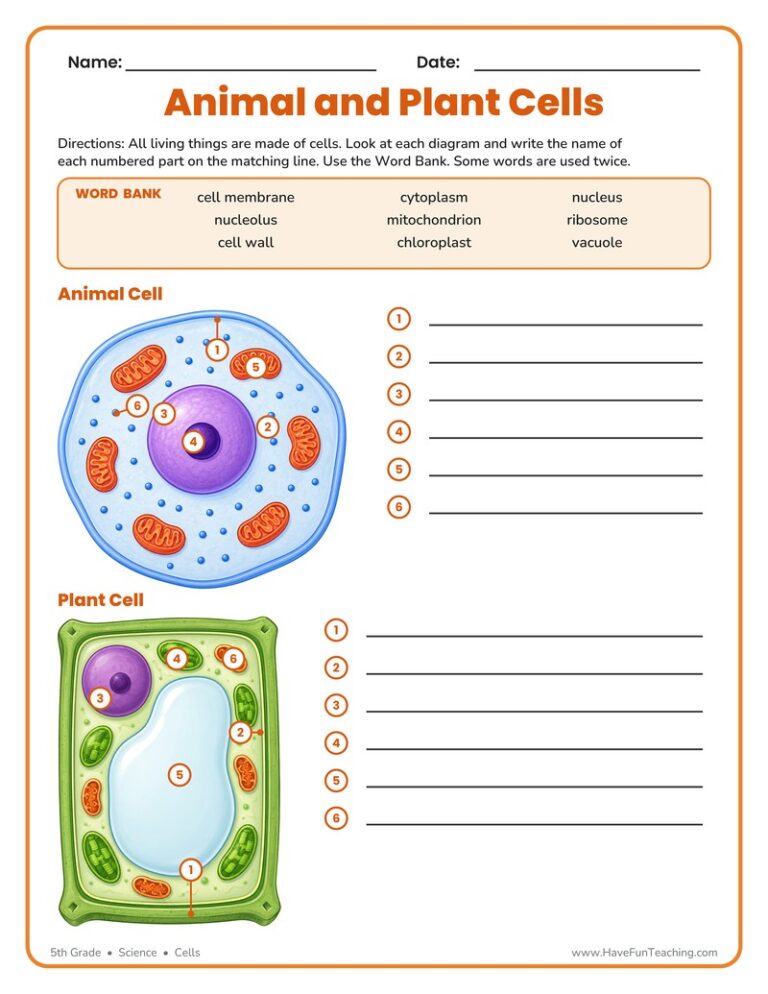
Worksheet5th GradeAnimal and Plant Cells Worksheet

This Animal and Plant Cells Worksheet asks 5th grade students to label the organelles of an animal cell and a plant cell using a word bank. Answer key included for fast, no-prep science review.

Worksheet
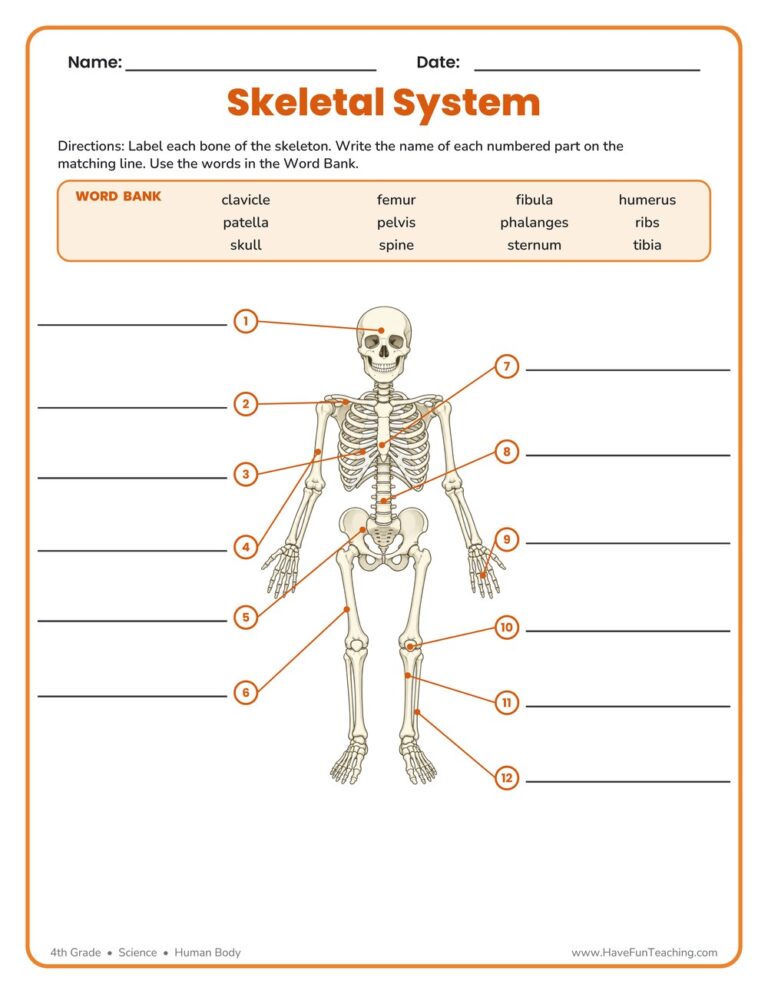
Worksheet4th GradeLabel Skeletal System Worksheet

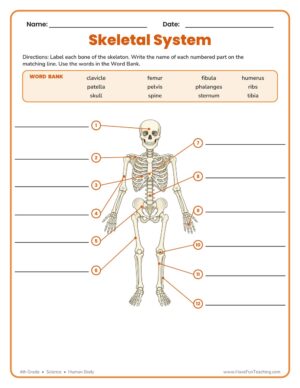
This Label Skeletal System Worksheet lets 4th grade students identify and name twelve major bones on a clear skeleton diagram using a word bank. An answer key is included for quick, no-prep human body practice.

Worksheet
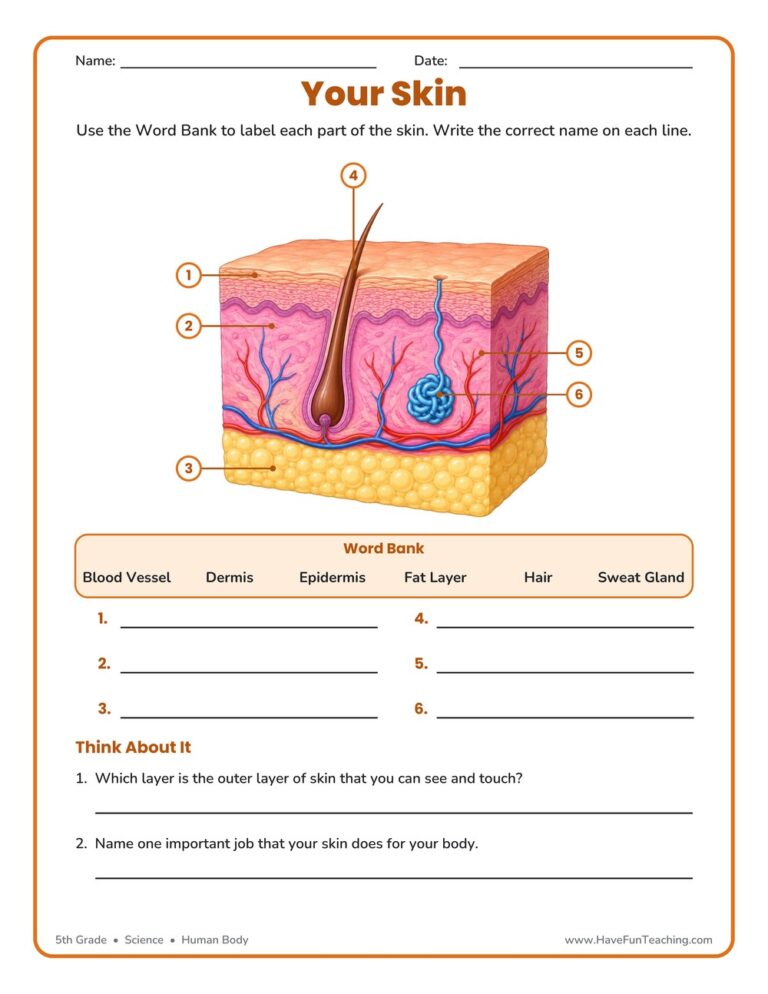
Worksheet5th GradeSkin Diagram Worksheet

This Skin Diagram Worksheet has 5th graders label the epidermis, dermis, fat layer, and more on a clear skin cross-section. Includes an answer key—perfect for a no-prep human body science lesson.

Worksheet
Worksheet4th GradeMuscular System Research Worksheet

This Muscular System Research Worksheet has 4th graders name the three muscle types, sort voluntary and involuntary actions, and explain their thinking. Answer key included, so checking work takes seconds.

Worksheet
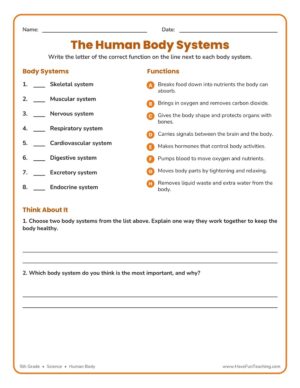
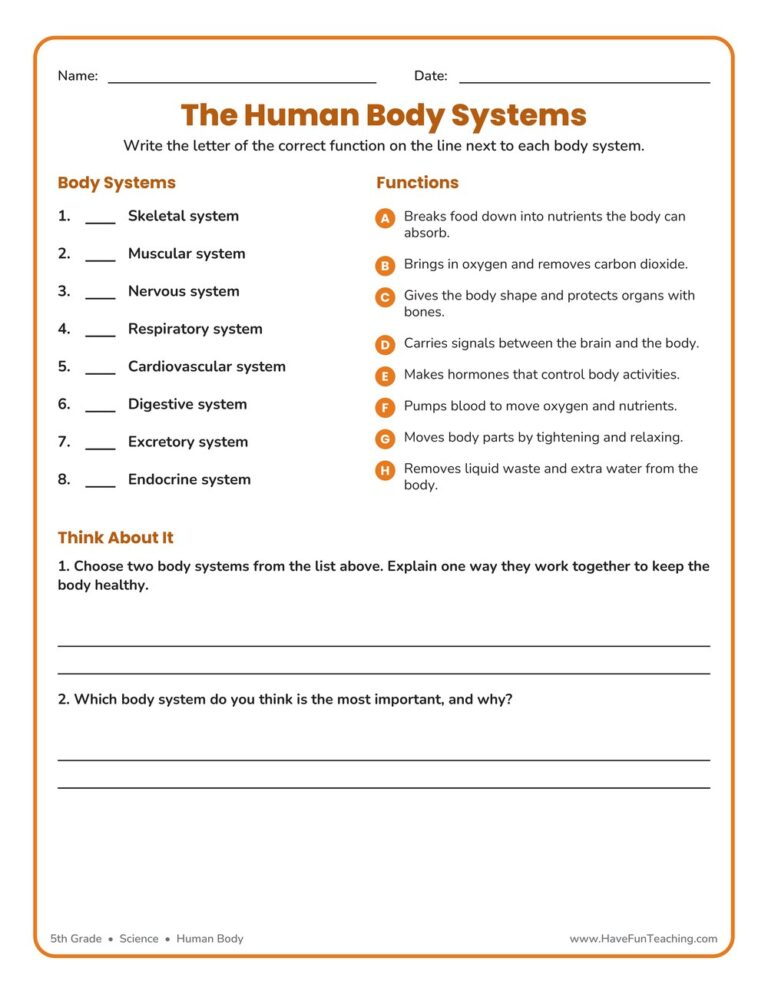
Worksheet5th GradeHuman Body Systems Worksheet

This human body systems worksheet has 5th graders match eight major body systems to their functions and reflect on how they work together. Answer key included for quick, no-prep science review.

Worksheet
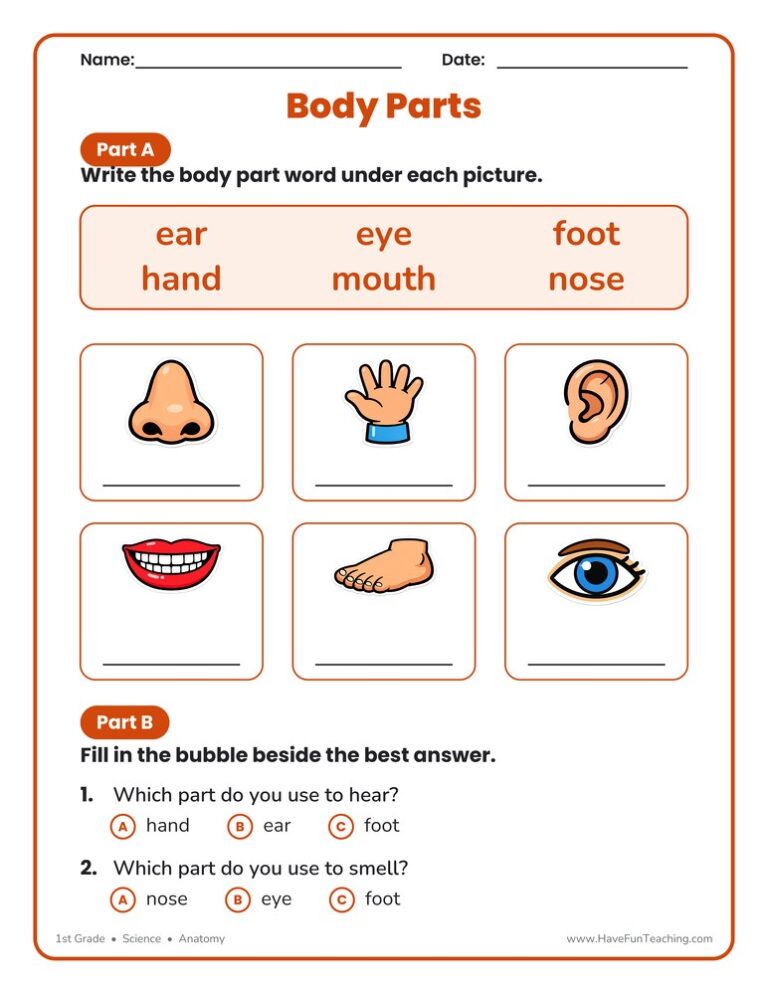
Worksheet1st GradeBody Parts Worksheet

This Body Parts Worksheet helps 1st Grade students name the nose, hand, ear, mouth, foot, and eye with a picture word bank, then show what each part does. Answer key included.

Worksheet
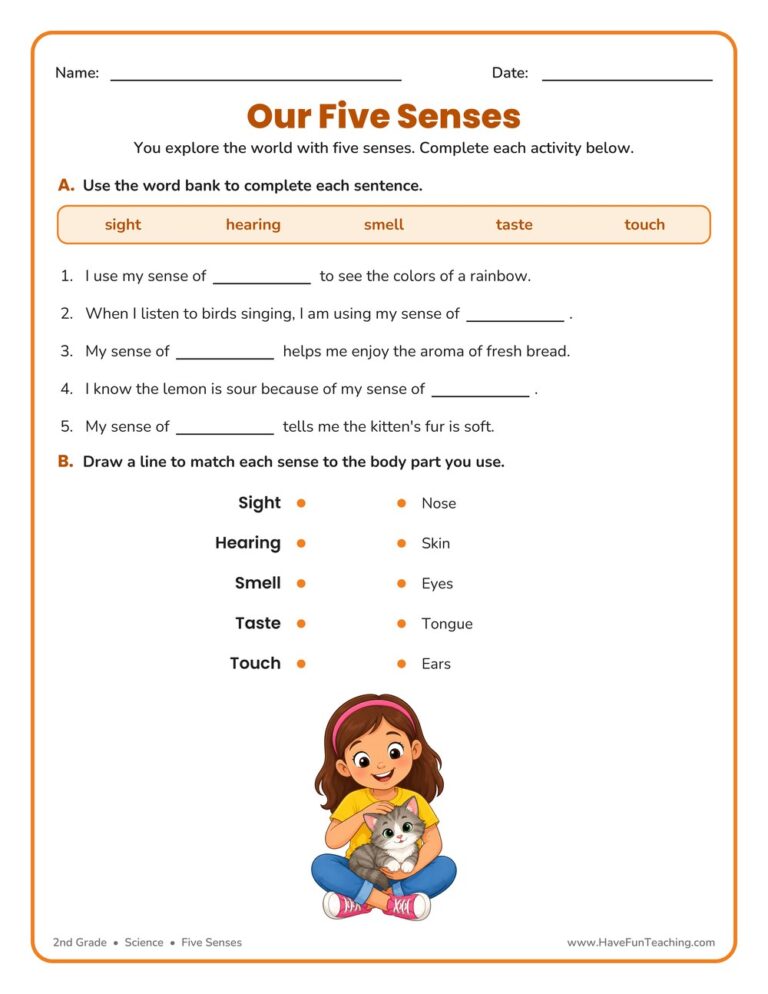
Worksheet2nd GradeSenses Fill in the Blanks Worksheet

The Senses Fill in the Blanks Worksheet gives 2nd grade students word-bank practice completing sentences about sight, hearing, smell, taste, and touch, plus a sense-to-body-part match. Answer key included for quick, no-prep science review.

Worksheet
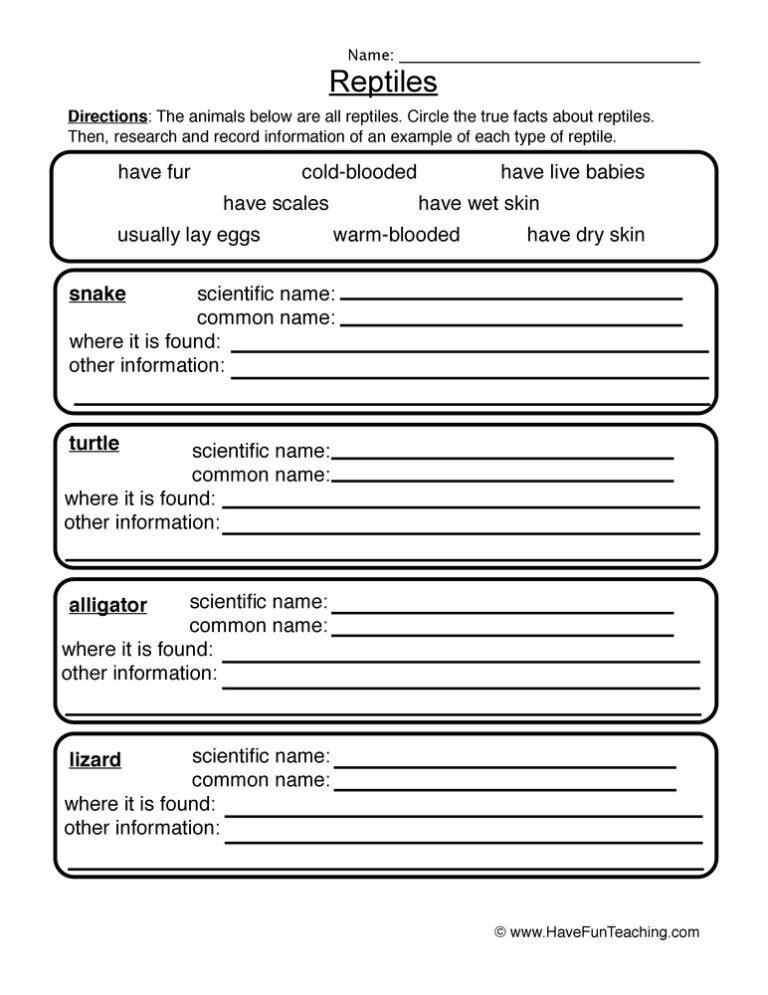
Worksheet3rd GradeReptiles Worksheet

This reptiles worksheet has 3rd Grade students check reptile facts, sort eight animals into reptile and not-a-reptile columns, and explain how a frog differs. An answer key is included, so checking work takes seconds.

Worksheet
Worksheet1st GradeSenses Touch Worksheet

This senses touch worksheet has first grade students circle the objects that feel soft, then write texture words to finish three sentences. An answer key is included, so checking the work takes seconds.

Worksheet
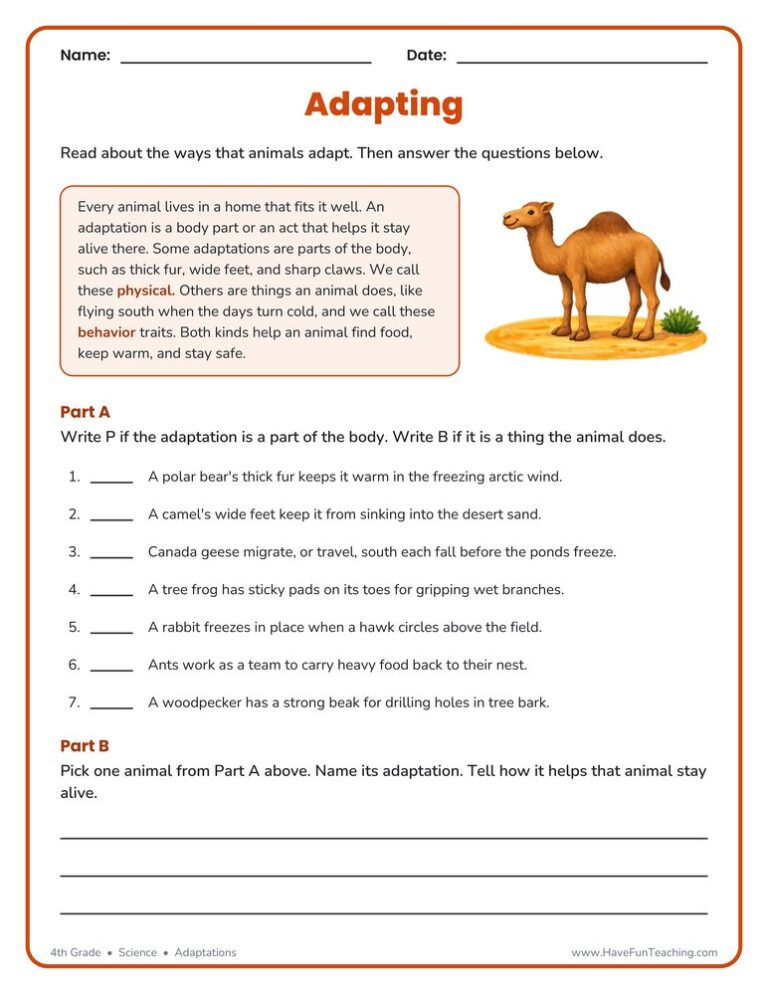
Worksheet4th GradeAdaptation Worksheet

This adaptation worksheet has 4th graders sort seven animal traits into physical and behavioral adaptations, then explain how one helps an animal survive. Answer key included for fast, no-prep life science practice.

Worksheet
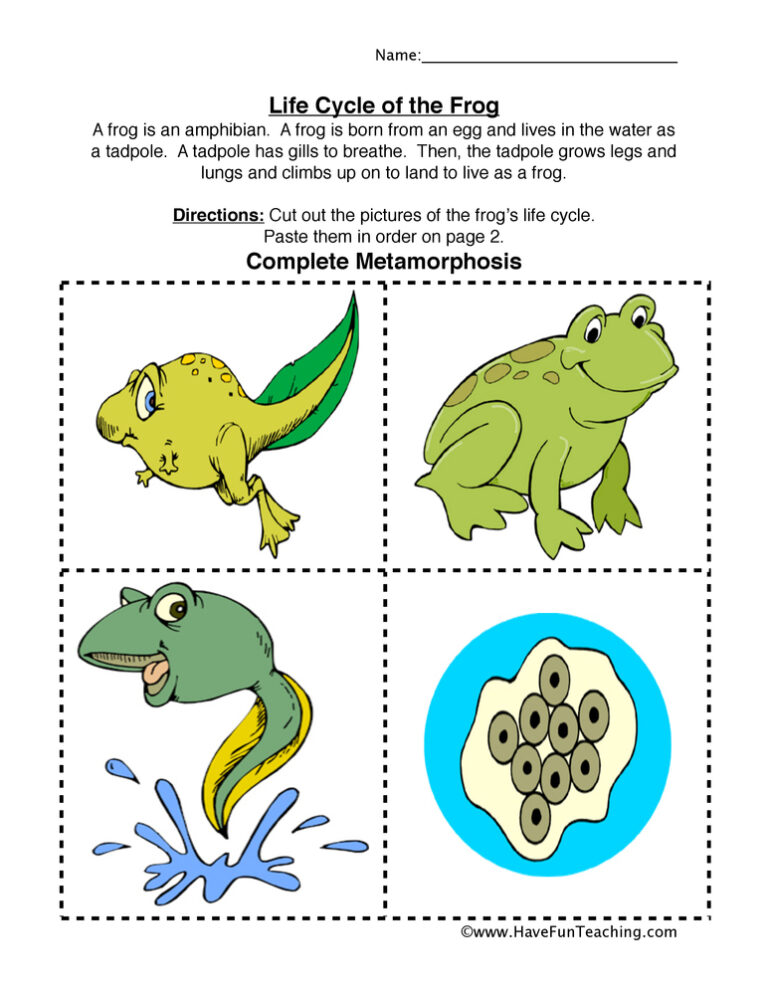
Worksheet2nd GradeFrog Life Cycle Worksheet

This Frog Life Cycle Worksheet has second graders order and name the four stages of a frog's life: egg, tadpole, froglet, and frog. An answer key is included, so grading takes seconds.

Worksheet
Worksheet4th GradeSkeletal System Research Worksheet

This skeletal system research worksheet asks 4th grade students to pair six bones with what each one does, then answer three research questions about the human skeleton. An answer key is included.

Worksheet
WorksheetKindergartenSenses Sight Worksheet

This senses sight worksheet asks kindergarten students to circle the objects that help their eyes see, then color four shapes. An answer key is included, so children learn what sight tells them about the world.

Worksheet
WorksheetKindergartenSenses Taste Worksheet

This Senses Taste Worksheet asks Kindergarten students to circle the things they can taste and color four shapes, with an answer key included, so the sense of taste becomes a rule a young child can use.

Worksheet
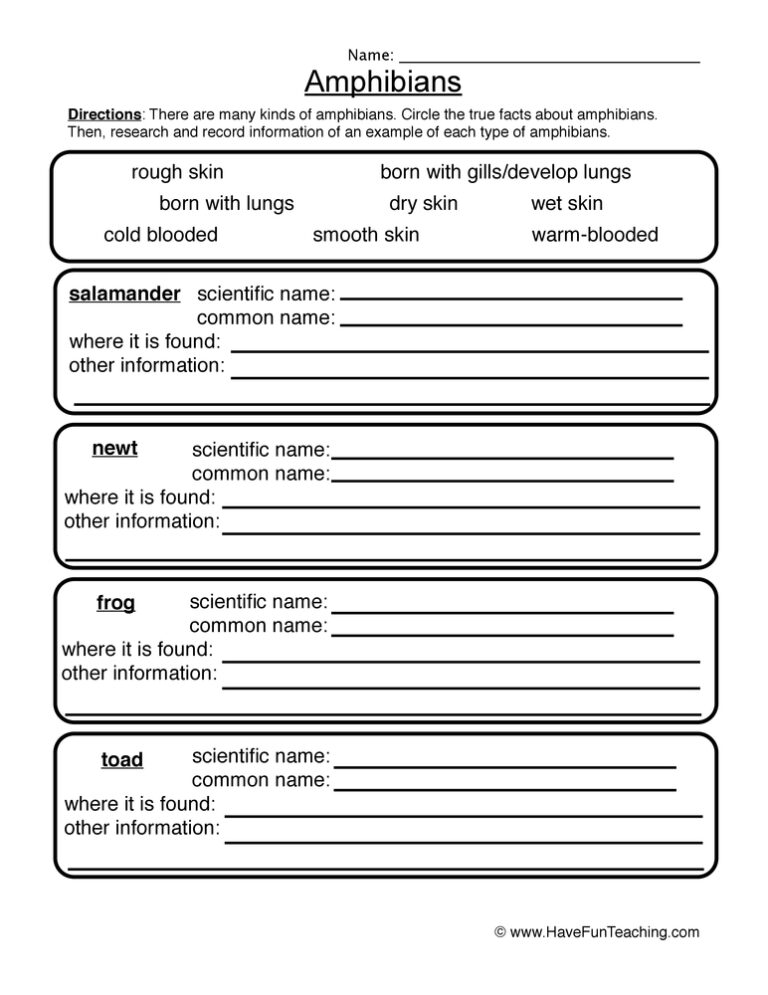
Worksheet3rd GradeAmphibians Worksheet

This amphibians worksheet has 3rd graders circle amphibian traits, sort eight animals into amphibian and non-amphibian columns, and explain their thinking. Answer key included for fast, no-prep science practice.

Worksheet
WorksheetKindergartenSenses Writing Worksheet

This senses writing worksheet has Kindergarten students look at five body parts and write the sense word that matches each one. Answer key included — an easy, no-prep way to build five senses vocabulary and handwriting at once.

Worksheet
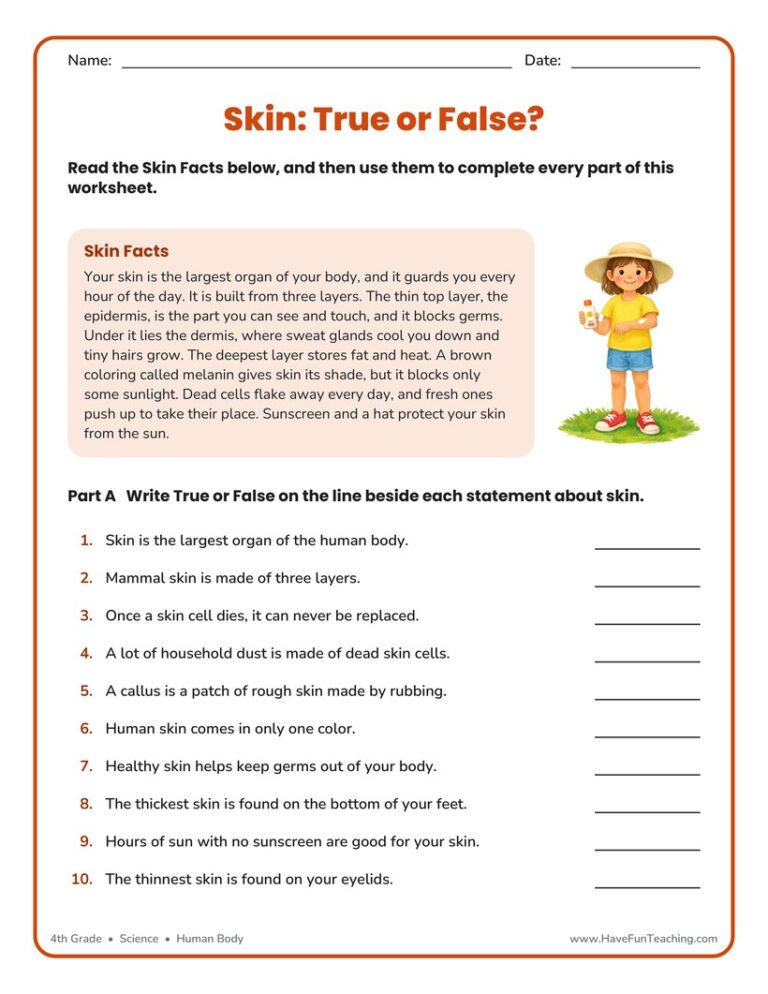
Worksheet4th GradeSkin True or False Worksheet

This Skin True or False Worksheet asks 4th grade students to judge ten skin facts, name the layers of the skin, and explain their thinking in writing. Answer key included, so science review takes minutes.

Worksheet
Worksheet1st GradeBody Parts Fill in the Blanks Worksheet

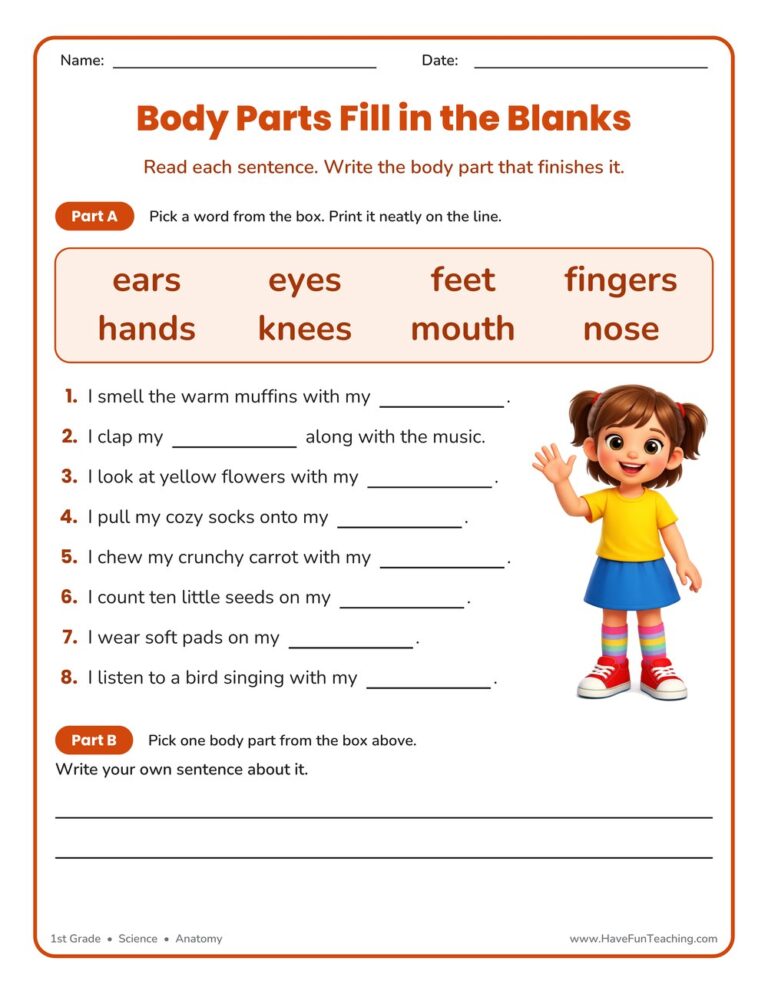
Students use a word box to complete eight sentences with the body parts fill in the blanks worksheet, then write one of their own. Built for 1st Grade with an answer key included, it makes naming body parts simple.

Worksheet
WorksheetKindergartenFish Parts Worksheet

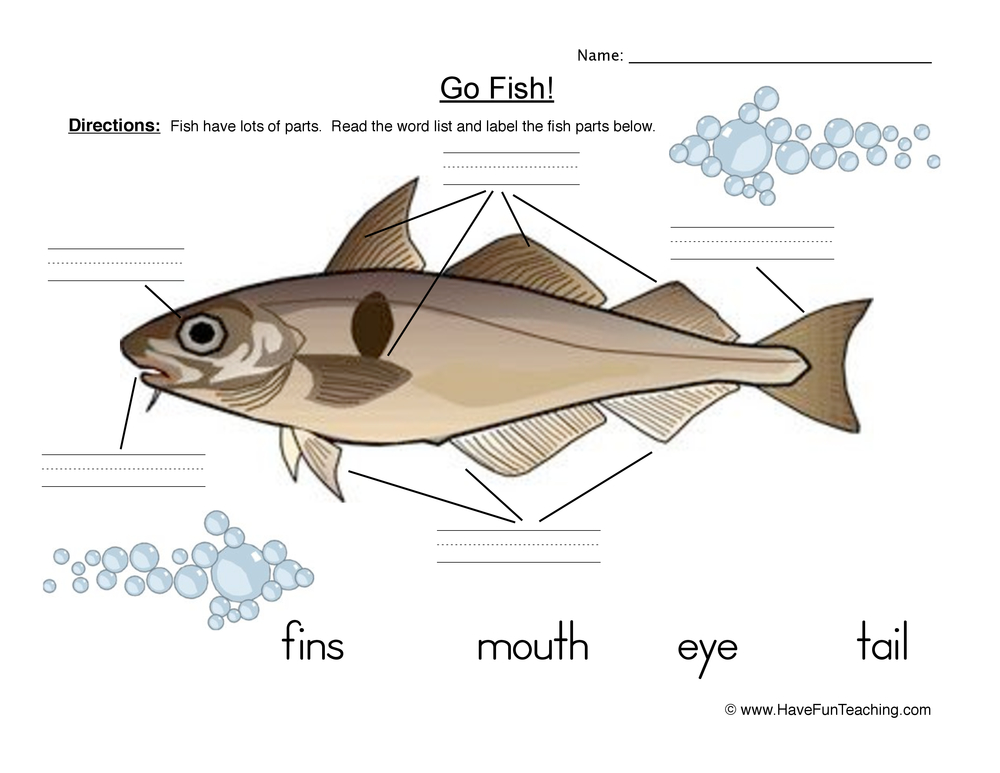
This Fish Parts Worksheet has kindergarten students label the eye, fin, mouth, and tail on a big numbered fish using a word box. An answer key is included for fast, easy checking.

Worksheet
WorksheetKindergartenBasic Fish Parts Worksheet

This Basic Fish Parts Worksheet asks 1st graders to label six numbered parts on a big, friendly fish using a word box. An answer key is included, so science practice takes no prep at all.

From our teachers' playbook

Bones, muscles and amazing bodies

What do kids learn about anatomy?

Anatomy is the study of how living things are built. Young kids start with body parts and the five senses. As they grow, they learn about body systems: the skeleton that holds us up, muscles that move us, the skin that protects us, the heart and lungs that keep us going. They compare animal bodies and learn how body parts help animals survive. Upper elementary students meet cells, the tiny building blocks of every living thing. The click is when a kid flexes and says, "My biceps just pulled on my bone!"

Our favorite ways to teach anatomy

Our bodies are the best science lab there is. These moves make anatomy hands-on.

Label it

Give kids a skeleton diagram and have them feel for each bone on their own body before labeling it. Skull, ribs, femur! Matching the picture to their own body makes the words stick.

Why it works: children learn more from words and pictures together than from words alone (Mayer, 2009).
Label Skeletal System WorksheetTry it withLabel Skeletal System WorksheetWorksheetsOpen it →

Compare cells

Upper grades can draw and label plant and animal cells side by side. Ask: what's in both? What's only in plants? Building the comparison helps kids remember the parts and their jobs.

Why it works: going from real objects to pictures to symbols is a core recommendation of the U.S. Department of Education's elementary math guide.

Animal and Plant Cells WorksheetTry it withAnimal and Plant Cells WorksheetWorksheetsOpen it →

Questions parents and teachers ask

What anatomy do elementary students learn?

Younger students learn body parts and the five senses. Older students learn body systems like the skeletal, muscular and circulatory systems, and in upper grades, cells.

How many bones are in the human body?

An adult has 206 bones. Babies are born with more, and some fuse together as they grow.

How do I teach body systems to kids?

Connect each system to something kids can feel: a heartbeat, breathing, flexing a muscle. Use diagrams, labeling and simple models.

What's the difference between anatomy and physiology?

Anatomy is about the structure, the parts and where they are. Physiology is about how those parts work. Elementary science usually mixes both.