Skip to content
Start My 3 Free Days $0 today · cancel anytime

Science Graphic Organizers

20 science graphic organizers, covering animals, life science, life cycle, plus 12 more topics. How teachers use these

Find the perfect resource in seconds

Science Graphic Organizers

20 science graphic organizers, covering animals, life science, life cycle, plus 12 more topics. How teachers use these

Graphic Organizer
Graphic Organizer3rd GradeWho What When Where Why Graphic Organizer Worksheet

This who what when where why graphic organizer worksheet helps 3rd graders record the five key details — who, what, when, where, and why — from any story or article. A clear, reusable note-taking template.

Graphic Organizer
Graphic Organizer3rd GradeWho What When Where Why Summary Graphic Organizer Worksheet

A Who What When Where Why Summary Graphic Organizer Worksheet that walks 3rd graders from a short story to the five W answers and on to a written summary. Answer key included, so students get quick feedback and real confidence.

Graphic Organizer
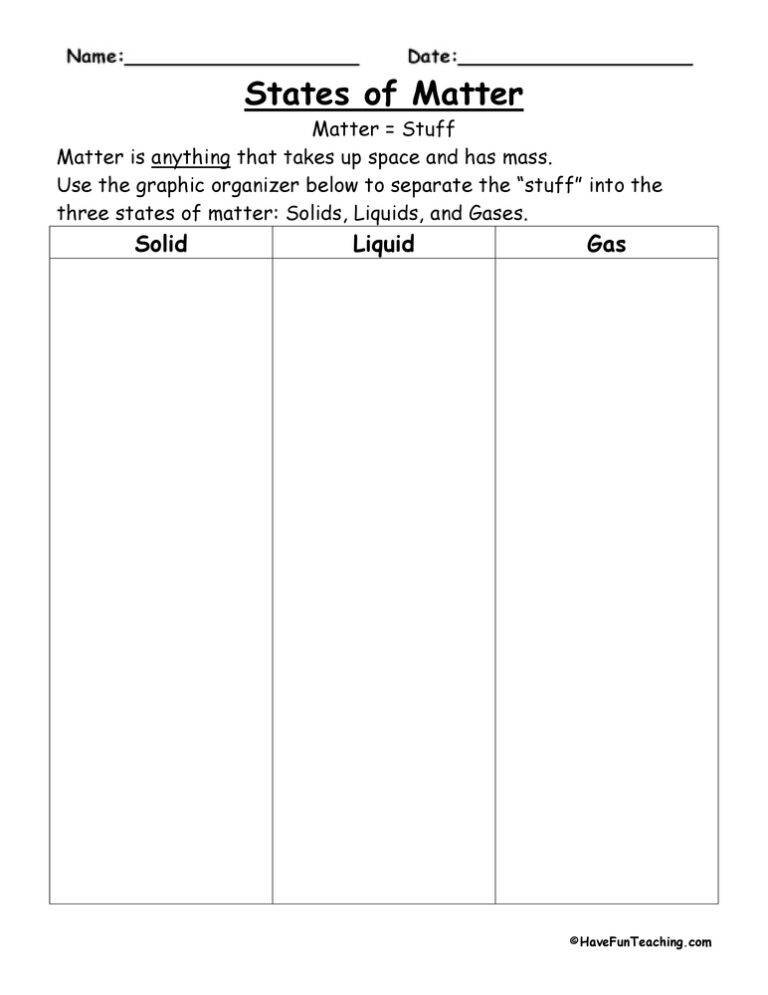
Graphic Organizer3rd GradeStates of Matter Worksheet

A States of Matter worksheet for 3rd grade: students sort nine everyday materials into Solid, Liquid, and Gas columns, then name the solid and the liquid in four sentences. Answer key included for fast, no-prep science practice.

Graphic Organizer
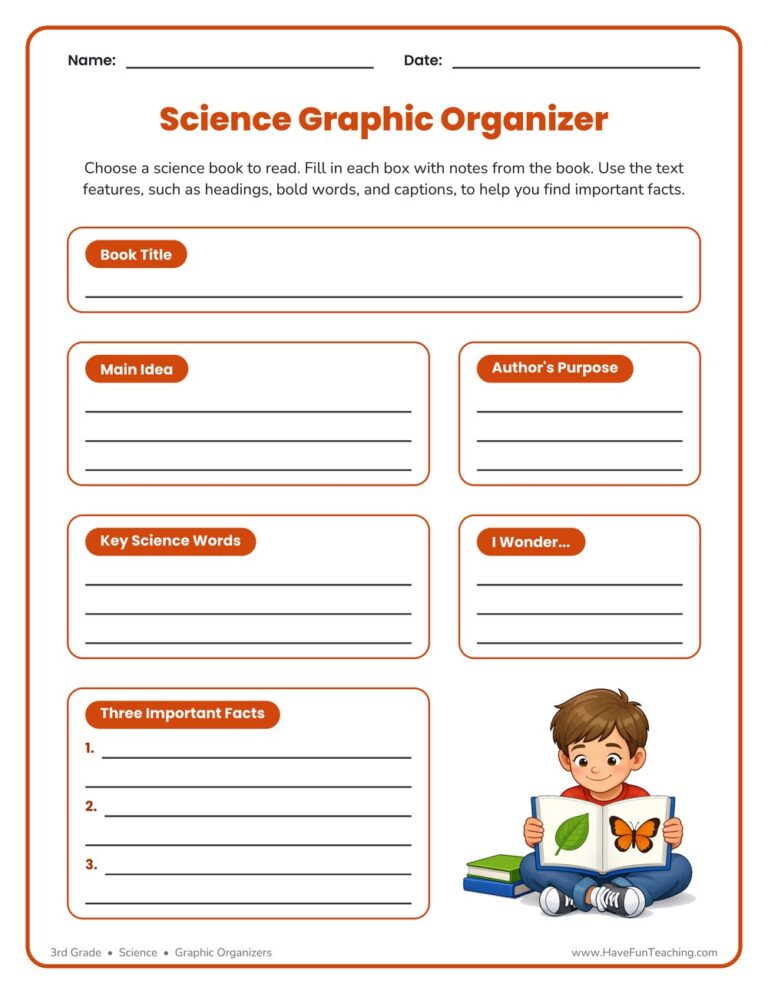
Graphic Organizer3rd GradeScience Graphic Organizer Worksheet

This science graphic organizer worksheet helps 3rd graders take notes on any nonfiction science book, from main idea and author’s purpose to key science words and three important facts. A reusable page that turns reading into real understanding.

Graphic Organizer
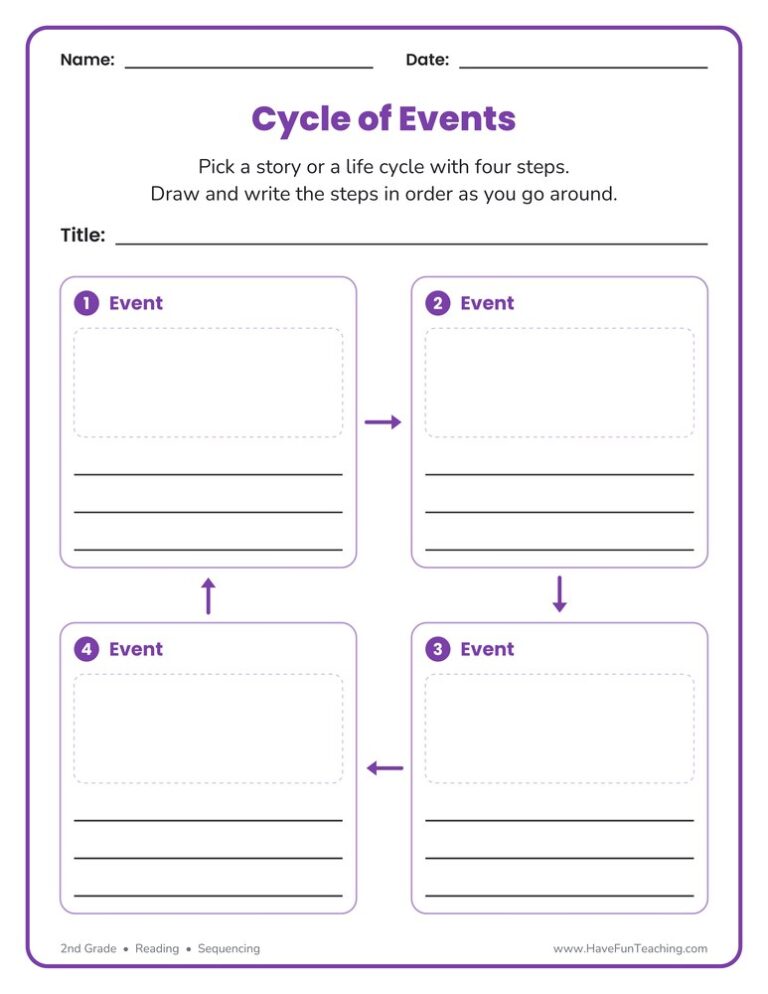
Graphic Organizer2nd GradeSequencing Graphic Organizer

This sequencing graphic organizer worksheet helps 2nd Grade students draw and write the four steps of a story or a life cycle in order, building strong retelling and sequencing skills.

Graphic Organizer
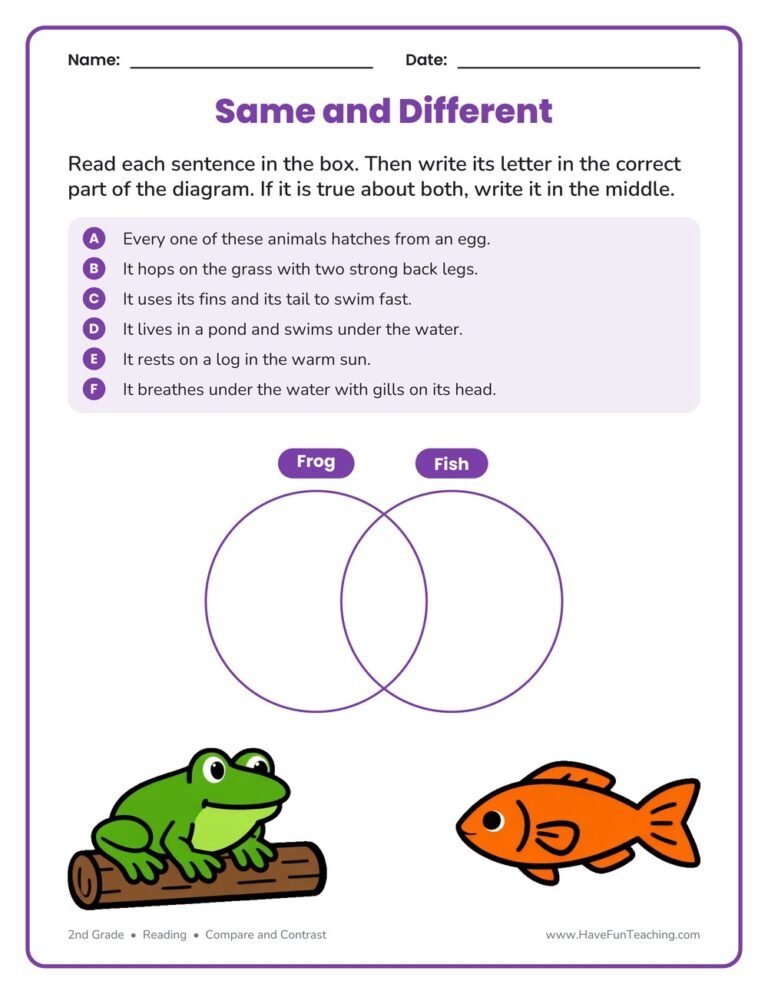
Graphic Organizer2nd GradeComparing Animals Venn Diagram Worksheet

This Comparing Animals Venn Diagram Worksheet has 2nd graders sort six true statements about a frog and a fish into a labeled Venn diagram. An answer key is included for quick, no-prep checking.

Graphic Organizer
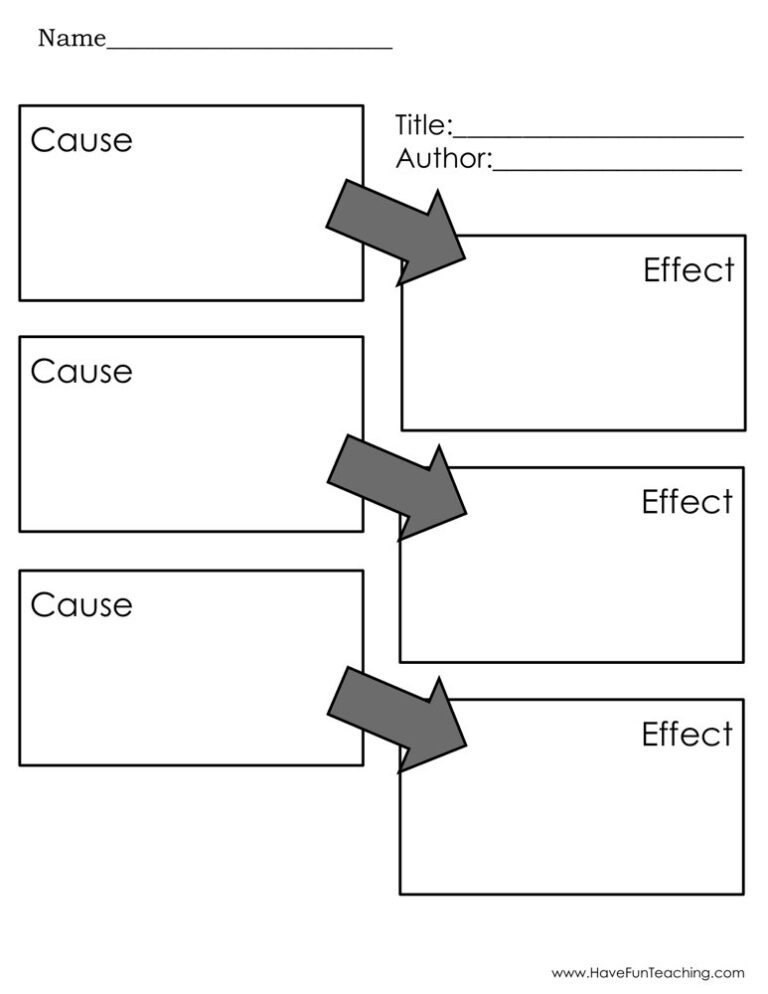
Graphic Organizer3rd GradeCause and Effect Graphic Organizer Worksheet

This cause and effect graphic organizer worksheet has 3rd graders match causes to effects and write their own effect sentences. An answer key is included, making it easy to check understanding.

Graphic Organizer
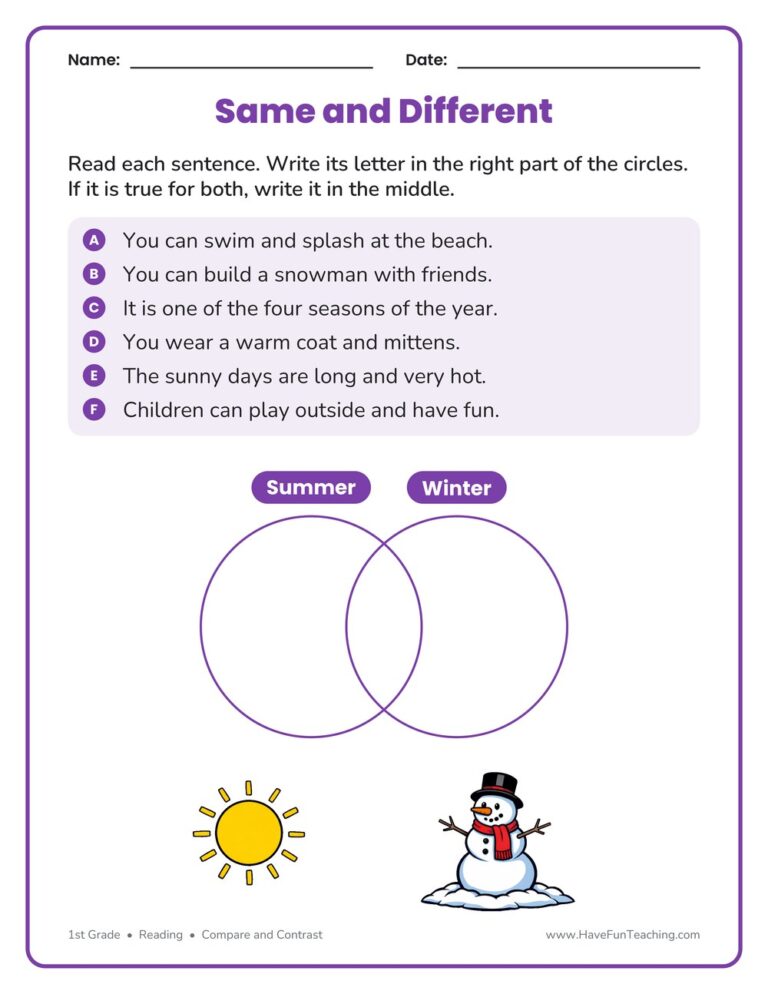
Graphic Organizer1st GradeComparing Seasons Venn Diagram Worksheet

This Comparing Seasons Venn Diagram Worksheet helps 1st graders sort six facts about summer and winter into a labeled Venn diagram. An answer key is included, making practice quick and easy to check.

Graphic Organizer
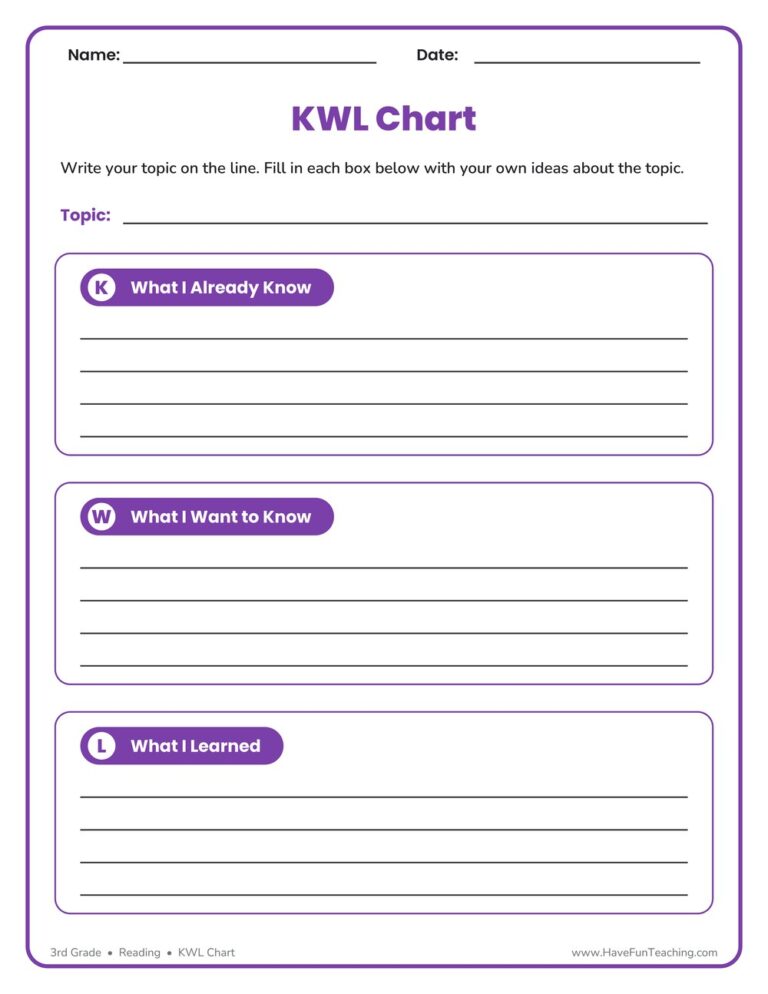
Graphic Organizer3rd GradeKWL About a Topic Graphic Organizer Worksheet

This KWL About a Topic Graphic Organizer Worksheet gives 3rd graders a roomy, full-width chart for recording what they know, what they want to know, and what they learned about any topic — a simple way to make thinking visible.

Graphic Organizer
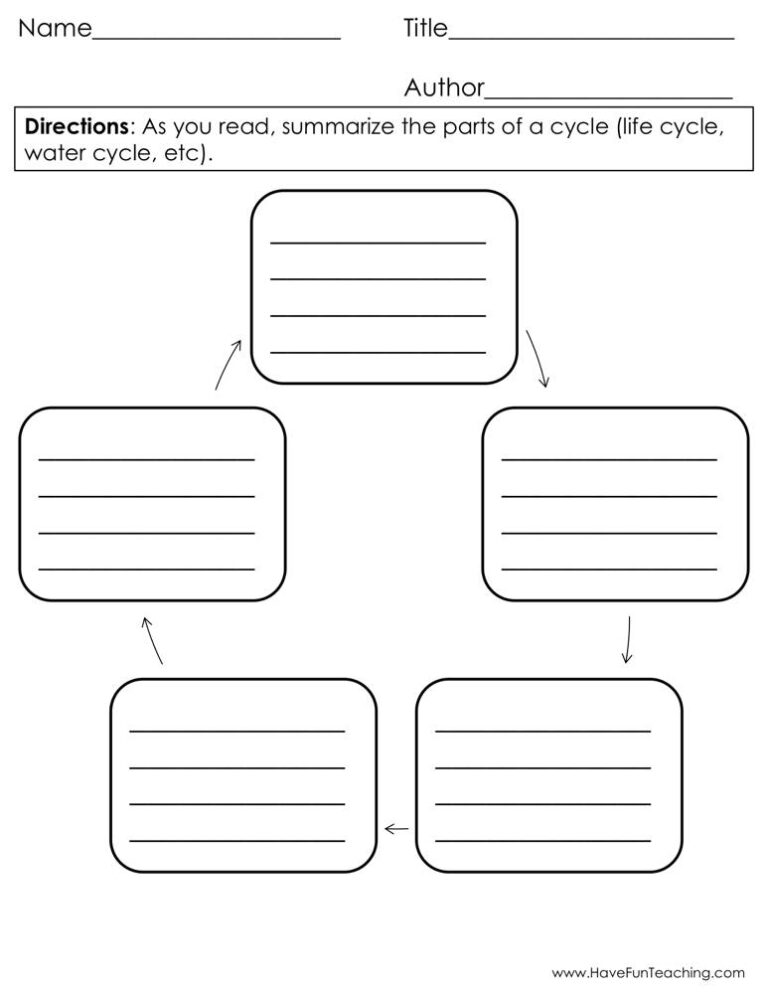
Graphic Organizer2nd GradeParts of a Cycle Graphic Organizer Worksheet

This parts of a cycle graphic organizer worksheet lets 2nd grade students draw and write each part of a life cycle or the water cycle in order, building strong summarizing skills.

Graphic Organizer
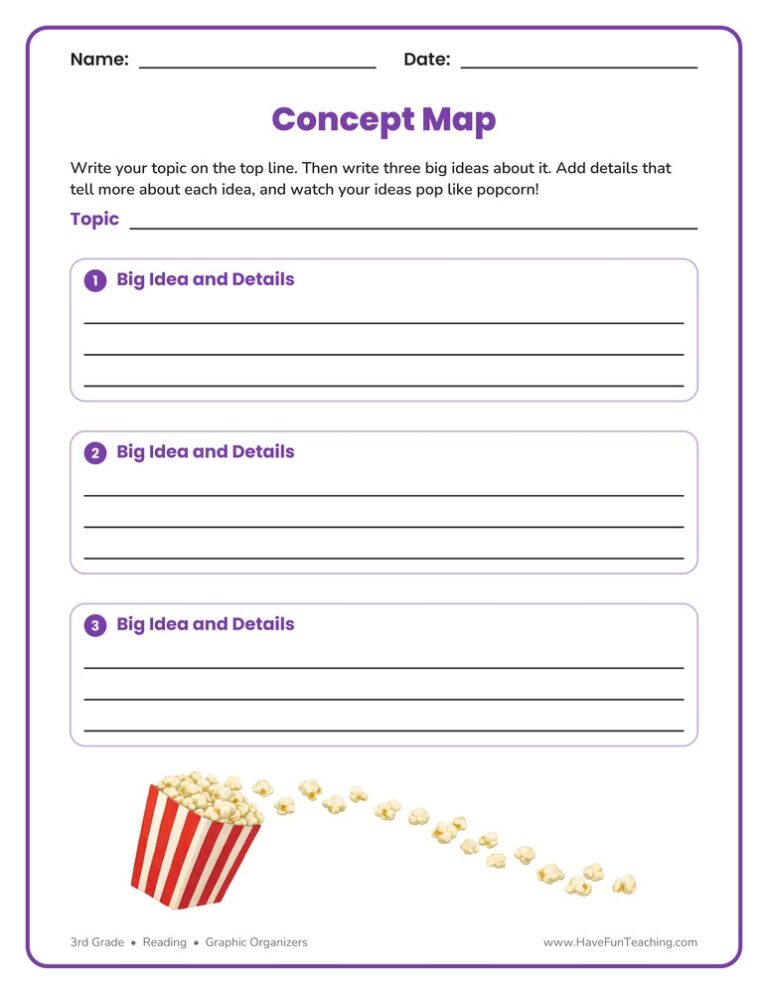
Graphic Organizer3rd GradePopcorn Concept Map Graphic Organizer Worksheet

This popcorn concept map graphic organizer worksheet helps third graders sort any topic into three big ideas with supporting details, building strong note-taking habits for reading, science, and social studies.

Graphic Organizer
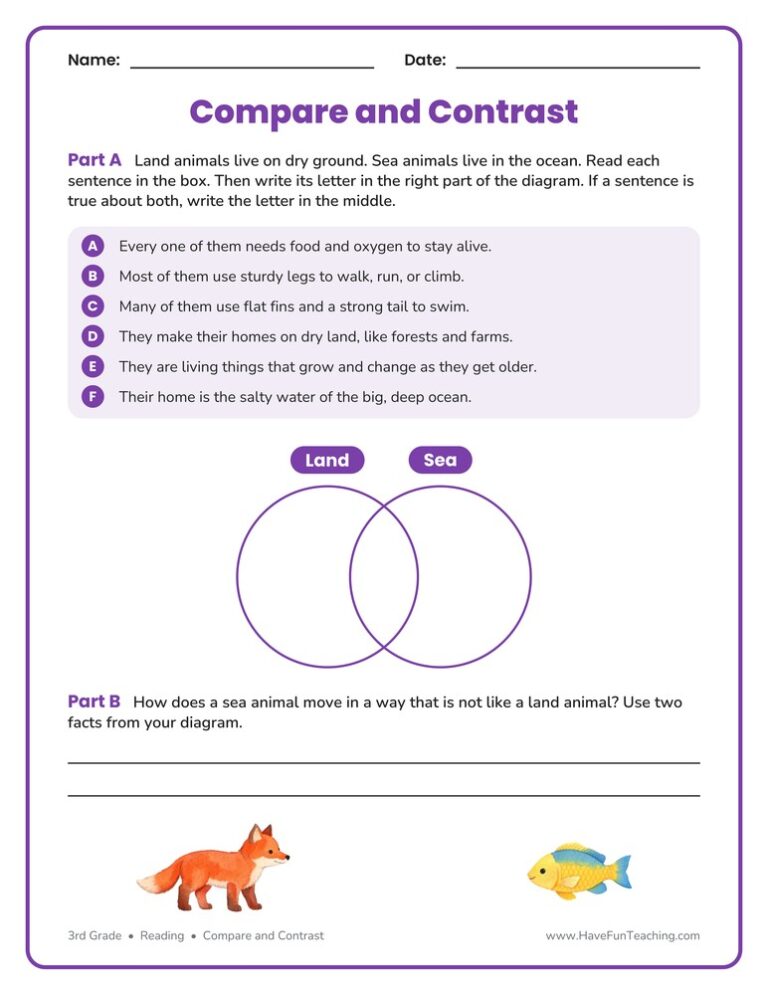
Graphic Organizer3rd GradeLand and Sea Animals Compare and Contrast Graphic Organizer

This land and sea animals compare and contrast worksheet has 3rd grade students sort facts into a Venn diagram and write about how animals move. An answer key is included for quick checking.

Graphic Organizer
Graphic Organizer3rd GradeCompare and Contrast Problem and Solution Graphic Organizer Worksheet

A compare and contrast graphic organizer that helps 3rd graders map the problem and solution in two texts, then write how the two texts compare. Works with any pair of books or articles.

Graphic Organizer
Graphic Organizer3rd GradeLiving and Non-Living Things Compare and Contrast Graphic Organizer

This living and non-living things compare and contrast graphic organizer asks 3rd graders to sort six facts about a cat and a chair into a Venn diagram. Answer key included for quick checking.

Graphic Organizer
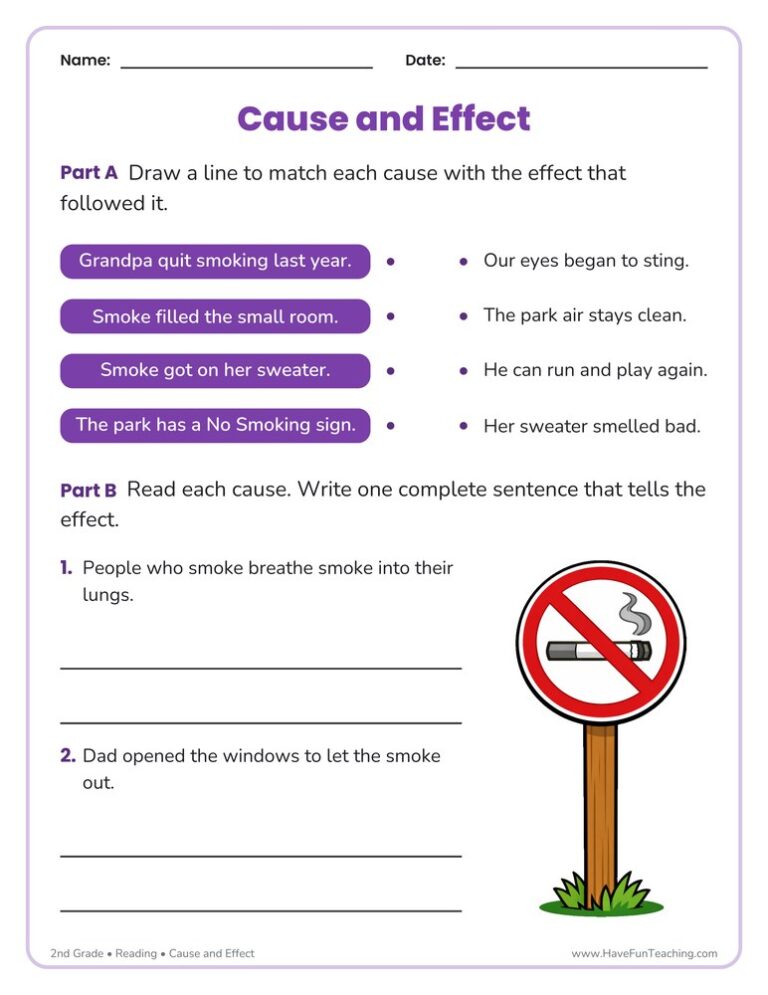
Graphic Organizer2nd GradeSmoking Cause and Effect Graphic Organizer

This Smoking Cause and Effect Graphic Organizer Worksheet helps 2nd graders link four health causes to their effects and write two more. An answer key is included, so kids practice reading and healthy choices together.

Graphic Organizer
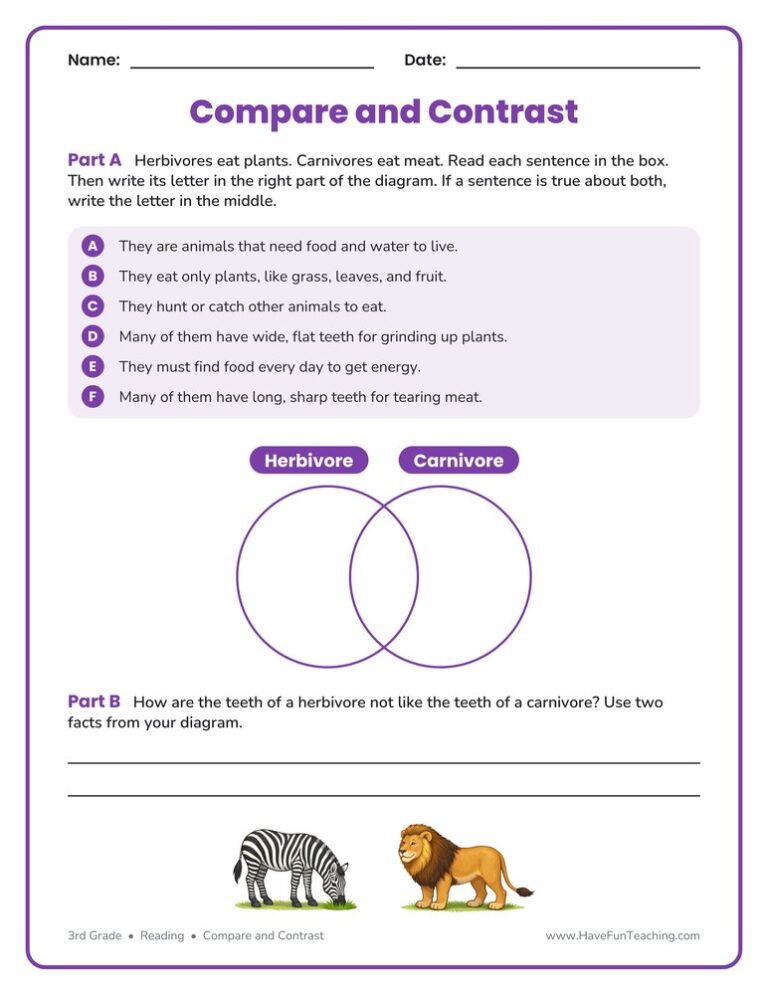
Graphic Organizer3rd GradeHerbivore and Carnivore Compare and Contrast Graphic Organizer

This herbivore and carnivore compare and contrast graphic organizer has 3rd graders sort animal facts into a Venn diagram and write about teeth. An answer key is included for quick checking.

Graphic Organizer
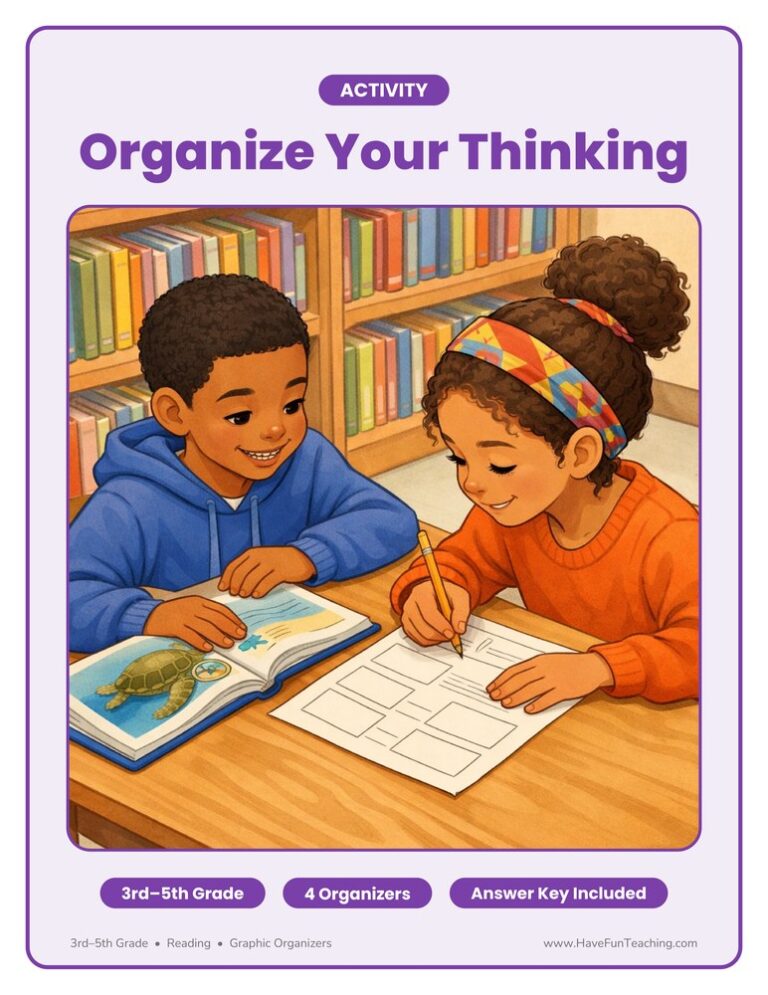
Graphic Organizer3rd GradeOrganize Your Thinking Informational Text Activity

This organize your thinking informational text activity helps students take clear notes on nonfiction. Made for 3rd to 5th Grade, with a practice page and answer key included.

Graphic Organizer
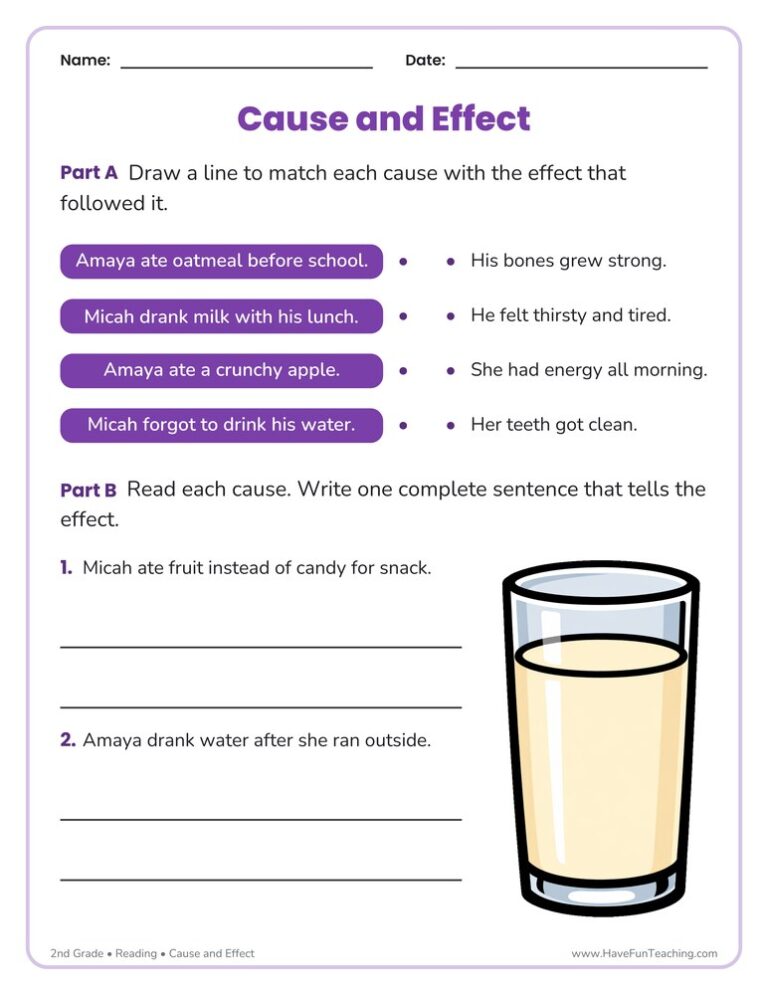
Graphic Organizer2nd GradeEating Healthy Cause and Effect Graphic Organizer

This Eating Healthy Cause and Effect Graphic Organizer Worksheet gives 2nd graders four healthy-eating causes to match with their effects, plus two sentences to write. Answer key included for no-prep reading practice.

Graphic Organizer
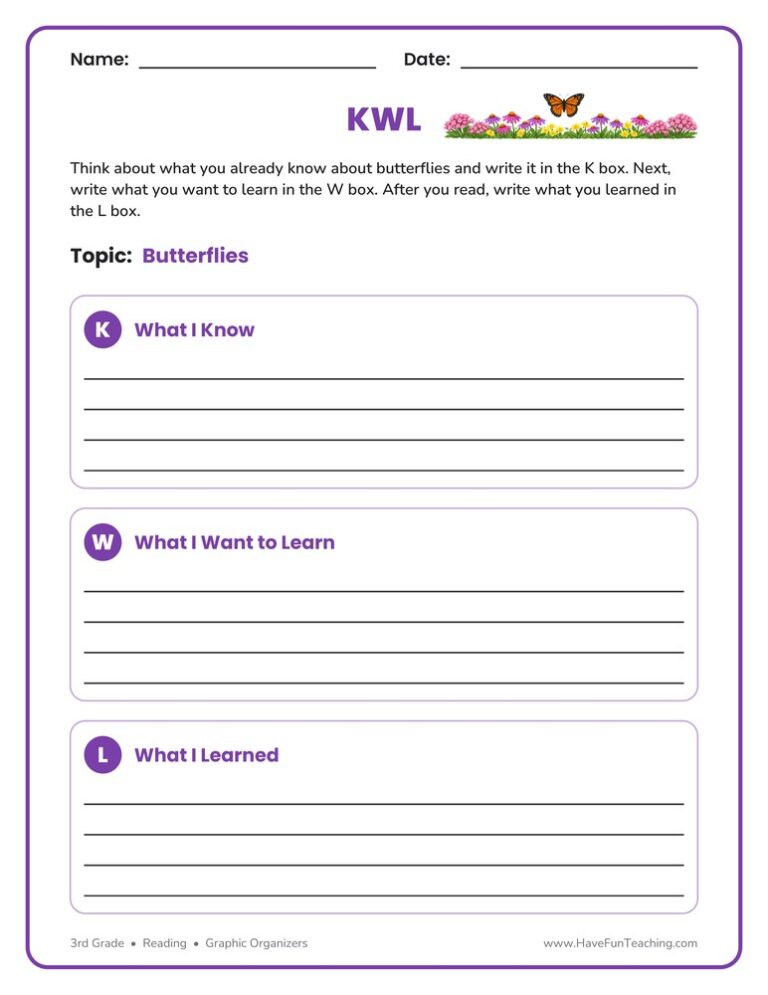
Graphic Organizer3rd GradeButterflies KWL Graphic Organizer

This butterflies KWL graphic organizer helps 3rd grade students record what they know, what they want to learn, and what they learned about butterflies, building strong reading and science habits.

Graphic Organizer
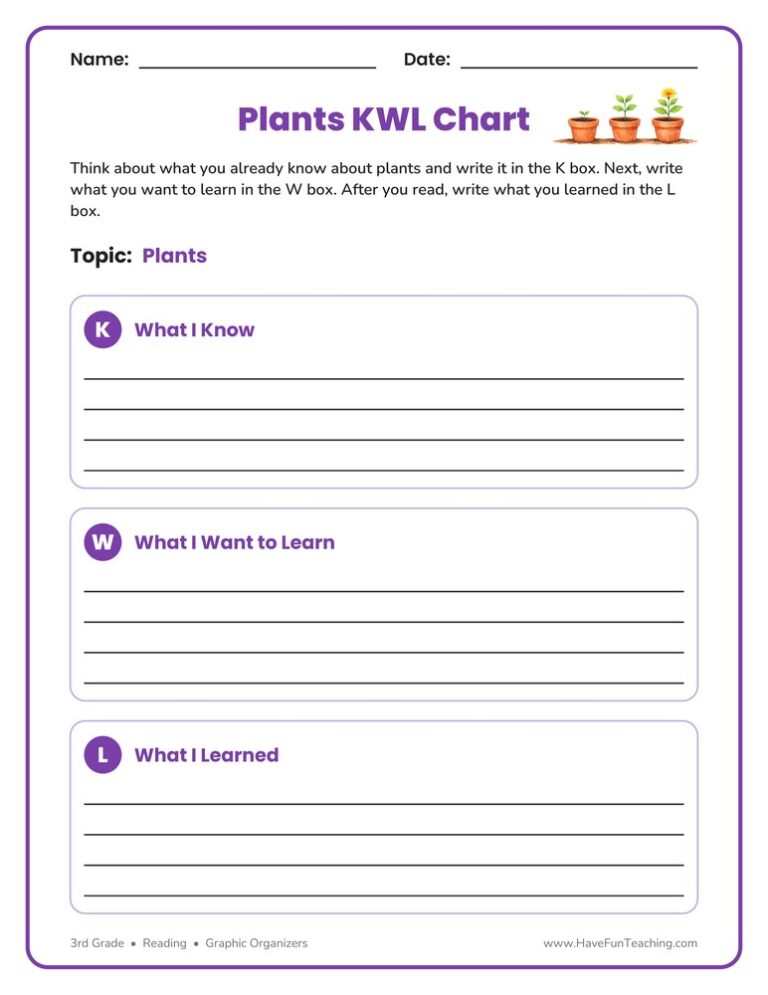
Graphic Organizer3rd GradePlants KWL Graphic Organizer

This plants KWL graphic organizer helps 3rd grade students record what they know, what they want to learn, and what they learned about plants, building strong reading and science habits.

From our teachers' playbook

Wonder, test, discover, repeat

What do kids learn in elementary science?

Elementary science is about asking questions and finding answers. Kids explore life science, like plant parts, animals, body systems and cells. They study Earth science: weather, seasons and the layers of the Earth. In physical science they investigate matter, from solids, liquids and gases to physical changes, and forces like pushes, pulls and gravity. Along the way they learn the scientific method: question → hypothesis → test → conclusion. The click is when a child says "Let's test it!" instead of just guessing.

Our favorite ways to teach science

Science sticks when kids do it, see it and talk about it.

Walk through the method

Do one experiment as a class, like "Which ball bounces highest?" and fill in each step of the scientific method together on the board. Then kids plan their own mini experiment using the scientific method worksheet.

Why it works: showing first, practicing together, then letting kids try alone is the "gradual release" model teachers have relied on for decades (Pearson and Gallagher, 1983).
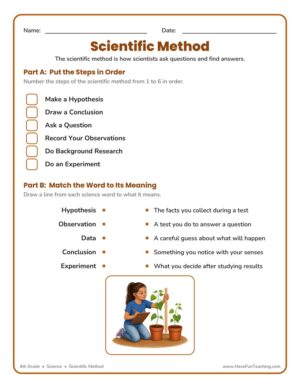
Scientific Method WorksheetTry it withScientific Method WorksheetWorksheetsOpen it →
Label to learn

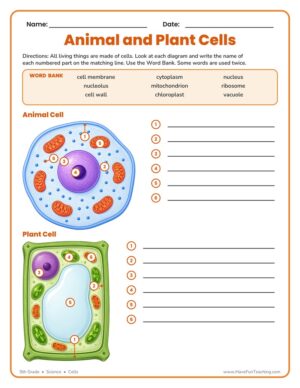
Have kids color and label animal and plant cells, then compare them side by side. Ask "What does the plant cell have that the animal cell doesn't?" Drawing and labeling turns tricky vocabulary into a picture they remember.

Why it works: pairing a picture with each word gives kids two ways to remember it, a well-tested principle of how people learn (Mayer, 2009).

Animal and Plant Cells WorksheetTry it withAnimal and Plant Cells WorksheetWorksheetsOpen it →

Review the vocab

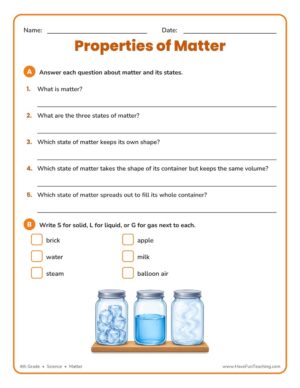
After a matter unit, use the properties of matter review page as a quick check. Kids explain each term in their own words. Retrieval, not rereading, is what locks science words in.

Why it works: pulling an answer out of memory makes it stick far better than rereading it, one of the strongest findings in learning research (Dunlosky and colleagues, 2013).

Properties of Matter Review WorksheetTry it withProperties of Matter Review WorksheetWorksheetsOpen it →

Questions parents and teachers ask about science

What science topics are taught in elementary school?

Life science (plants, animals, the human body), Earth science (weather, seasons, rocks and the Earth's layers) and physical science (matter, forces and energy). Kids also learn the scientific method.

How can I teach science at home?

Cook, garden, watch the weather and ask "What do you think will happen?" Simple kitchen experiments like melting ice or mixing baking soda and vinegar are great starters.

What is the scientific method for kids?

It is a step-by-step way to answer a question: ask a question, make a guess called a hypothesis, test it, observe what happens, and draw a conclusion.

How do I make science fun?

Let kids get hands-on. Experiments, nature walks, drawing what they observe and songs about science ideas all make it memorable.

Keep exploring