Skip to content
Start My 3 Free Days $0 today · cancel anytime

Writing Activities

97 writing activities, covering essays, narrative writing, prompts, plus 7 more topics. How teachers use these

Writing Activities

97 writing activities, covering essays, narrative writing, prompts, plus 7 more topics. How teachers use these

Activity
ActivityKindergartenWord Work Activity

This word work activity lets kindergarten and 1st grade students build CVC words with color-coded consonant and vowel tiles, then write each word. An answer key is included for quick checking.

Activity
ActivityKindergartenDear Valentine Activity

This dear valentine activity has K-2nd grade students pick heart word cards for family and school helpers and spell each word on a Valentine card. Answer key included.

Activity
Activity1st GradeSnowman Contractions Activity

Play this snowman contractions activity as a memory game: 1st to 3rd grade students match two-word Mitten Cards to Snowman contraction cards and record each pair. Answer key included.

Activity
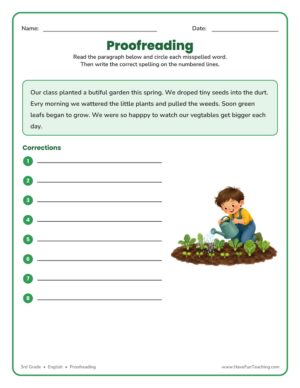
Activity2nd GradeProofreading Capitalization and Punctuation Activity

This proofreading capitalization and punctuation activity gives 2nd to 5th grade students 16 self-checking detective cards for fixing sentences. A practice page and answer key are included.

Activity
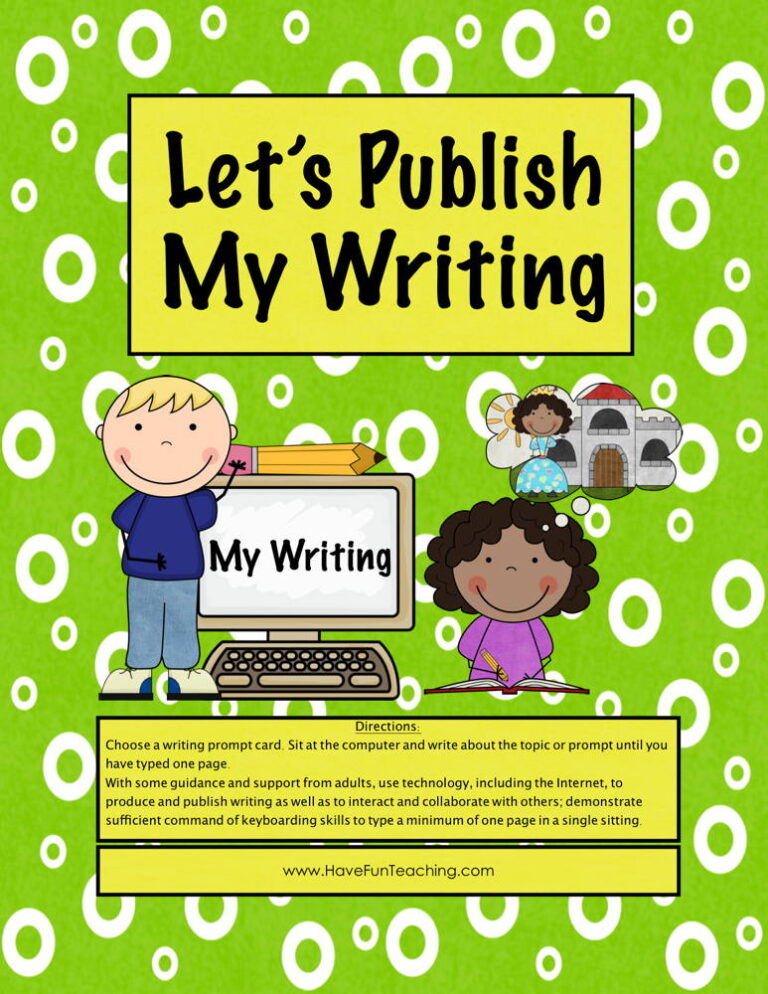
Activity2nd GradeLet's Publish My Writing Activity

Let's Publish My Writing Activity helps 2nd to 4th Grade writers pick a prompt card, plan, and type one full page on the computer, then check their work with a publishing checklist.

Activity
ActivityPreschoolStrong Writing Activity

Using Strong Writing Activity, students respond to questions and suggestions from peers and add details to strengthen writing as needed.

Activity
Activity3rd GradeWriting Tweets Activity

This writing tweets activity has kids read a bird feeder how-to text and answer fun prompt cards. Made for 3rd to 5th grade, with an answer key included for the practice page.

Activity
Activity1st GradeApple Themed Writing Activity

This apple themed writing activity has 1st and 2nd grade children order apple life cycle cards, write the steps, compare apples and oranges, and write a poem and story. Answer key included.

Activity
ActivityKindergartenApple Shape Book Activity

This apple shape book activity lets K-2nd grade children color, cut out and write their own apple story on cover, picture and writing pages with kid-sized lines.

Activity
Activity1st GradeComplete Sentences with Subject and Predicate Activity

This complete sentences with subject and predicate activity has 1st to 3rd grade students match picture subject cards to predicate cards, then practice on a worksheet. Answer key included.

Activity
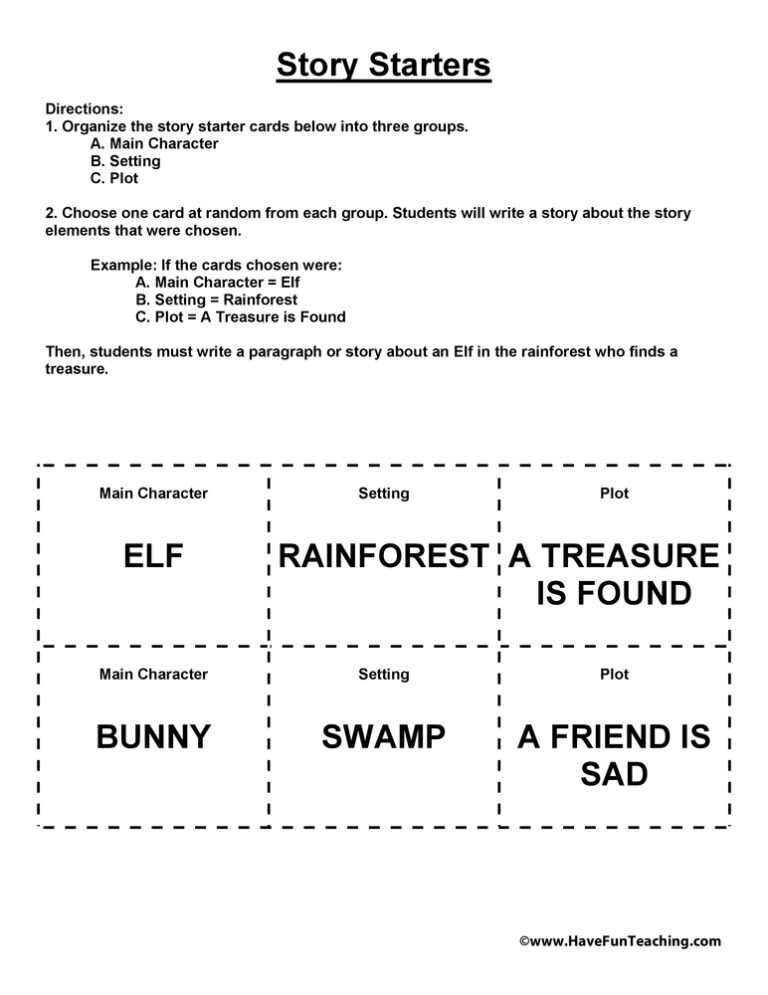
Activity3rd GradeStory Starters

This story starters worksheet has 3rd graders sort twelve starters into character, setting, and plot, then write a short story of their own. An answer key is included, and it makes planning a story fun.

Activity
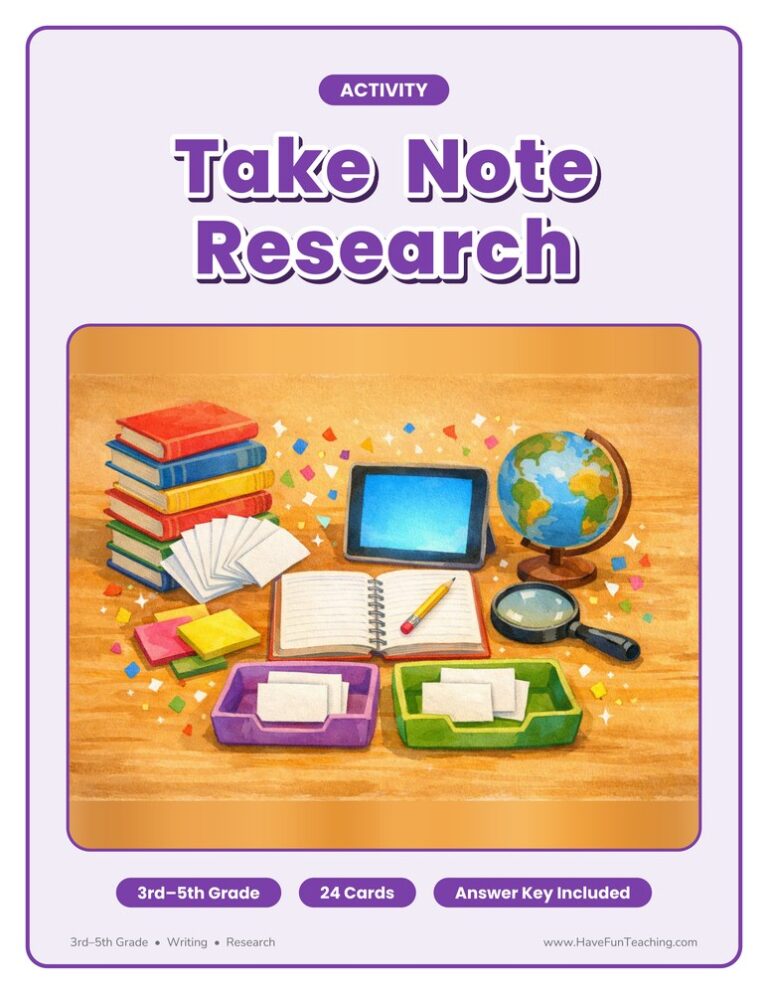
Activity3rd GradeTake Note Writing Activity

This take note writing activity has 3rd to 5th grade students sort print and digital sources, research a state with question cards, and take notes in their own words. Answer key included.

Activity
ActivityKindergartenCar Shape Book Activity

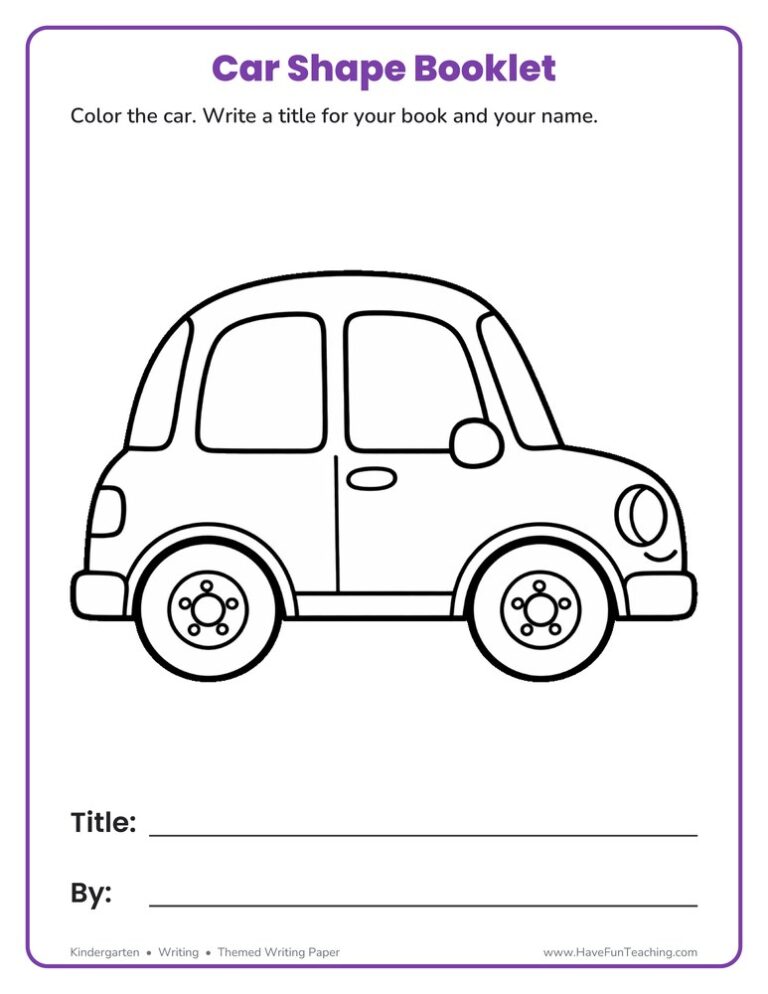
This car shape book activity gives kindergarten students a big car cover to color and sign, plus a page of tall lines for writing about a car ride.

Activity
ActivityPreschoolCVC Word Mats Activity

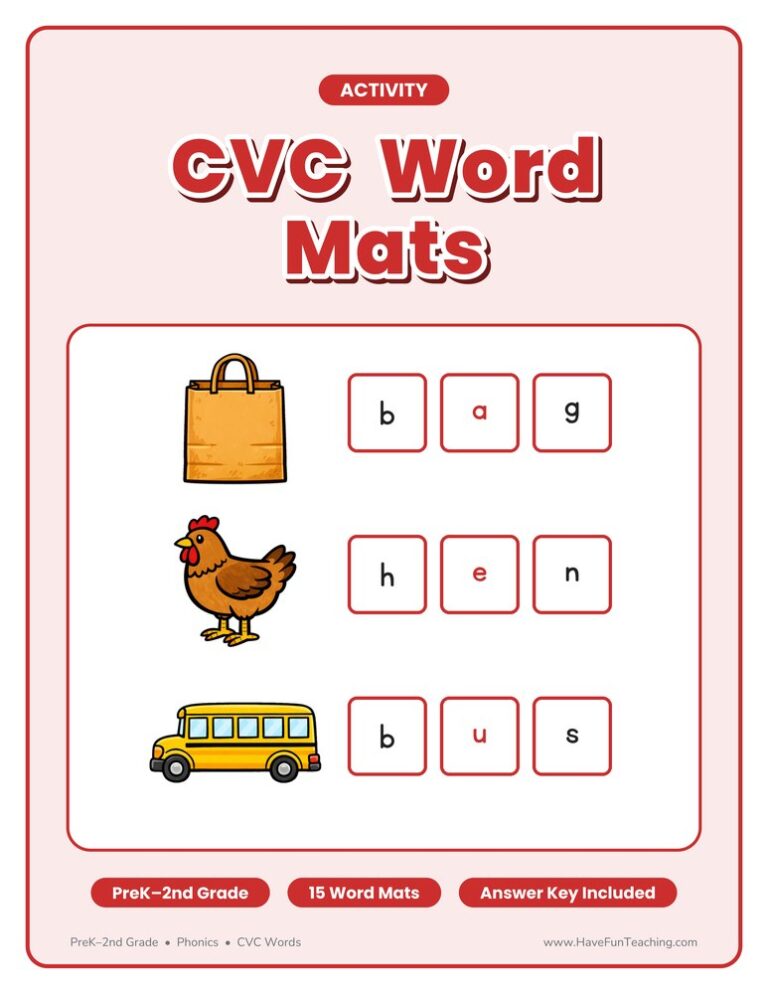
This CVC word mats activity helps preschool to 2nd grade students build and spell short vowel words with letter tiles, with a practice page and an answer key included.

Activity
ActivityKindergartenBarn Shape Book Activity

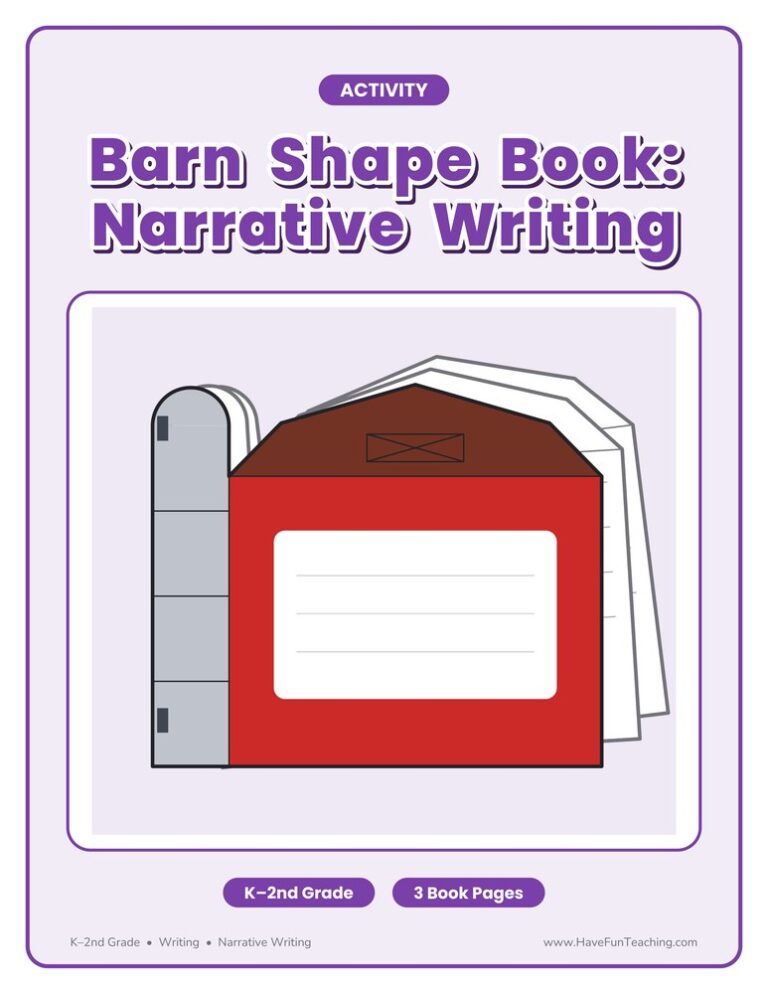
This barn shape book activity helps K-2nd Grade children color, draw and write their own farm story, then cut out and staple the barn pages into a book to share.

Activity
ActivityKindergartenInformative Text Paragraph Writing Activity

Plan and write a first paragraph with this informative text paragraph writing activity for kindergarten and 1st grade: topic cards, a Fact Planner, a writing page and practice, answer key included.

Activity
ActivityKindergarten50 States Research Activity

Using 50 States Research Activity, studentsparticipate in shared research and writing projects to learn about the 50 states.

Activity
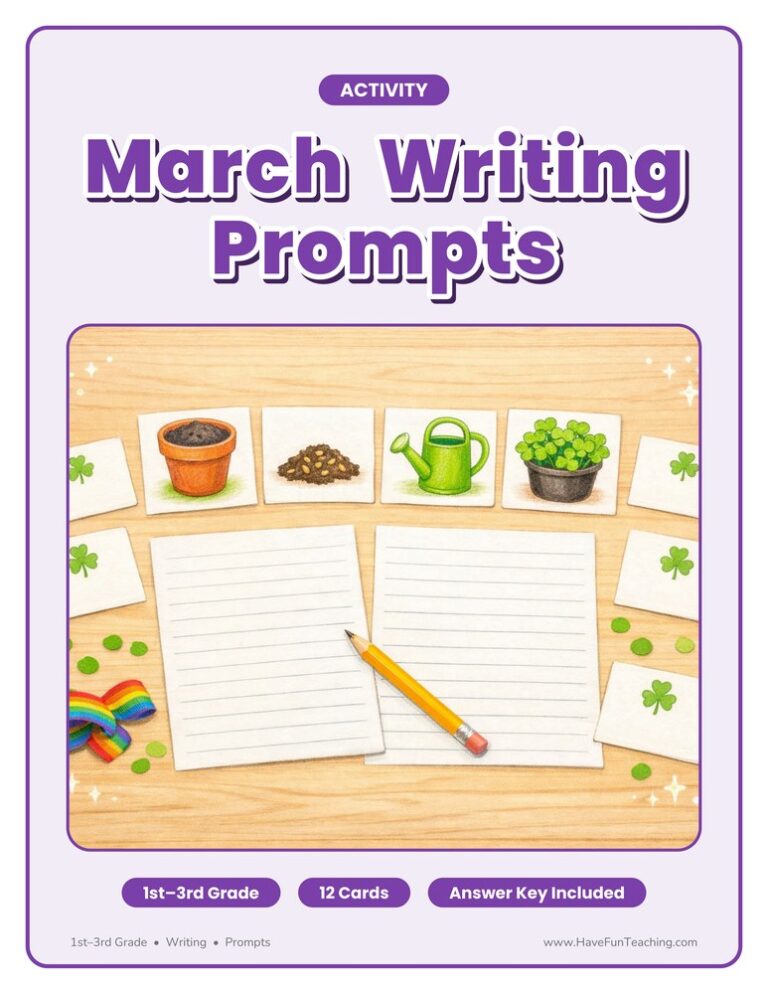
Activity1st GradeSt. Patrick's Day Writing Activity

This St. Patrick's Day writing activity gives 1st to 3rd grade children prompt cards, shamrock step cards, a story map and themed writing paper so every child can plan and write. Answer key included.

Activity
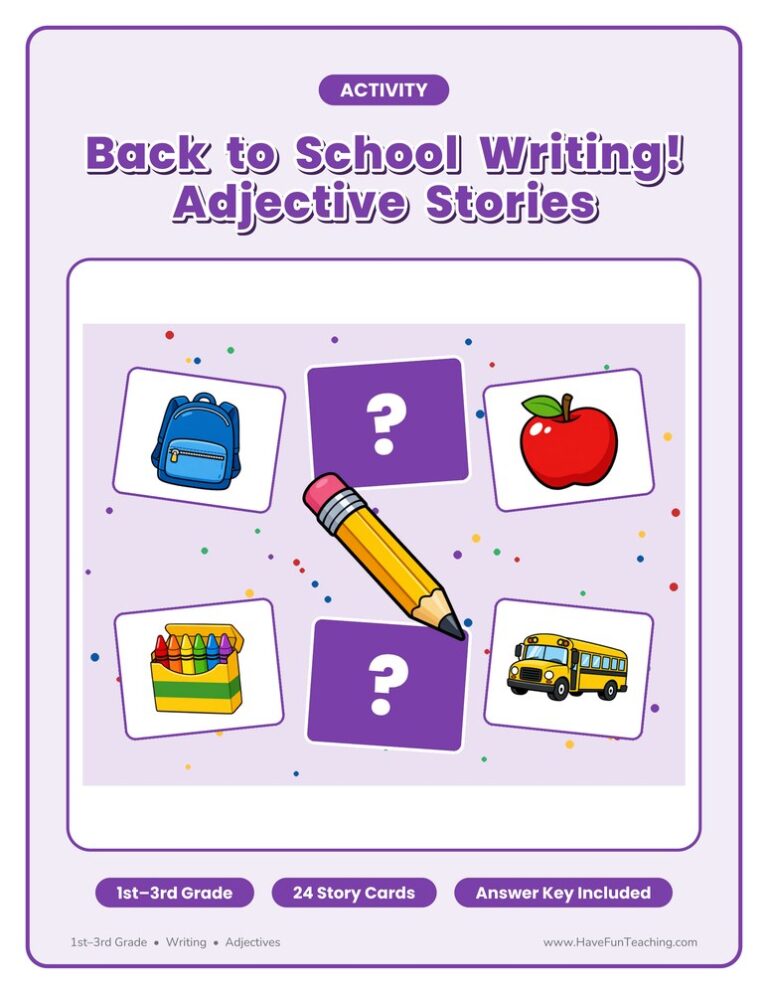
Activity1st GradeBack to School Adjective Writing Activity

This back to school adjective writing activity helps 1st to 3rd grade students plan a first-day story and add describing words. An answer key is included for the practice page.

Activity
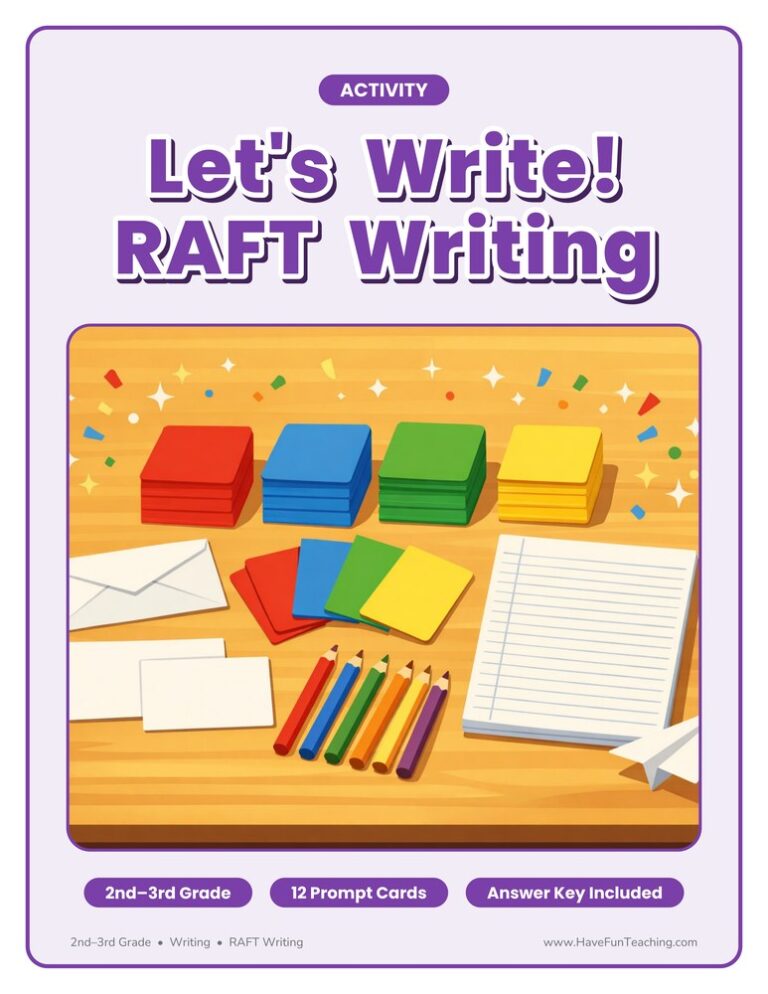
Activity2nd GradeLet's Write RAFT Writing Activity

This let's write RAFT writing activity gives 2nd and 3rd grade writers 12 prompt cards, a planner and a publish page to write from a new point of view. Answer key included.

From our teachers' playbook

From first letters to whole stories

What do kids learn in writing?

Writing grows in layers. Little ones start by forming letters and drawing pictures they can label. In 1st and 2nd grade, kids write complete sentences with a capital and an end mark, then string them into short stories with a beginning, middle and end. By 3rd through 5th grade they write real paragraphs: a topic sentence, supporting details and a conclusion, plus opinion, informative and narrative pieces. Along the way they learn that good writers plan, draft, revise and edit. The magic moment is when a child reads their own story aloud and the class laughs in all the right places.

Our favorite ways to teach writing

Kids become writers by watching us write and then writing a little every day. Here's how we do it.

Write in front of them

Write your own short piece on the board and say every thought out loud: "I need a topic sentence. What's my big idea?" Cross things out and fix them. Kids learn that messy first drafts are normal and how real writers decide what to change.

Why it works: handing over the work step by step, from teacher to student, is one of the most widely used teaching frameworks (Pearson and Gallagher, 1983).
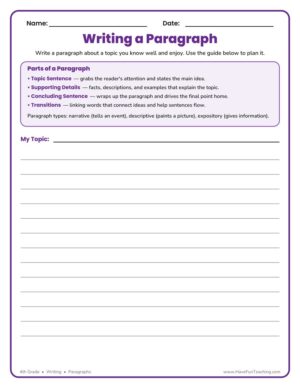
Writing Paragraphs WorksheetTry it withWriting Paragraphs WorksheetWorksheetsOpen it →

Plan before you write

Before drafting, kids fill a simple organizer: main idea in the middle, three details around it. Then each box becomes a sentence. Planning first is the cure for "I don't know what to write!"

Why it works: going from real objects to pictures to symbols is a core recommendation of the U.S. Department of Education's elementary math guide.

Writing Graphic Organizer WorksheetTry it withWriting Graphic Organizer WorksheetWorksheetsOpen it →

Start with a picture

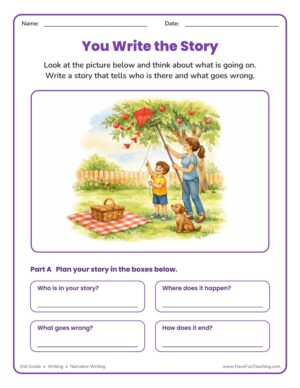
Show an interesting picture and ask, "What's happening? What happens next?" Kids talk it through with a partner, then write. Pictures give reluctant writers something to say.

Why it works: pairing a picture with each word gives kids two ways to remember it, a well-tested principle of how people learn (Mayer, 2009).

Writing Complete Sentences about an Image WorksheetTry it withWriting Complete Sentences about an Image WorksheetWorksheetsOpen it →

What's on this page

Teacher favorites right now: Word Work Activity, Dear Valentine Activity and Snowman Contractions Activity.

Writing: your questions

How do I teach a child to write a paragraph?

Teach the parts one at a time: a topic sentence that tells the big idea, two or three detail sentences, and a closing sentence. A simple graphic organizer helps kids plan each part before they write.

What should kids check when editing their writing?

Many teachers use CUPS: Capitals, Usage, Punctuation and Spelling. Have kids read their writing aloud first, then check one thing at a time instead of everything at once.

How can I help a reluctant writer?

Lower the stakes. Let them talk their idea out loud first, use a picture prompt, or give a sentence starter. Short, frequent writing and a real audience, like reading to a sibling, build confidence fast.

What kinds of writing do elementary students learn?

The three big types are narrative (telling a story), opinion (sharing a view with reasons) and informative (teaching about a topic). Kids also write letters, poems, summaries and simple research notes.

How long should kids write each day?

Even ten to fifteen minutes a day makes a big difference. Daily practice matters more than long sessions once a week.