Skip to content
Start My 3 Free Days $0 today · cancel anytime

Sentences Resources (Writing)

40 sentences resources: 34 worksheets and 7 activities. How teachers use these

Sentences Resources (Writing)

40 sentences resources: 34 worksheets and 7 activities. How teachers use these

Worksheet
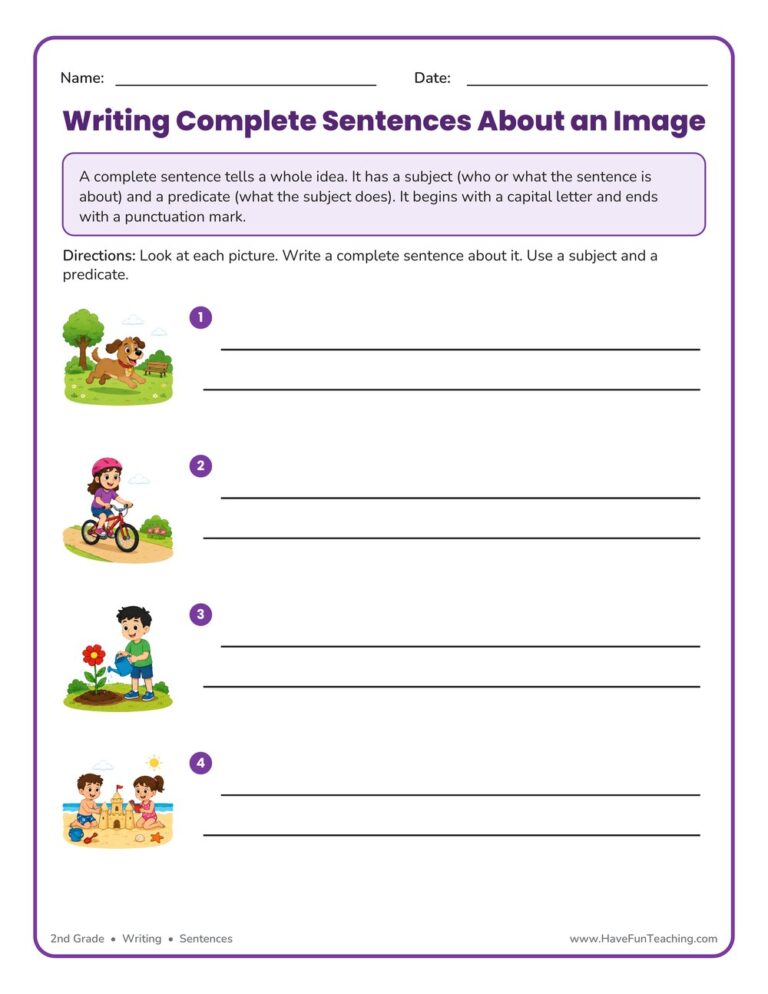
Worksheet2nd GradeWriting Complete Sentences about an Image Worksheet

This Writing Complete Sentences About an Image Worksheet gives 2nd graders four picture prompts to practice building sentences with a subject and predicate. Includes sample answers — great for no-prep grammar and writing practice.

Worksheet
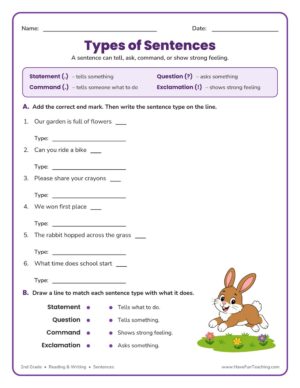
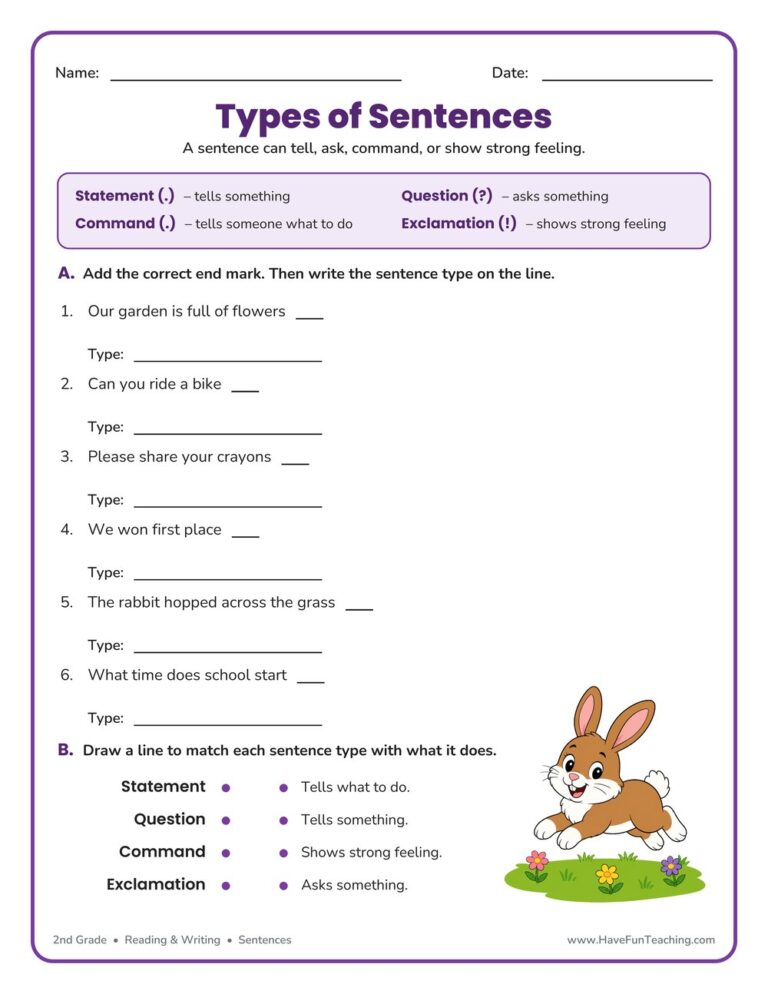
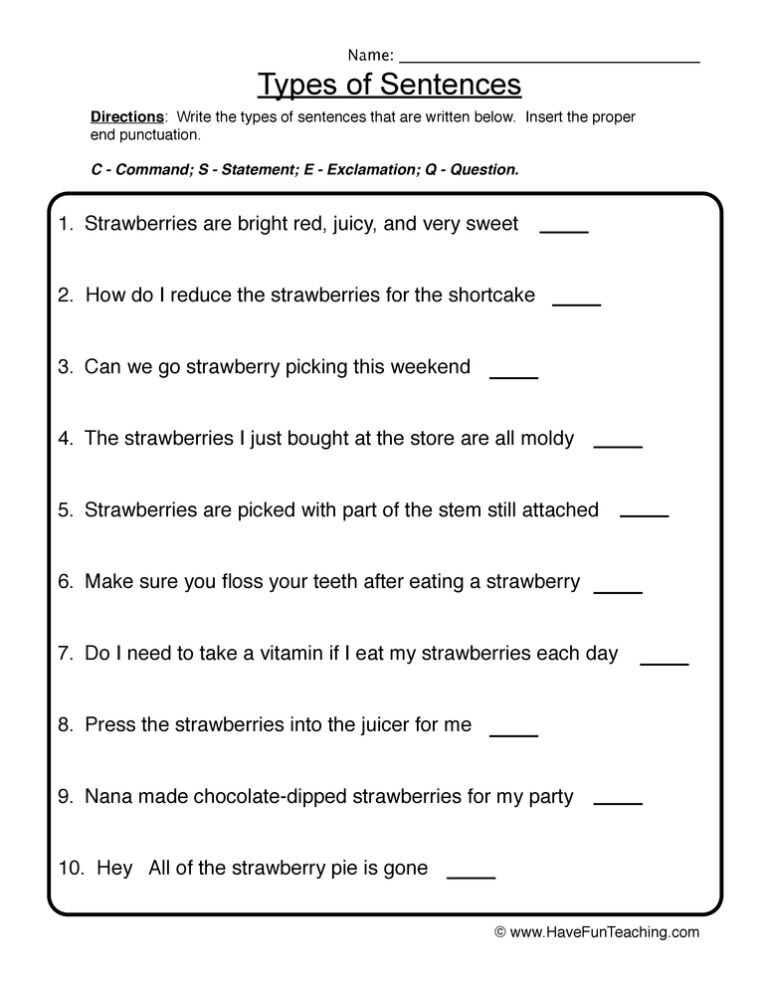
Worksheet2nd GradeTypes of Sentences Worksheet

A types of sentences worksheet that helps 2nd graders add end punctuation and identify statements, questions, commands, and exclamations. Includes a complete answer key—perfect for quick, no-prep grammar practice at home or school.

Worksheet
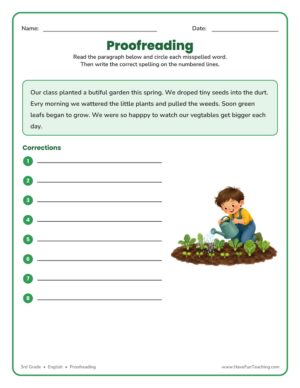
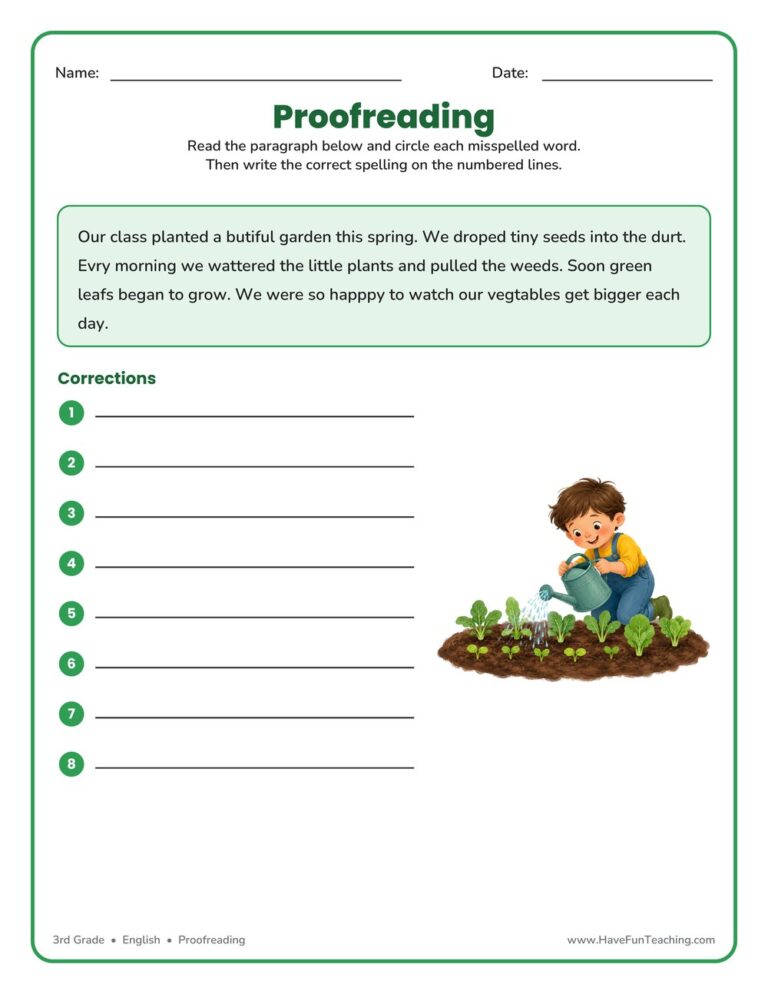
Worksheet3rd GradeProofreading Worksheet

This 3rd grade proofreading worksheet has students hunt for and fix eight misspelled words in a fun garden paragraph. Answer key included — perfect for quick, no-prep spelling and editing practice at home or school.

Worksheet
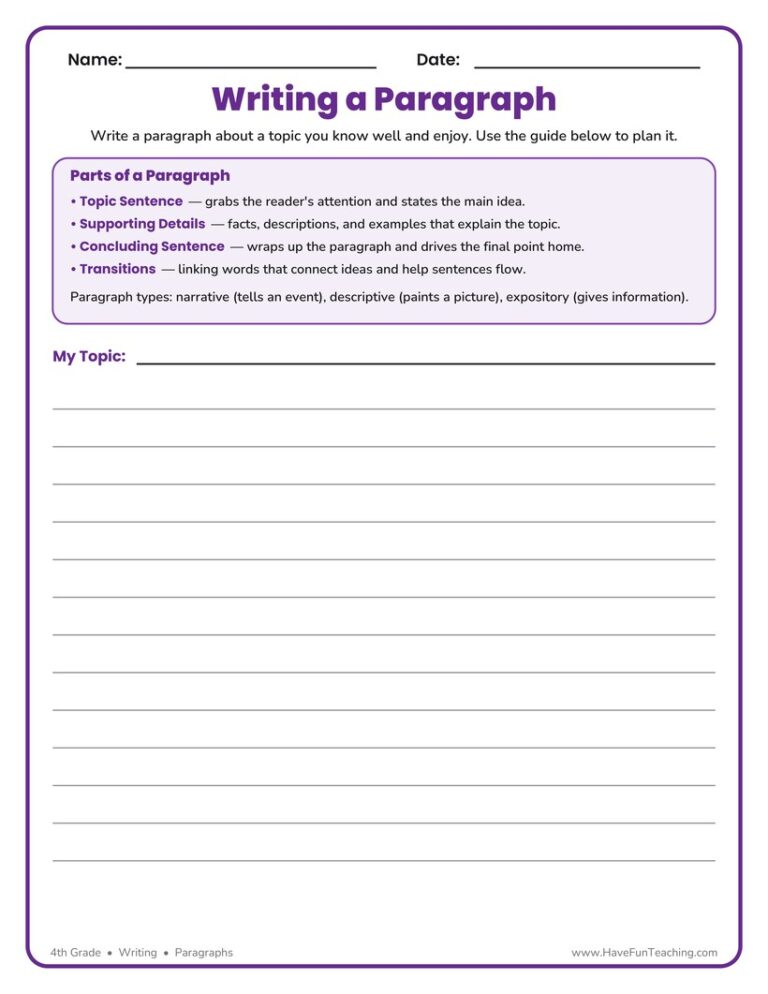
Worksheet4th GradeWriting Paragraphs Worksheet

A guided writing paragraphs worksheet for 4th grade, with a parts-of-a-paragraph reference box and a full page of lined space. Students plan a topic sentence, supporting details, and a conclusion, then write with confidence.

Worksheet
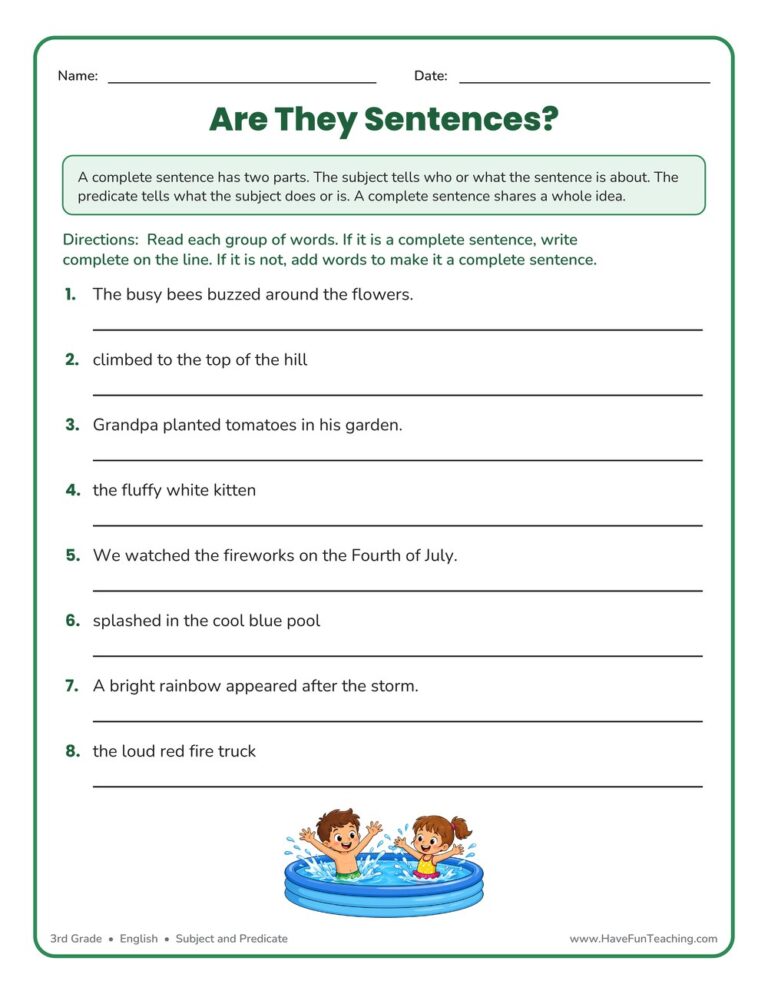
Worksheet3rd GradeCreating Complete Sentences Worksheet

This Creating Complete Sentences Worksheet asks 3rd graders to spot complete sentences and fix fragments by adding a missing subject or predicate. Answer key included — perfect for quick, no-prep grammar practice at home or school.

Worksheet
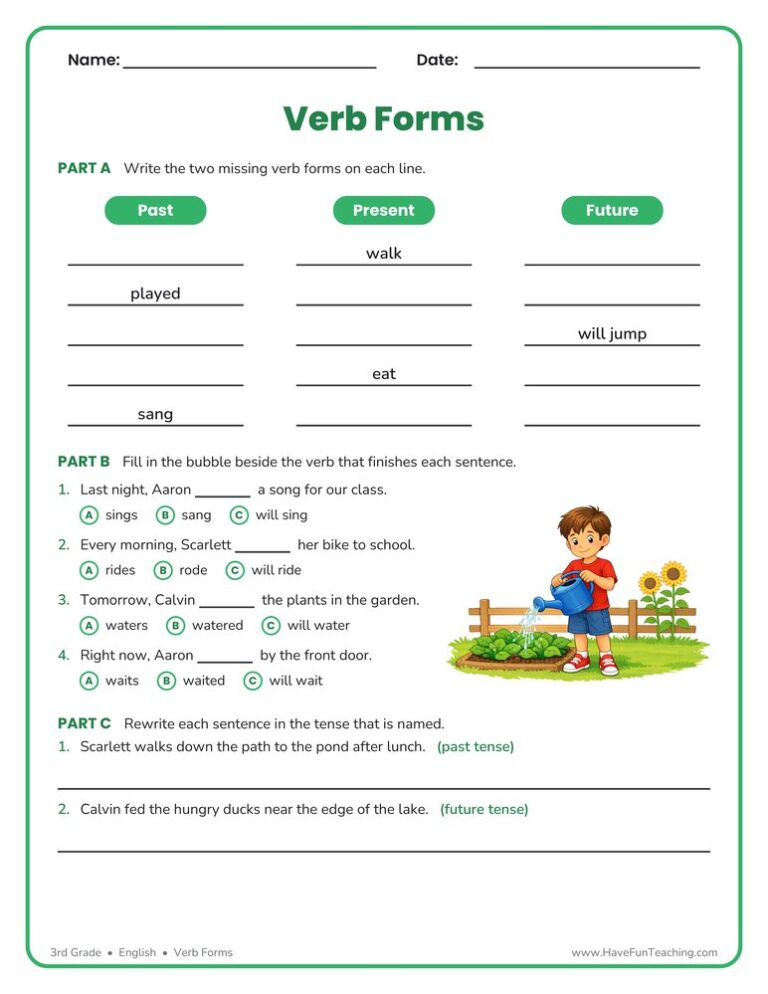
Worksheet3rd GradeVerb Forms Worksheet

A three-part verb forms worksheet that has 3rd graders complete a past, present, and future chart, pick the right verb for each sentence, and rewrite sentences in a new tense. Answer key included for fast checking.

Worksheet
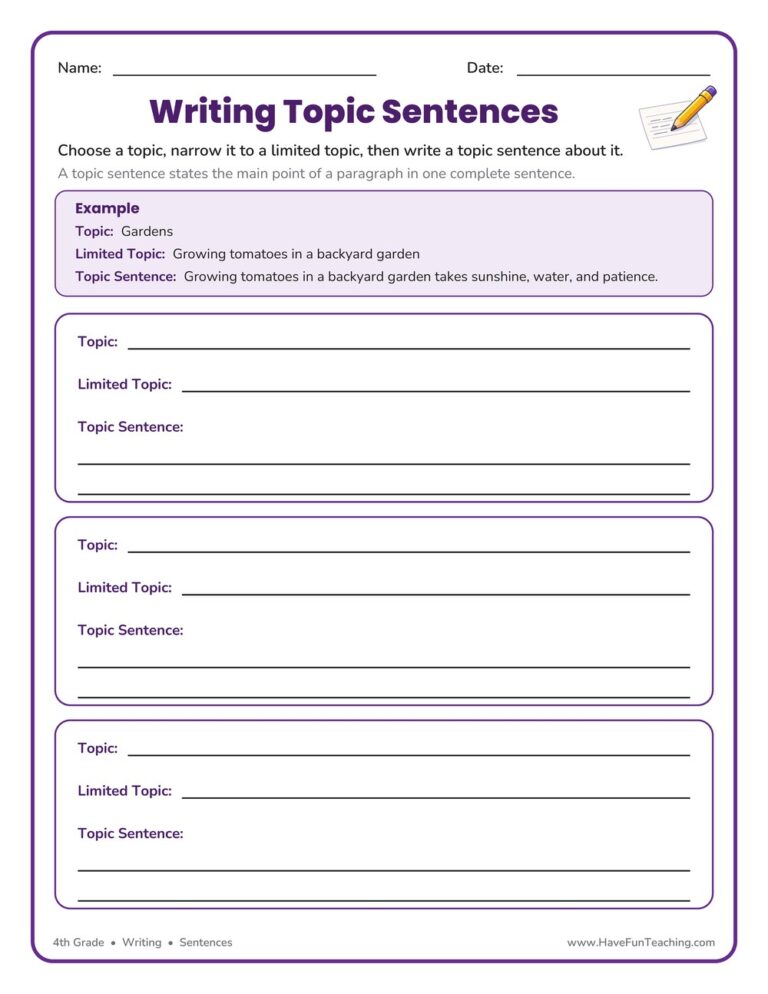
Worksheet4th GradeWriting Topic Sentences Worksheet

This Writing Topic Sentences Worksheet gives 4th grade students a worked example and three guided frames to move from a broad topic to a focused topic sentence. Perfect for no-prep paragraph-writing practice at home or school.

Worksheet
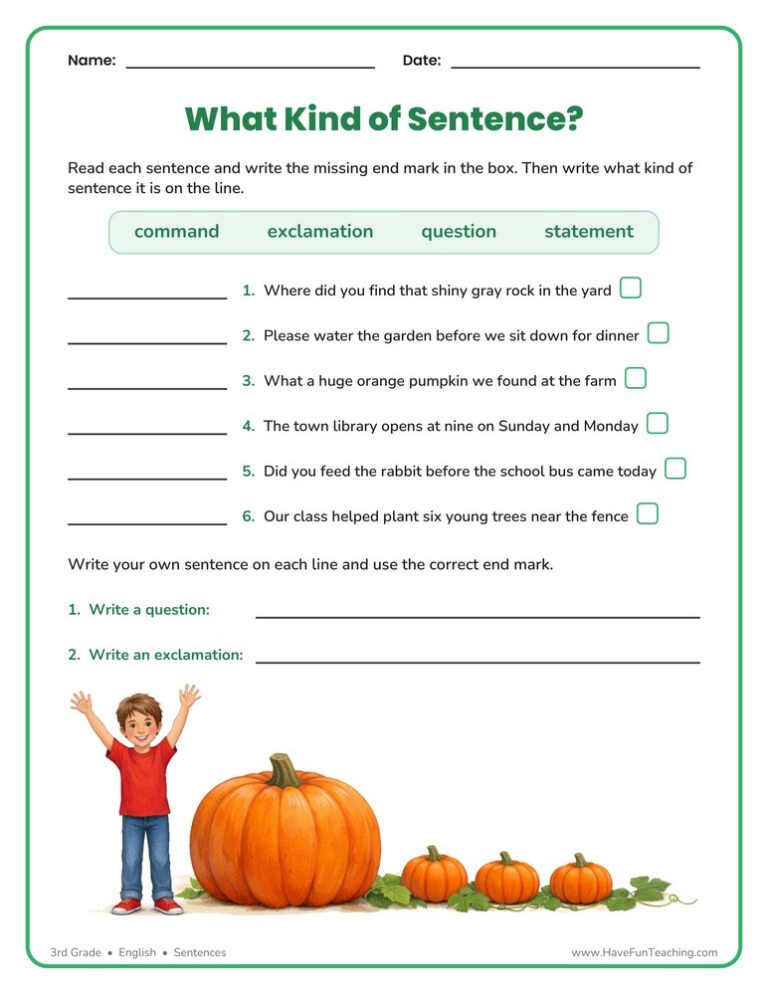
Worksheet3rd GradeWhat Kind of Sentence? Worksheet

With this What Kind of Sentence? Worksheet, 3rd Grade students add the missing end mark and label each sentence as a statement, question, command, or exclamation. An answer key is included, so practice is quick to check.

Worksheet
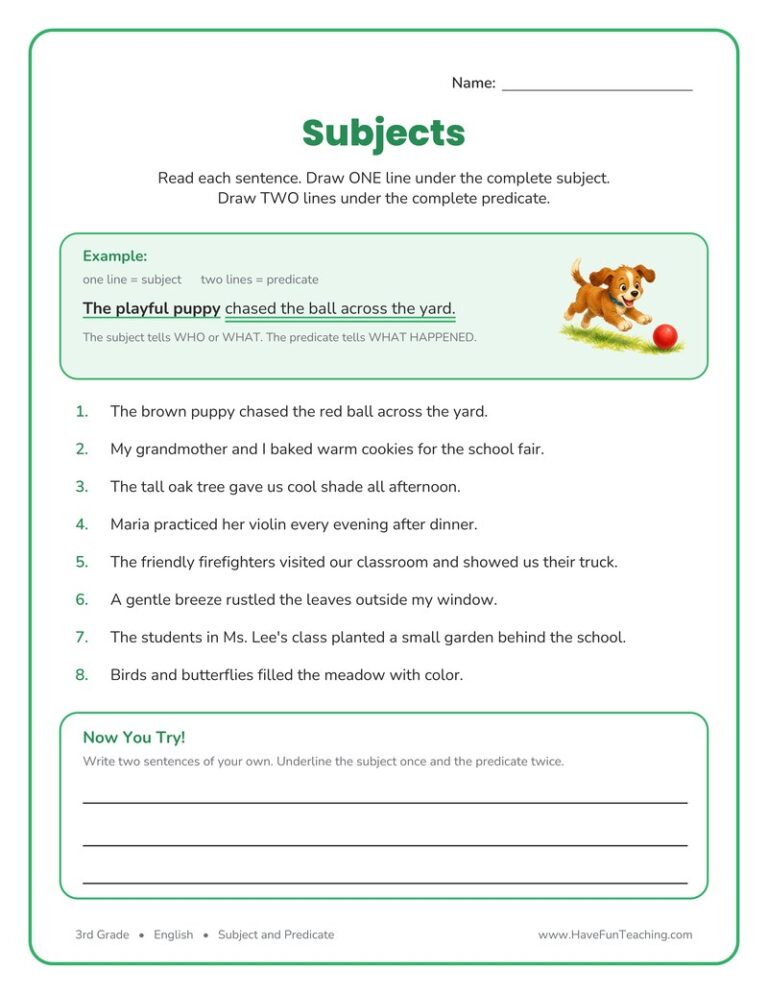
Worksheet3rd GradeSubject Predicate Worksheet

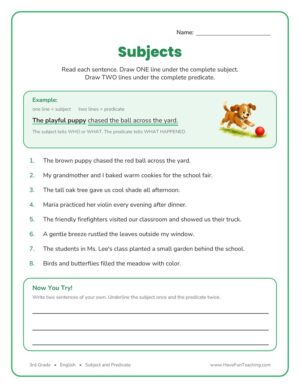
A 3rd grade subject predicate worksheet where kids underline the subject and predicate in eight sentences, then write their own. Includes a full answer key for quick, confident grammar practice.

Worksheet
Worksheet3rd GradeIdentifying Types of Sentences Worksheet

Students use this identifying types of sentences worksheet to add end marks, label each sentence, and rewrite one type as another. Built for 3rd Grade, with an answer key included.

Worksheet
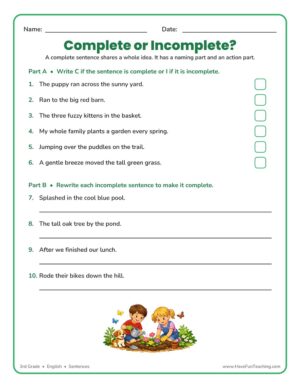
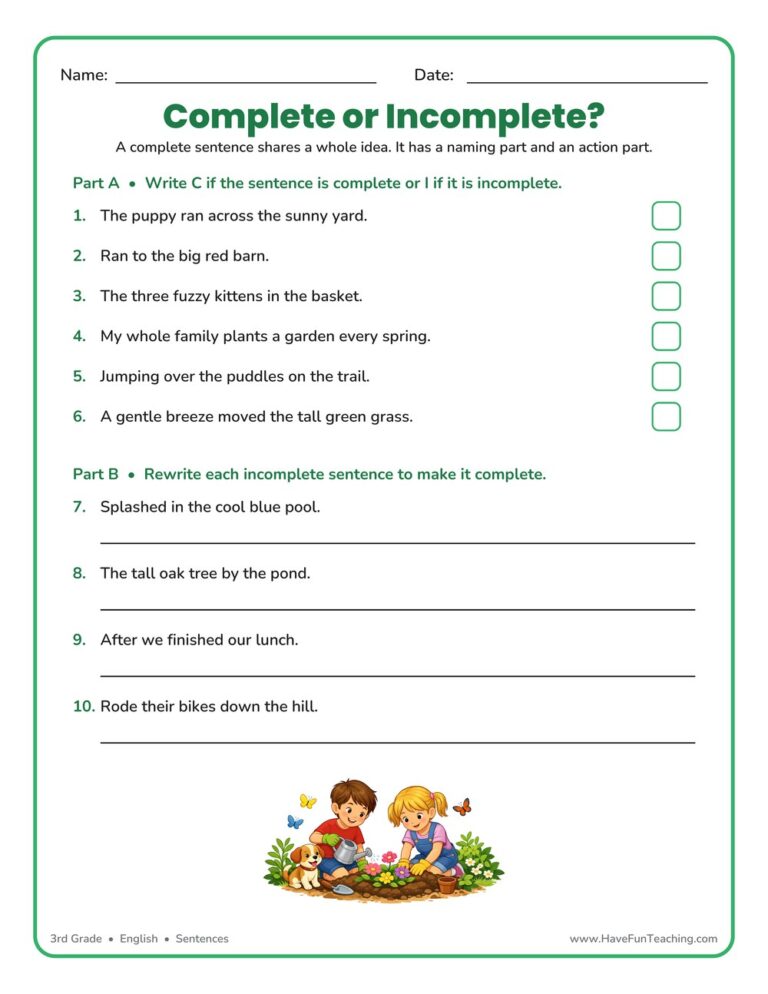
Worksheet3rd GradeRewriting Incomplete Sentences Worksheet

This rewriting incomplete sentences worksheet helps 3rd graders sort complete and incomplete sentences, then rewrite the fragments into full thoughts. Includes an answer key for fast, no-prep grammar practice at home or school.

Worksheet
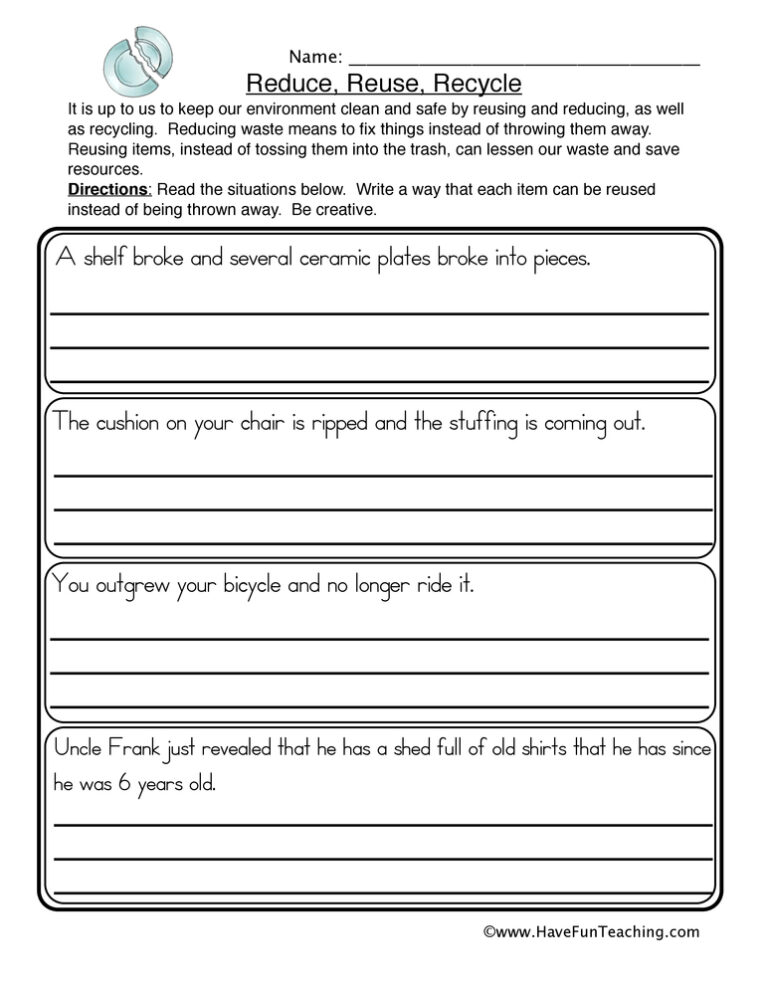
Worksheet3rd GradeReduce, Reuse, Recycle Scenarios Worksheet

Read six real-life situations and decide whether each one shows reducing, reusing, or recycling on this reduce, reuse, recycle scenarios worksheet for 3rd grade. Answer key included, so Earth Day science practice takes no prep.

Worksheet
Worksheet5th GradeWriting Supporting Sentences Worksheet

This writing supporting sentences worksheet asks 5th grade students to add two supporting details to each topic sentence and spot the sentence that does not belong. Answer key included, so paragraphs get stronger fast.

Worksheet
Worksheet2nd GradePronouns Dialogue Worksheet

This Pronouns Dialogue Worksheet helps 2nd Grade students replace bold nouns with the right pronoun and rewrite sentences using one. An answer key is included, so practice is quick to check and easy to reuse.

Worksheet
Worksheet2nd GradeSpeaking in Complete Sentences Worksheet

A Speaking in Complete Sentences Worksheet that helps 2nd graders tell a whole sentence from a fragment, find the naming part, and say and write one about a picture. Answer key included for confident sentence practice.

Worksheet
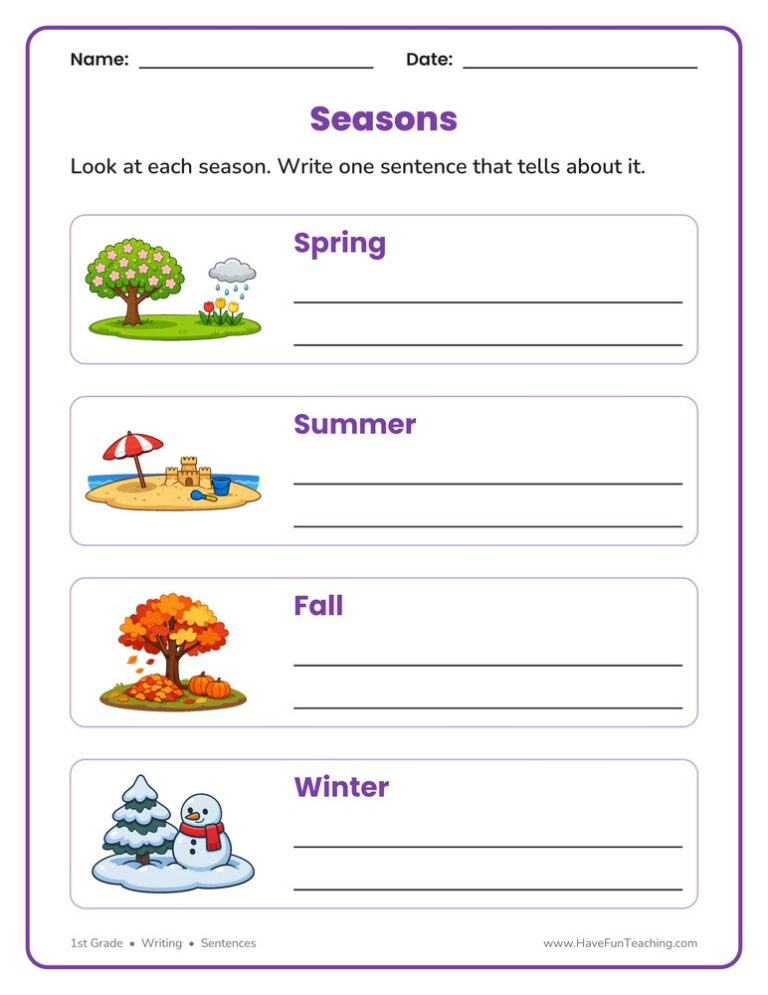
Worksheet1st GradeSeasons of the Year Sentences Worksheet

This seasons of the year sentences worksheet invites 1st Grade writers to study a picture of spring, summer, fall and winter and write one complete sentence about each season.

Activity
Activity2nd GradeProofreading Capitalization and Punctuation Activity

This proofreading capitalization and punctuation activity gives 2nd to 5th grade students 16 self-checking detective cards for fixing sentences. A practice page and answer key are included.

Worksheet
Worksheet2nd GradeUsing Complete Sentences Worksheet

This Using Complete Sentences Worksheet helps 2nd graders find the subject and the predicate, match the two halves, and write a complete sentence of their own. Answer key included for fast, no-prep grammar practice.

Worksheet
Worksheet3rd GradeProofreading Spelling Errors Worksheet

Third graders proofread five sentences, a short paragraph, and two rewrites to catch and fix misspelled words with this proofreading spelling errors worksheet. An answer key is included for quick checking.

Worksheet
Worksheet1st GradeThanksgiving Sentence Writing Worksheet

This Thanksgiving Sentence Writing Worksheet gives 1st Grade students three autumn pictures to write about on their own lines, building confident sentence writing from the first day of November.

From our teachers' playbook

Who did what? That's a sentence!

What do kids learn about writing sentences?

Kids learn that a complete sentence needs two parts: a subject (who or what) and a predicate (what they do or are). "The dog" is not a sentence yet, but "The dog barked at the mail truck." is! They learn every sentence starts with a capital letter and ends with punctuation, and that there are four types: statements, questions, exclamations and commands. Older writers combine short sentences into longer ones and fix fragments and run-ons. The click is when kids can hear an incomplete sentence and say "Wait, what happened?"

Our favorite ways to build strong sentences

Good sentences come from lots of short, focused practice. These moves give kids a clear routine.

Who plus what happened

Write a subject on a sentence strip ("My little brother") and ask, "What did he do?" Kids shout predicates and you write a few. Model checking each one: does it have a who and a what happened? Then kids build their own.

Why it works: showing first, practicing together, then letting kids try alone is the "gradual release" model teachers have relied on for decades (Pearson and Gallagher, 1983).
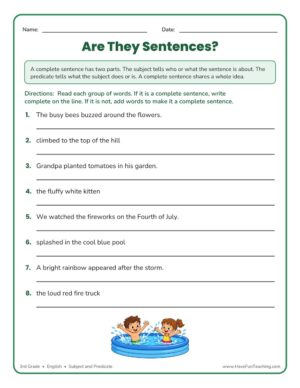
Creating Complete Sentences WorksheetTry it withCreating Complete Sentences WorksheetWorksheetsOpen it →
Split the sentence

Have kids draw a line between the subject and the predicate in a set of sentences. Color one side blue and the other red. Seeing the two halves makes it easy to spot when a half is missing.

Why it works: kids understand an idea best when they touch it, then draw it, then write it, the order the U.S. Department of Education recommends for elementary math.

Subject Predicate WorksheetTry it withSubject Predicate WorksheetWorksheetsOpen it →

Questions teachers and parents ask about sentences

What makes a complete sentence?

A complete sentence has a subject and a predicate and expresses a full thought. It begins with a capital letter and ends with a period, question mark or exclamation point.

What are the four types of sentences?

Declarative (a statement), interrogative (a question), exclamatory (shows strong feeling) and imperative (a command). Each one has its own ending punctuation.

What is a sentence fragment?

A fragment is part of a sentence that's missing a subject, a predicate or a complete thought, like "Under the bed." Kids fix it by adding the missing part.

How do I help my child write better sentences?

Have them say the sentence out loud before writing it. If it sounds complete when spoken, it usually is. Then check for a capital and ending punctuation.

Keep exploring