
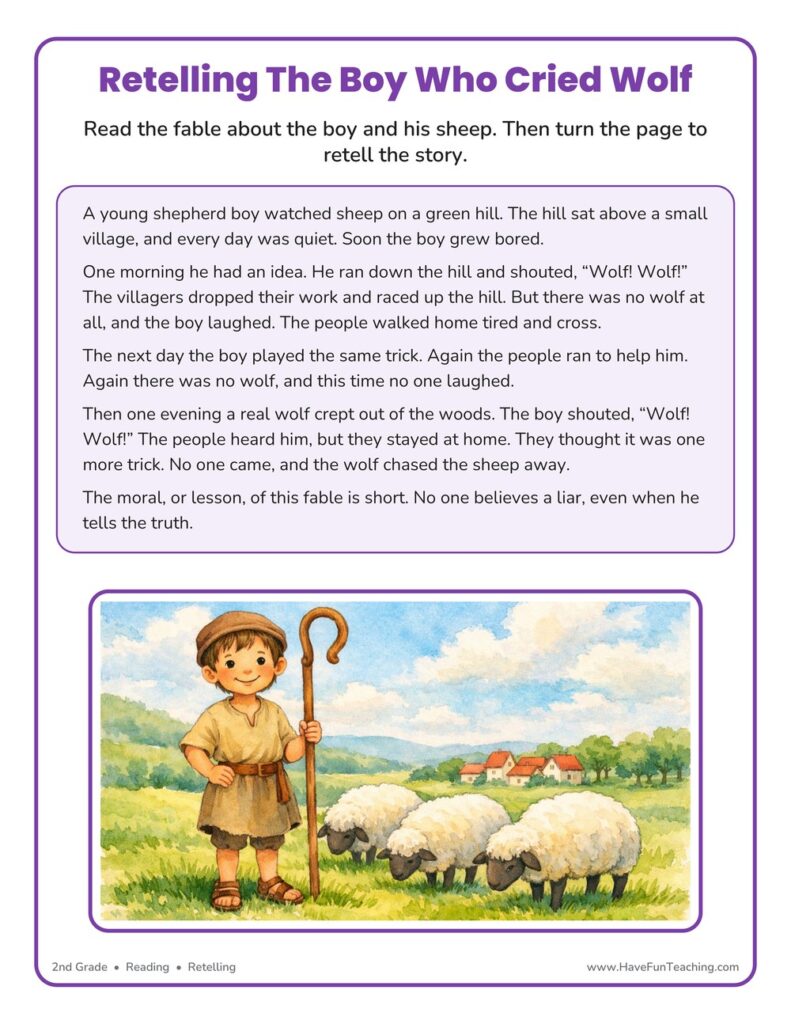
Retelling The Boy Who Cried Wolf Worksheet
This Retelling The Boy Who Cried Wolf Worksheet gives 2nd graders an Aesop fable to read, four events to put in order, and beginning, middle, and end boxes to fill in. Answer key included for fast, no-prep retelling practice.
$6.97
Or free with a membership — members pay $3.33/mo for all 10,000+ resources. See plans
Want this one free?
Tell us where to send it and it’s yours — no card, no catch.
One free resource per teacher. We’ll also send free teaching ideas each week — unsubscribe anytime.
Teaching is easier with a membership
Unlimited printables, games & videos for PreK–6th — for your classroom or homeschool. Cancel anytime.
Start your 3-day free trial$0 today · cancel anytime · Instant access to 10,000+ resources
About this resource
Description
Retelling is how a young reader shows that a story really landed. When children put a tale back together in their own words — who was in it, what happened first, what happened next, and how it all ended — they practice comprehension, sequencing, and summarizing at the same time. This Retelling The Boy Who Cried Wolf Worksheet hands 2nd graders a classic Aesop fable and a clear, friendly structure for retelling it, so the skill feels manageable instead of overwhelming.
The first page holds an original, on-grade version of the fable, illustrated with a watercolor scene of the shepherd boy and his flock on the hill. Children read it on their own or follow along during guided reading. On the second page, this boy who cried wolf retelling activity asks them to number four story events in the correct order, then write what happened at the beginning, in the middle, and at the end. Read the fable together one day and retell it the next, or use the whole sheet as a quick, no-prep comprehension check.
What’s Included
- 1 print-ready PDF worksheet
- Answer key
- A 2nd grade fable passage, a 4-event sequencing activity, and beginning, middle, and end retelling boxes
Three things make this Retelling The Boy Who Cried Wolf Worksheet work. First, the sequencing task comes before the writing, so children settle the order of events before they have to put anything into sentences. Second, the beginning, middle, and end frame gives reluctant writers a place to start — three short boxes instead of one blank page. Third, the fable closes with a stated moral, which is a natural bridge from retelling into identifying a central message, a skill that turns up on nearly every second grade reading assessment.
Teachers and parents can stretch the story further. Act it out, with two or three children playing the villagers, and then ask the shepherd to retell what happened. Draw a four-box comic strip of the fable and label each panel. Compare it with another familiar tale, such as The Three Little Pigs, and talk about how both stories teach a lesson. Or ask your child to retell the fable at the dinner table without looking at the page — if they can do that, the skill has stuck.
Related Resources
What teachers say
Reviews
You must be logged in to post a review.
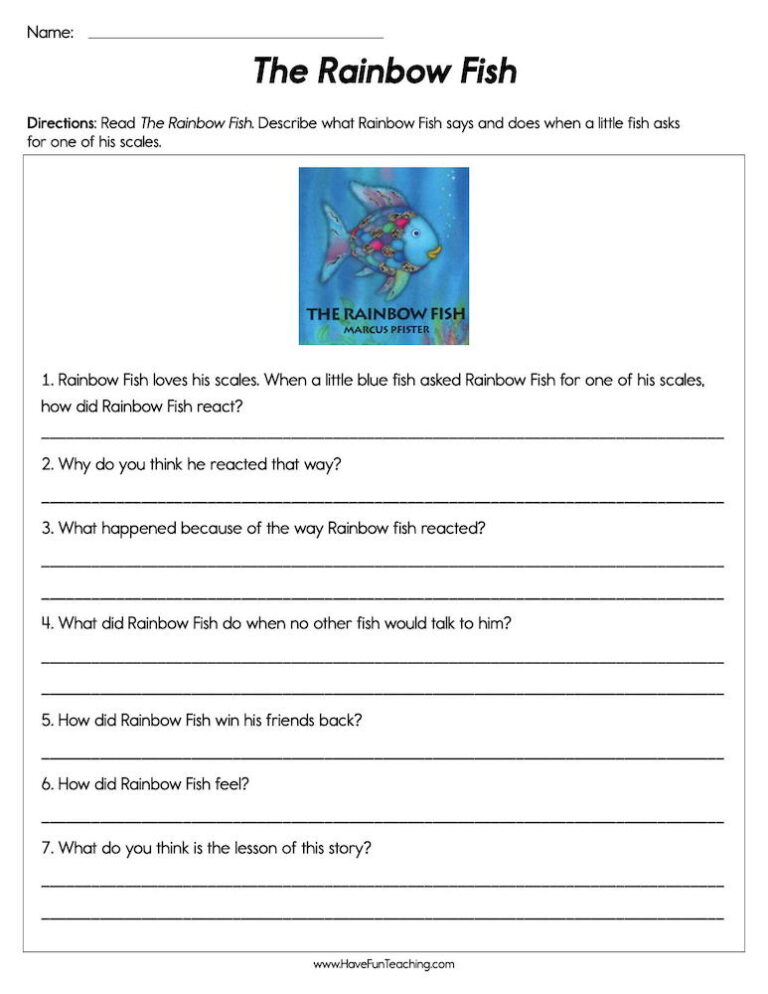
Using The Rainbow Fish Worksheet, students read The Rainbow Fish and describe what Rainbow Fish says and does when a little fish asks for one of his scales.

This What Are Maps Worksheet gives 2nd graders a short informational passage about maps plus four questions and a written response on the main idea. An answer key is included, so checking work takes seconds.
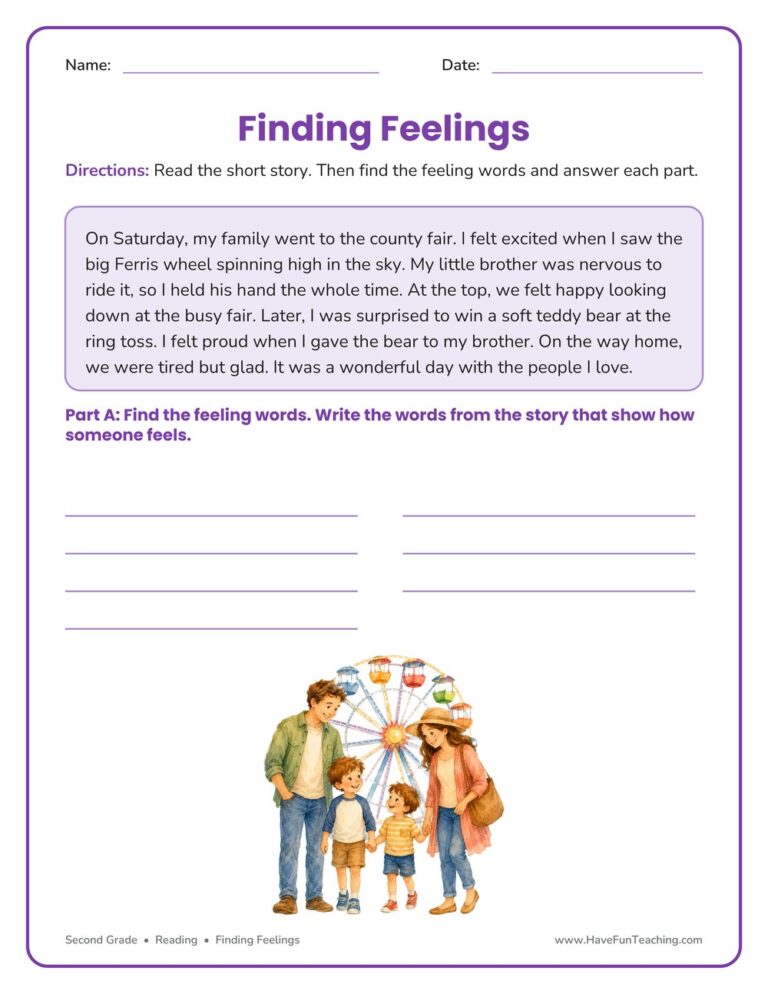
This Finding Feelings Worksheet has second graders read a short story, find the feeling words, and match story moments to emotions. Answer key included — a no-prep way to build reading comprehension and empathy.
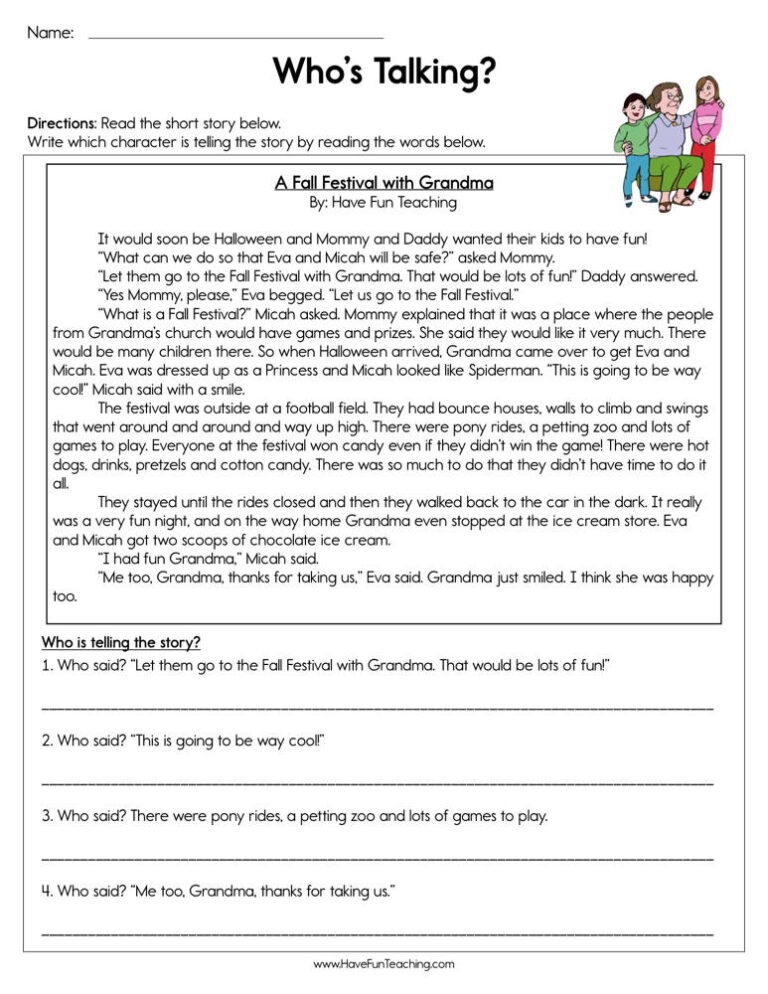
This Who's Talking Worksheet asks 2nd Grade readers to match four quoted lines back to the character who said them, then explain how they knew, with an answer key included.

This Fables The Lion and The Mouse Worksheet gives 2nd graders an original retelling of Aesop’s fable, four comprehension questions and a written item on the lesson. Answer key included for quick, no-prep practice.

This reading fluency worksheet gives 2nd Grade students a 129-word passage to read out loud in one minute, with a running word count and a six-row chart for tracking their score week by week.

This small group checklist worksheet lets 2nd grade students check off six discussion rules they followed and finish one sentence about what they learned from their group that day.

A second grade r-controlled vowels word hunt worksheet: students read a short farm story, circle the twelve bossy r words, then sort them by ar, or, and er/ir/ur. Answer key included for fast, no-prep phonics practice.

Using Feeling Words Activity, students read Amy Goes to First Grade to find words and phrases that describe Amy's feelings on the first day of school.
Using Fiction and Non-Fiction Favorite Books Worksheet, students create a list of their favorite fiction and non-fiction books that they have read.
This group reading activities worksheet helps 2nd grade teachers record how each student asks, answers, shares, and listens during a small reading group, with lines to log the text and genre.
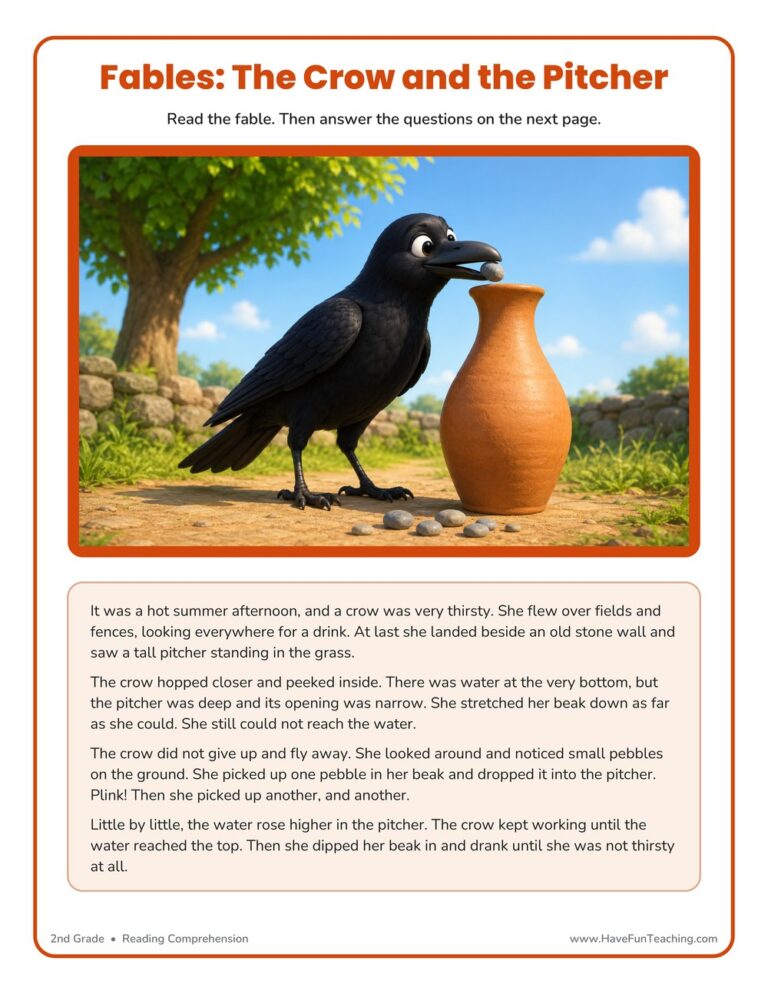
This Fables The Crow and The Pitcher Worksheet gives 2nd Grade readers an illustrated Aesop fable, comprehension questions, a sequencing activity, and a lesson response. Answer key included for quick, no-prep reading practice.
Reviews
There are no reviews yet