Skip to content
Start My 3 Free Days $0 today · cancel anytime

English Activities

221 English activities, covering vocabulary, speaking and listening, parts of speech, plus 29 more topics. How teachers use these

English Activities

221 English activities, covering vocabulary, speaking and listening, parts of speech, plus 29 more topics. How teachers use these

Activity
ActivityPreschoolAlphabet Uppercase Letter Matching Activity

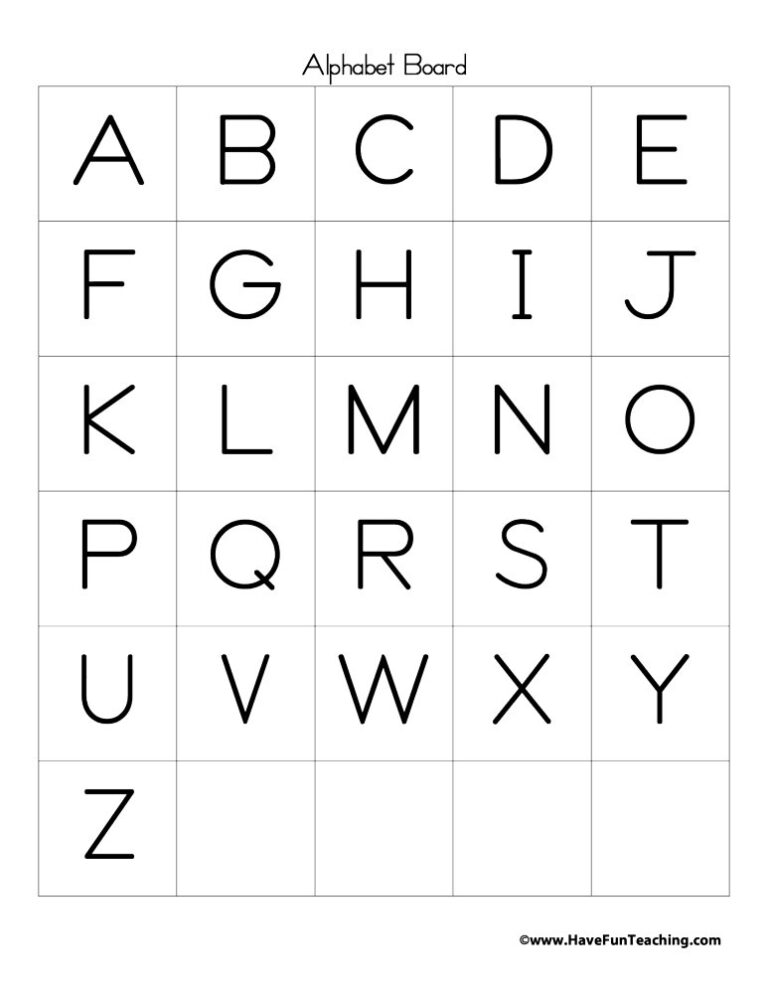
This alphabet uppercase letter matching activity has preschool, kindergarten, and 1st grade children match 26 letter cards to a game board. A practice page and answer key are included for easy letter recognition fun.

Activity
ActivityPreschoolRhyming Words Matching Activity

This rhyming words matching activity lets PreK to 1st grade children match picture cards that rhyme, like cat and hat. A practice page and answer key included.

Activity
Activity1st GradeSingular Plural Noun Go Fish Activity

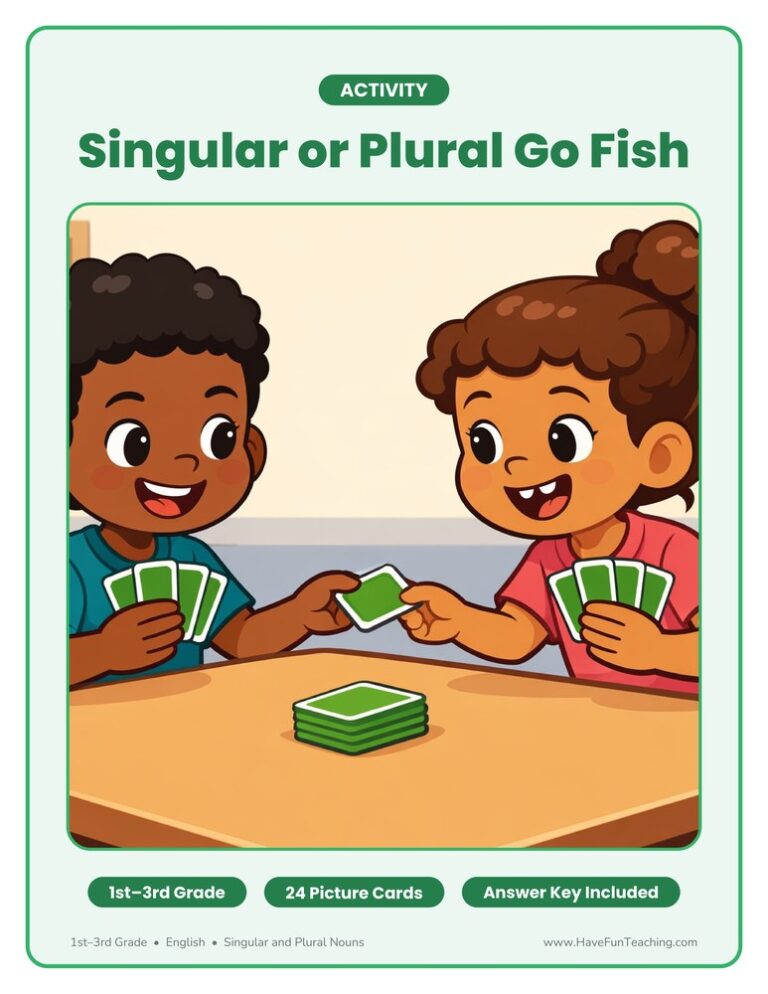
Play this singular plural noun go fish activity with 1st through 3rd grade students to match one and more than one with -s and -es. Answer key included.

Activity
Activity1st GradeNoun, Adjective, and Verb Activity

A noun, adjective, and verb activity for 1st to 3rd grade: sort 24 popcorn word cards into three buckets, then practice in sentences. Answer key included for easy checking.

Activity
ActivityKindergartenPopcorn Blends Activity

In this popcorn blends activity, K-2nd Grade children spin a blend, sort 12 picture cards into popcorn boxes and fill in a practice page, with an answer key included for quick checking.

Activity
Activity2nd GradeIdioms Figurative Language Activity

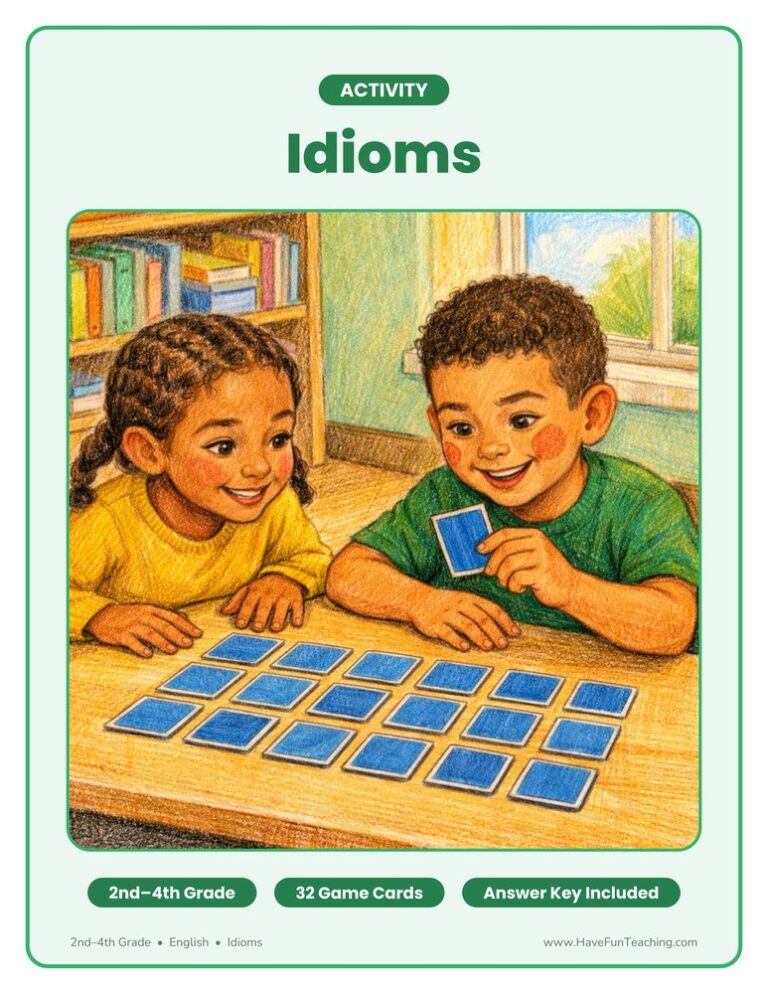
This idioms figurative language activity lets 2nd to 4th grade students match idioms to their real meanings in a fun card game, then draw and explain them. Answer key included.

Activity
ActivityPreschoolPosition Words Activity

In this position words activity, preschool to 1st grade children match butterfly pictures to above, below, next to, in front of, and behind. Answer key included.

Activity
Activity1st GradeDescribing Words Activity

This describing words activity has 1st and 2nd Grade students match 8 picture cards with 16 adjective cards, with a recording sheet, practice page and answer key included.

Activity
Activity1st GradeDescribing Nouns Adjective Activity

This describing nouns adjective activity has 1st and 2nd Grade partners describe picture cards with adjectives and play a guessing game. Answer key included.

Activity
Activity2nd GradeDictionary Dive Activity

This dictionary dive activity helps 2nd to 4th grade students look up multiple-meaning words and use context clues to pick the right meaning. A printed dictionary page and an answer key are included.

Activity
Activity1st GradePast Present Future Tense Activity

This past present future tense activity lets 1st to 4th grade students sort twelve verb cards by tense and write verbs in the right form. Answer key included for easy checking.

Activity
ActivityKindergartenWord Work Activity

This word work activity lets kindergarten and 1st grade students build CVC words with color-coded consonant and vowel tiles, then write each word. An answer key is included for quick checking.

Activity
ActivityKindergartenDear Valentine Activity

This dear valentine activity has K-2nd grade students pick heart word cards for family and school helpers and spell each word on a Valentine card. Answer key included.

Activity
Activity2nd GradePrefixes and Suffixes Sorting Activity

This prefixes and suffixes sorting activity has 2nd and 3rd Grade readers sort 24 word cards by prefix or suffix, with a recording sheet, practice page and answer key included.

Activity
Activity2nd GradeWhat Does it Mean Literal Non-Literal Language Activity

This what does it mean literal non-literal language activity has 2nd to 4th grade students sort 16 food sentence cards and explain idioms. A practice page and answer key are included.

Activity
ActivityPreschoolNoun BINGO

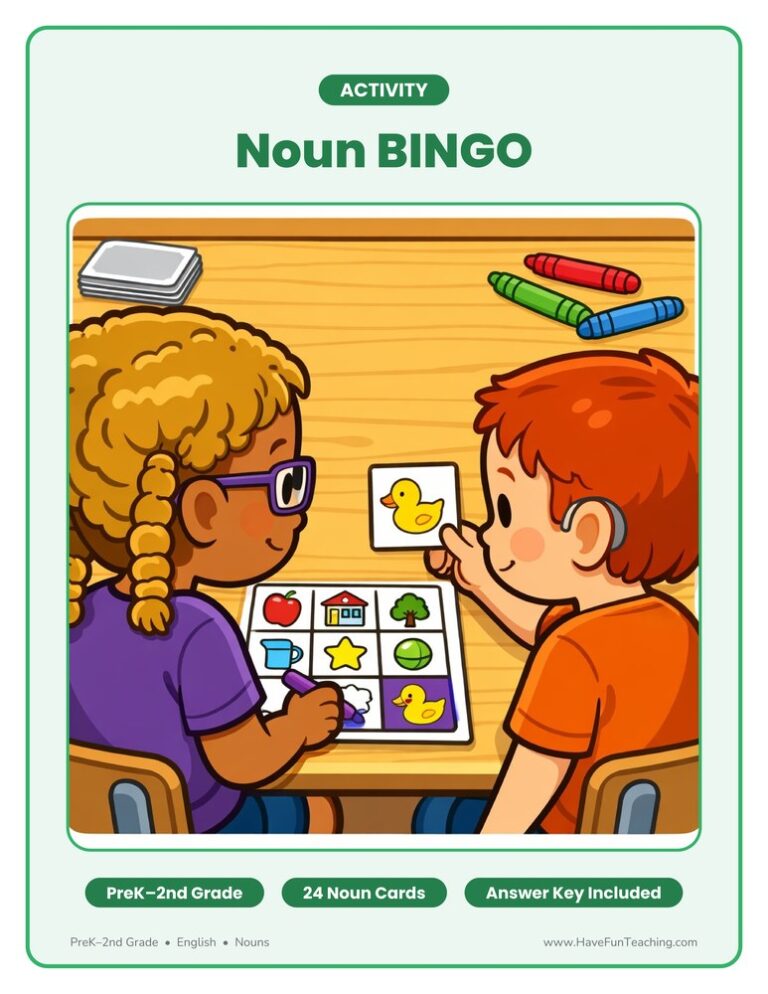
This noun bingo activity has 24 picture cards and 4 boards for Preschool to 2nd Grade, plus a practice page with an answer key included, so kids learn nouns while they play.

Activity
Activity1st GradeCapitalize It Activity

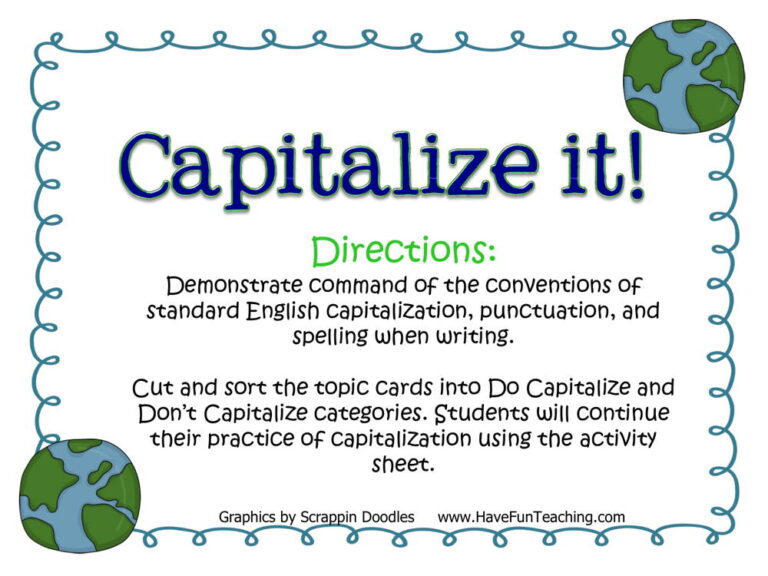
Using Capitalize It Activity, students sort the topic cards into Do Capitalize and Don't Capitalize categories.

Activity
Activity1st GradePlurals Activity

Using Plurals Activity, students add the proper word ending to make a plural noun for correct usage in writing.

Activity
Activity1st GradeSnowman Contractions Activity

Play this snowman contractions activity as a memory game: 1st to 3rd grade students match two-word Mitten Cards to Snowman contraction cards and record each pair. Answer key included.

Activity
Activity2nd GradeProofreading Capitalization and Punctuation Activity

This proofreading capitalization and punctuation activity gives 2nd to 5th grade students 16 self-checking detective cards for fixing sentences. A practice page and answer key are included.

From our teachers' playbook

Grammar that kids actually enjoy

What do kids learn in English and grammar?

English class is where kids learn how our language works. They start by writing complete sentences with capital letters and end marks, then learn the parts of speech: nouns, verbs, adjectives and pronouns. Along the way they make plurals, including tricky irregular ones like mouse → mice, and use possessive pronouns like his and their. Older students build vocabulary with prefixes, suffixes and Greek and Latin roots. The click comes when kids catch their own mistakes before you do!

Our favorite ways to teach grammar

Grammar sticks when kids use it, not just memorize rules. These moves keep it active.

Sort the words

Cut apart a noun sort and have kids put words into person, place and thing piles. Then they add their own words to each pile. Sorting makes kids think about what a word does, not just what it looks like.

Why it works: going from real objects to pictures to symbols is a core recommendation of the U.S. Department of Education's elementary math guide.

Noun Sorting WorksheetTry it withNoun Sorting WorksheetWorksheetsOpen it →

Fix it together

Put one messy sentence on the board each morning and fix it as a class: "i went to the park on monday" becomes "I went to the park on Monday." Talk through every change. Then hand out the editing page for kids to try solo.

Why it works: handing over the work step by step, from teacher to student, is one of the most widely used teaching frameworks (Pearson and Gallagher, 1983).

Editing Sentences WorksheetTry it withEditing Sentences WorksheetWorksheetsOpen it →

Plural pop quiz

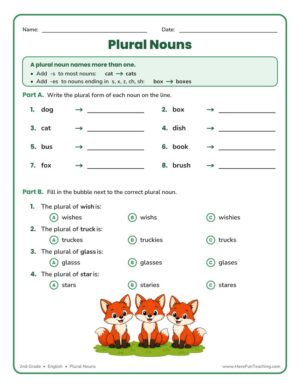
Call out a noun, like box, baby or leaf, and kids write the plural on whiteboards. Mix easy -s words with -es and -ies ones. A quick check like this shows who needs the rule again.

Why it works: pulling an answer out of memory makes it stick far better than rereading it, one of the strongest findings in learning research (Dunlosky and colleagues, 2013).

Creating Plural Nouns WorksheetTry it withCreating Plural Nouns WorksheetWorksheetsOpen it →

Questions parents and teachers ask about English

What grammar should kids know in elementary school?

Kids learn complete sentences, capitalization and punctuation, nouns and plurals, verbs and tenses, pronouns, adjectives and adverbs. Upper grades add prefixes, suffixes and word roots.

How do I make grammar fun for kids?

Turn it into games, sorts and silly sentences. Let kids fix your mistakes on the board. Kids love catching the teacher being wrong!

What is the best way to teach parts of speech?

Start with what a word does in a sentence: a noun names, a verb shows action, an adjective describes. Sorting words and finding them in real books makes it concrete.

How can I help my child with grammar at home?

Read together and point out punctuation and interesting words. Have them read their own writing aloud to catch mistakes, and try a quick editing worksheet now and then.