
Skip to content
Start My 3 Free Days $0 today · cancel anytime

Speaking and Listening Activities

37 speaking and listening activities. Teacher favorites: Describing Words Activity and Describing Nouns Adjective Activity. How teachers use these

Speaking and Listening Activities

37 speaking and listening activities. Teacher favorites: Describing Words Activity and Describing Nouns Adjective Activity. How teachers use these

Activity
Activity1st GradeDescribing Words Activity

This describing words activity has 1st and 2nd Grade students match 8 picture cards with 16 adjective cards, with a recording sheet, practice page and answer key included.

Activity
Activity1st GradeDescribing Nouns Adjective Activity

This describing nouns adjective activity has 1st and 2nd Grade partners describe picture cards with adjectives and play a guessing game. Answer key included.

Activity
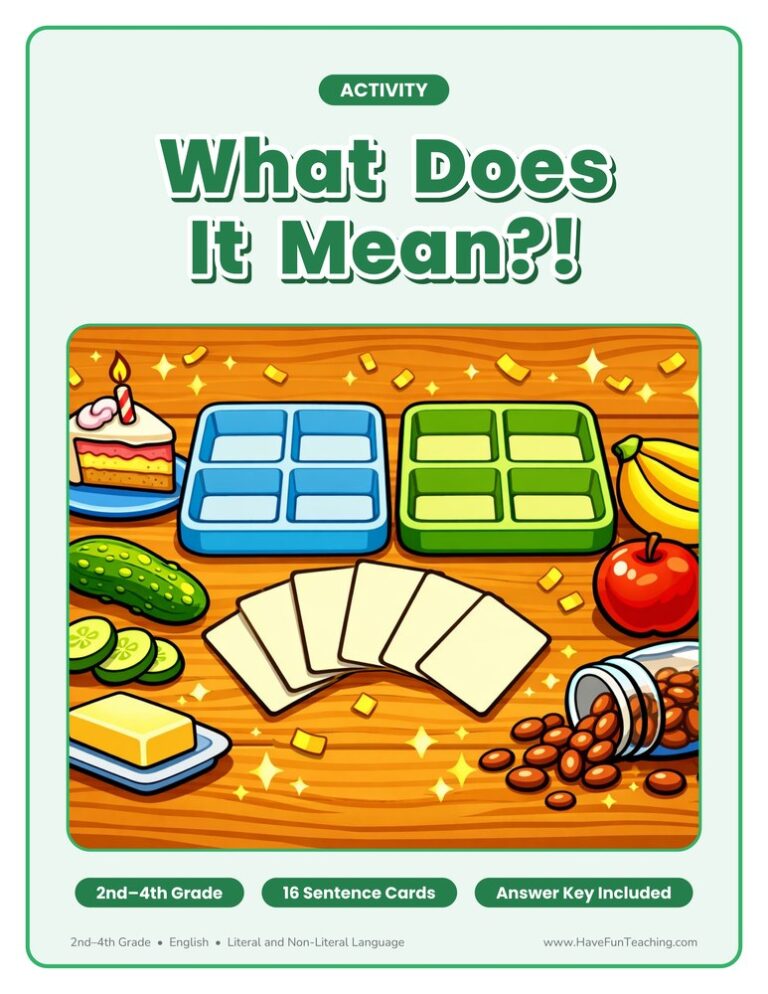
Activity2nd GradeWhat Does it Mean Literal Non-Literal Language Activity

This what does it mean literal non-literal language activity has 2nd to 4th grade students sort 16 food sentence cards and explain idioms. A practice page and answer key are included.

Activity
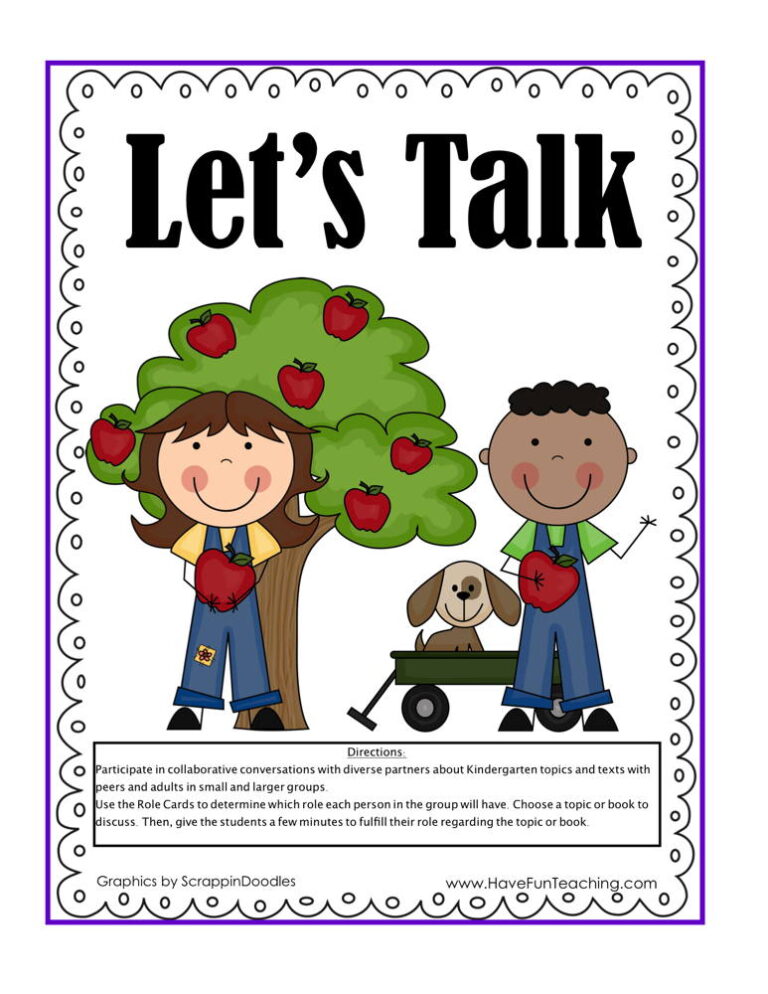
ActivityKindergartenLet's Talk Classroom Speaking Activity

This Let's Talk classroom speaking activity gives kindergarten through 3rd grade students role cards, topic cards and a self-check for small group talks. A practice page and answer key are included.

Activity
ActivityPreschoolGuess Who Matching Game Activity

UsingGuess Who Matching Game Activity, students take turns asking questions to figure out their partner's mystery person.

Activity
Activity1st GradeUsing Clues to Describe Activity

Using this Using Clues to Describe Activity, students describe familiar people, places, things, and events.

Activity
ActivityKindergartenFeeling Words Activity

Using Feeling Words Activity, students read Amy Goes to First Grade to find words and phrases that describe Amy's feelings on the first day of school.

Activity
ActivityKindergartenTotal Recall Activity

This total recall activity for Kindergarten to 3rd Grade has kids tell about real memories, spin for a question word, and draw and write about one memory.

Activity
ActivityKindergartenClassroom Conversations Activity

Using this Classroom Conversations Activity, students participate in collaborative conversations with diverse partners about topics and texts with peers and adults in small and larger groups.

Activity
Activity1st GradeDescribe It Figurative Language Activity

This describe it figurative language activity for 1st and 2nd Grade has kids match adjective word cards to the pictures they describe. Answer key included.

Activity
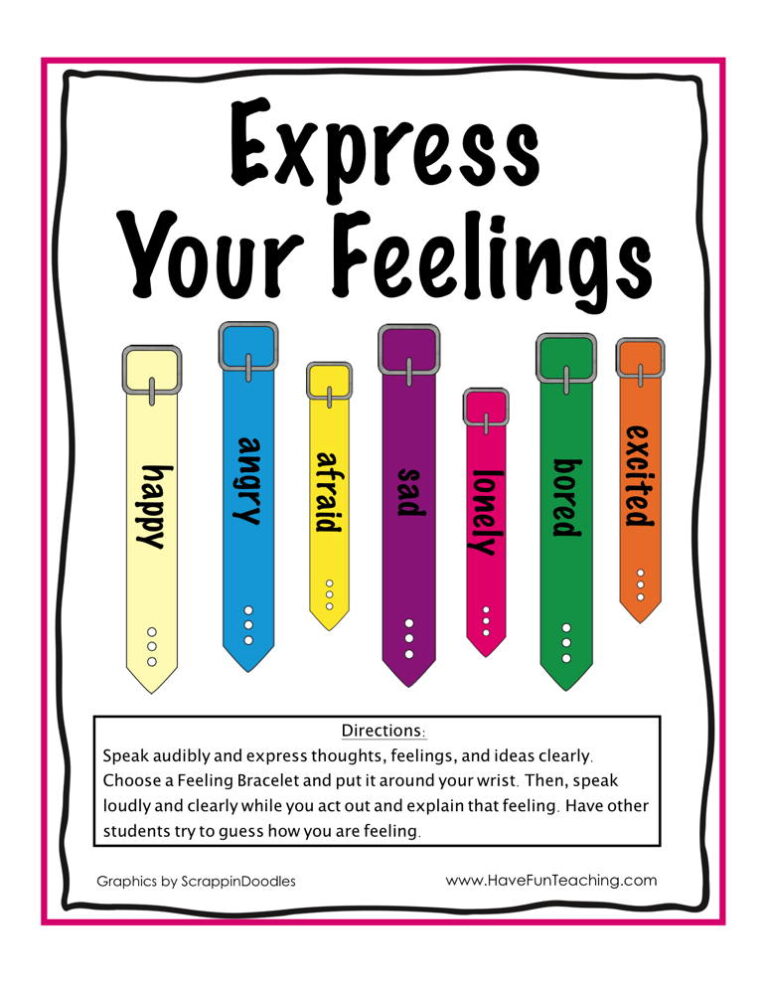
ActivityKindergartenExpress Your Feelings Character Education Activity

This express your feelings character education activity helps K-2nd grade students name six feelings with bracelets, charades and talk cards, then speak in full sentences. Answer key included.

Activity
ActivityKindergartenLet's Talk About It Activity

This Let's Talk About It activity gives Kindergarten to 2nd Grade students sentence starters for sharing, asking and agreeing in partner talks, with a spinner game. Answer key included.

Activity
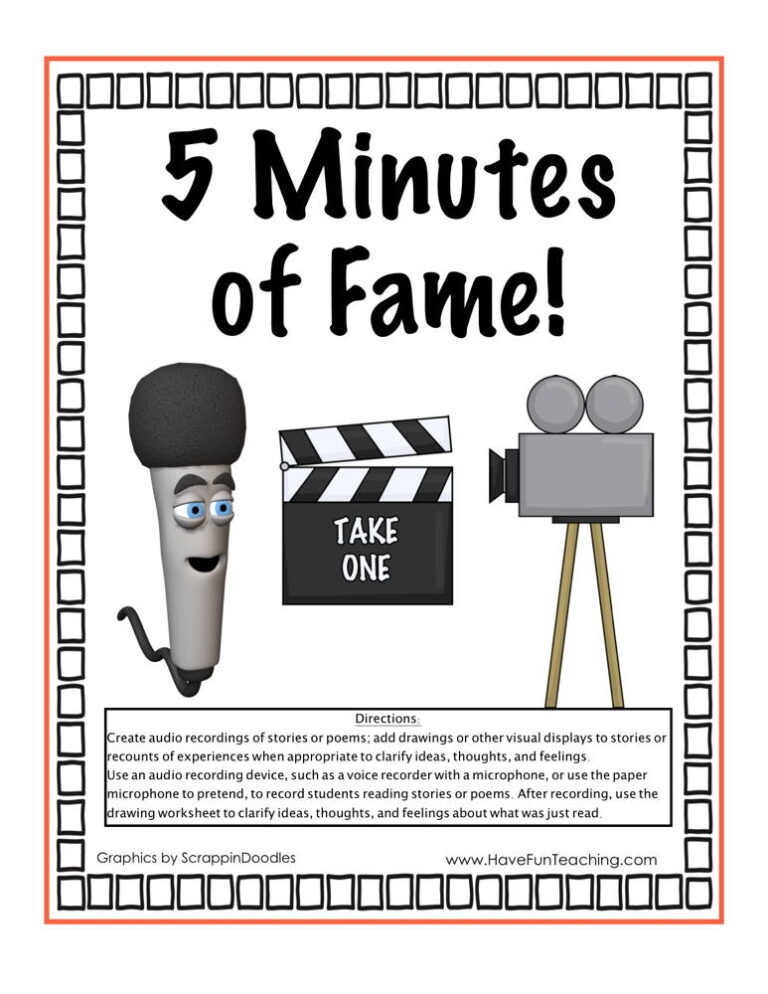
Activity1st Grade5 Minutes of Fame Read Aloud Activity

With this 5 minutes of fame read aloud activity, 1st-3rd Grade students practice and perform short poems with a paper microphone. A practice page and answer key are included.

Activity
ActivityKindergartenHelp Me Out Asking Questions Activity

Using the Help Me Out Asking Questions Activity, students produce complete sentences when appropriate to task and situation in order to provide requested detail or clarification.

Activity
Activity2nd GradeSL.2.4 Common Core Activity

Using this SL.2.4 Common Core Activity , studentstell a story or recount an experience with appropriate facts and relevant, descriptive details, speaking audibly in coherent sentences.

Activity
Activity3rd GradeFormal or Informal English Activity

This formal or informal English activity has 3rd to 5th grade students sort envelope situation cards by audience and rewrite informal sentences, with an answer key included for quick checking.

Activity
Activity1st GradeWho What When Where Why How Activity

This who what when where why how activity is a newspaper card game for 1st to 3rd grade that builds key detail skills, with a practice page. Answer key included.

Activity
ActivityKindergartenAfter Reading Discussion Cards Activity

These after reading discussion cards give kindergarten to 3rd grade readers 24 story questions, a spinner and a book talk page for lively group conversations about any book.

Activity
ActivityKindergartenRead it Aloud Activity

Using the Read it Aloud Activity, students create engaging audio recordings of stories or poems that demonstrate fluid reading at an understandable pace.

Activity
ActivityKindergartenAsk Me About It Speaking and Listening Activity

This ask me about it speaking and listening activity gives Kindergarten to 2nd Grade children topic cards, question cards and a spinner to share, ask and answer, with an answer key included.

From our teachers' playbook

Talk it out, listen it in

What do kids learn about speaking and listening?

Speaking and listening skills help kids share ideas and learn from others. Young students practice taking turns, listening without interrupting, and asking and answering questions about a story or a picture. They learn to speak in complete sentences, describe things with detail, and tell a story in order. As they grow, kids join small group discussions, build on each other's ideas ("I agree with Mia because..."), and learn when to use formal language, like in a presentation, versus informal language with friends. These skills show up in every subject, every day.

How we teach speaking and listening

Kids learn to talk well by talking a lot, with a little structure. These moves give them both.

Sentence starters on the wall

Post starters like "I agree because...", "I have a different idea..." and "Can you tell me more about...?" Model using them in a class discussion. Kids start borrowing them, and your discussions become more respectful and thoughtful.

Why it works: handing over the work step by step, from teacher to student, is one of the most widely used teaching frameworks (Pearson and Gallagher, 1983).

Collaboration Discussion WorksheetTry it withCollaboration Discussion WorksheetWorksheetsOpen it →

Turn and talk with a job

During partner talk, give one child the speaker job and the other the listener job. The listener must repeat back one thing they heard. Then switch. It turns "talk time" into real listening practice.

Why it works: kids understand an idea best when they touch it, then draw it, then write it, the order the U.S. Department of Education recommends for elementary math.

Asking and Answering Questions WorksheetTry it withAsking and Answering Questions WorksheetWorksheetsOpen it →

Formal or informal?

Read short sentences aloud and have kids decide whether they sound like a job interview or a chat with a friend. Then practice saying the same idea both ways. Kids love the silly fancy voices!

Why it works: in a well-known study, a few short sessions of a simple number board game measurably boosted young children's number skills (Ramani and Siegler, 2008).

Is it Formal or Informal WorksheetTry it withIs it Formal or Informal WorksheetWorksheetsOpen it →

Speaking and listening questions

What are speaking and listening skills?

They include listening carefully, taking turns, asking and answering questions, speaking clearly in complete sentences, and adjusting language for different situations.

Why are speaking and listening skills important?

Kids use them to learn in every subject, work in groups, make friends and share ideas. Strong oral language also supports reading and writing.

How can I help my child become a better listener?

Make eye contact, give one direction at a time, and ask your child to repeat back what they heard. Reading aloud and talking about the story helps a lot too.

What is the difference between formal and informal language?

Formal language is polite and complete, used in presentations or letters. Informal language is relaxed, used with friends and family.



