Skip to content
Start My 3 Free Days $0 today · cancel anytime

2nd Grade Reading Comprehension Activities

29 2nd grade reading comprehension activities. Teacher favorites: Key Details Activity and Fables and Folktales Activity. How teachers use these

2nd Grade Reading Comprehension Activities

29 2nd grade reading comprehension activities. Teacher favorites: Key Details Activity and Fables and Folktales Activity. How teachers use these

Activity
Activity2nd GradeKey Details Activity

This key details activity gives K through 3rd grade readers 12 question cards to use with any book, plus a recording sheet and practice stories. Answer key included.

Activity
Activity2nd GradeFables and Folktales Activity

Read, retell and find the moral with this fables and folktales activity for 2nd and 3rd grade: story cards, moral cards, talk cards and a Story Map, with an answer key included.

Activity
Activity2nd GradeListen for the Main Idea Activity

This listen for the main idea activity helps 1st to 3rd grade students hear a short text, name its main idea, and retell a detail, with an answer key included.

Activity
Activity2nd GradeFeeling Words Activity

Using Feeling Words Activity, students read Amy Goes to First Grade to find words and phrases that describe Amy's feelings on the first day of school.

Activity
Activity2nd GradeWhat's the Moral of the Story Activity

This what's the moral of the story activity helps 2nd and 3rd graders read short fables, retell them, and match each one to its lesson. Answer key included for quick checking.

Activity
Activity2nd GradeRetelling Stories Activity

This retelling stories activity has Kindergarten to 2nd Grade students order picture and sentence cards, then retell a pool-day story. Answer key included to check every card.

Activity
Activity2nd GradeRetelling Using Key Details Activity

This retelling using key details activity helps kindergarten to 3rd grade students sort key events, put them in order, and retell a story, with an answer key included.

Activity
Activity2nd GradeMain Idea and Details Reading Activity

This main idea and details reading activity for 1st and 2nd grade turns reading into a train game: match detail cars to main idea engines. Practice page and answer key included.

Activity
Activity2nd GradeWhat's the Main Idea Activity

This What's the Main Idea Activity helps 1st to 3rd Grade students match short texts to their main ideas and find a supporting detail, with an answer key included.

Activity
Activity2nd GradeWhy oh Why Story Details Activity

This why oh why story details activity lets 2nd-4th grade students match 12 effects to their causes and build paper chains. A practice page and answer key are included.

Activity
Activity2nd GradeWho What When Where Why How Activity

This who what when where why how activity is a newspaper card game for 1st to 3rd grade that builds key detail skills, with a practice page. Answer key included.

Activity
Activity2nd GradeKey Details in a Text Activity

This key details in a text activity helps K-2nd grade readers answer who, what, where, when, why, and how questions with self-checking story cards. Answer key included.

Activity
Activity2nd GradeAfter Reading Discussion Cards Activity

These after reading discussion cards give kindergarten to 3rd grade readers 24 story questions, a spinner and a book talk page for lively group conversations about any book.

Activity
Activity2nd GradeReading Questions Camping Activity

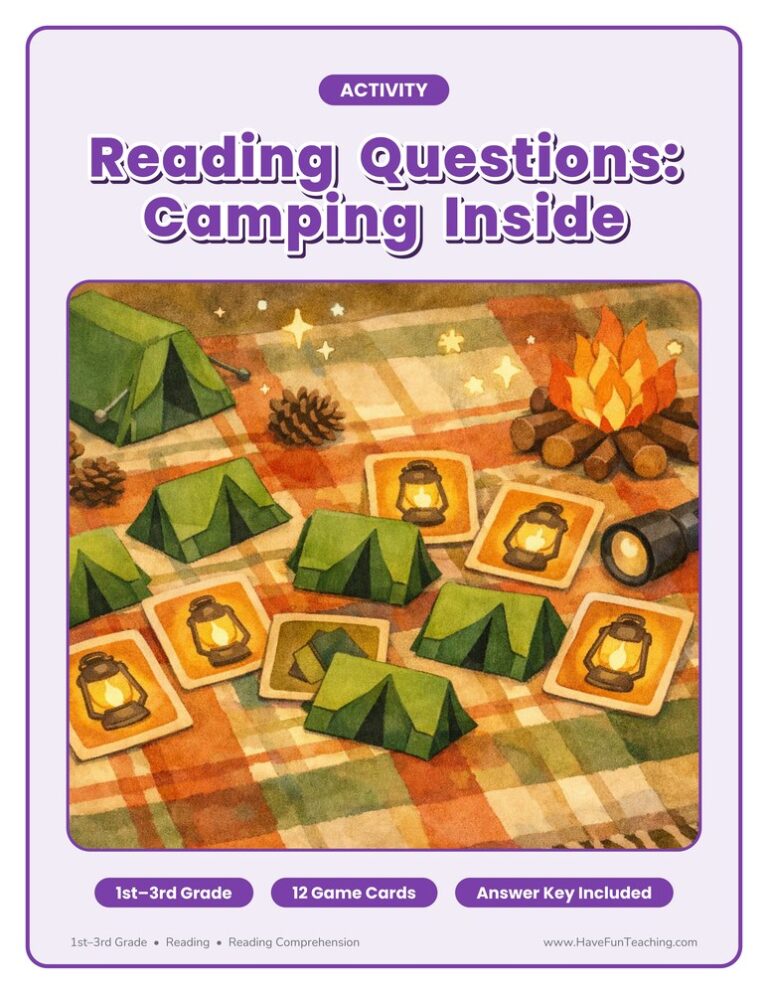
Try this reading questions camping activity with 1st to 3rd grade readers. Kids read a camping story and match question cards to answer cards; an answer key is included.

Activity
Activity2nd GradeDescribing Key Ideas Activity

Play this describing key ideas activity with 1st to 3rd grade readers. Kids say what a community helper would say to show a key idea, and an answer key is included.

Activity
Activity2nd GradeWhat is the Main Topic? Activity

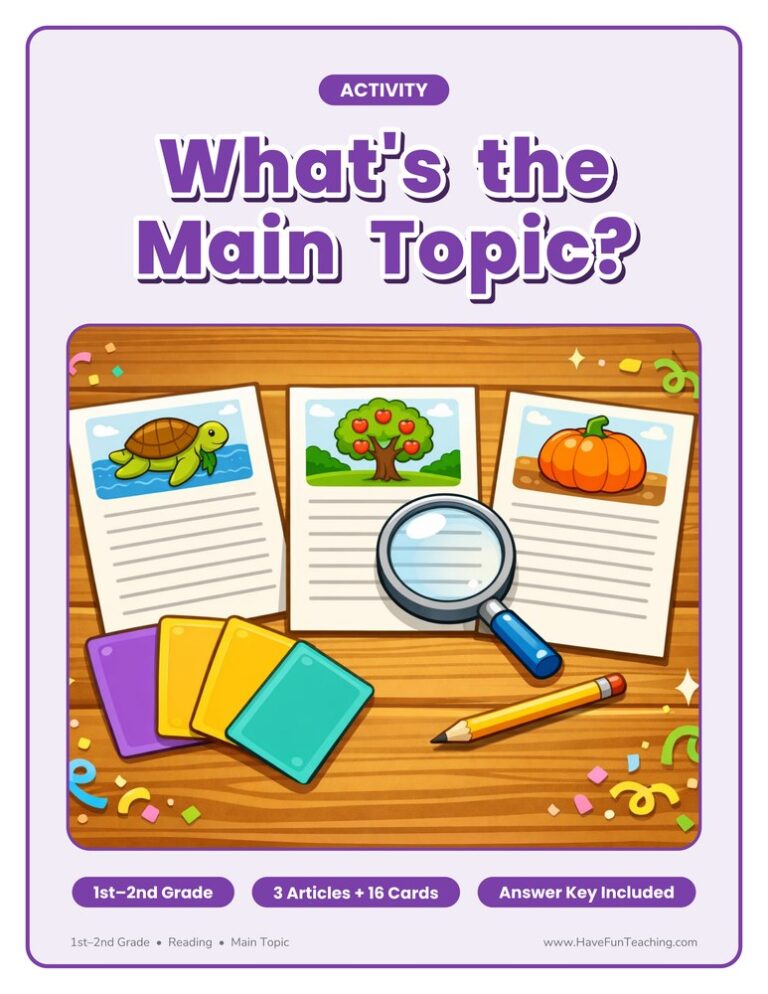
This main topic activity has 1st and 2nd grade students read short articles and match cards to find the main topic and the focus of each paragraph. Answer key included.

Activity
Activity2nd GradeKey Details for Comprehension Activity

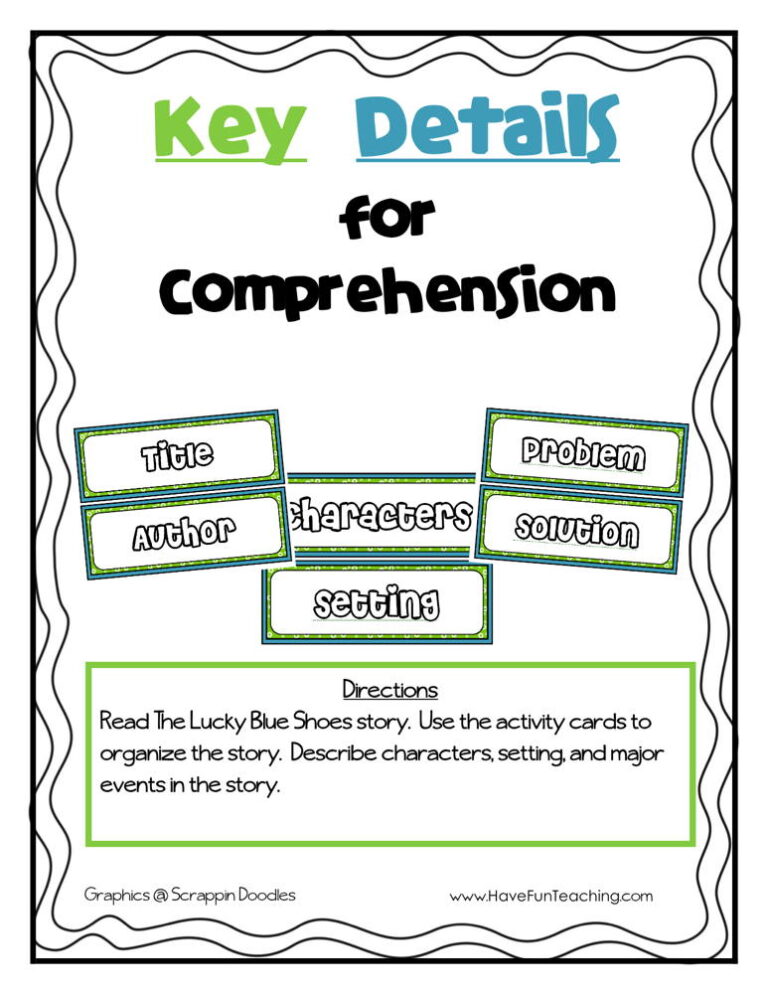
Use this key details for comprehension activity with Kindergarten to 3rd grade readers to find characters, setting, problem and solution in a story. Answer key included, so checking work is quick.

Activity
Activity2nd GradeThinking Maps for Reading Journeys Activity

Using these Thinking Maps for Reading Journeys Activity, students map out the important details in a text to show their thinking while building reading comprehension.

Activity
Activity2nd GradeGold Medal Reading Strategies Activity

Using Gold Medal Reading Strategies Activity, students read grade-level text with purpose and understanding using graphic organizers for support.

Activity
Activity2nd GradeFun With Poetry Activity

Using Fun With Poetry Activity, students read prose and poetry of appropriate complexity for grade 1. to build reading comprehension skills.

From our teachers' playbook

Reading with questions in mind

What do 2nd graders learn about reading comprehension?

In 2nd grade, comprehension is all about asking and answering questions while you read. Kids answer who, what, where, when, why and how questions, retell fables and folktales, and figure out the lesson or moral. In nonfiction, they find the main topic of a whole passage and the focus of each paragraph. They describe how characters respond to big events and compare two versions of the same story. The big shift: reading the words → thinking about the words. Kids stop just finishing the page and start wondering why things happened.

Our favorite ways to teach 2nd grade reading comprehension

Second graders understand more when they talk about what they read. These moves get them thinking.

Find the lesson in a fable

Read The Lion and the Mouse aloud, then think out loud about the moral: "The mouse was tiny but saved the lion. I think the lesson is that small friends can be a big help." Then let kids find the lesson in the next fable on their own.

Why it works: showing first, practicing together, then letting kids try alone is the "gradual release" model teachers have relied on for decades (Pearson and Gallagher, 1983).

Fables The Lion and The Mouse WorksheetTry it withFables The Lion and The Mouse WorksheetWorksheetsOpen it →
Quick question game

After a short passage, play a quick game where kids answer who, what, where and why questions. Mixing question types keeps them going back to the text for evidence instead of guessing.

Why it works: researchers who compared ten study methods found practice testing is one of the two that work best (Dunlosky and colleagues, 2013).

Thanksgiving Reading Comprehension GameTry it withThanksgiving Reading Comprehension GameGamesOpen it →

A passage a day

Keep a reading comprehension workbook in the morning routine and do one short passage a day. Ten minutes daily builds stamina and confidence far better than a long packet on Friday.

Why it works: spreading practice out over days is one of the two most effective study methods in a major research review (Dunlosky and colleagues, 2013).

Sight Words Reading Comprehension WorkbookTry it withSight Words Reading Comprehension WorkbookWorkbooksOpen it →

2nd grade reading comprehension questions we hear a lot

What reading comprehension skills do 2nd graders need?

Second graders answer who, what, where, when, why and how questions, retell stories, find the moral of a fable, identify the main topic of nonfiction, and compare two versions of a story.

How do I improve my 2nd grader's reading comprehension?

Read together every day and stop to ask questions. Have your child retell the story in their own words, and ask why characters made their choices. Talking about books is one of the best ways to build comprehension.

How long should a 2nd grade reading passage be?

Second grade passages are often one to two pages, sometimes broken into a few short paragraphs. Short passages let kids focus on understanding instead of just getting through the text.

What if my child can read the words but doesn't understand them?

This is common! Slow down, read shorter chunks and pause to ask what just happened. Picture walks before reading and retelling after can help a lot.