A kindergarten characters, settings, and events worksheet that helps young readers identify story elements—who is in a story, where it happens, and what happens—using a simple three-column graphic organizer for retelling any story.
This who what when where why graphic organizer worksheet helps 3rd graders record the five key details — who, what, when, where, and why — from any story or article. A clear, reusable note-taking template.
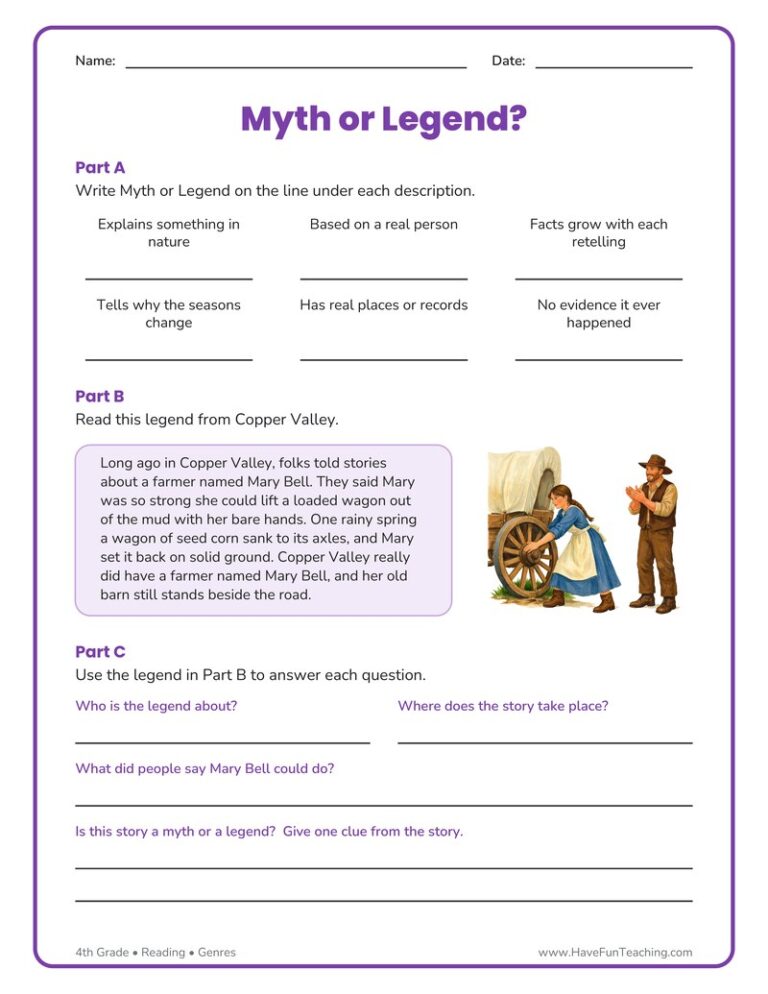
This Myths Legends Worksheet helps 4th graders tell the two genres apart, then apply what they learn to an original legend passage. Answer key included — a no-prep way to build genre knowledge and text evidence skills.
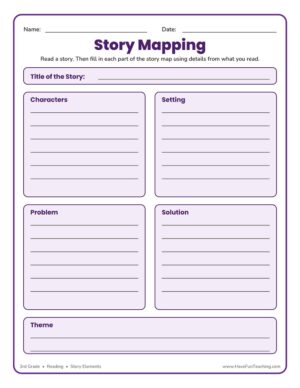
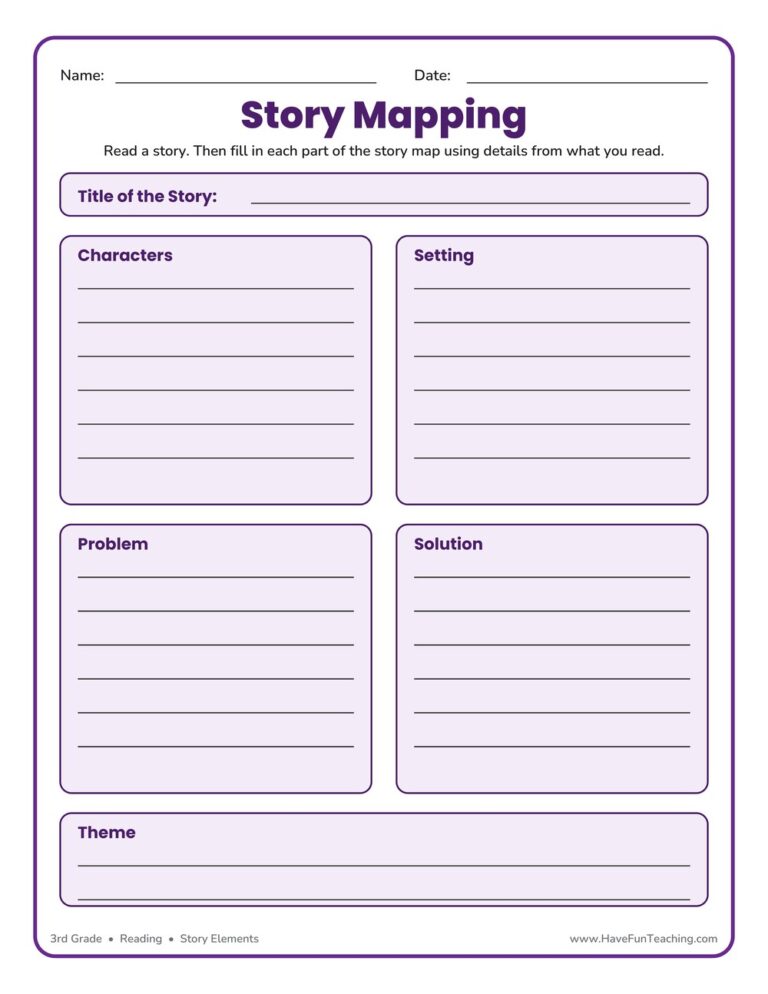
This 3rd grade Story Map Graphic Organizer Worksheet has students record a story's characters, setting, problem, solution, and theme in one clear, reusable page that strengthens reading comprehension.
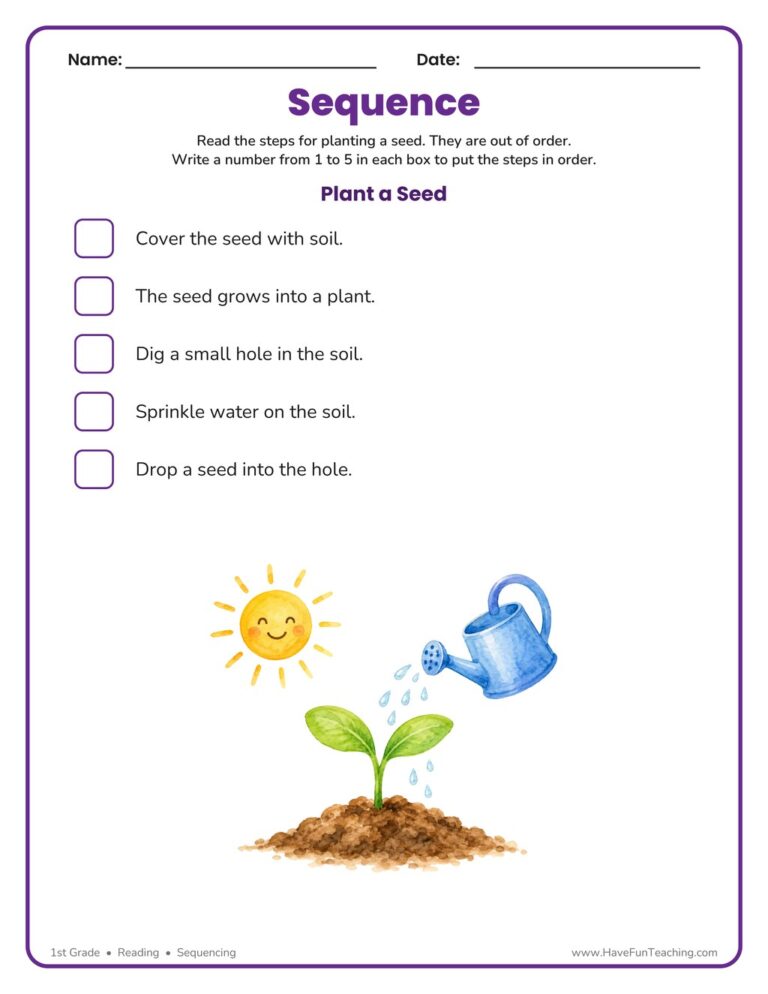
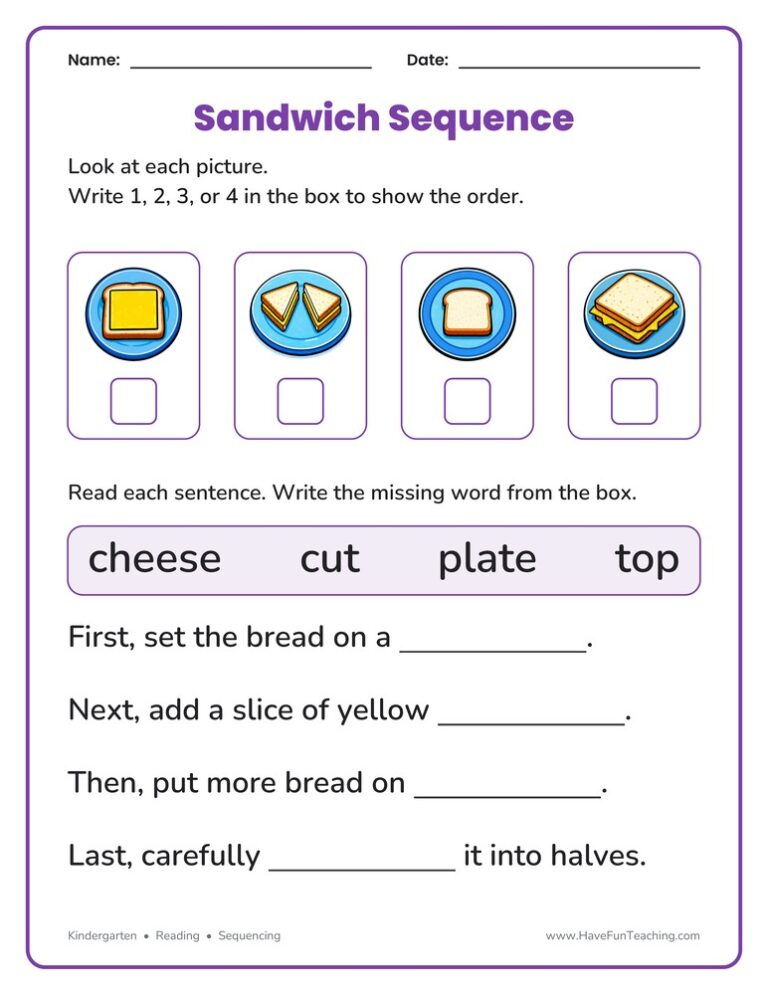
The Plant a Seed Sequence Worksheet helps 1st graders put five planting steps in order from first to last. Includes a complete answer key—perfect for quick, no-prep sequencing practice at home or school.
A Who What When Where Why Summary Graphic Organizer Worksheet that walks 3rd graders from a short story to the five W answers and on to a written summary. Answer key included, so students get quick feedback and real confidence.
A print-and-go Character and Settings Worksheet that helps 1st graders draw and describe the main character and the setting of any story they choose. Flexible enough for guided reading, independent reading, or a bedtime book at home.
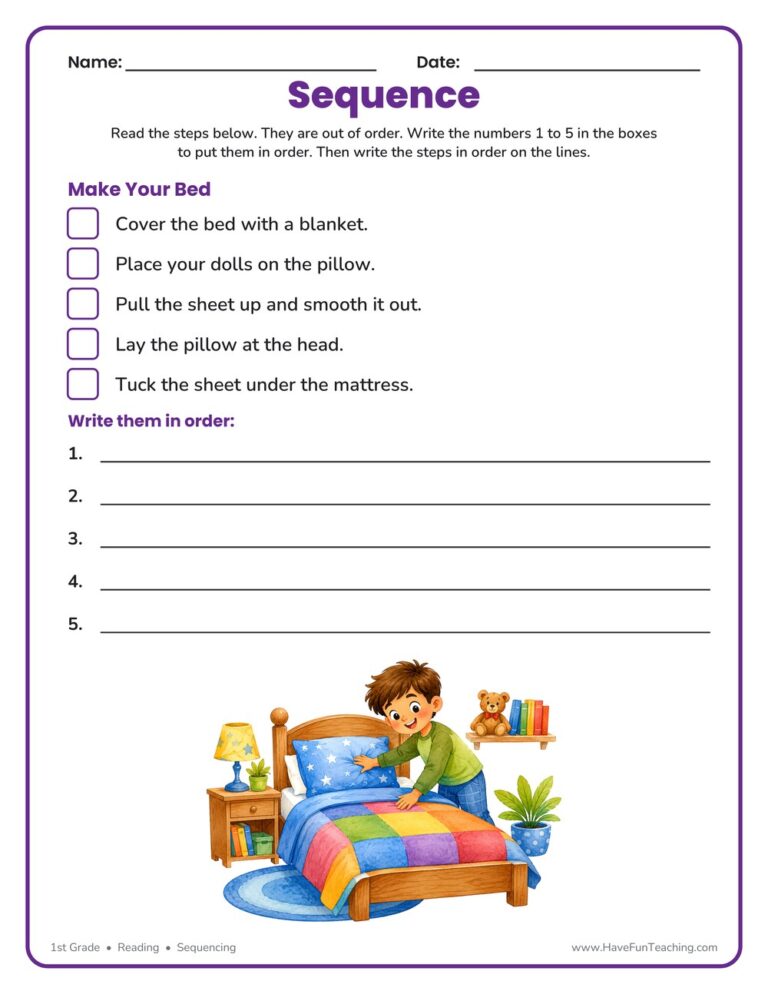
This Making a Bed Sequence Worksheet has 1st graders order five steps, number the boxes 1 to 5, and rewrite them in sequence. Answer key included — a fun, no-prep way to practice sequencing.
Plan a story from start to finish with this Sequence Writing Graphic Organizer Worksheet. First Grade writers name their story idea, then write what happens First, Next, Then, and Last on wide primary lines.
A characters, settings, and big events worksheet for 1st Grade: students read a short story, then draw and write the characters, setting, and big event in a simple organizer. Answer key included for quick, no-prep story elements practice.
This Asking Questions About Pictures Worksheet gives 1st Grade students an illustrated scene, four fill-in-the-bubble questions, and room to write a question of their own. Answer key included, so checking takes seconds.
This Who's Talking Worksheet asks 2nd Grade readers to match four quoted lines back to the character who said them, then explain how they knew, with an answer key included.
This Finding Feelings Worksheet has second graders read a short story, find the feeling words, and match story moments to emotions. Answer key included — a no-prep way to build reading comprehension and empathy.
Using Characters, Settings, and Big Events Worksheet, students draw pictures and write a sentence for each to tell about the story elements in a book.
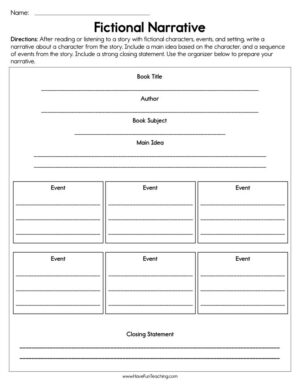
Using Fictional Narrative Worksheet, students write a narrative about a character using details from a book you read as inspiration.
This characters and story plots worksheet gives 2nd Grade readers a short story, then asks them to name the characters and tell the beginning, problem and ending. An answer key is included, so retelling a book gets easier.
A story elements reading graphic organizer worksheet for 2nd grade: read a short story, then fill in Somebody, Wanted, But, and So. Answer key included, so retelling practice takes no prep.
This sequencing brainstorming worksheet has 2nd graders number five story events in order, then plan the steps of their own activity. An answer key is included, so checking takes just seconds.
Using Sequence Writing Worksheet, students write a story where two events occur providing details, order words, and a sense of closure in your writing.
Use this Important Elements of the Story Worksheet to help first grade readers name the characters, setting, and events in an original short story. Includes five questions and an answer key.