
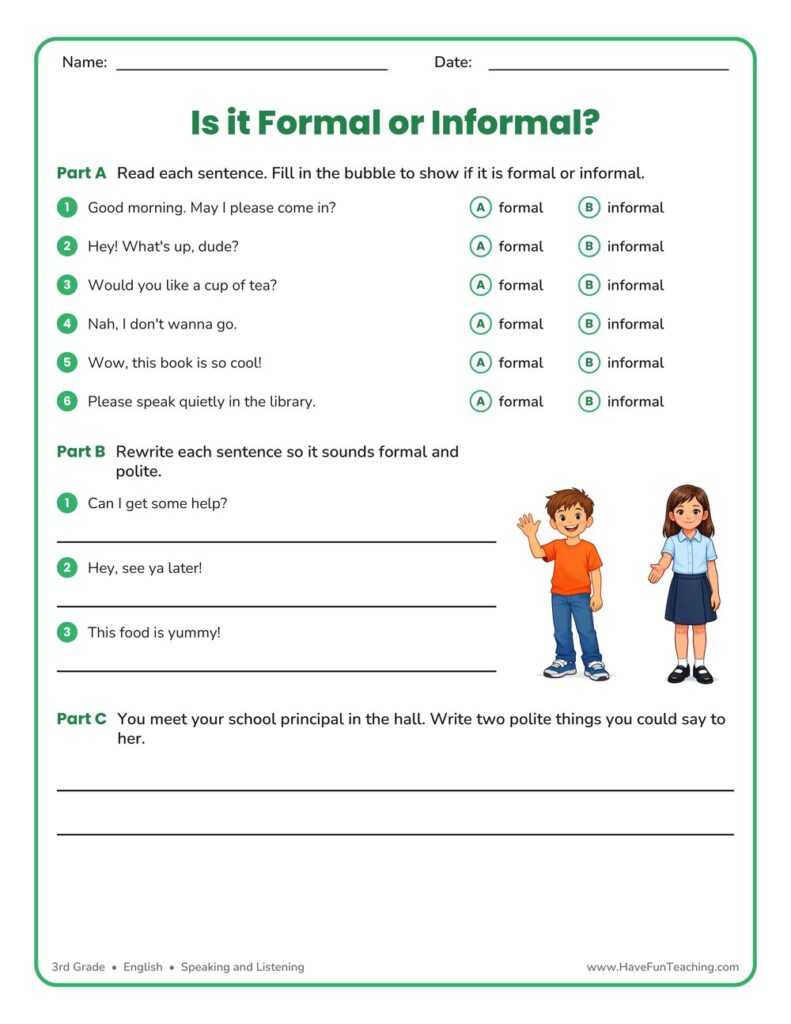
Is it Formal or Informal Worksheet
The Is it Formal or Informal Worksheet helps 3rd graders sort everyday sentences by how polite they sound, then rewrite the casual ones. An answer key is included, so it works as no-prep speaking and listening practice.
$6.97
Or free with a membership — members pay $3.33/mo for all 10,000+ resources. See plans
Want this one free?
Tell us where to send it and it’s yours — no card, no catch.
One free resource per teacher. We’ll also send free teaching ideas each week — unsubscribe anytime.
Teaching is easier with a membership
Unlimited printables, games & videos for PreK–6th — for your classroom or homeschool. Cancel anytime.
Start your 3-day free trial$0 today · cancel anytime · Instant access to 10,000+ resources
About this resource
Description
Knowing when to use careful, polite English and when relaxed English is fine is a real speaking and listening skill, and the Is it Formal or Informal Worksheet gives third graders a clear way to practice it. Formal language is the language students use with a principal, a new neighbor, or a written report. Informal language is the easy, friendly English they use with a best friend at recess. Both kinds are correct. The skill is matching the language to the listener and the situation, and that is exactly what this page teaches.
This formal and informal language worksheet moves students from noticing to producing in three short parts. In Part A, they read six everyday sentences and fill in the bubble to show whether each one is formal or informal. In Part B, they rewrite three casual sentences so the sentences sound formal and polite. In Part C, they imagine meeting the school principal in the hall and write two polite things they could say. Use it as an independent morning warm-up, a small-group discussion starter, or a quick check before a class presentation.
What’s Included
- 1 print-ready PDF worksheet
- Answer key
- 6 fill-in-the-bubble sorting items, 3 rewrite-it-formally sentences, and 1 two-line writing prompt
Three things make the Is it Formal or Informal Worksheet a strong practice page. First, it uses sentences children really hear, so the difference between a quick hello to a friend and a polite greeting to an adult is obvious and easy to remember. Second, it asks students to produce formal language rather than only recognize it, which is the harder and far more useful half of the standard. Third, the open writing prompt at the end ties the skill to a real school moment, so students walk away with polite words they can use the very same day.
Teachers and parents can stretch this lesson in a few easy ways. Play a switch-it game in which one person says a sentence casually and a partner says the same idea politely. Act out a short pretend phone call to the public library and listen for polite word choices. Sort classroom greetings into two paper pockets labeled formal and informal. Read a picture book aloud and pause whenever a character changes the way they talk to a different listener. Small amounts of daily practice build the habit of thinking about audience and adjusting language on purpose.
Related Resources
What teachers say
Reviews
You must be logged in to post a review.

A 3rd Grade collaboration discussion worksheet that guides students through group talk with a six-rule checklist and note spaces for others' ideas, their own thinking, and what they learned.

This Writing Formal vs. Informal Letters Worksheet gives 3rd Grade students practice labeling letter lines, swapping casual phrases for formal ones, and matching a letter to its reader. An answer key is included.
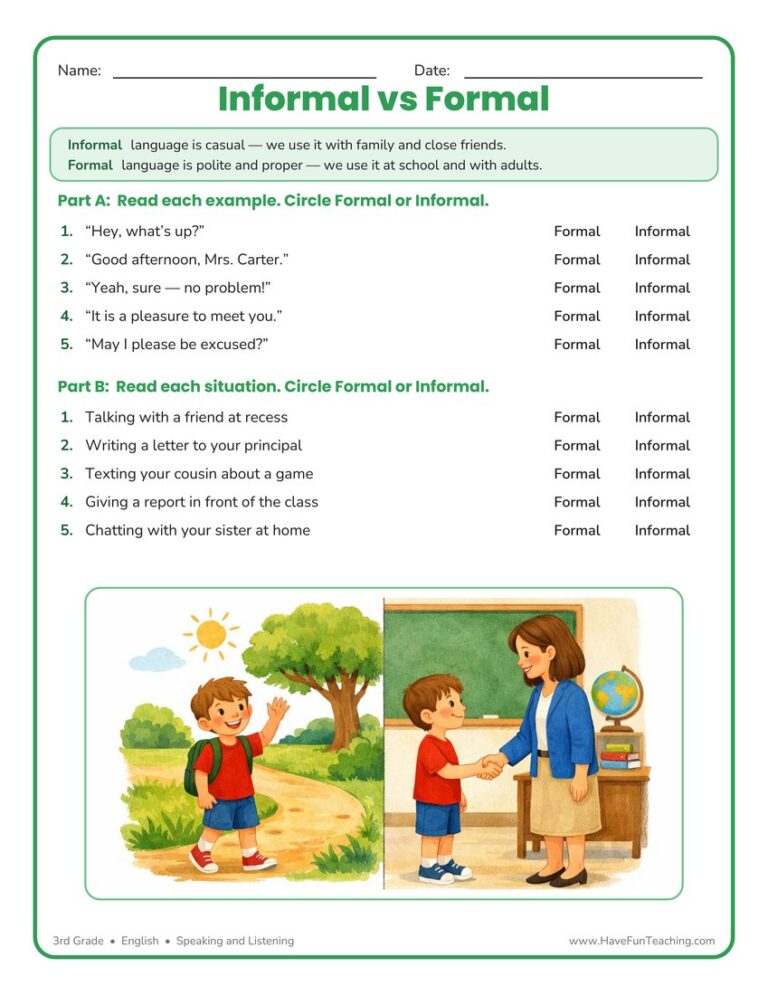
This Informal vs Formal Worksheet helps 3rd graders decide when to use formal or informal language across real examples and everyday situations. A complete answer key is included for quick, no-prep speaking and listening practice.

Using Feeling Words Activity, students read Amy Goes to First Grade to find words and phrases that describe Amy's feelings on the first day of school.
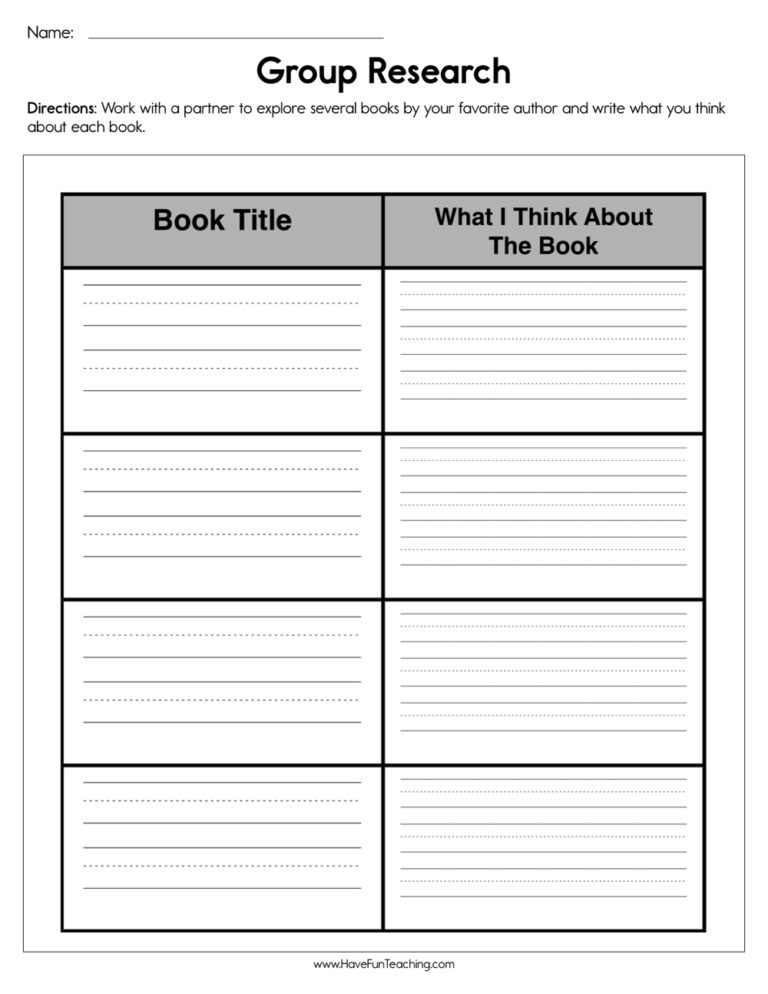
Using the Group Research Worksheet, students read with a partner to explore several books by your favorite author and write what you thinkabout each book.
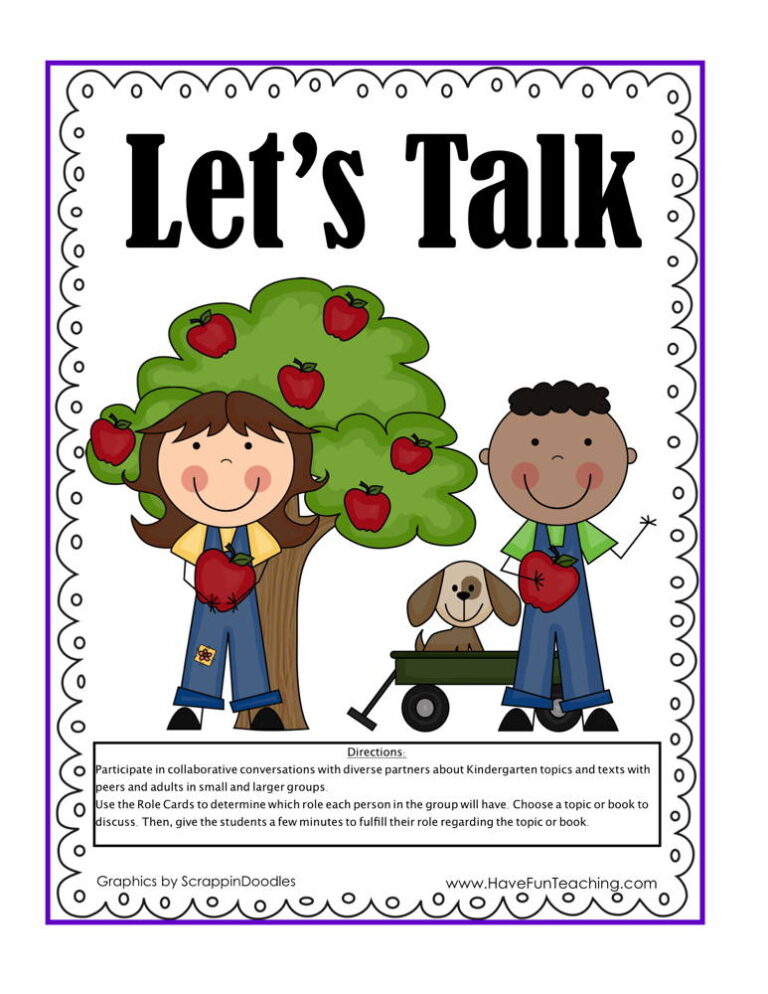
Using this Let's Talk Classroom Speaking Activity, students participate in collaborative conversations with diverse partners about topics and texts with peers and adults in small and larger groups.

A Collaborative Research Worksheet that helps 3rd graders plan a group project: one topic, four research questions, the sources they used, and how they will share what they learned.
Using this What Does it Mean Literal Non-Literal Language Activity, students determine the meaning of words and phrases as they are used in a text, distinguishing literal from non-literal language.
Using Green Eggs and Ham Reader's Theater, students act out different parts in the story Green Eggs and Hall to learn more about Dr. Seuss.

Using Hurricanes Reading Comprehension Activity, students refer to details to explain what the text says explicitly and when drawing inferences. This is perfect for making inferences and drawing conclusions.

Using the Spoken or Written Language Activity, students determine which words or phrases are most appropriate to be used in spoken or written situations.

Using the Recording a Story or Poem Worksheet, students create audio recordings of stories or poems by using a voice recorder with a microphone.
Reviews
There are no reviews yet