Skip to content
Start My 3 Free Days $0 today · cancel anytime

Classification Worksheets

62 classification worksheets. Teacher favorites: Grouping into Categories Worksheet and Sorting Objects Worksheet. How teachers use these

Classification Worksheets

62 classification worksheets. Teacher favorites: Grouping into Categories Worksheet and Sorting Objects Worksheet. How teachers use these

Worksheet
WorksheetKindergartenGrouping into Categories Worksheet

This Grouping into Categories Worksheet asks kindergarten students to sort eight pictures into fruit, animals, plants, and shapes by writing each one's category number. Includes an answer key for fast, no-prep classification practice.

Worksheet
WorksheetKindergartenSorting Objects Worksheet

This Sorting Objects Worksheet has kindergarten students sort twelve pictures into animals, plants, vehicles, and people, then count each group. Includes an answer key — a no-prep way to build classification and early counting skills.

Worksheet
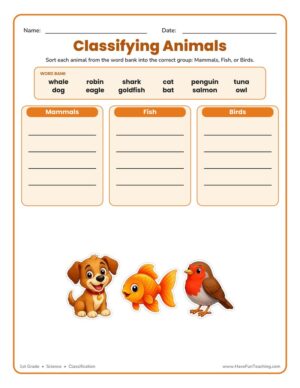
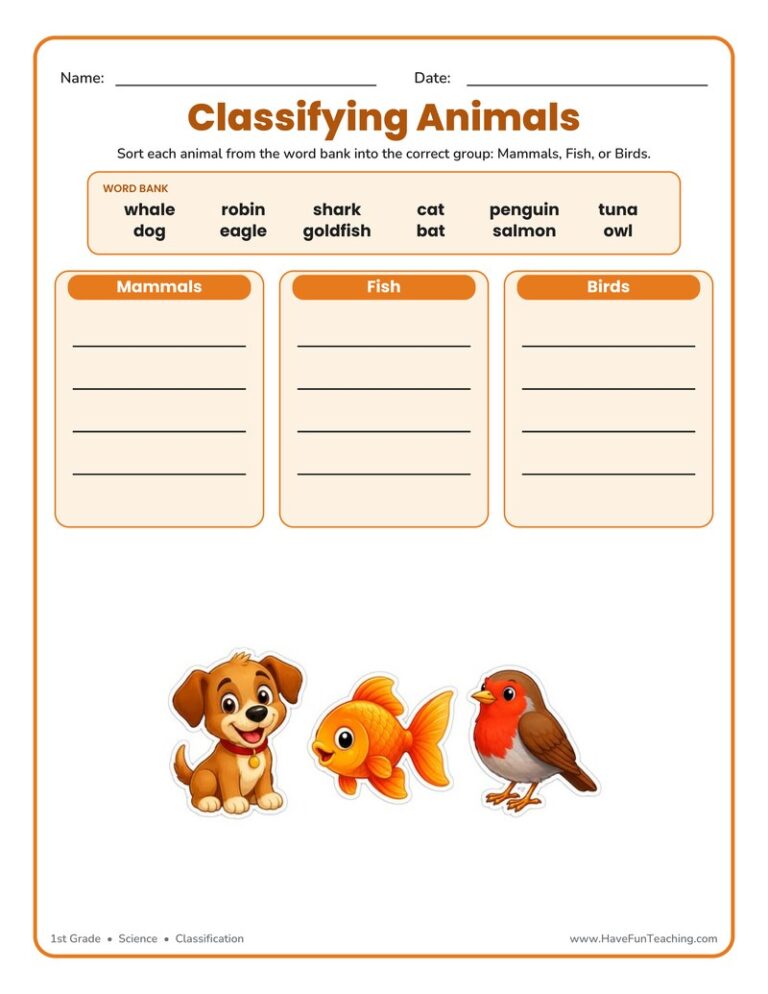
Worksheet1st GradeMammals, Fish, or Birds Classifying Animals Worksheet

A 1st grade Mammals, Fish, or Birds Classifying Animals Worksheet where students sort a word bank of animals into three groups. Includes a complete answer key for quick, no-prep science practice.

Worksheet
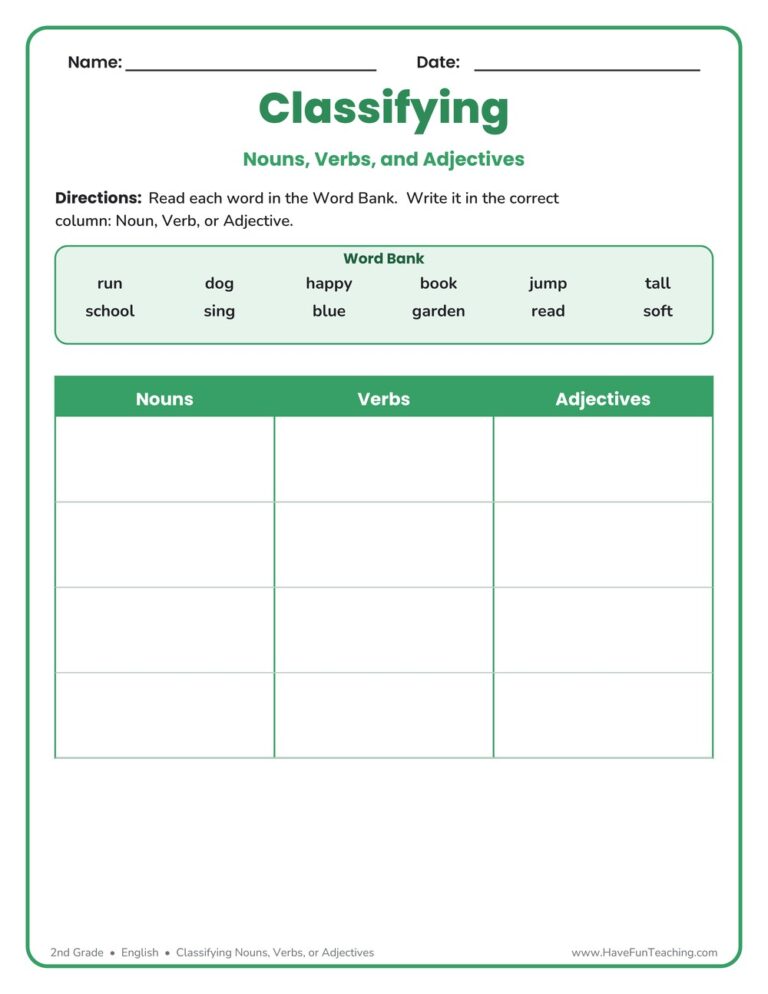
Worksheet2nd GradeClassifying Nouns, Verbs, or Adjectives Worksheet

Sort twelve everyday words into nouns, verbs, and adjectives with this Classifying Nouns, Verbs, or Adjectives Worksheet for 2nd grade. Includes a complete answer key for quick, no-prep grammar practice.

Worksheet
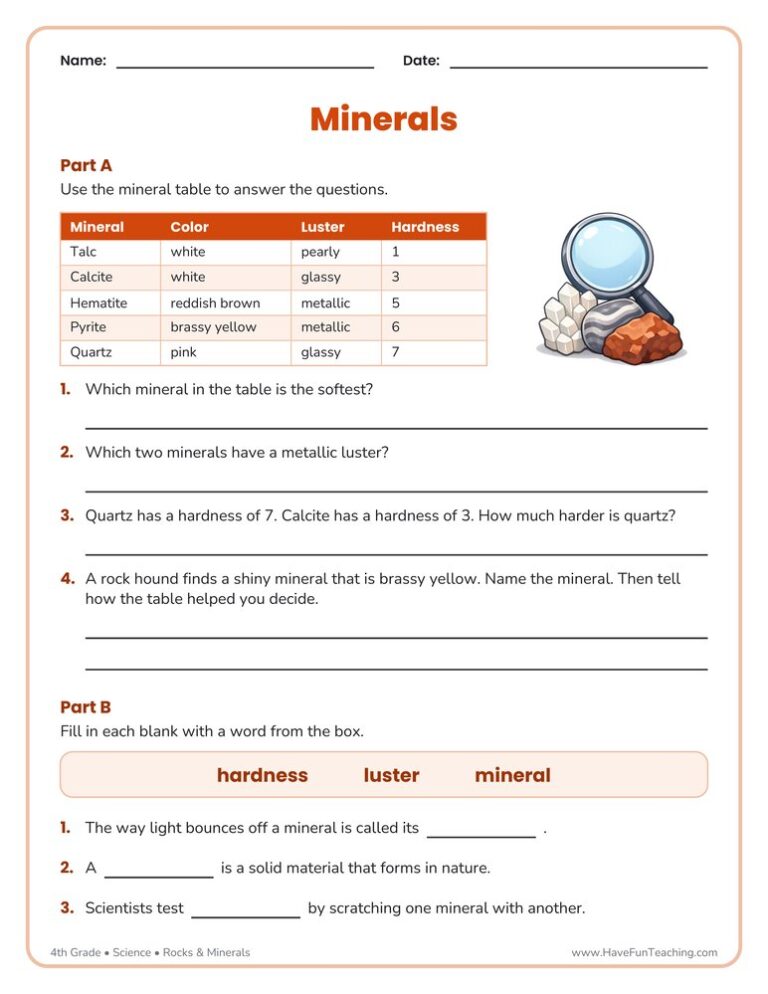
Worksheet4th GradeRocks & Minerals Worksheet

This Rocks & Minerals Worksheet gives 4th graders a real property table of talc, calcite, hematite, pyrite, and quartz to read and reason from. Answer key included, so mineral identification practice takes no prep at all.

Worksheet
Worksheet1st GradeCategorizing Objects Worksheet

This Categorizing Objects Worksheet helps 1st graders read nine words and sort them into groups like animals, food, and colors. Includes a complete answer key for quick, no-prep classification practice.

Worksheet
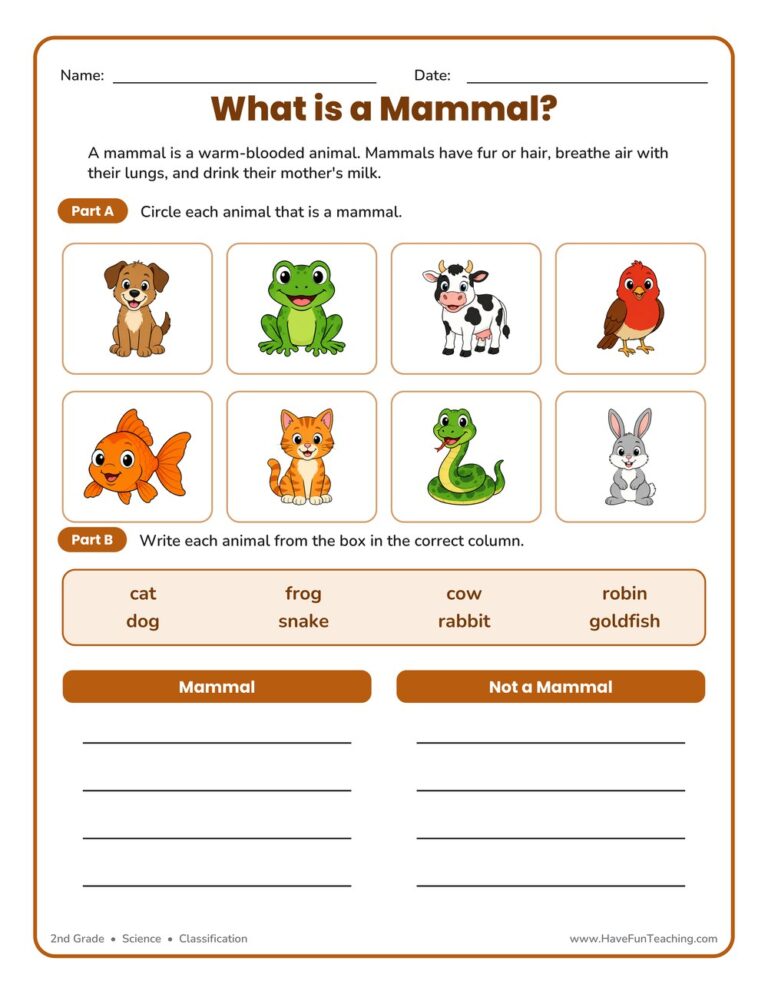
Worksheet2nd GradeMammal Classification Worksheet

This mammal classification worksheet helps 2nd graders spot mammals and sort animals into mammal and not-a-mammal groups. It includes a complete answer key, making it perfect for no-prep science practice at home or in the classroom.

Worksheet
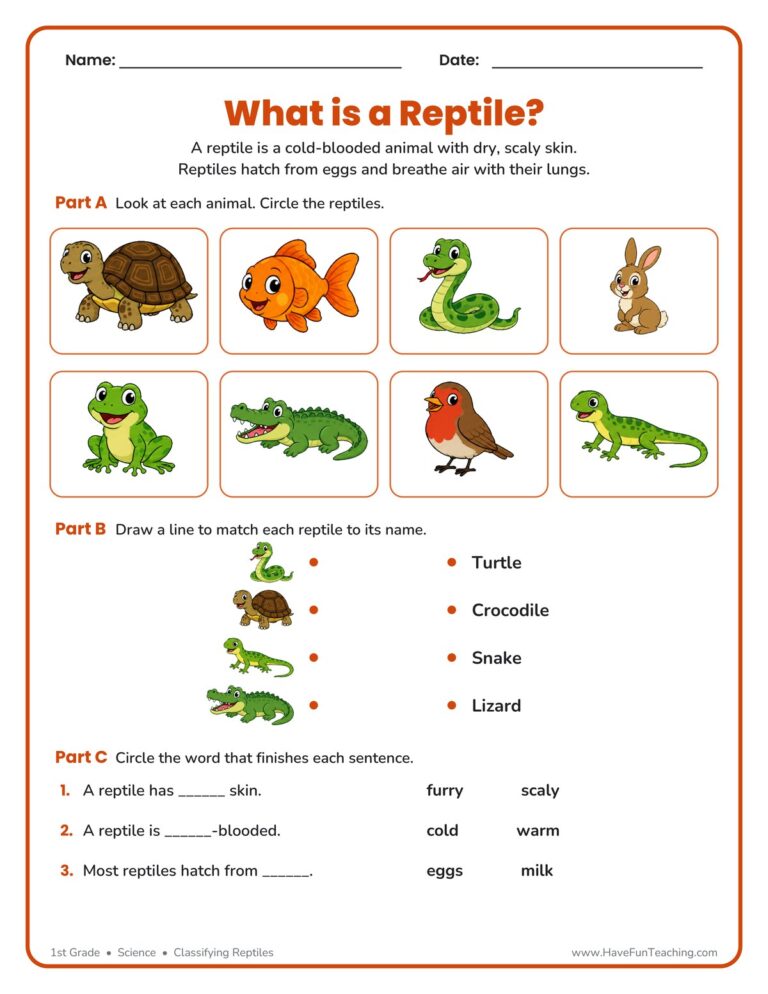
Worksheet1st GradeReptile Classification Worksheet

This reptile classification worksheet helps 1st graders sort animals by circling reptiles, matching them to their names, and completing simple reptile facts. Includes a complete answer key for fast, no-prep life science practice.

Worksheet
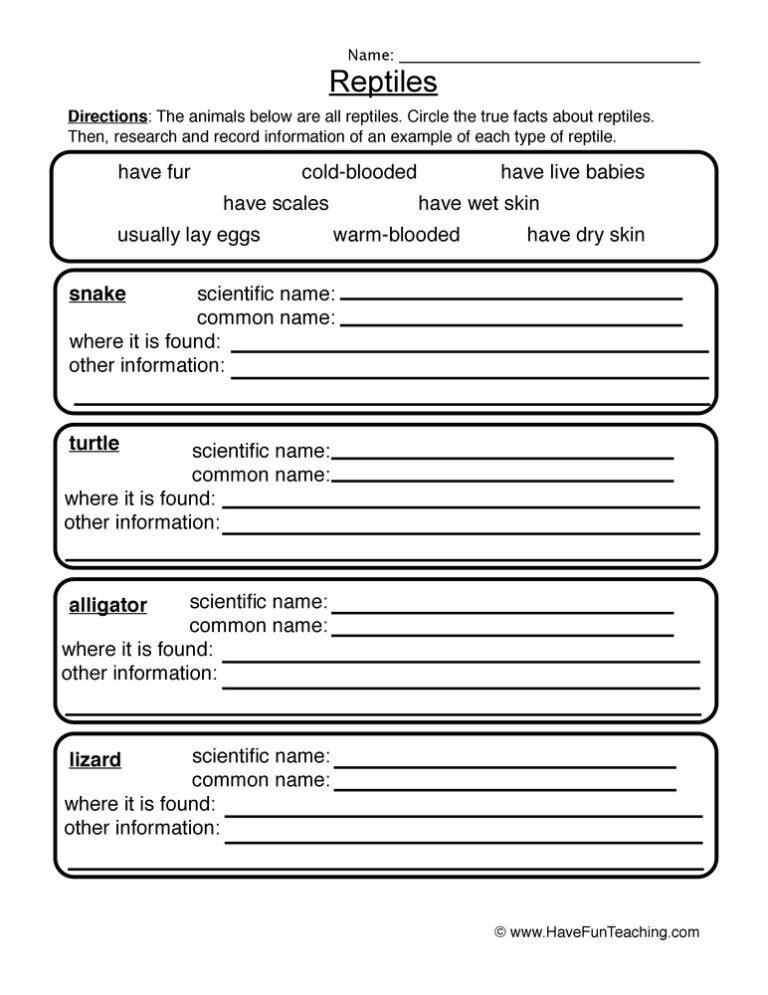
Worksheet3rd GradeReptiles Worksheet

This reptiles worksheet has 3rd Grade students check reptile facts, sort eight animals into reptile and not-a-reptile columns, and explain how a frog differs. An answer key is included, so checking work takes seconds.

Worksheet
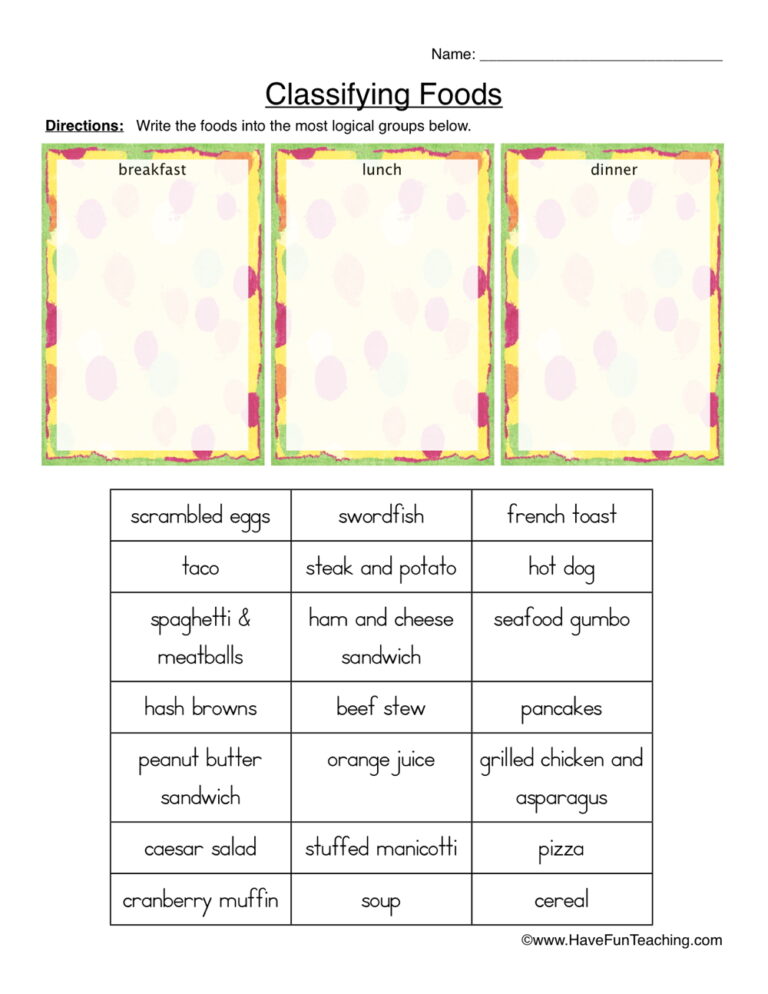
Worksheet1st GradeBreakfast, Lunch, or Dinner Classifying Food Worksheet

This Breakfast, Lunch, or Dinner Classifying Food Worksheet has 1st Grade students sort nine familiar foods into three meal columns. Answer key included, so sorting practice checks itself in minutes.

Worksheet
Worksheet5th GradeMammals Worksheet

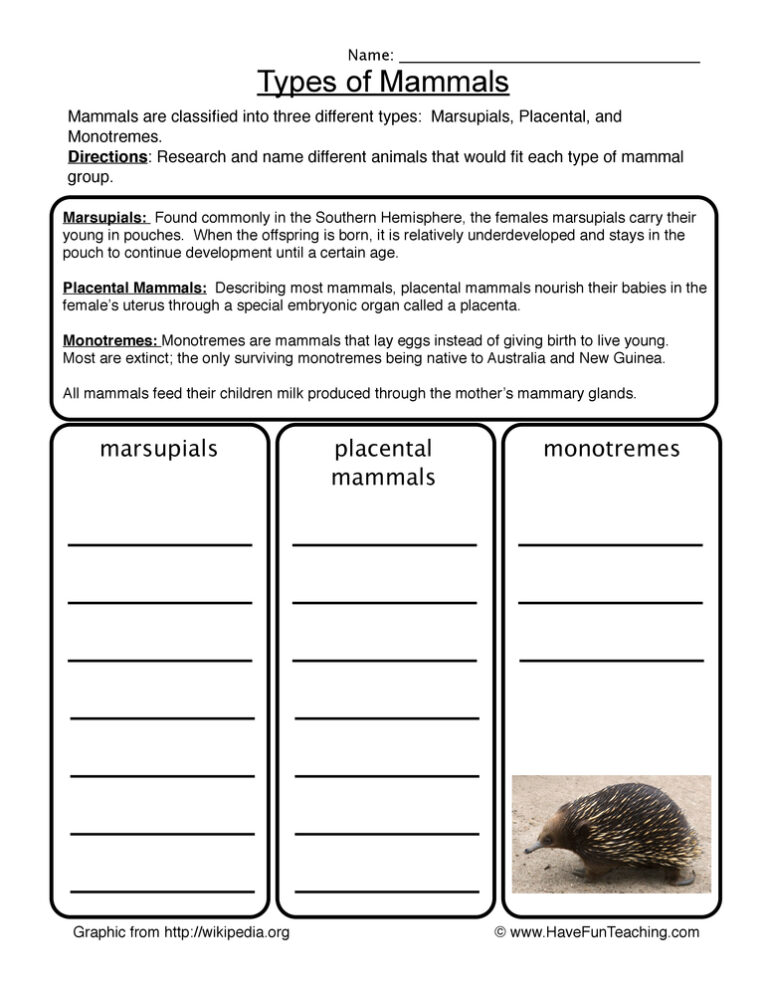
A three-part mammals worksheet that has 5th graders define, sort, and explain the three mammal groups: marsupials, placental mammals, and monotremes. Answer key included for fast, no-prep science practice.

Worksheet
WorksheetKindergartenLiving Things and Non Living Things Sorting Worksheet

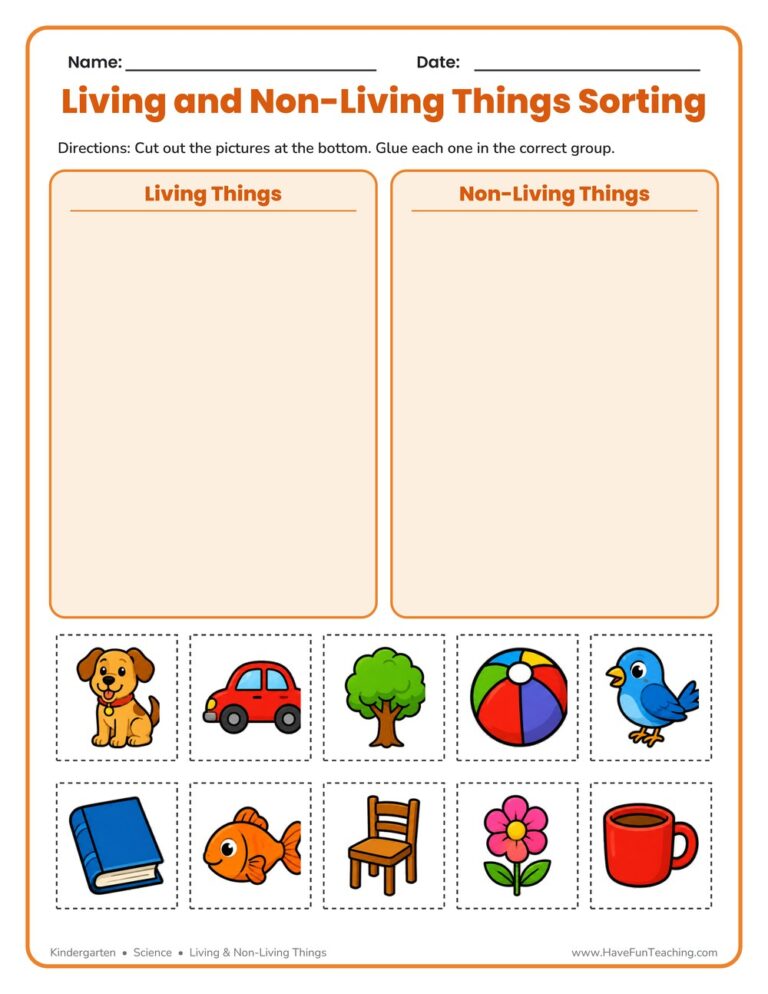
This Living Things and Non Living Things Sorting Worksheet has kindergarten students cut out ten pictures and sort them into living and non-living groups. Answer key included for quick, hands-on science practice.

Worksheet
Worksheet3rd GradeAmphibians Worksheet

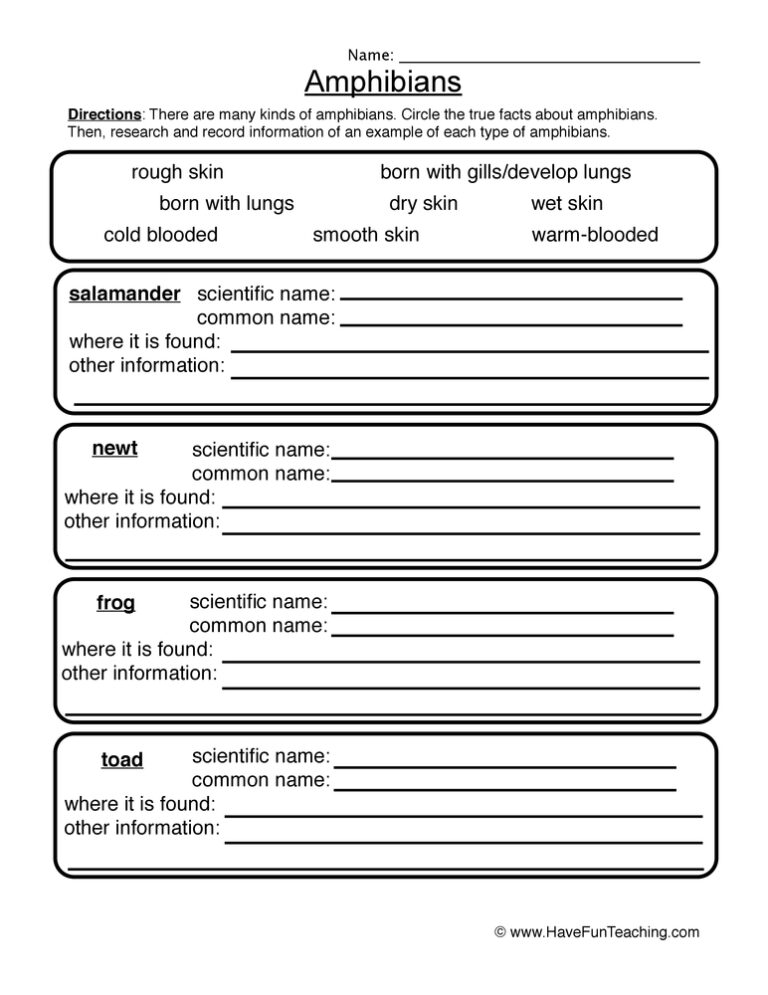
This amphibians worksheet has 3rd graders circle amphibian traits, sort eight animals into amphibian and non-amphibian columns, and explain their thinking. Answer key included for fast, no-prep science practice.

Worksheet
Worksheet2nd GradeAnimal Classification Worksheet

This animal classification worksheet lets 2nd graders sort twelve animals into mammals, birds, fish, and reptiles using a picture-clued word box. An answer key is included — great for no-prep science practice at home or in class.

Worksheet
Worksheet3rd GradeTools Worksheet

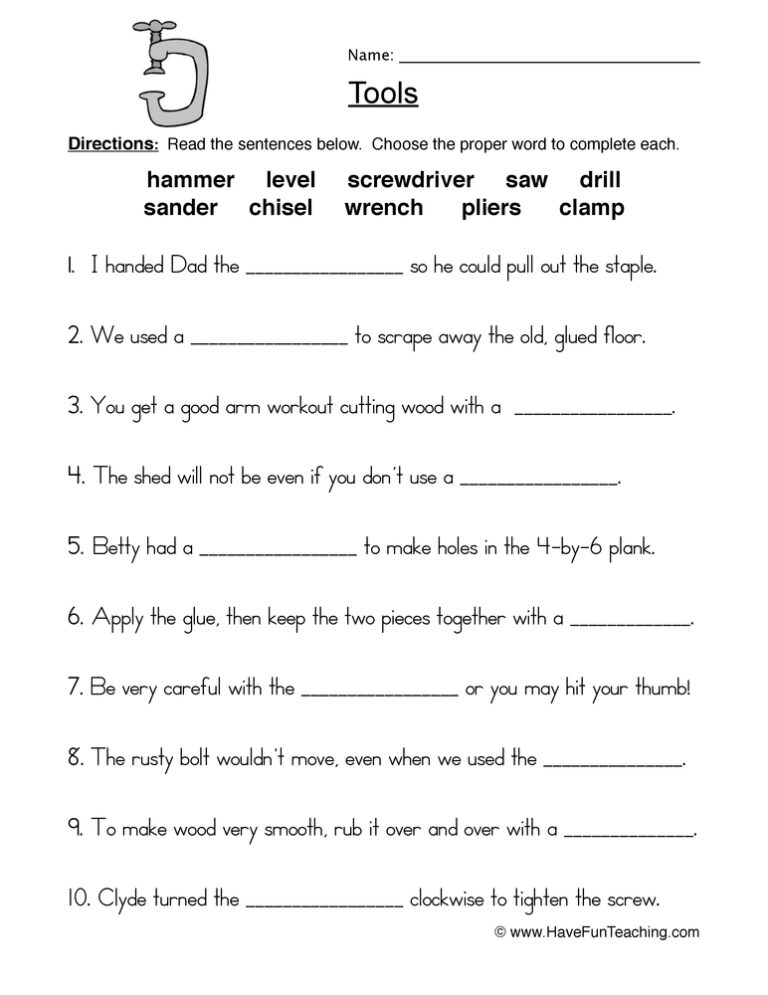
This tools worksheet has 3rd graders name each tool from the job it does, then sort six tools into cutting, turning, and measuring groups. Answer key included, so science practice is ready to print and go.

Worksheet
WorksheetKindergartenSort Classify and Count Worksheet

This Sort Classify and Count Worksheet asks kindergartners to sort twelve mixed shapes, count each kind, and answer three questions about which has the most and fewest. Answer key included.

Worksheet
Worksheet1st GradeCount Classify and Sort Worksheet

This Count Classify and Sort Worksheet has 1st graders group nine animal pictures into birds, fish, and bugs, count each group, and compare them. Answer key included for quick, no-prep practice.

Worksheet
Worksheet3rd GradeBird Classification Worksheet

This bird classification worksheet asks 3rd grade students to sort eight animals into birds and not birds, then match four trait clues. A full answer key makes the sort quick to check.

Worksheet
Worksheet5th GradeCells Worksheet

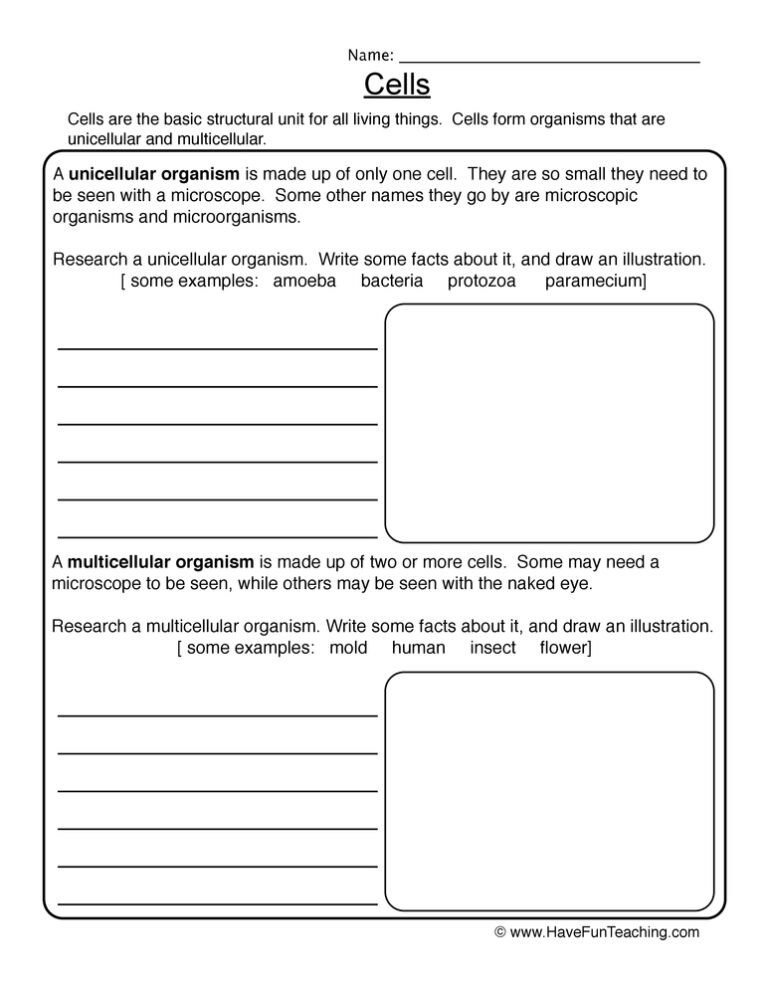
This cells worksheet has 5th graders sort eight living things into unicellular and multicellular columns, then use clues to classify four more. An answer key is included, so science practice is ready to print and grade in minutes.

Worksheet
Worksheet3rd GradeInsects Worksheet

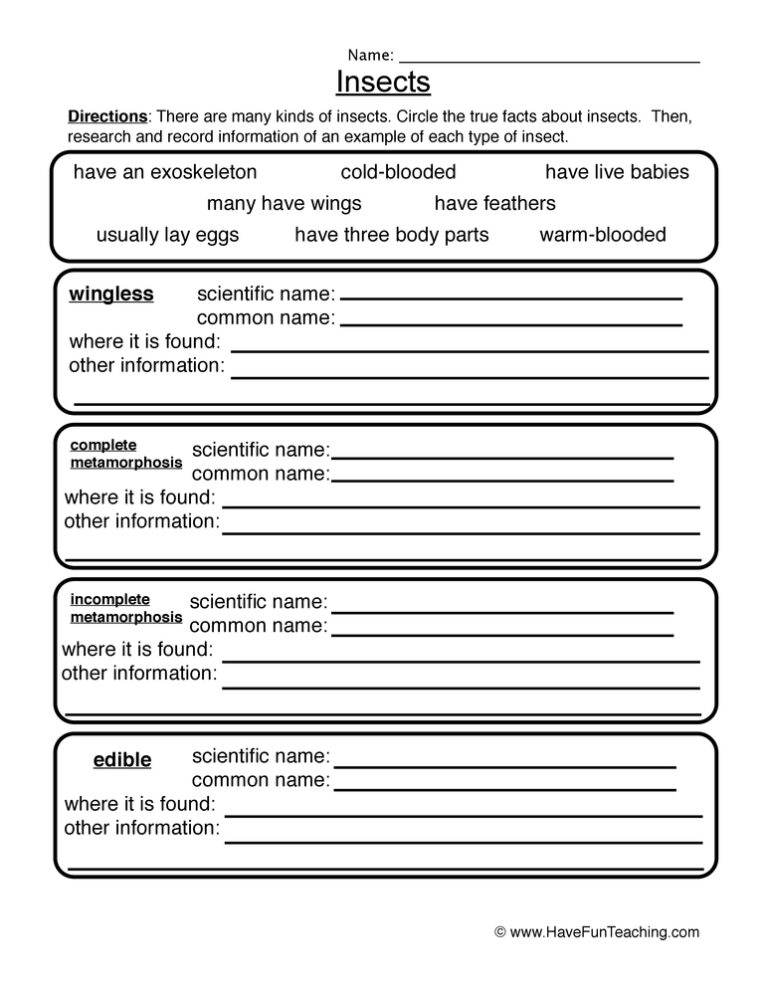
This insects worksheet helps 3rd grade students circle true insect facts, sort eight animals into insect groups, and explain why a spider is not an insect, with an answer key included for easy checking.

From our teachers' playbook

Sort it like a scientist

What do kids learn about classification?

Classification is sorting things into groups by what they have in common, and it is one of the first things real scientists do. Little learners start by sorting buttons or toys by color, size and shape. Soon they sort living and nonliving things, then animals into groups like mammals, birds, fish, reptiles, amphibians and insects. Older students sort by body features, such as fur + breathes air + feeds young milk = mammal, and they even sort rocks and minerals. The big idea: you pick a rule, check every object against it, and explain your reasoning.

Moves that make classification click

Kids are natural sorters. These moves turn that instinct into real science thinking.

Sort it, then name the rule

Hand groups a bag of mixed objects and say "Sort these any way you want." Then each group shares, and the class guesses their rule. Kids learn that there is more than one right way to sort, as long as you can explain your rule.

Why it works: going from real objects to pictures to symbols is a core recommendation of the U.S. Department of Education's elementary math guide.

Sorting Objects WorksheetTry it withSorting Objects WorksheetWorksheetsOpen it →

Feature check charts

Make a chart with columns like fur, feathers, scales and lays eggs. Kids check off features for each animal card before they decide which group it belongs in. Penguins and bats become the best debates in the room!

Why it works: pairing a picture with each word gives kids two ways to remember it, a well-tested principle of how people learn (Mayer, 2009).

Animal Classification WorksheetTry it withAnimal Classification WorksheetWorksheetsOpen it →

Sing the animal groups

An animal song gives kids a catchy way to remember the big groups and one example of each. Play it at the start of the unit and again before a quiz. Kids will hum "mammals" in the lunch line, which is a win.

Why it works: a catchy, repeating tune gives the brain a hook to hang words on, so sung text is remembered better (Wallace, 1994).

Animal Song (Animated Music Video)Try it withAnimal Song (Animated Music Video)SongsOpen it →

Classification questions we hear

What is classification in science?

It is grouping living things or objects by shared features. Scientists use classification to organize the natural world and make it easier to study.

What are the main animal groups kids learn?

Most elementary classes learn mammals, birds, fish, reptiles, amphibians and insects. Older students also learn that animals with backbones are vertebrates and those without are invertebrates.

What age do kids start classifying?

Preschoolers already sort by color and shape. Science classification by features usually begins in kindergarten and 1st grade and becomes more detailed through 4th and 5th grade.

Why is a whale a mammal and not a fish?

Whales breathe air with lungs, are warm-blooded and feed their babies milk. Those are mammal features, even though whales live in the water.

How can I practice classifying at home?

Sort laundry, groceries or toy animals together and ask "What rule did you use?" Then challenge your child to sort the same things a different way.