Skip to content
Start My 3 Free Days $0 today · cancel anytime

Habitats and Biomes Worksheets

45 habitats and biomes worksheets. Teacher favorites: Matching Animal Habitats Worksheet and Biomes Worksheet. How teachers use these

Habitats and Biomes Worksheets

45 habitats and biomes worksheets. Teacher favorites: Matching Animal Habitats Worksheet and Biomes Worksheet. How teachers use these

Worksheet
Worksheet2nd GradeMatching Animal Habitats Worksheet

This matching animal habitats worksheet has 2nd Grade students connect five animals to the ocean, pond, desert, forest, and grassland, then finish three sentences. An answer key is included for fast, no-prep science practice.

Worksheet
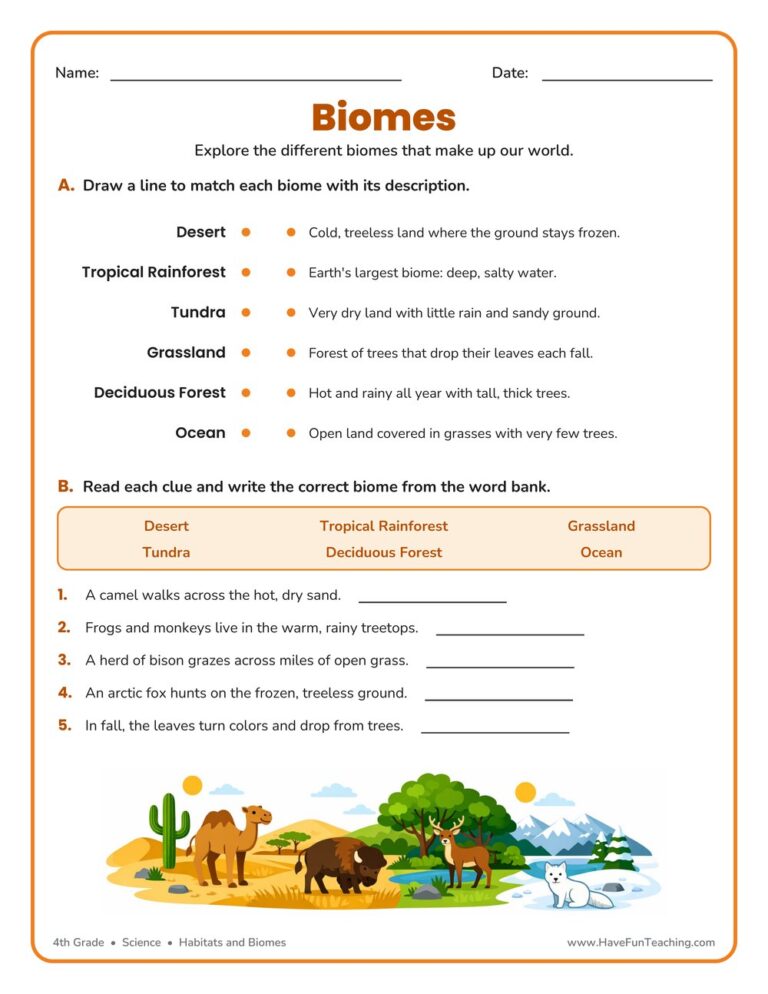
Worksheet4th GradeBiomes Worksheet

This Biomes Worksheet helps 4th grade students match major biomes to their climates and identify each one from real-world clues. Includes an answer key for fast, no-prep science practice at home or school.

Worksheet
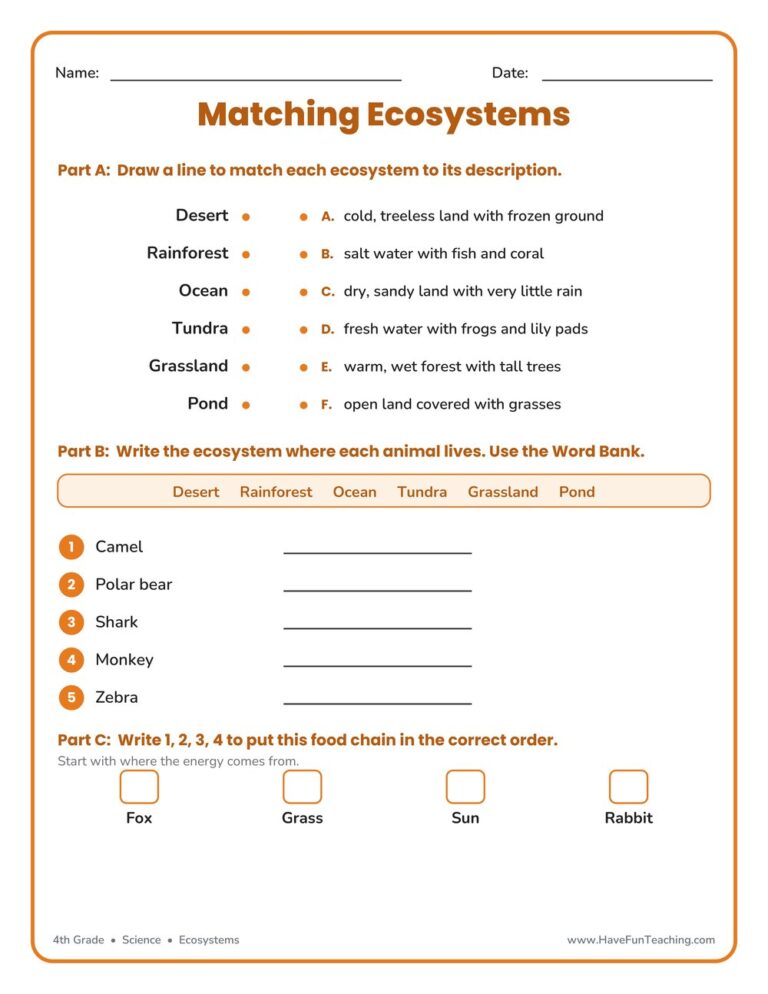
Worksheet4th GradeMatching Ecosystems Worksheet

This matching ecosystems worksheet helps 4th grade students match ecosystems to descriptions, sort animals into habitats, and order a food chain. Includes an answer key for easy, no-prep science practice.

Worksheet
Worksheet3rd GradeWater Pollution Worksheet

This Water Pollution Worksheet has 3rd Grade students sort pictures, finish sentences from a word box, and write about one way to keep rivers clean. Answer key included.

Worksheet
Worksheet3rd GradeMatching Habitats Worksheet

This matching habitats worksheet has 3rd graders link five animals to the habitats they live in, then explain two animal adaptations in writing. Answer key included for fast, no-prep science practice.

Worksheet
Worksheet4th GradeOur Natural Resources Worksheet

Our Natural Resources Worksheet asks 4th graders to sort eight resources into renewable and nonrenewable columns, then explain the difference in writing. Answer key included — easy no-prep Earth Science practice.

Worksheet
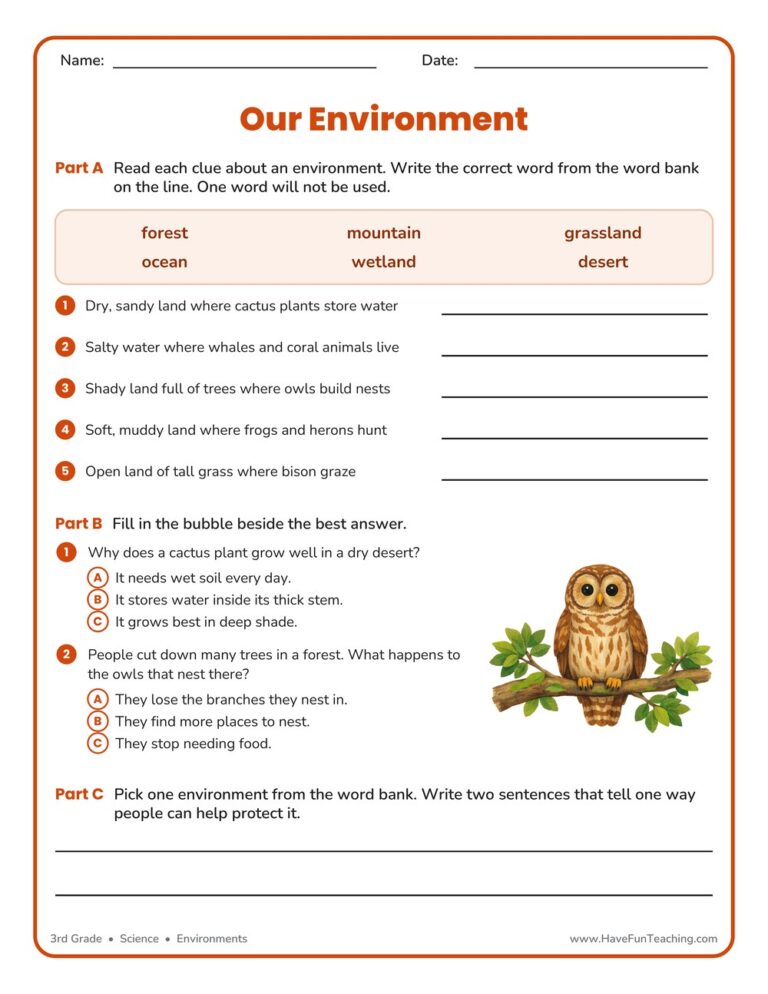
Worksheet3rd GradeOur Environment Worksheet

This Our Environment Worksheet asks 3rd graders to name five environments, answer two habitat questions, and write about protecting nature. An answer key is included for fast, no-prep science practice.

Worksheet
Worksheet4th GradeLandform Matching Worksheet

This landform matching worksheet helps 4th grade students match eight landforms to their meanings, then draw and describe two of them. An answer key is included to make checking quick and easy.

Worksheet
Worksheet3rd GradeAnimal Habitats Worksheet

This animal habitats worksheet asks 3rd Grade students to match animals to their habitats, sort six animals into two environments, and explain one desert adaptation. An answer key is included for fast, no-prep science practice.

Worksheet
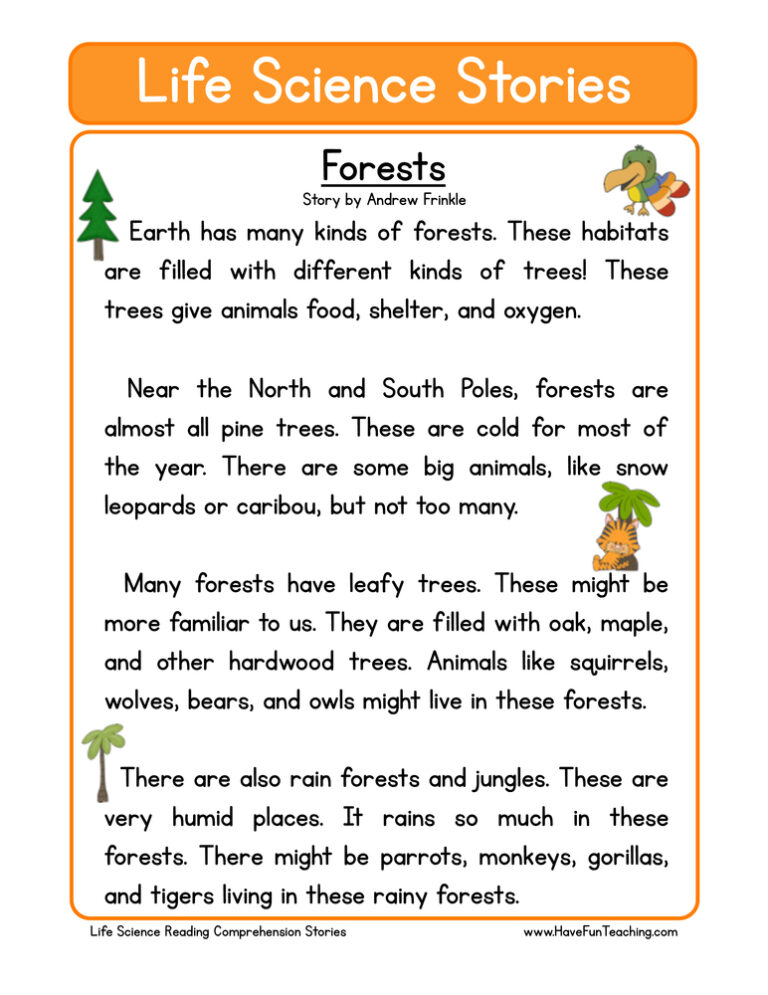
Worksheet2nd GradeForests Life Science Reading Comprehension Worksheet

This Forests Life Science Reading Comprehension Worksheet gives 2nd graders a short non-fiction passage about pine, leafy, and rain forests, plus questions and an answer key. Great no-prep practice for main idea and key details.

Worksheet
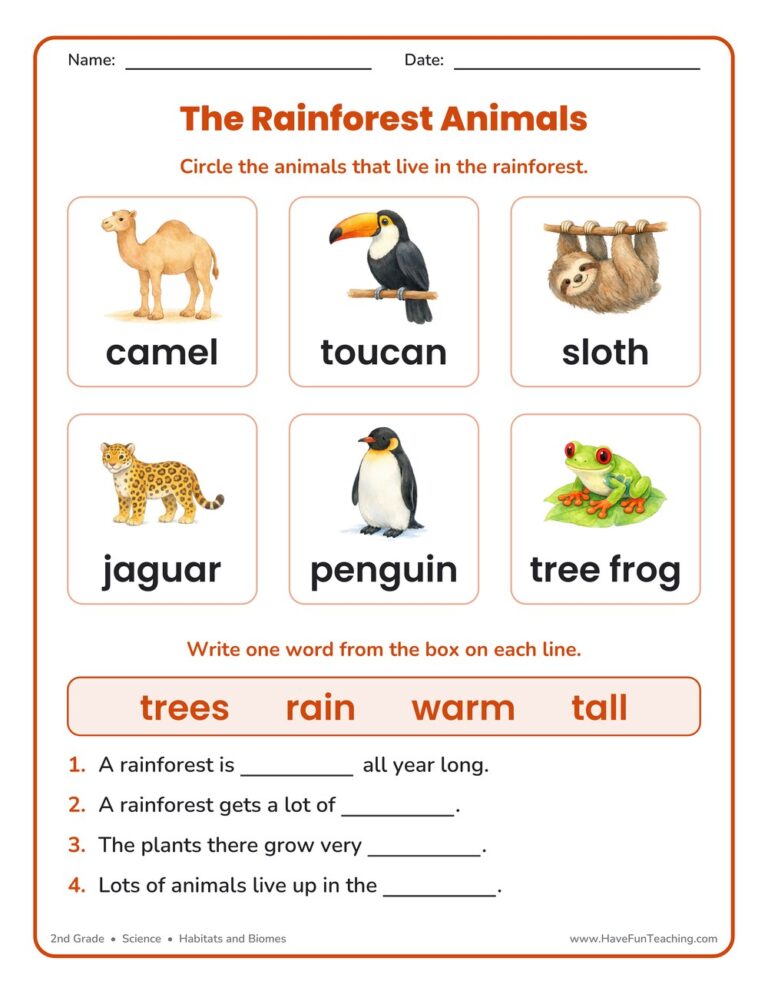
Worksheet2nd GradeRainforest Animals Worksheet

This rainforest animals worksheet asks 2nd Grade students to circle four rainforest animals and finish sentences about their habitat. Answer key included, so habitat practice takes only minutes to assign and check.

Worksheet
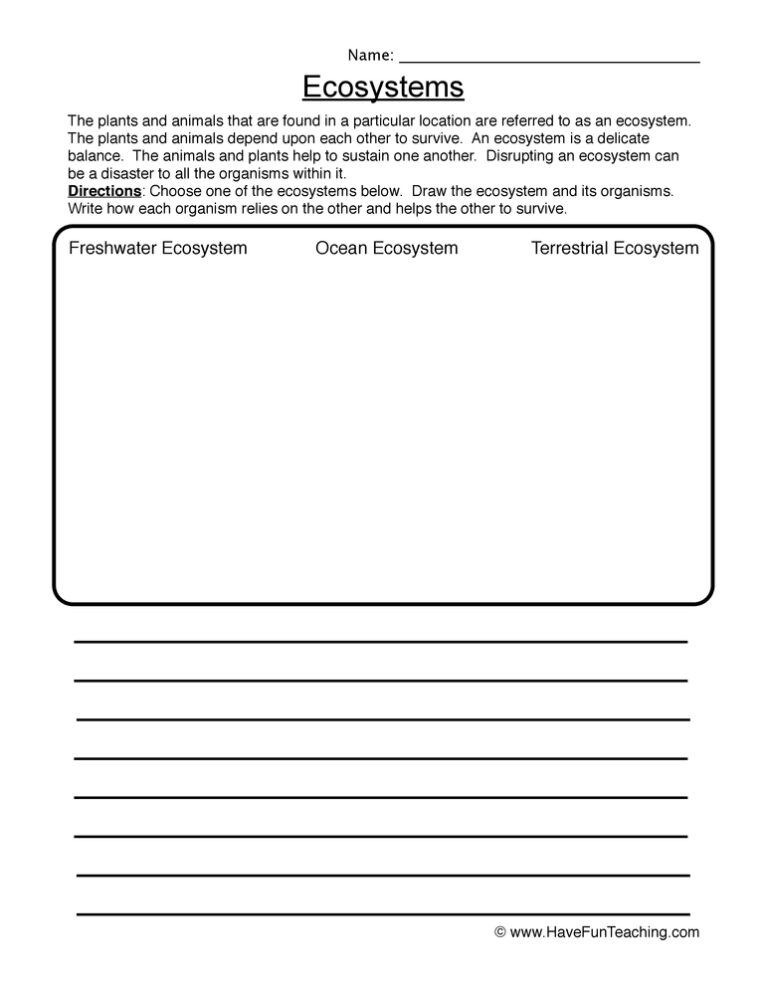
Worksheet4th GradeDrawing Ecosystems Worksheet

The Drawing Ecosystems Worksheet asks 4th grade students to name the freshwater, ocean and terrestrial ecosystems behind six clues, then explain one animal partnership. An answer key is included, so checking takes a minute.

Worksheet
Worksheet3rd GradeDesert Plants Worksheet

This desert plants worksheet asks 3rd graders to sort eight desert words into plants and animals, then find the plant and animal named in each sentence. An answer key is included for quick checking.

Worksheet
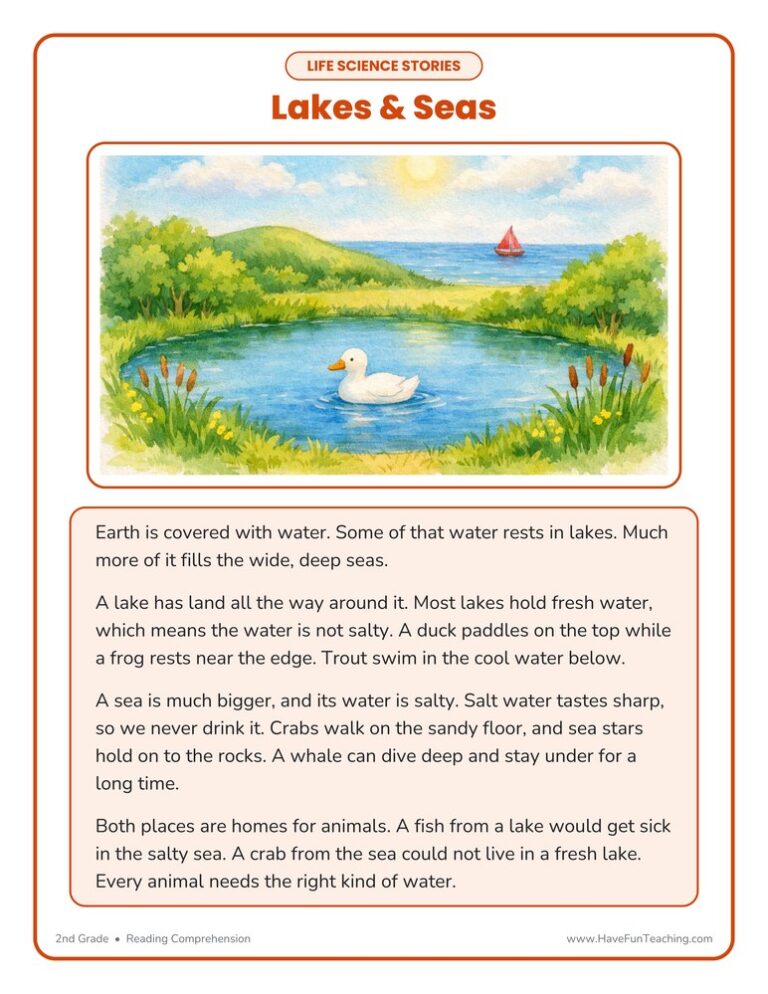
Worksheet2nd GradeLakes and Seas Life Science Reading Comprehension Worksheet

This Lakes and Seas Life Science Reading Comprehension Worksheet gives 2nd Grade students an original passage about fresh water and salt water habitats, with bubble, fill-in, and writing questions. Answer key included.

Worksheet
Worksheet3rd GradeDesert True or False Worksheet

This desert true or false worksheet asks 3rd graders to judge eight statements about desert weather, plants and animals, then rewrite a false one correctly. Answer key included for fast, no-prep science practice.

Worksheet
Worksheet1st GradeOcean Animal Habitat Worksheet

This Ocean Animal Habitat Worksheet has 1st graders circle the animals that live in the sea, then write the three names on wide handwriting lines. Answer key included for quick, no-prep science practice.

Worksheet
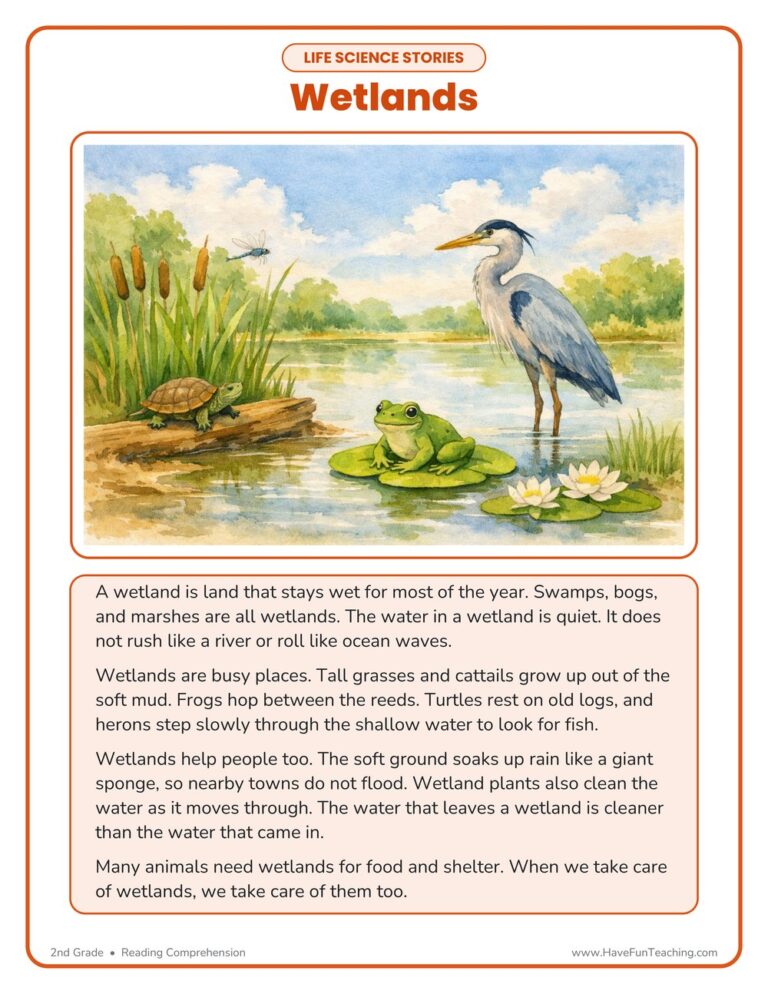
Worksheet2nd GradeWetlands Life Science Reading Comprehension Worksheet

Explore swamps, bogs, and marshes with this wetlands life science reading comprehension worksheet. Second graders read a short nonfiction passage and answer six questions, and an answer key is included, so learning about habitats stays easy and fun.

Worksheet
WorksheetKindergartenLand and Water Worksheet

This Land and Water Worksheet asks Kindergarten students to look at six pictures and fill in the bubble for land or water. An answer key is included, so sorting practice takes no prep.

Worksheet
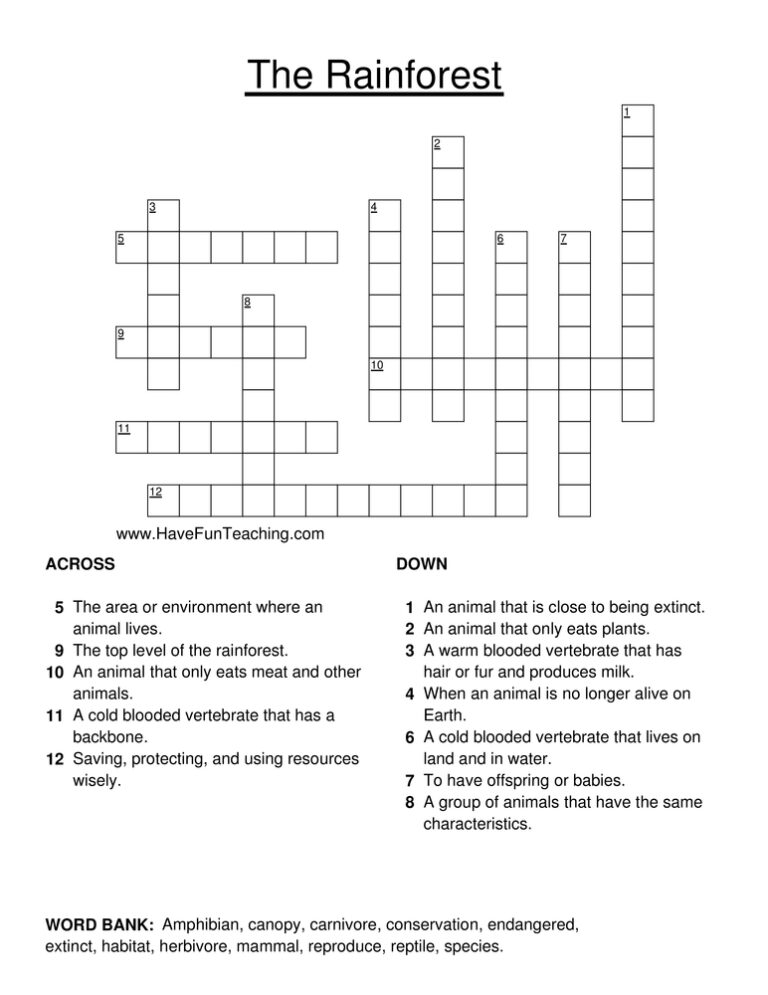
Worksheet3rd GradeRainforest Crossword Puzzle

This rainforest crossword puzzle worksheet gives 3rd grade students eight habitat vocabulary words to solve from short science clues, plus one written question. An answer key is included.

Worksheet
Worksheet3rd GradeDesert Animals Habitat Worksheet

This desert animals habitat worksheet asks 3rd grade students to sort eight animals into desert and non-desert columns, then match animals to habitats in four sentences. An answer key is included.

From our teachers' playbook

Wonder, test, discover, repeat

What do kids learn in elementary science?

Elementary science is about asking questions and finding answers. Kids explore life science, like plant parts, animals, body systems and cells. They study Earth science: weather, seasons and the layers of the Earth. In physical science they investigate matter, from solids, liquids and gases to physical changes, and forces like pushes, pulls and gravity. Along the way they learn the scientific method: question → hypothesis → test → conclusion. The click is when a child says "Let's test it!" instead of just guessing.

Our favorite ways to teach science

Science sticks when kids do it, see it and talk about it.

Walk through the method

Do one experiment as a class, like "Which ball bounces highest?" and fill in each step of the scientific method together on the board. Then kids plan their own mini experiment using the scientific method worksheet.

Why it works: showing first, practicing together, then letting kids try alone is the "gradual release" model teachers have relied on for decades (Pearson and Gallagher, 1983).
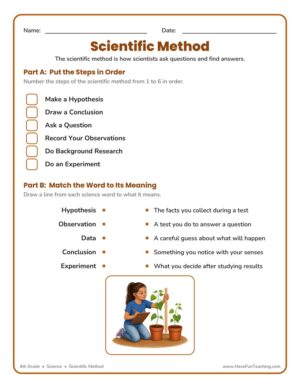
Scientific Method WorksheetTry it withScientific Method WorksheetWorksheetsOpen it →

Label to learn

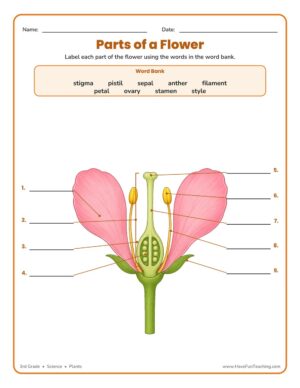
Have kids color and label animal and plant cells, then compare them side by side. Ask "What does the plant cell have that the animal cell doesn't?" Drawing and labeling turns tricky vocabulary into a picture they remember.

Why it works: pairing a picture with each word gives kids two ways to remember it, a well-tested principle of how people learn (Mayer, 2009).

Animal and Plant Cells WorksheetTry it withAnimal and Plant Cells WorksheetWorksheetsOpen it →

Review the vocab

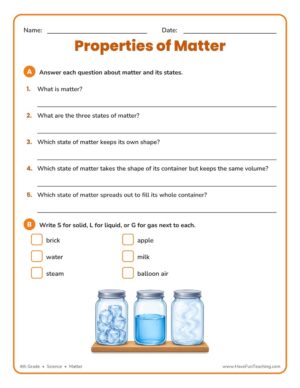
After a matter unit, use the properties of matter review page as a quick check. Kids explain each term in their own words. Retrieval, not rereading, is what locks science words in.

Why it works: a big review of study methods ranked quick self-quizzing among the most powerful ways to remember (Dunlosky and colleagues, 2013).

Properties of Matter Review WorksheetTry it withProperties of Matter Review WorksheetWorksheetsOpen it →

Questions parents and teachers ask about science

What science topics are taught in elementary school?

Life science (plants, animals, the human body), Earth science (weather, seasons, rocks and the Earth's layers) and physical science (matter, forces and energy). Kids also learn the scientific method.

How can I teach science at home?

Cook, garden, watch the weather and ask "What do you think will happen?" Simple kitchen experiments like melting ice or mixing baking soda and vinegar are great starters.

What is the scientific method for kids?

It is a step-by-step way to answer a question: ask a question, make a guess called a hypothesis, test it, observe what happens, and draw a conclusion.

How do I make science fun?

Let kids get hands-on. Experiments, nature walks, drawing what they observe and songs about science ideas all make it memorable.