
3 days free
Ready for the whole library?
You’ve had your freebie — but members download 10,000+ resources for every grade, all year long. Try it free — $0 today, cancel anytime.
Free for teachers
Pick your grade. We’ll send 10 free resources.
Worksheets, activities and a video — picked for your classroom, ready to print tonight.
One free bundle per teacher. We’ll also send free teaching ideas each week — unsubscribe anytime.




This senses hearing worksheet asks 2nd graders to sort ten everyday sounds into Loud and Quiet columns, then write each word by hand. Answer key included for teachers and homeschool parents.

This senses touch worksheet has first grade students circle the objects that feel soft, then write texture words to finish three sentences. An answer key is included, so checking the work takes seconds.
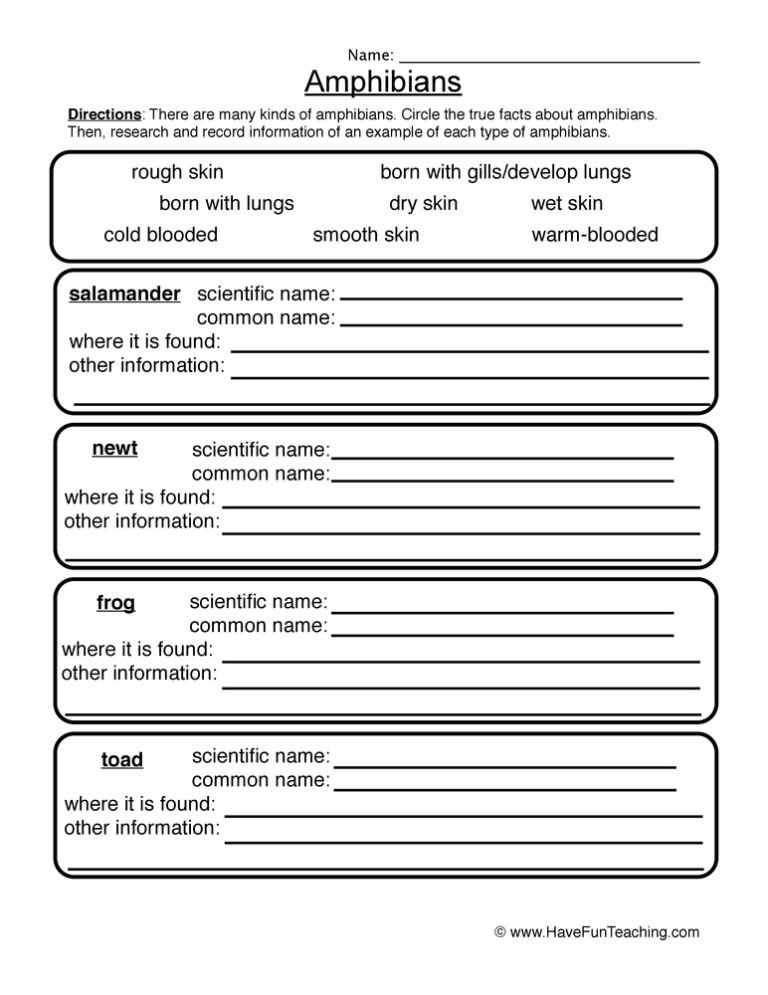
This amphibians worksheet has 3rd graders circle amphibian traits, sort eight animals into amphibian and non-amphibian columns, and explain their thinking. Answer key included for fast, no-prep science practice.
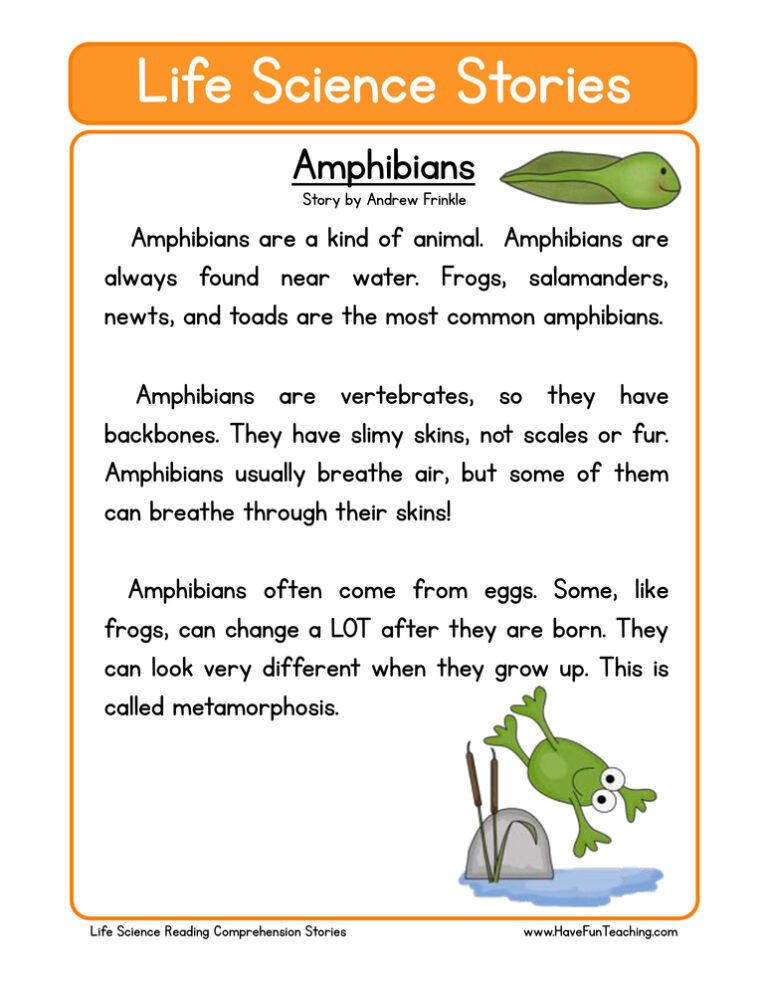
This amphibians life science reading comprehension worksheet gives 2nd grade students a nonfiction passage, four questions and a written response. An answer key is included, so a pond life lesson is ready to print.
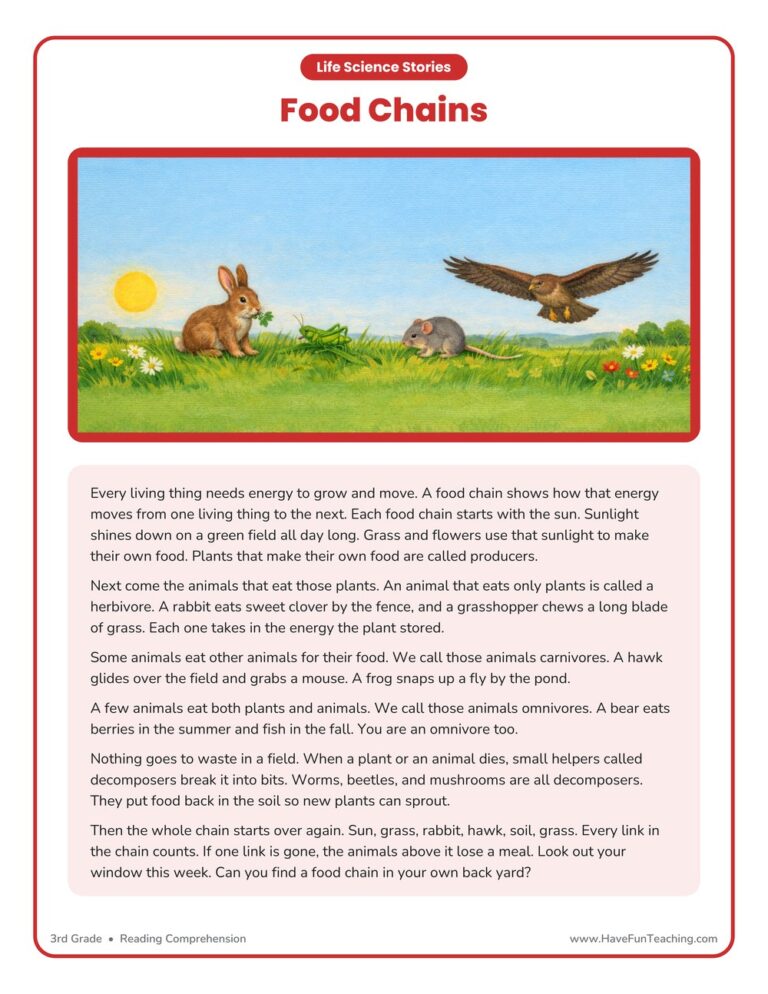
Read an original meadow story and follow the energy from the sun to a hawk with this Food Chains Life Science Reading Comprehension Worksheet. Built for 3rd Grade, answer key included, so new science vocabulary sticks.

UsingCharacter Reading Comprehension Workbook Download, students can have all of the passages about different life science topics all in one workbook.
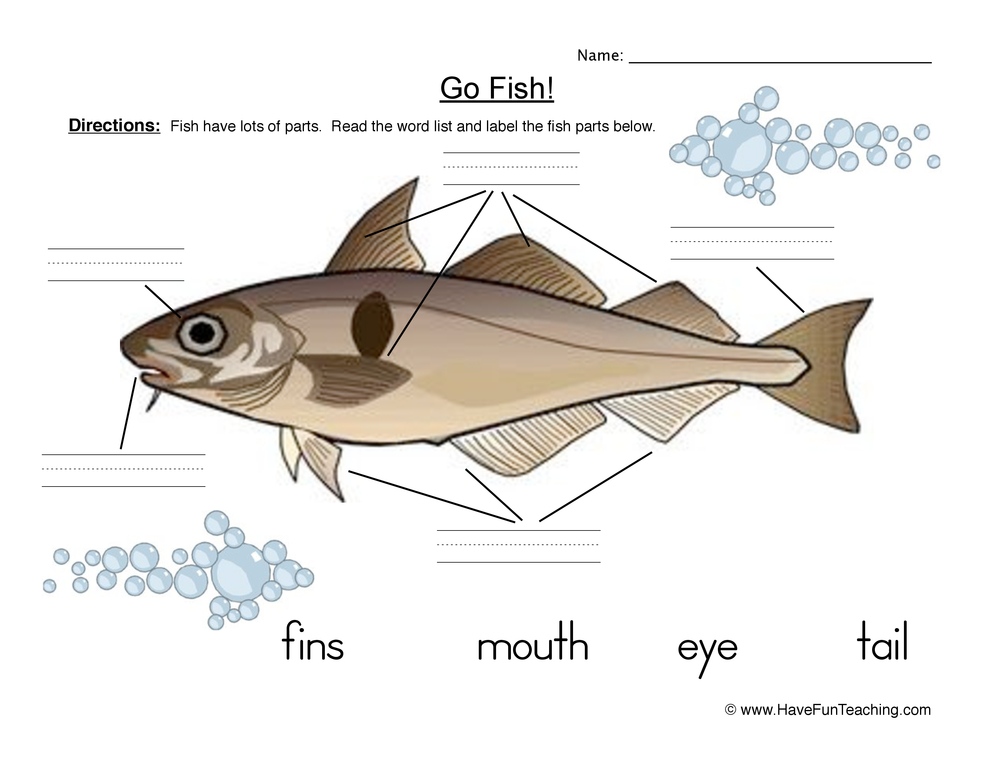
This Fish Parts Worksheet has kindergarten students label the eye, fin, mouth, and tail on a big numbered fish using a word box. An answer key is included for fast, easy checking.

This animals matching classification worksheet has 3rd grade students sort twelve animals into mammals, birds, reptiles, amphibians, fish, and insects, then solve clue questions. An answer key is included for quick checking.

This fish worksheet has 3rd graders circle the facts that are true of all fish, sort eight animals into Fish and Not a Fish, and explain how a dolphin is different. Answer key included.

This Plant Riddles Worksheet gives 1st Grade students four three-clue riddles about plants and a word box to answer them from. An answer key is included.
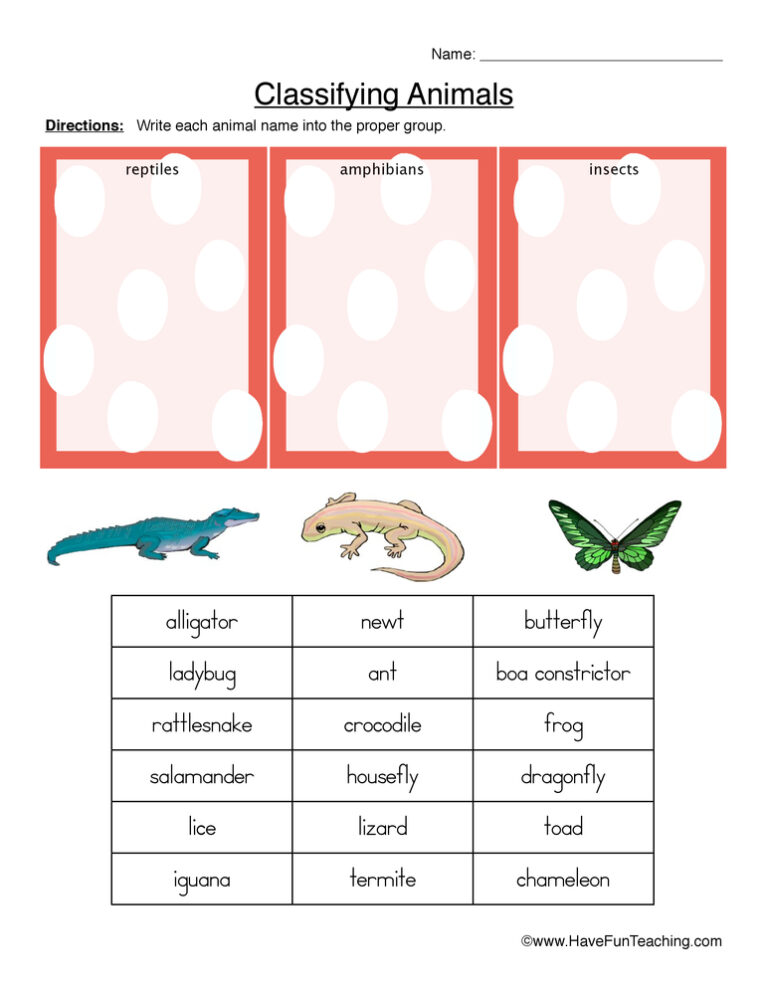
This Classifying Reptiles, Amphibians, or Insects Worksheet helps 3rd Grade students sort twelve animals by their traits and explain their thinking. An answer key is included, so checking work takes seconds.
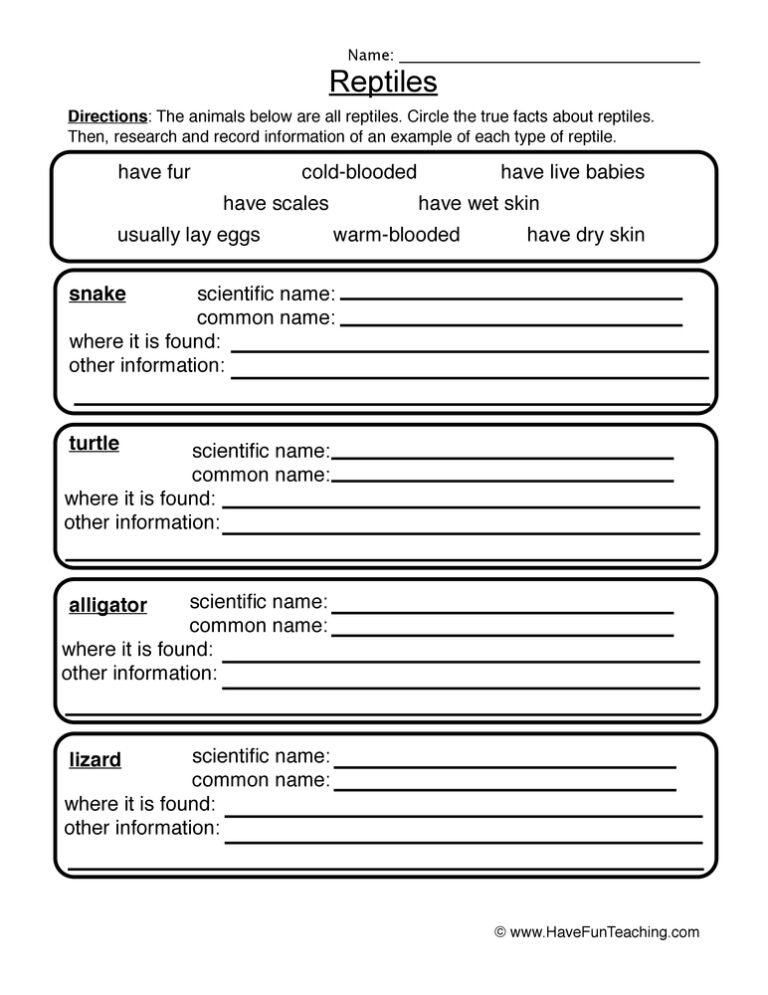
This reptiles worksheet has 3rd Grade students check reptile facts, sort eight animals into reptile and not-a-reptile columns, and explain how a frog differs. An answer key is included, so checking work takes seconds.

This Mammal VS Reptile Pictures Worksheet has 2nd graders sort six animals by fur or scales, then classify four more by name. Answer key included, so a quick science check takes minutes.

This Five Senses Examples Worksheet has 2nd graders sort ten sensory adjectives by sight, sound, smell, taste, and touch. An answer key is included, so describing words get easier fast.

Using this Frog Facts Activity, students learn about frogs by sorting facts into true or false categories.
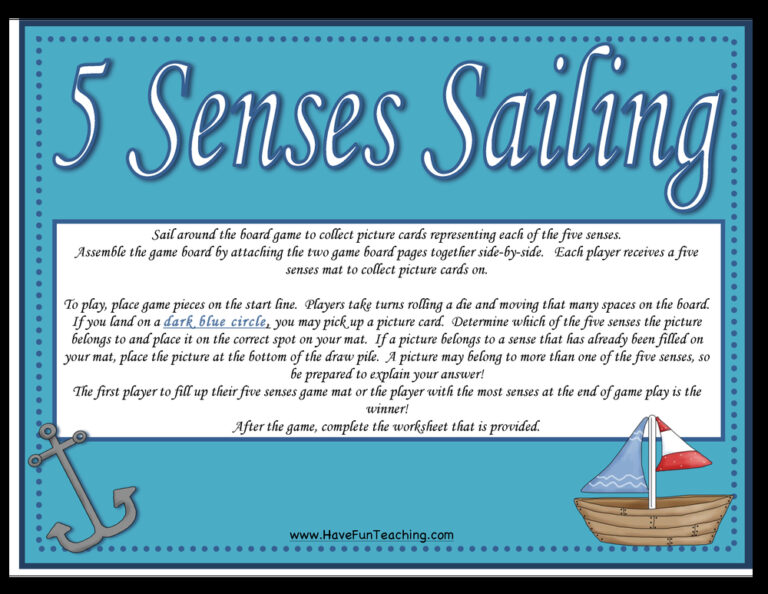
Using Five Senses Board Game Activity, studentssail around the board game to collect picture cards representing each of the five senses.

With this farm animals examples worksheet, kindergarten kids circle the one farm animal in each row of pictures. A fun animal sorting page for young scientists, with an answer key.

This rainforest true or false worksheet asks 3rd graders to judge eight statements about rainforest weather, plants and animals, then fix a false one. An answer key makes it quick, no-prep science review.

This food chain worksheet asks 4th grade students to match a producer and three consumers to their pictures and explain how energy moves. An answer key is included to make checking quick.

This compare and contrast living and non living things worksheet has 2nd graders sort six words into Living and Non-Living groups, then match four traits. Answer key included for fast, no-prep science practice.



