Skip to content
Start My 3 Free Days $0 today · cancel anytime

Physical Science Resources

62 physical science resources: 58 worksheets and 4 activities. How teachers use these

Physical Science Resources

62 physical science resources: 58 worksheets and 4 activities. How teachers use these

Worksheet
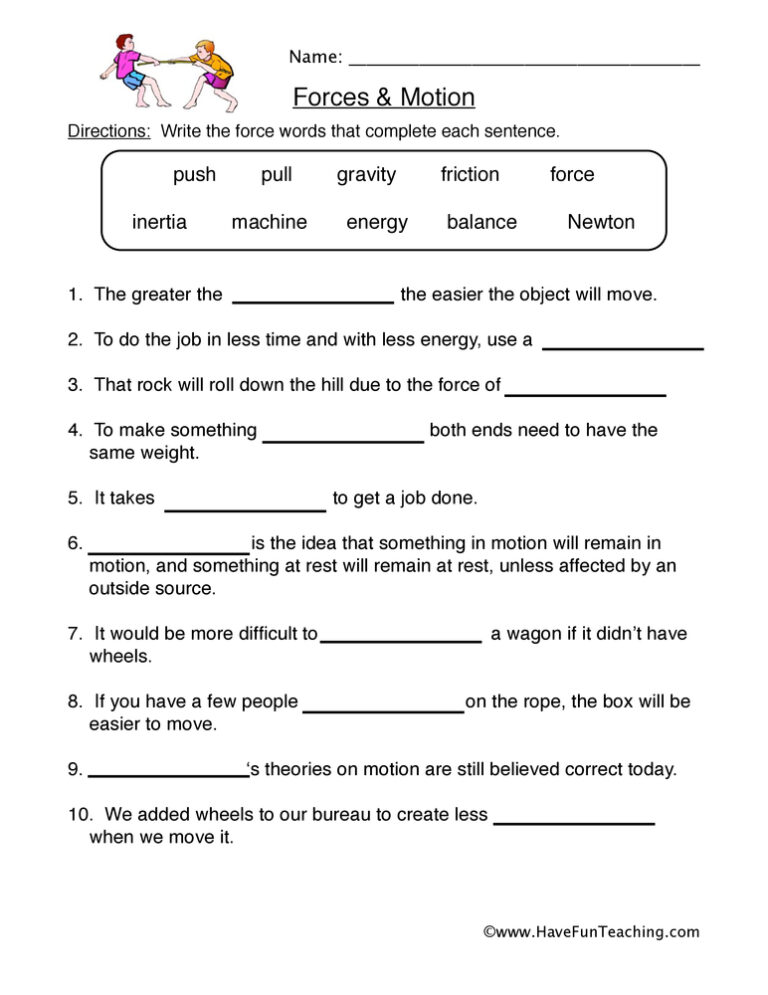
Worksheet3rd GradeForces Motion Worksheet

A 3rd grade forces motion worksheet where students use a word bank to complete eight sentences about force, push, pull, gravity, friction, motion, speed, and magnets. Includes an answer key for easy, no-prep science practice.

Worksheet
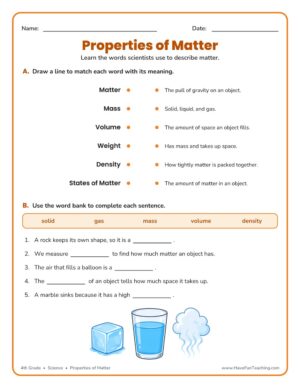
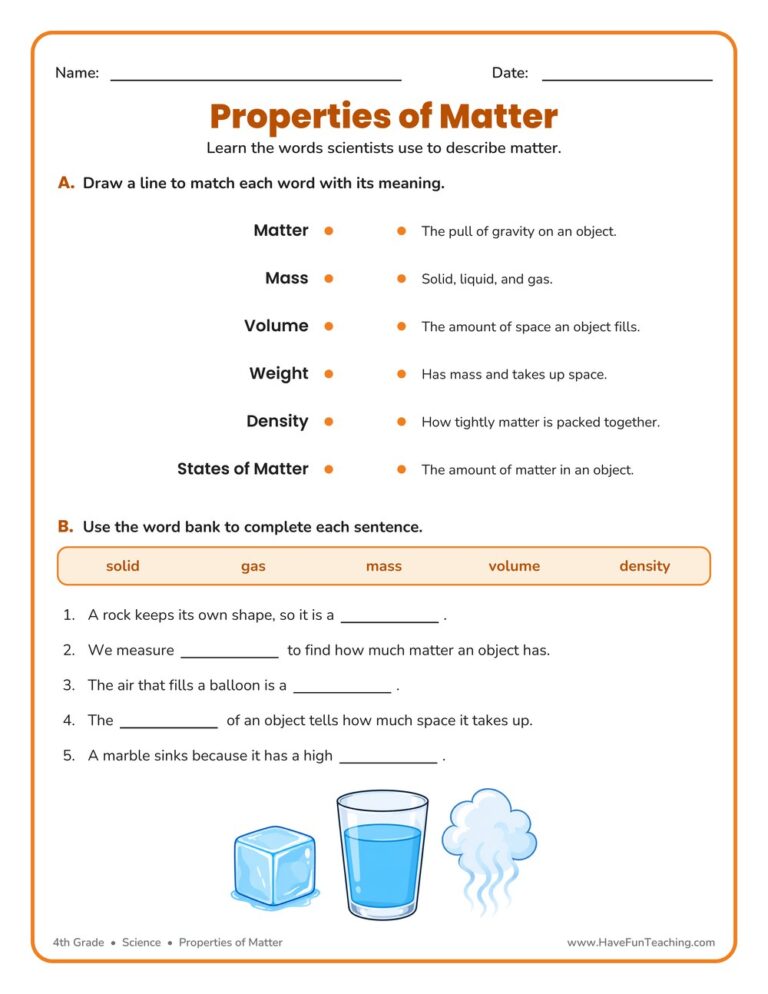
Worksheet4th GradeProperties of Matter Definitions Worksheet

This Properties of Matter Definitions Worksheet helps 4th grade students match key science terms—matter, mass, volume, weight, and density—to their meanings and complete sentences about solids and gases. Answer key included for fast, no-prep science practice.

Worksheet
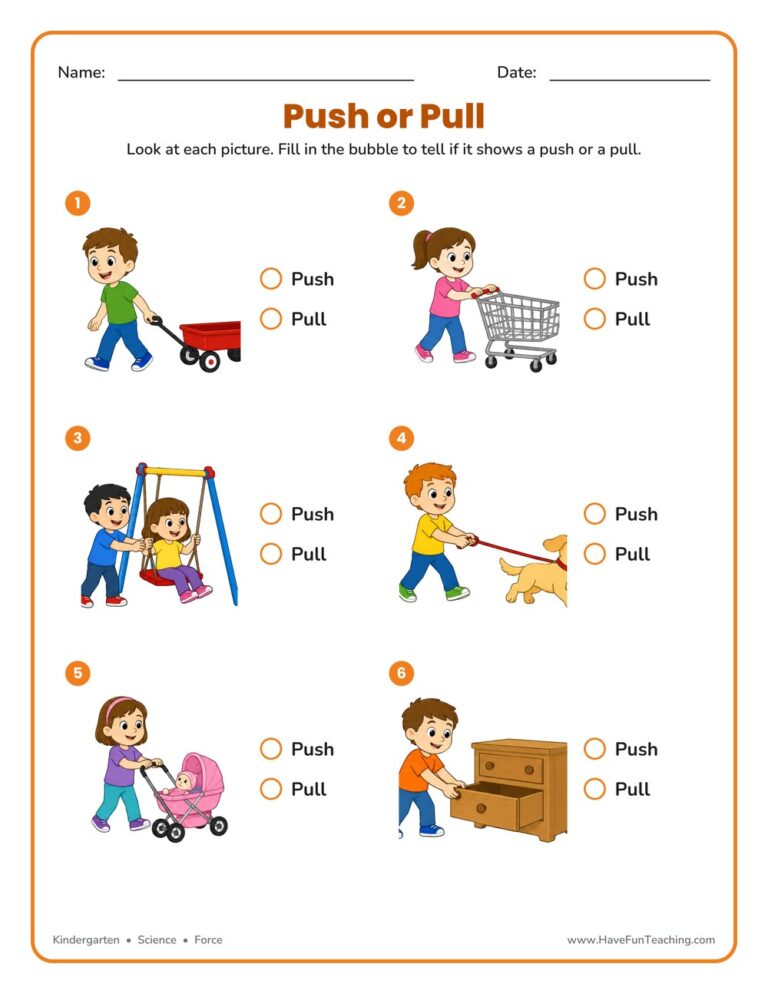
WorksheetKindergartenPush or Pull Force Worksheet

This push or pull force worksheet lets kindergarten students look at six pictures and fill in the bubble to show whether each action is a push or a pull. Includes an answer key—a simple, no-prep introduction to force.

Worksheet
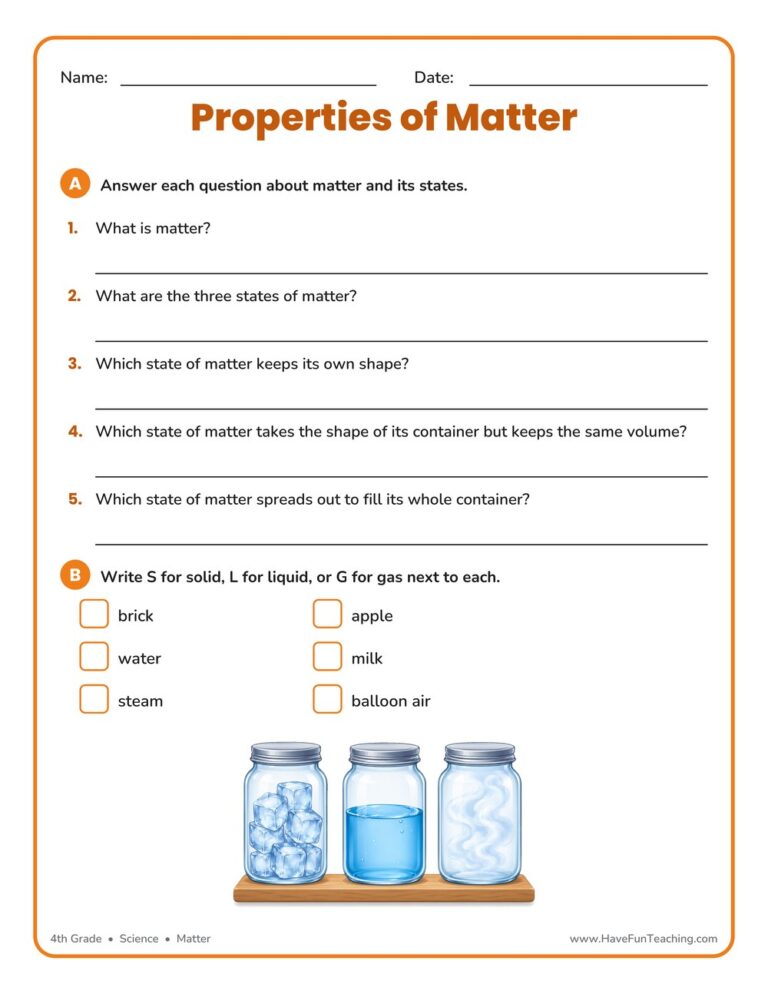
Worksheet4th GradeProperties of Matter Review Worksheet

This 4th Grade Properties of Matter Review Worksheet has students answer key questions about matter and sort everyday objects as solid, liquid, or gas. Answer key included — an easy, no-prep way to review states of matter.

Worksheet
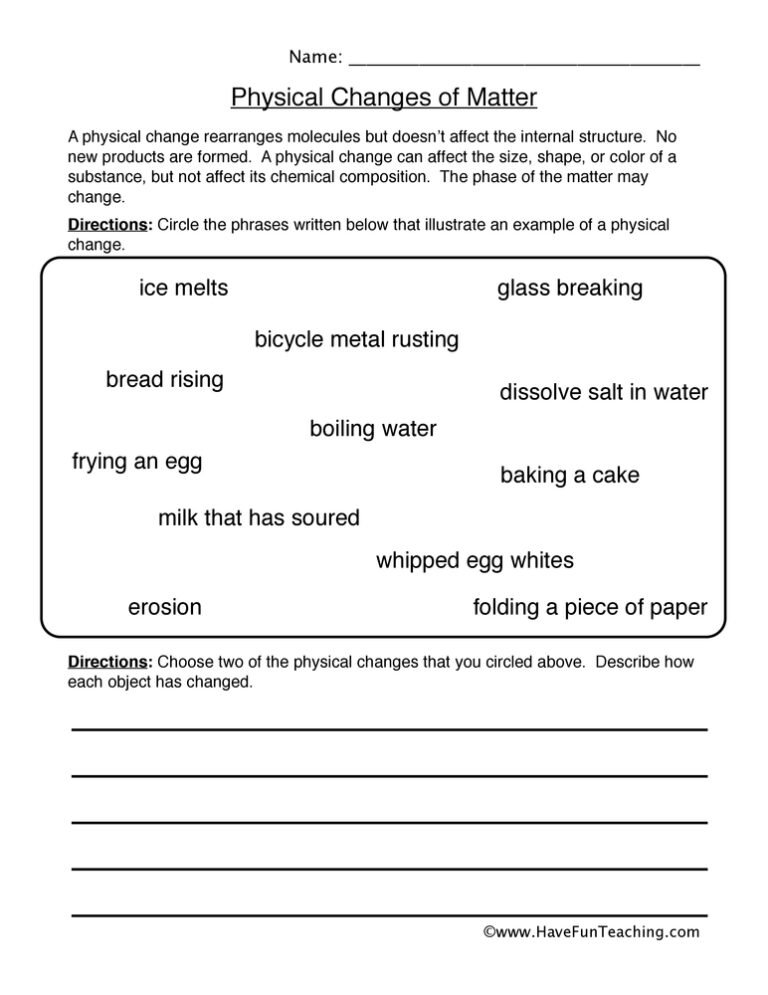
Worksheet5th GradePhysical Changes Matter Worksheet

This physical changes matter worksheet asks 5th Grade students to sort eight everyday changes, label three states of matter, and explain their thinking, with an answer key included for fast grading.

Worksheet
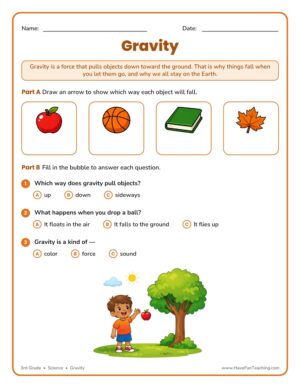
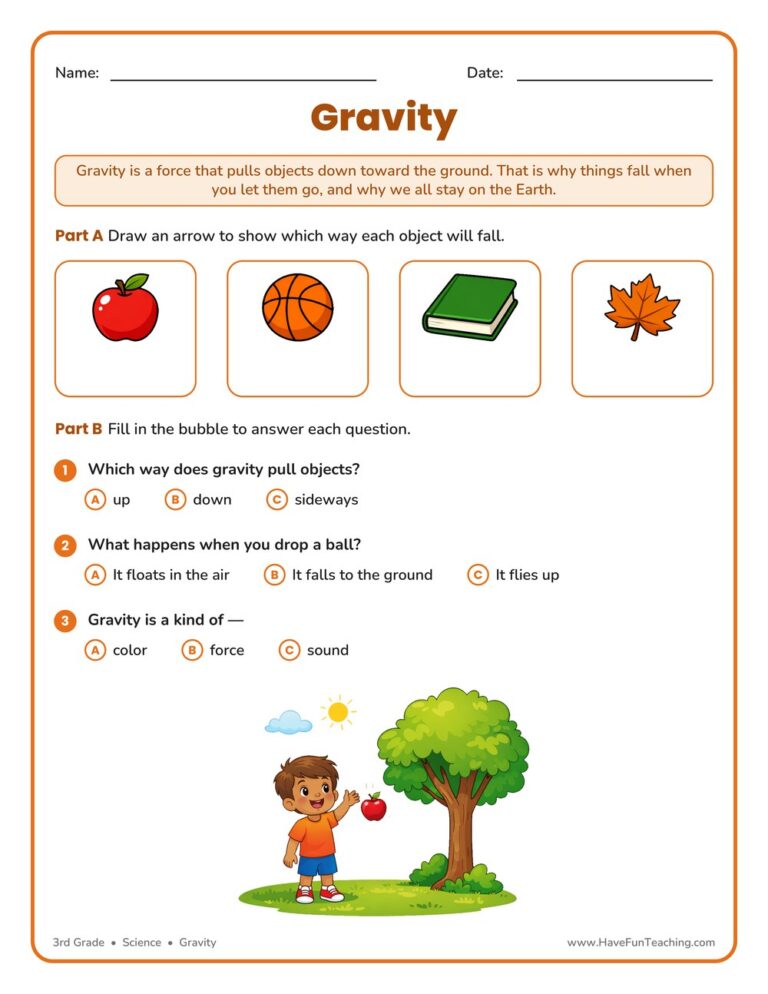
Worksheet3rd GradeFalling Gravity Worksheet

This falling gravity worksheet helps 3rd graders show which way objects fall and explain how gravity pulls things down. Answer key included — a quick, no-prep way to practice force and motion at home or in class.

Worksheet
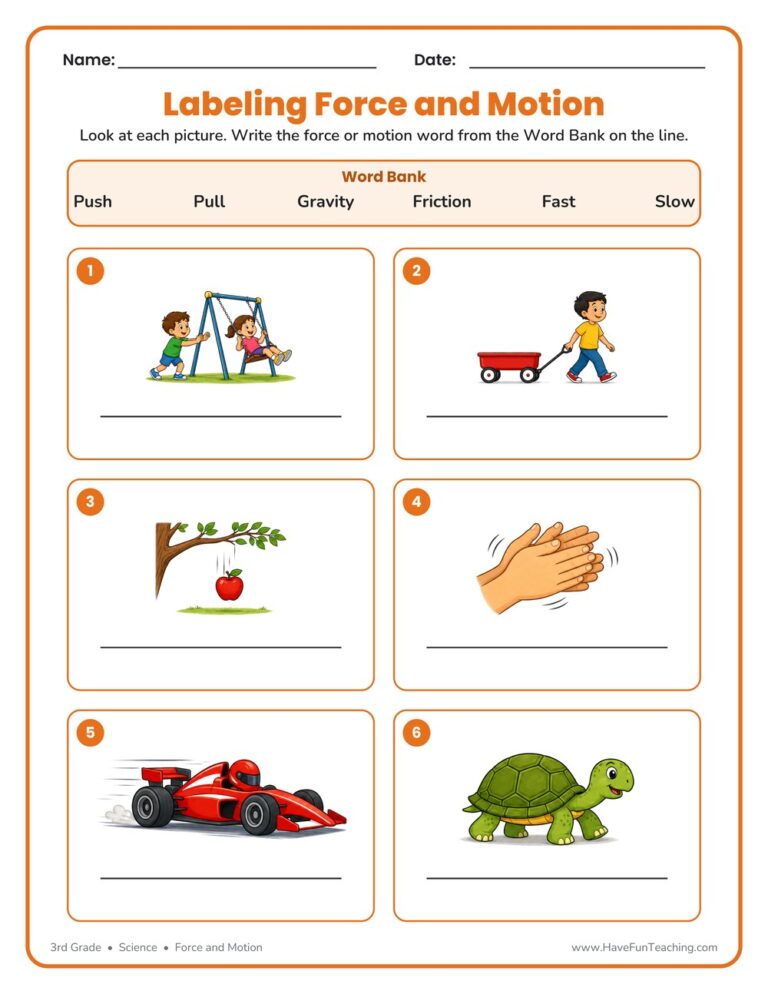
Worksheet3rd GradeLabeling Force and Motion Worksheet

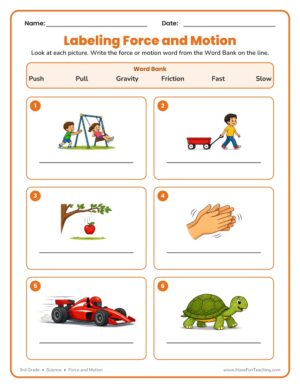
The Labeling Force and Motion Worksheet has 3rd graders label six pictures with push, pull, gravity, friction, fast, and slow from a word bank. Includes an answer key for easy, no-prep science practice.

Worksheet
Worksheet3rd GradeSimple Machines Fill in the Blanks Worksheet

This simple machines fill in the blanks worksheet has 3rd graders name the lever, pulley, wedge, screw, inclined plane, and wheel and axle from real-life clues, then explain how two of them make work easier. Answer key included.

Worksheet
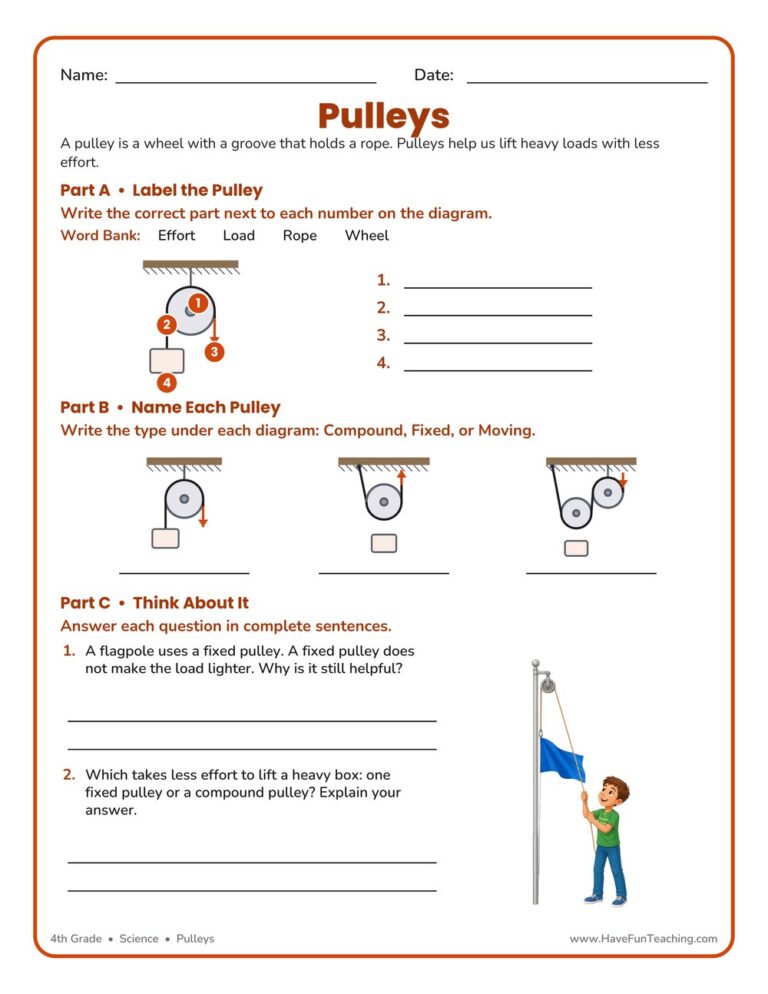
Worksheet4th GradePulleys Worksheet

This Pulleys Worksheet helps 4th graders label a pulley, compare fixed, moving, and compound pulleys, and explain how pulleys lift heavy loads. Includes an answer key — a no-prep way to practice simple machines science.

Worksheet
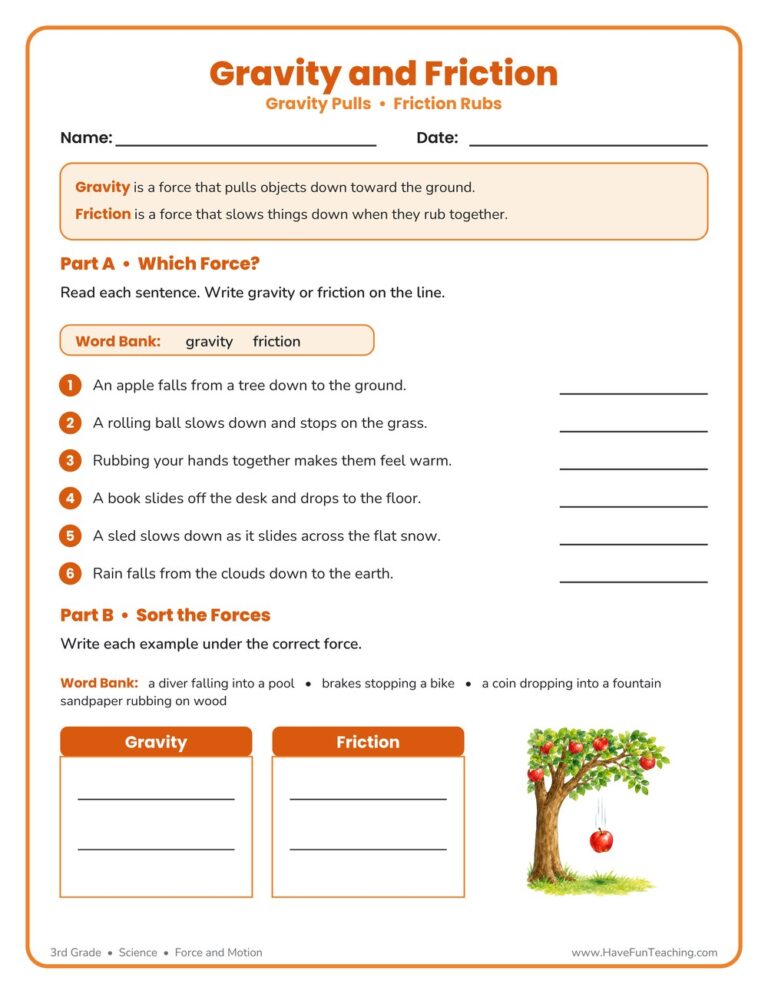
Worksheet3rd GradeGravity or Friction Force Worksheet

This Gravity or Friction Force Worksheet helps 3rd grade students tell the difference between gravity and friction by identifying and sorting real-life examples. Includes a complete answer key for quick, no-prep science practice.

Worksheet
Worksheet5th GradePhysical Changes Examples Worksheet

This Physical Changes Examples Worksheet gives 5th Grade students six sorting items and two written-response questions on physical and chemical change, answer key included, so classifying matter becomes second nature.

Worksheet
Worksheet3rd GradeFall Faster Gravity Worksheet

This Fall Faster Gravity Worksheet asks 3rd graders to predict which dropped object lands first and to explain why, using gravity and air resistance. Answer key included for fast, no-prep science practice.

Worksheet
Worksheet4th GradeCircuits Worksheet

This Circuits Worksheet helps 4th Grade students label the battery, bulb, switch, and wire, decide whether a circuit is open or closed, and explain how current flows. Answer key included, so checking work is quick.

Worksheet
Worksheet4th GradeElectricity Worksheet

This Electricity Worksheet pairs a short reading passage with vocabulary and explanation questions that show 4th graders how current, circuits, conductors, and insulators work. Answer key included for fast, no-prep science practice.

Worksheet
Worksheet3rd GradeDrawing Friction Worksheet

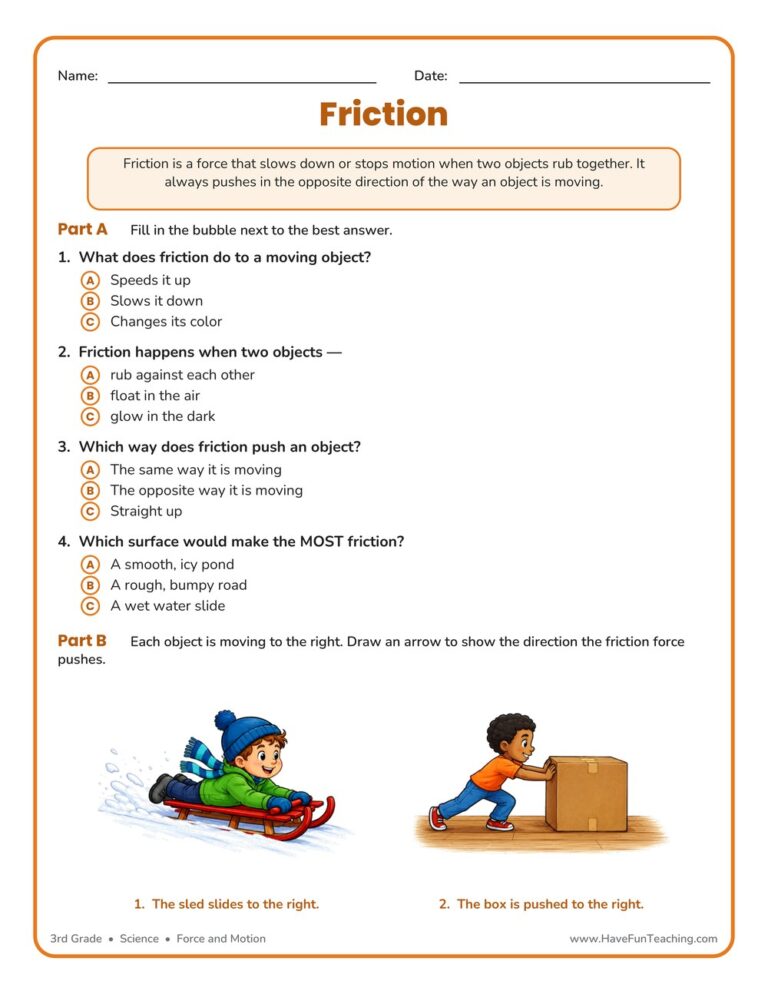
This drawing friction worksheet lets 3rd graders explore force and motion by answering questions and drawing arrows to show which way friction pushes. Answer key included for quick, no-prep science practice.

Worksheet
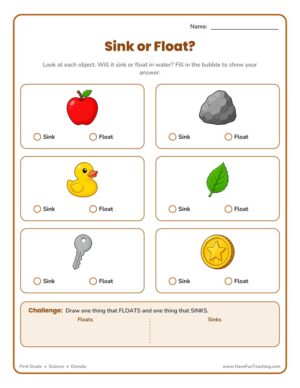
Worksheet1st GradeSink Float Identify Worksheet

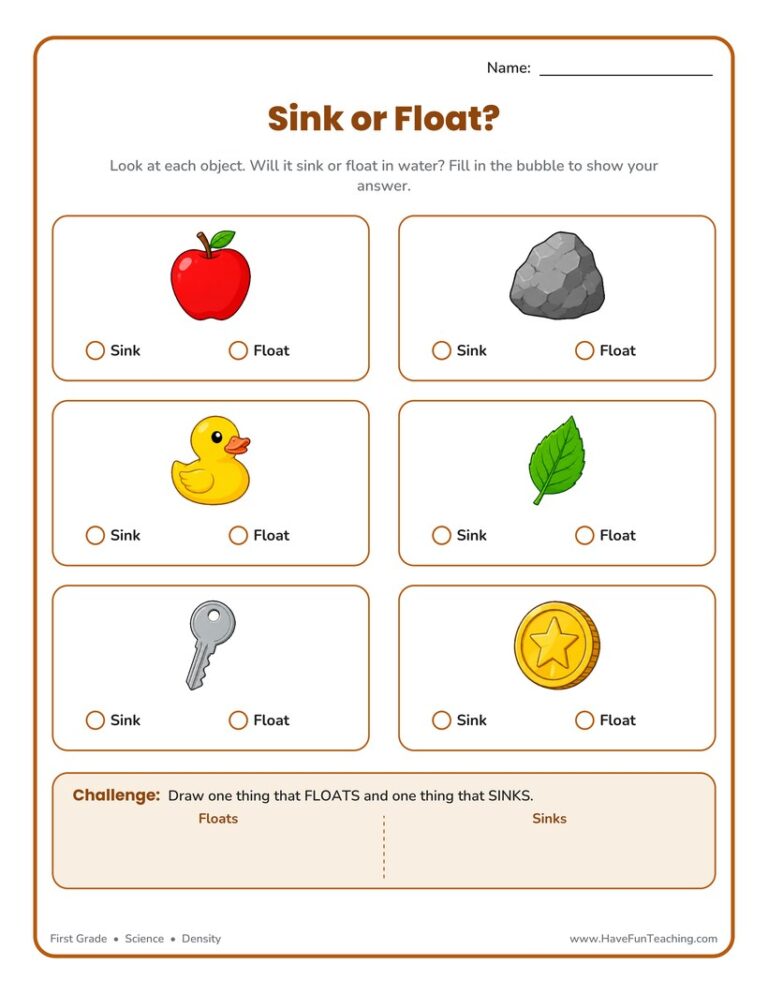
This sink float identify worksheet lets first graders predict whether an apple, rock, duck, and more will sink or float in water. Includes an answer key for a fun, hands-on introduction to density.

Worksheet
Worksheet3rd GradePhysical Properties Matter Worksheet

This physical properties matter worksheet gives 3rd grade students practice naming color, texture, size, shape, and mass, plus states of matter. An answer key is included, so checking work takes seconds.

Worksheet
Worksheet3rd GradeEnergy Wordsearch Worksheet

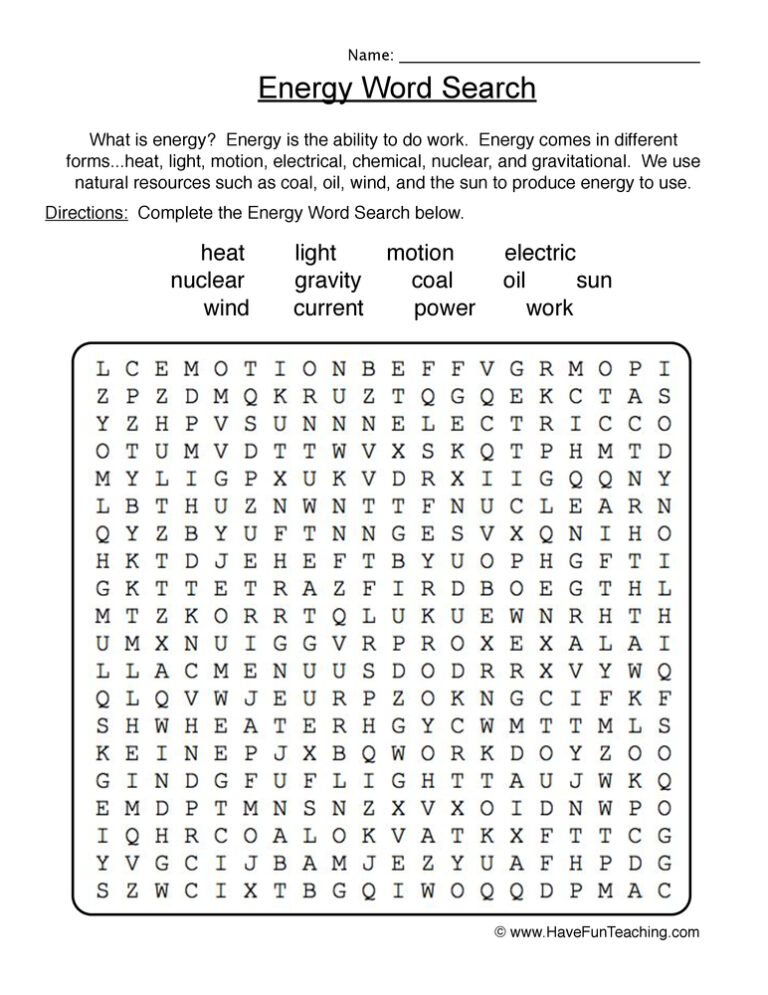
A ten-word Energy Wordsearch Worksheet that helps 3rd graders name the forms and sources of energy, then use one in a sentence of their own. Answer key included for fast, no-prep science review.

Worksheet
Worksheet4th GradeSimple Machines Match Worksheet

This Simple Machines Match Worksheet gives 4th Grade students six machines to pair with the jobs they do, plus everyday examples to name. An answer key is included, so checking work takes seconds.

Worksheet
Worksheet5th GradeChemical Changes Matter Worksheet

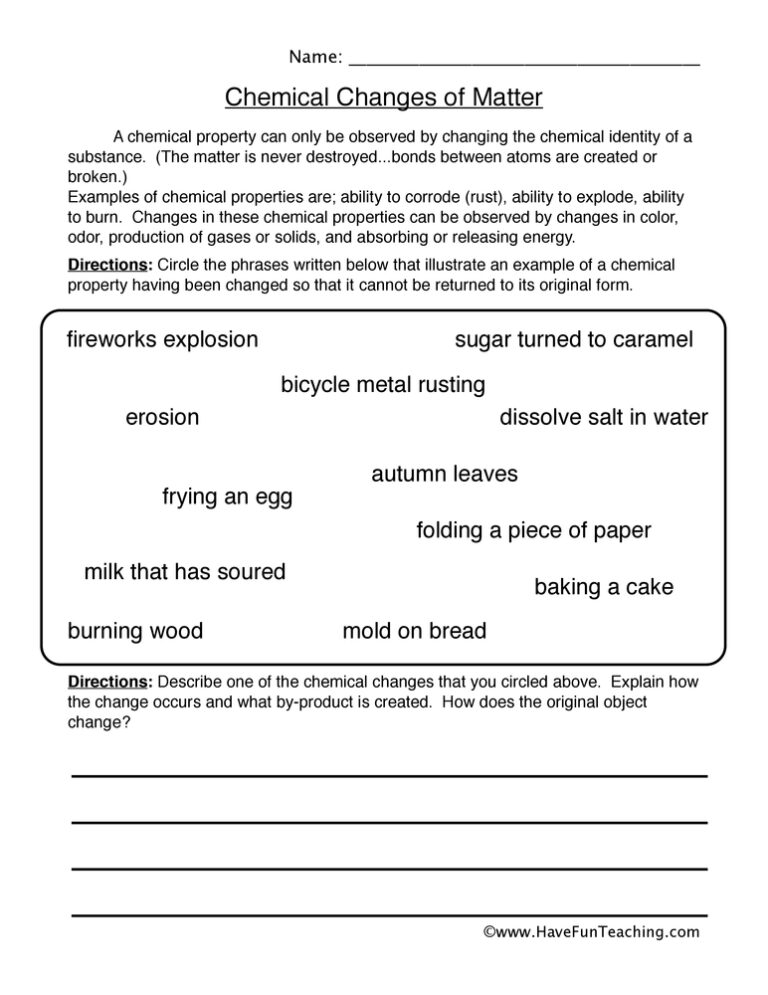
This chemical changes matter worksheet has 5th grade students name the signs of a chemical change and explain their thinking with evidence. An answer key is included for quick, easy checking.

From our teachers' playbook

Push it, drop it, float it, light it up!

What do kids learn in physical science?

Physical science is the study of matter, forces and energy, and kids are natural physical scientists. Young learners sort objects by properties like hard, soft, heavy or shiny, and find out that pushes and pulls make things move. In the middle grades they learn the states of matter, the difference between a physical change (ice melting) and a chemical one (toast burning), and how gravity, friction and magnets work. Older kids explore electricity and circuits, simple machines like levers and pulleys, and energy changing forms. The click moment is when kids realize that nothing moves, stops or changes direction without a force making it happen.

Our favorite ways to teach physical science

Physical science begs to be tested with real stuff. These moves pair a quick experiment with practice that locks in the words.

Push it or pull it?

Set out a toy car, a door, a wagon and a drawer. Kids move each one and decide: was that a push or a pull? Then they predict what a harder push will do and test it. Feeling the force in their own hands makes the worksheet afterward easy.

Why it works: kids understand an idea best when they touch it, then draw it, then write it, the order the U.S. Department of Education recommends for elementary math.
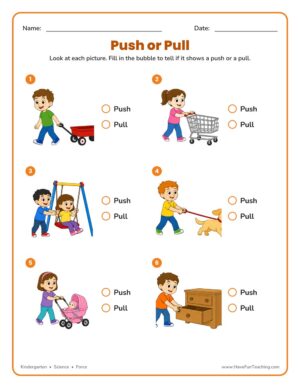
Push or Pull Force WorksheetTry it withPush or Pull Force WorksheetWorksheetsOpen it →
Draw the arrows

Have kids draw a picture of a force in action, like a soccer kick, and add arrows showing which way each force acts. Big arrow, big force. Drawing forces turns an invisible idea into something kids can see and talk about.

Why it works: children learn more from words and pictures together than from words alone (Mayer, 2009).

Labeling Force and Motion WorksheetTry it withLabeling Force and Motion WorksheetWorksheetsOpen it →

Vocabulary quick checks

Physical science is full of words that sound alike: mass, matter, motion. Open class with a two-minute check of five words, mixing in old ones from past weeks. Kids who can explain the words can explain the science.

Why it works: researchers who compared ten study methods found practice testing is one of the two that work best (Dunlosky and colleagues, 2013).

Properties of Matter Definitions WorksheetTry it withProperties of Matter Definitions WorksheetWorksheetsOpen it →

Questions parents and teachers ask us

What is physical science for kids?

Physical science is the part of science about matter, forces, motion and energy. Kids study things like magnets, gravity, sink and float, states of matter, electricity and simple machines.

What is the difference between physical and chemical changes?

A physical change alters how something looks but not what it is, like cutting paper or melting ice. A chemical change makes a new substance, like baking a cake or rust forming on metal.

What are easy physical science experiments at home?

Try sink or float with kitchen objects, roll toy cars down ramps of different heights, or test which objects a magnet picks up. Ask your child to predict first, then explain what happened.

What are the six simple machines?

The lever, wheel and axle, pulley, inclined plane, wedge and screw. Each one makes work easier by changing the size or direction of a force.

Keep exploring