
Skip to content
Start My 3 Free Days $0 today · cancel anytime

Summarizing Worksheets

42 summarizing worksheets. Teacher favorites: Retelling A Story Worksheet and Making A Sandwich Sequencing Worksheet. How teachers use these

Summarizing Worksheets

42 summarizing worksheets. Teacher favorites: Retelling A Story Worksheet and Making A Sandwich Sequencing Worksheet. How teachers use these

Worksheet
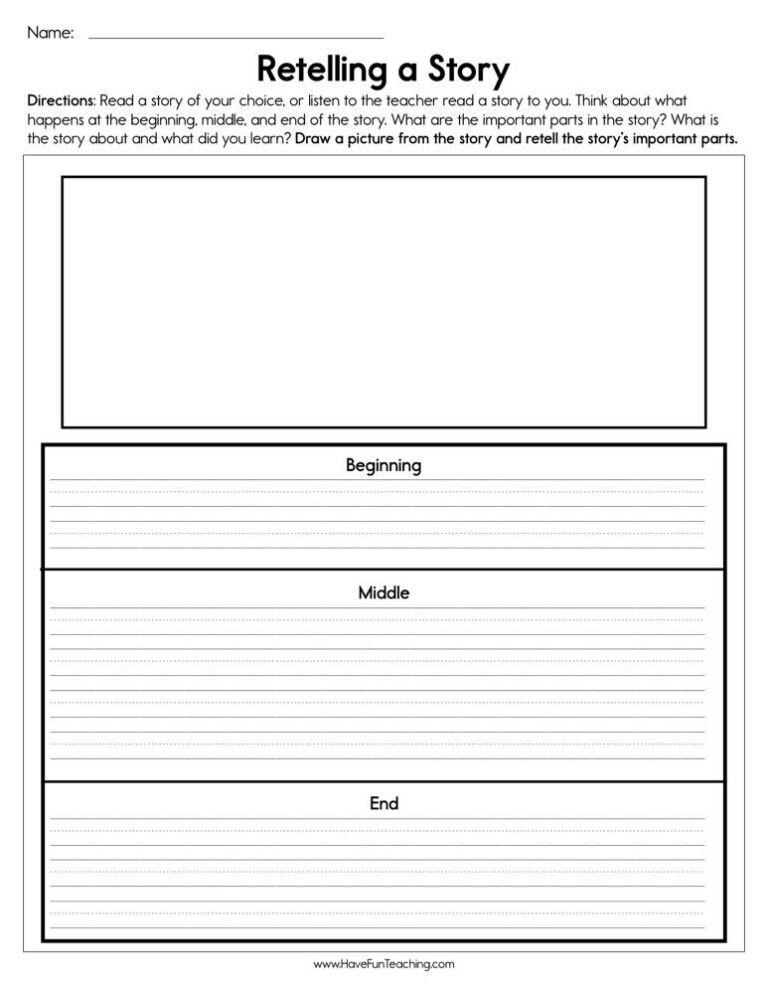
Worksheet1st GradeRetelling A Story Worksheet

This Retelling a Story Worksheet gives 1st Grade readers a short story to sequence and retell in their own words, with a full answer key included, so comprehension practice is ready to print.

Worksheet
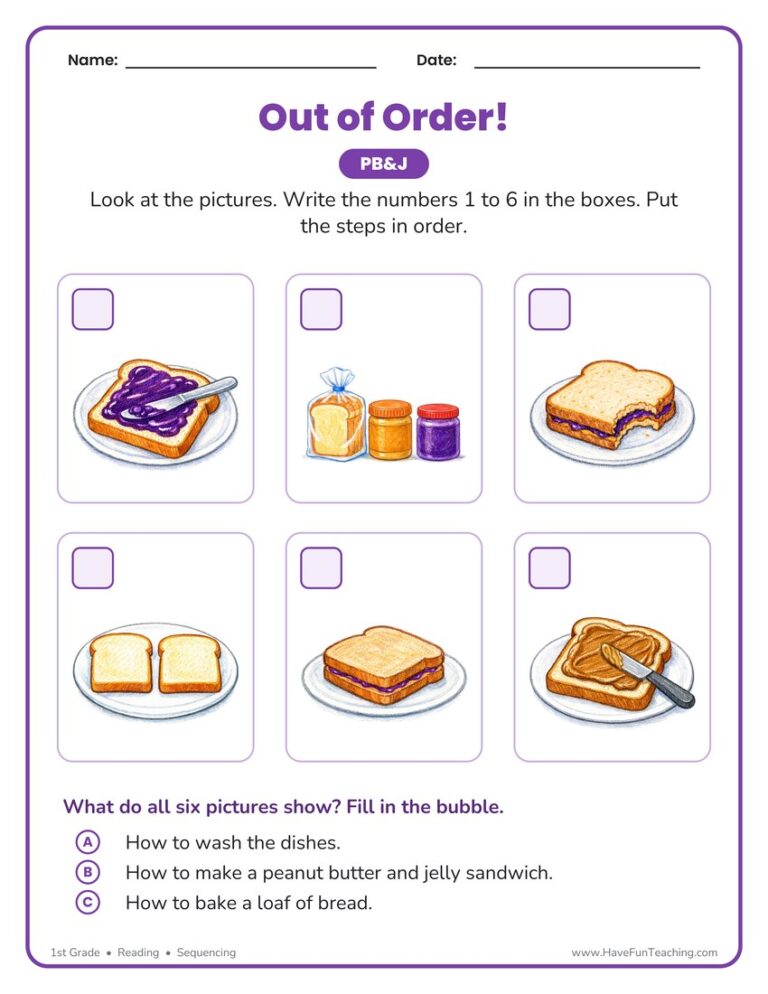
Worksheet1st GradeMaking A Sandwich Sequencing Worksheet

A picture-based Making A Sandwich Sequencing Worksheet that asks 1st graders to number six peanut butter and jelly steps in order, then name what the whole set shows. Answer key included for fast, no-prep retelling practice.

Worksheet
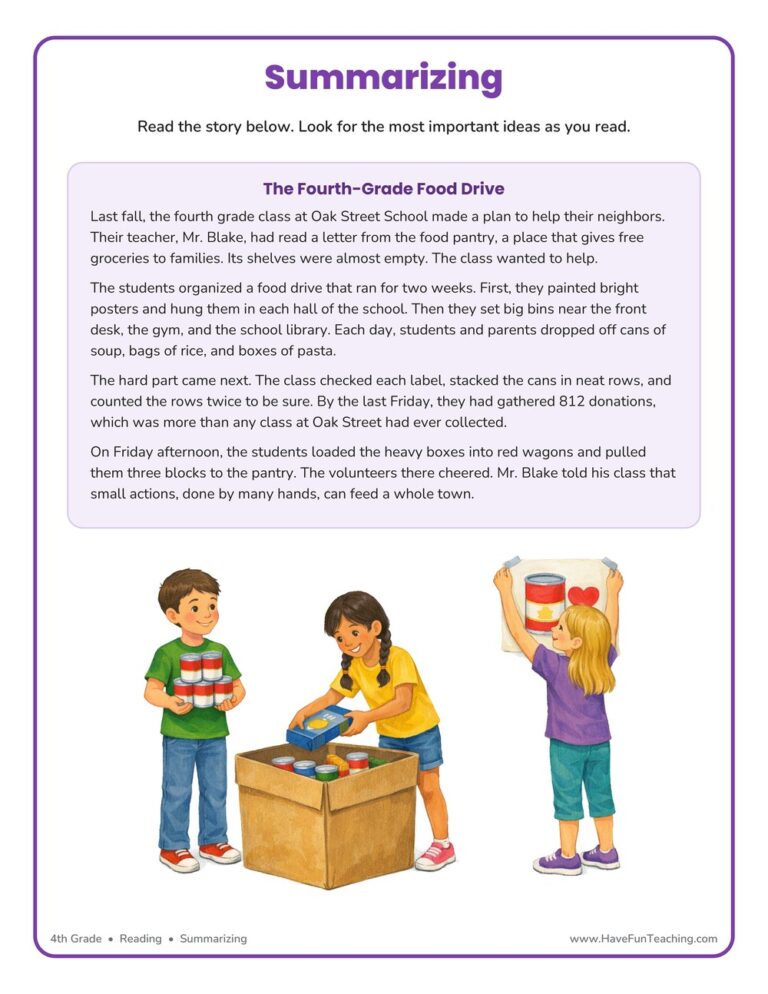
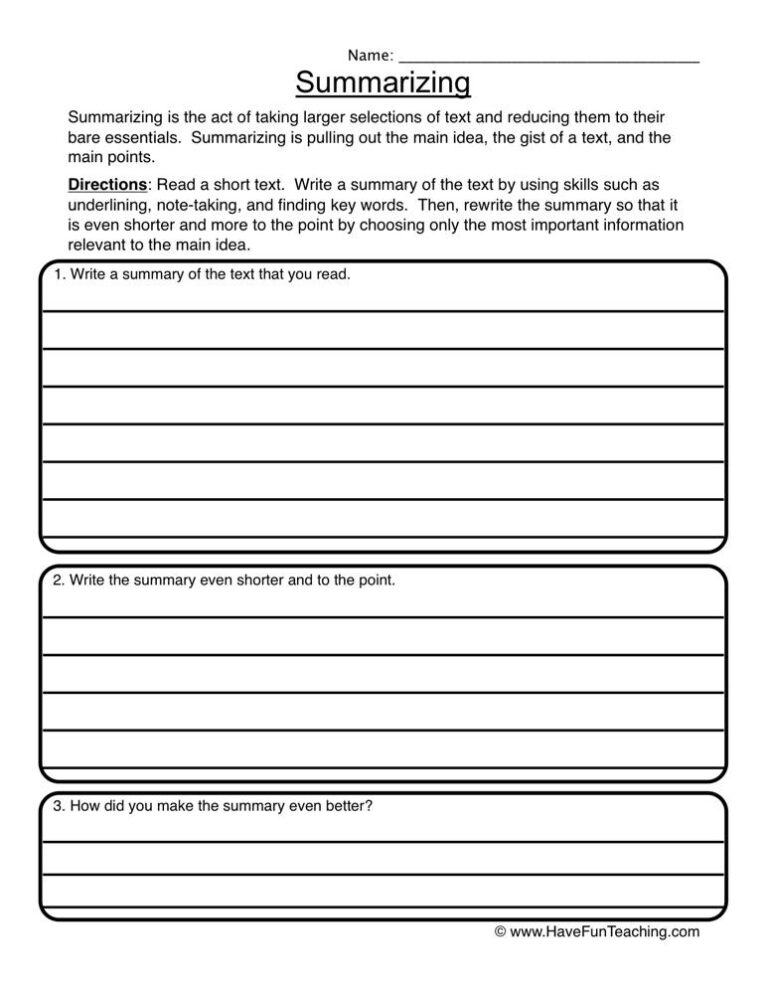
Worksheet4th GradeSummarizing Worksheet

This Summarizing Worksheet asks 4th graders to read an original story, map it on a who, what, where, when, and how organizer, then write a short summary. Answer key included for fast, no-prep practice.

Worksheet
Worksheet1st GradeCarving A Pumpkin Sequencing Worksheet

The Carving A Pumpkin Sequencing Worksheet gives 1st Grade students four out-of-order pictures to number and four order-word sentences to complete, with an answer key, so retelling gets easier.

Worksheet
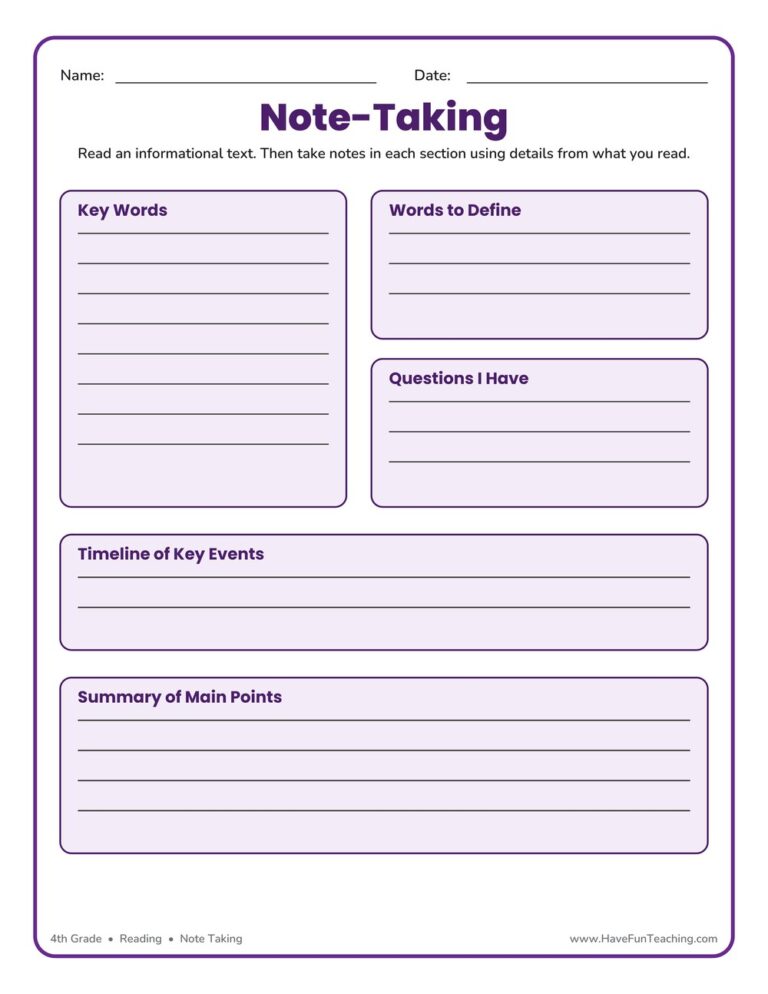
Worksheet4th GradeInformational Text Note-Taking Worksheet

This Informational Text Note-Taking Worksheet gives 4th grade readers a five-section graphic organizer for recording key words, vocabulary, questions, a timeline, and a summary from any nonfiction text — a no-prep tool for building stronger comprehension.

Worksheet
Worksheet1st GradeBrushing Your Teeth Sequencing Worksheet

This brushing your teeth sequencing worksheet asks 1st graders to number four pictures and four sentences to rebuild a familiar routine. An answer key is included, so checking sequencing practice takes only a moment.

Worksheet
Worksheet2nd GradeFables The Lion and The Mouse Worksheet

This Fables The Lion and The Mouse Worksheet gives 2nd graders an original retelling of Aesop’s fable, four comprehension questions and a written item on the lesson. Answer key included for quick, no-prep practice.

Worksheet
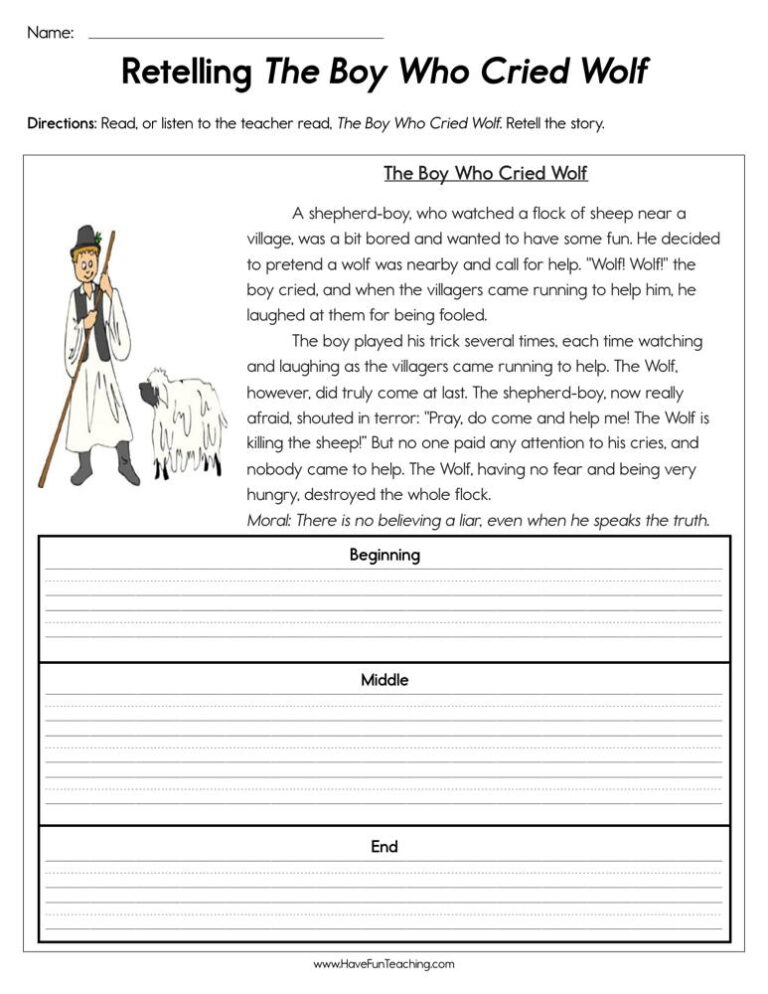
Worksheet2nd GradeRetelling The Boy Who Cried Wolf Worksheet

This Retelling The Boy Who Cried Wolf Worksheet gives 2nd graders an Aesop fable to read, four events to put in order, and beginning, middle, and end boxes to fill in. Answer key included for fast, no-prep retelling practice.

Worksheet
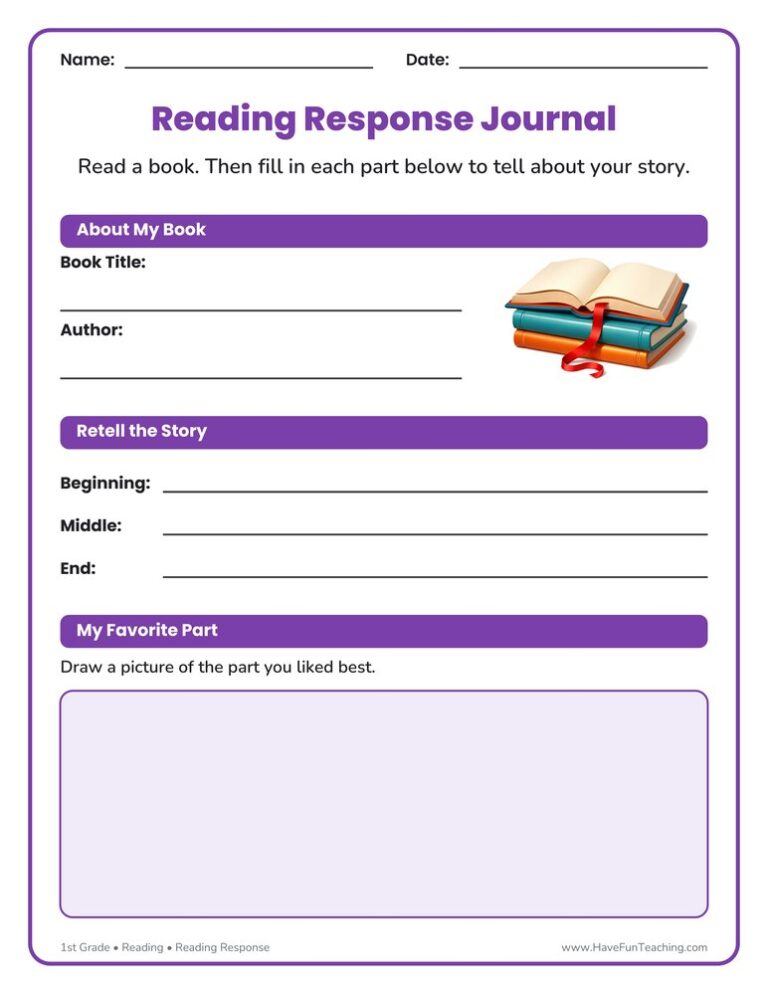
Worksheet1st GradeReading Response Journal

A reading response journal worksheet for 1st grade that works with any book: students record the title and author, retell the beginning, middle, and end, and draw their favorite part. Reusable all year for real comprehension practice.

Worksheet
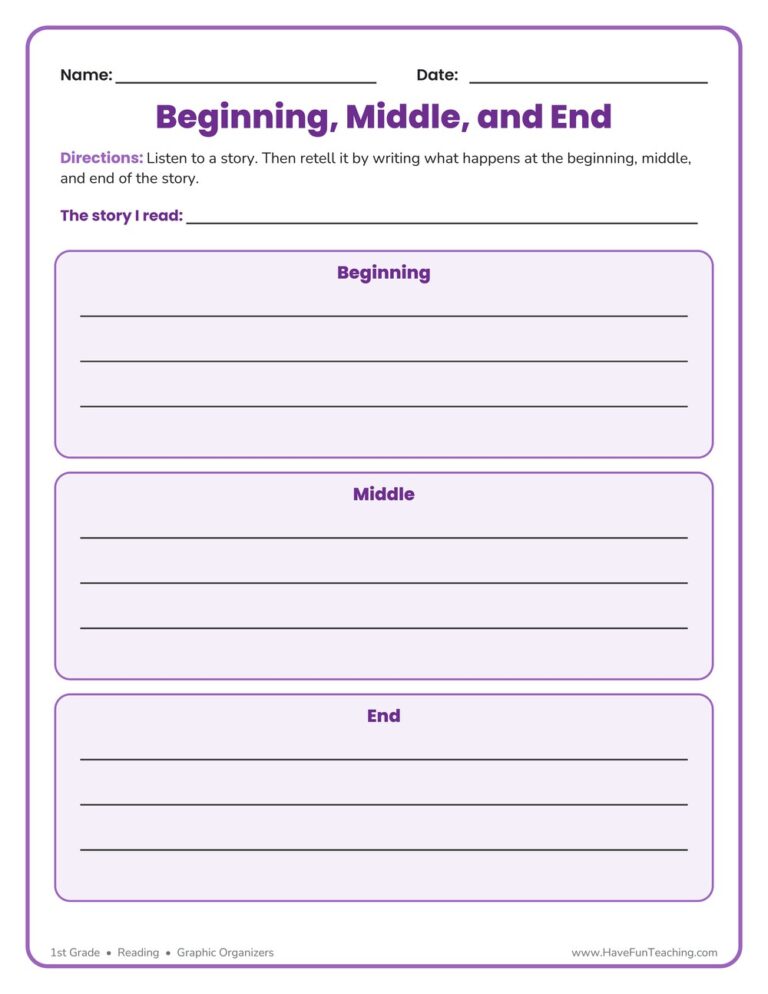
Worksheet1st GradeBeginning, Middle, and End Worksheet

A reusable Beginning, Middle, and End Worksheet that helps 1st graders retell any story in order across three clear sections. Perfect for building sequencing and summarizing skills with every book they read.

Worksheet
Worksheet3rd GradeStory Map Worksheet

This story map worksheet lets 3rd grade students record the characters, setting, problem, main events, and solution of any story they read, building stronger comprehension and retelling skills.

Worksheet
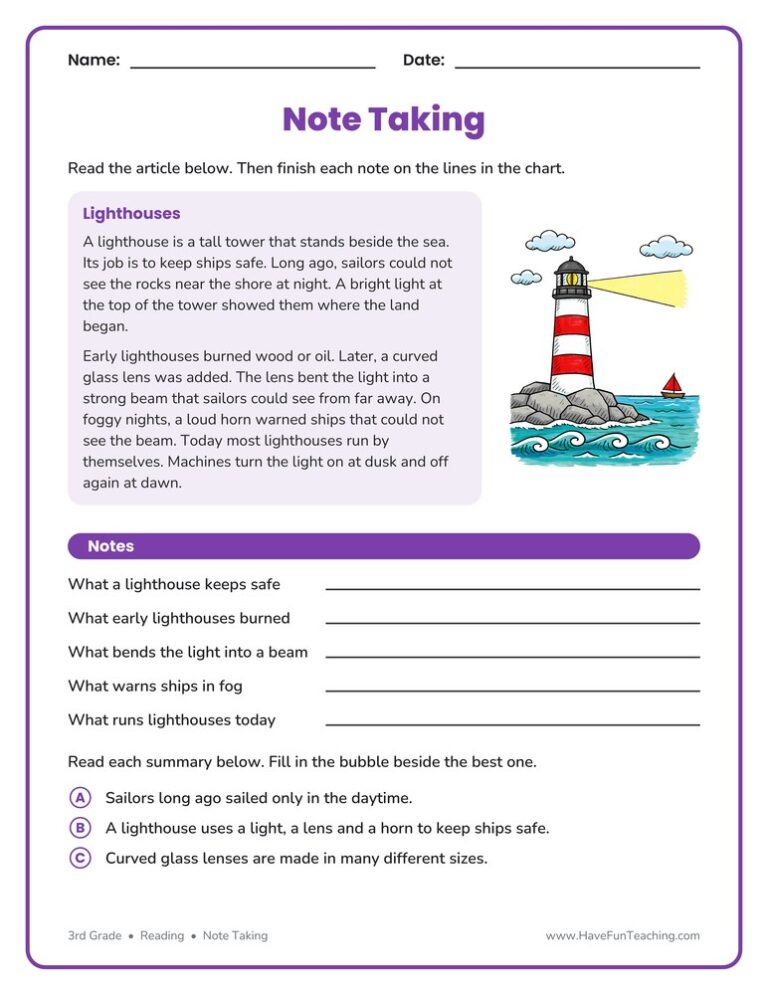
Worksheet3rd GradeNote Taking Worksheet

This note taking worksheet has 3rd Grade students read a short article about lighthouses, finish five notes in a chart, and choose the best summary. An answer key is included.

Worksheet
Worksheet5th GradeMain Idea Worksheet

This Main Idea Worksheet helps 5th graders find two main ideas in any nonfiction text, back each one with key details, and write a clear summary of what they read.

Worksheet
Worksheet4th GradeMain Idea Graphic Organizer

This Main Idea Graphic Organizer helps 4th graders record the main idea of any nonfiction text, add four supporting details, and write a short summary that builds strong reading skills.

Worksheet
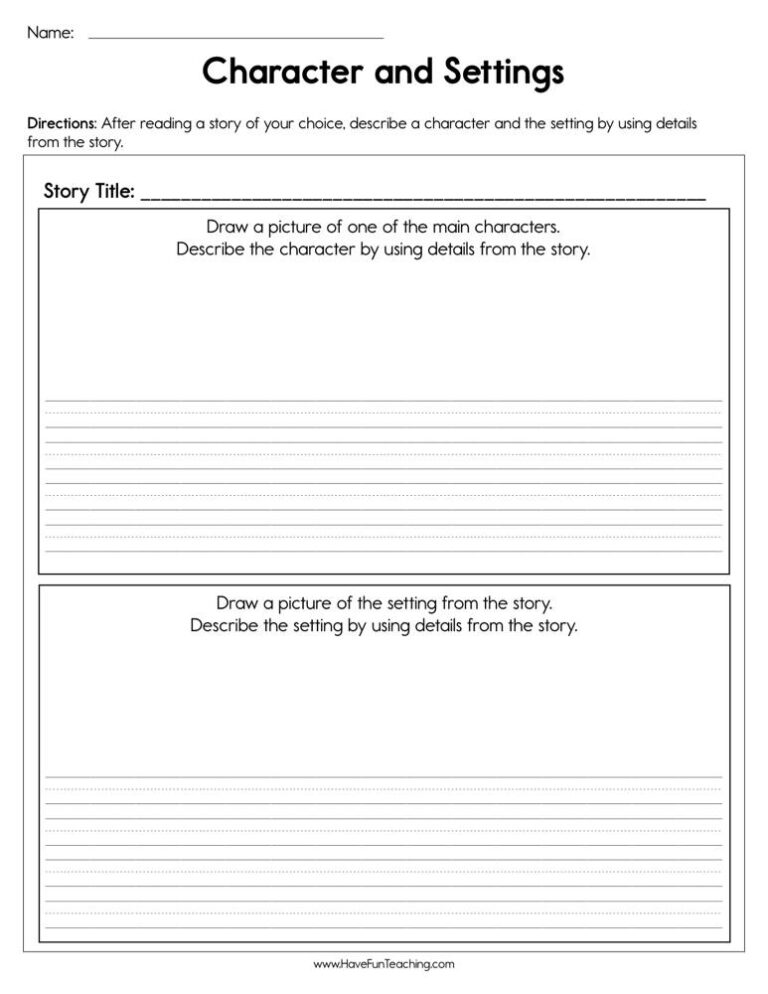
Worksheet1st GradeCharacter and Settings Worksheet

A print-and-go Character and Settings Worksheet that helps 1st graders draw and describe the main character and the setting of any story they choose. Flexible enough for guided reading, independent reading, or a bedtime book at home.

Worksheet
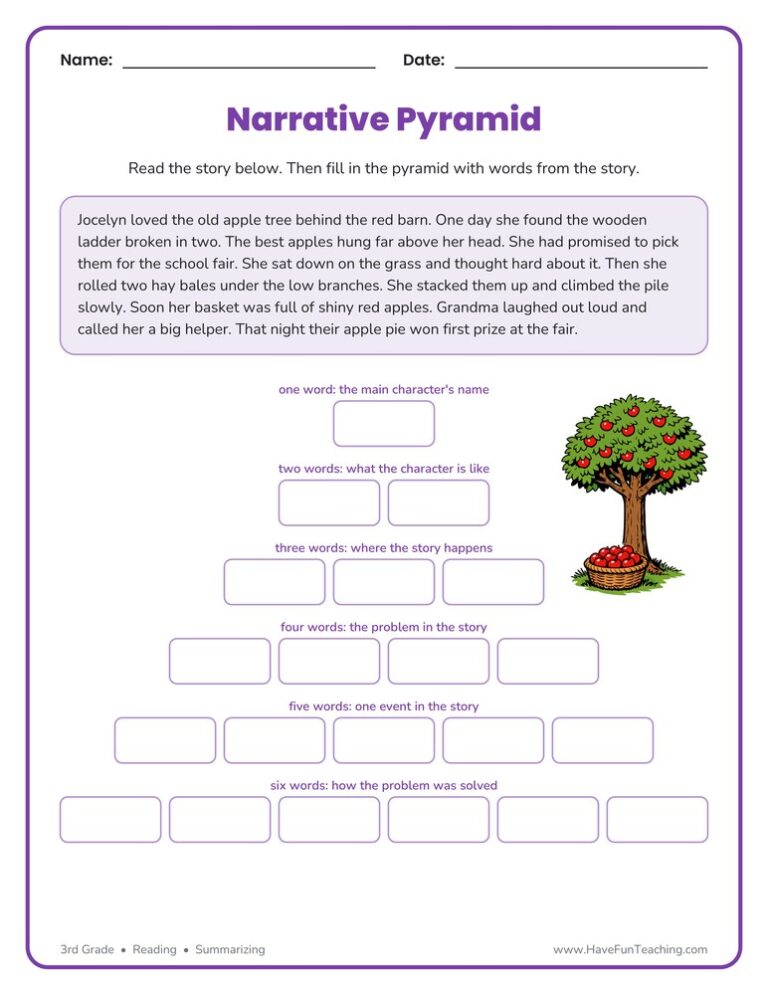
Worksheet3rd GradeNarrative Pyramid Worksheet

This Narrative Pyramid Worksheet prints an original story for 3rd graders, then asks them to summarize it row by row, from one word up to six. An answer key is included, so it works as a quick reading check or a pre-writing plan.

Worksheet
Worksheet3rd GradeBeginning, Middle, End Worksheet

A Beginning, Middle, End Worksheet that helps 3rd graders retell one short story in three parts and write a clear summary of each. Includes a complete answer key for quick, no-prep reading practice.

Worksheet
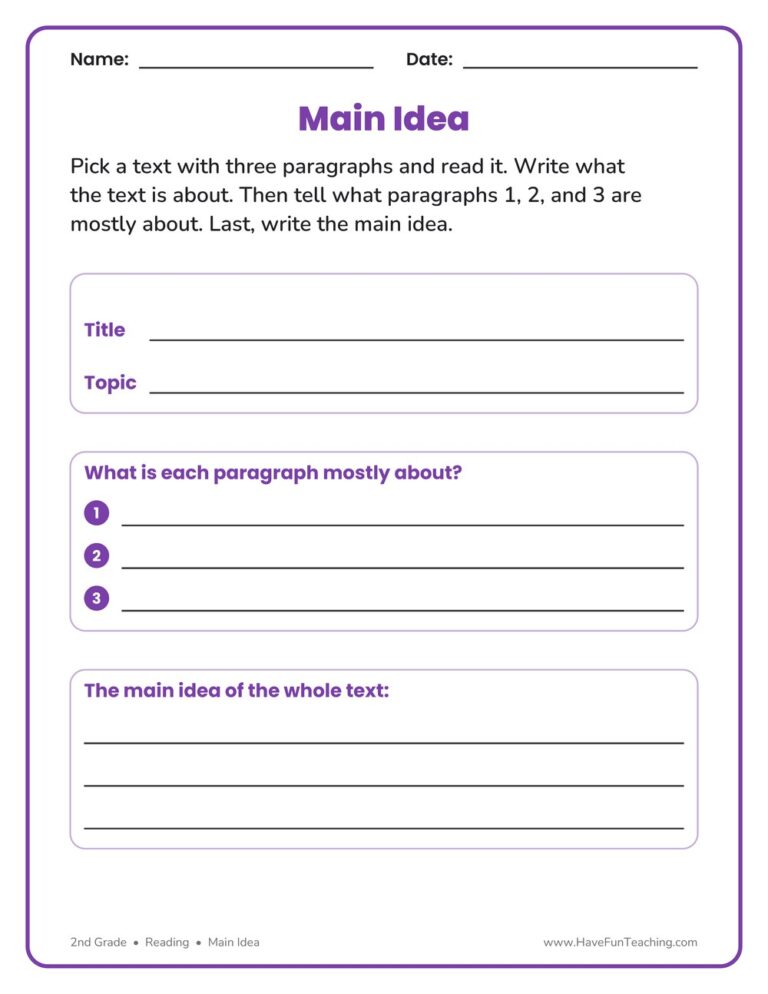
Worksheet2nd GradeMain Idea Graphic Organizer Worksheet

This main idea graphic organizer worksheet helps 2nd grade readers note what each of three paragraphs is about, then write the main idea of the whole text, building strong summarizing skills.

Worksheet
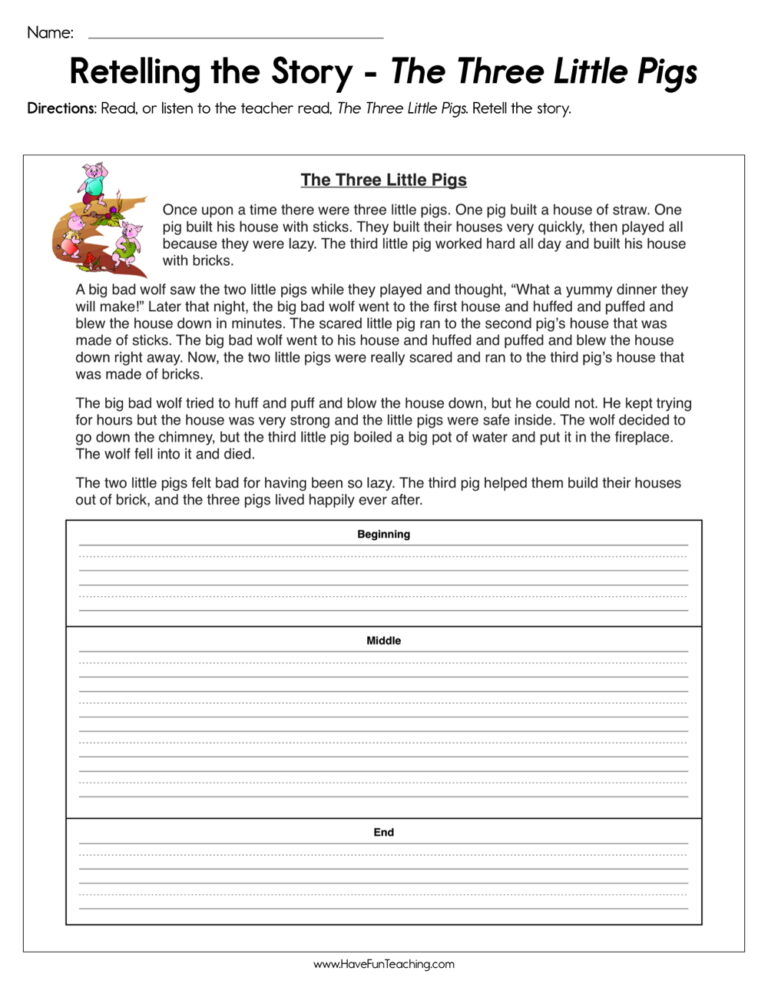
Worksheet1st GradeRetelling the Story The Three Little Pigs Worksheet

This Retelling the Story The Three Little Pigs Worksheet gives 1st graders a short story to read, four events to put in order, and Beginning, Middle, and End retell boxes. Answer key included for fast checking.

Worksheet
Worksheet4th GradeSummarizing Organizer Worksheet

This summarizing organizer worksheet walks 4th grade students from the main idea to three key details to a short summary in their own words, using any story or article they choose.

From our teachers' playbook

Say a lot in just a little

What do kids learn about summarizing?

Summarizing means telling the most important parts of a text in your own words, and leaving the rest out. Young readers start by retelling a story in order: beginning, middle and end. As they grow, they learn that a summary is shorter than a retell. They name the character, the problem and how it gets solved, or the main idea and two or three key details in nonfiction. The hardest part is deciding what not to include, and the "aha" comes when kids realize a great summary is short on purpose.

Moves that turn retellers into summarizers

Kids love to tell you every single detail. These moves help them find the important ones.

Somebody, Wanted, But, So, Then

Give kids a five-box organizer and fill it in for a story everyone knows, like The Lion and the Mouse. Read the boxes together as one sentence and you have a summary. After a few stories, kids can do it on their own with almost any fiction text.

Why it works: pairing a picture with each word gives kids two ways to remember it, a well-tested principle of how people learn (Mayer, 2009).

Summarizing Organizer WorksheetTry it withSummarizing Organizer WorksheetWorksheetsOpen it →
Think aloud while you cross out

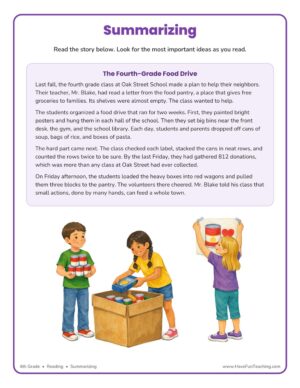
Put a short paragraph on the board and summarize it in front of the class. Say why you are crossing out each detail: "This is interesting, but the story still makes sense without it." Kids need to hear that decision being made before they can make it themselves.

Why it works: showing first, practicing together, then letting kids try alone is the "gradual release" model teachers have relied on for decades (Pearson and Gallagher, 1983).

Summarizing WorksheetTry it withSummarizing WorksheetWorksheetsOpen it →

Retell first, then shrink it

Have kids retell a story using beginning, middle and end boxes. Then give them a challenge: say the whole thing in 20 words or fewer. Shrinking a retell is the bridge from retelling to real summarizing.

Why it works: going from real objects to pictures to symbols is a core recommendation of the U.S. Department of Education's elementary math guide.

Beginning, Middle, and End WorksheetTry it withBeginning, Middle, and End WorksheetWorksheetsOpen it →

Summarizing questions from teachers and parents

What is the difference between retelling and summarizing?

A retell tells everything that happened, in order. A summary tells only the most important parts, in fewer words. Kids usually learn to retell first, then learn to summarize around 2nd and 3rd grade.

What is the Somebody Wanted But So Then strategy?

It is a simple frame for summarizing fiction. Somebody is the main character, Wanted is their goal, But is the problem, So is how they try to fix it, and Then is how it ends.

How do you summarize nonfiction?

Find the main idea first, then pick two or three details that support it. A main idea graphic organizer helps kids keep the big idea separate from the small facts.

How long should a summary be?

For elementary students, a few sentences is usually right. A good rule is that a summary should be much shorter than the text, and every sentence should matter.

How can I help my child summarize at home?

After reading a bedtime story, ask "What happened in just three sentences?" or have them retell a movie in under a minute. Quick, playful practice builds the habit.



