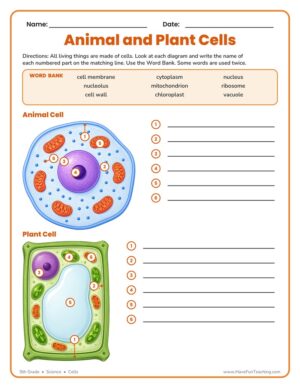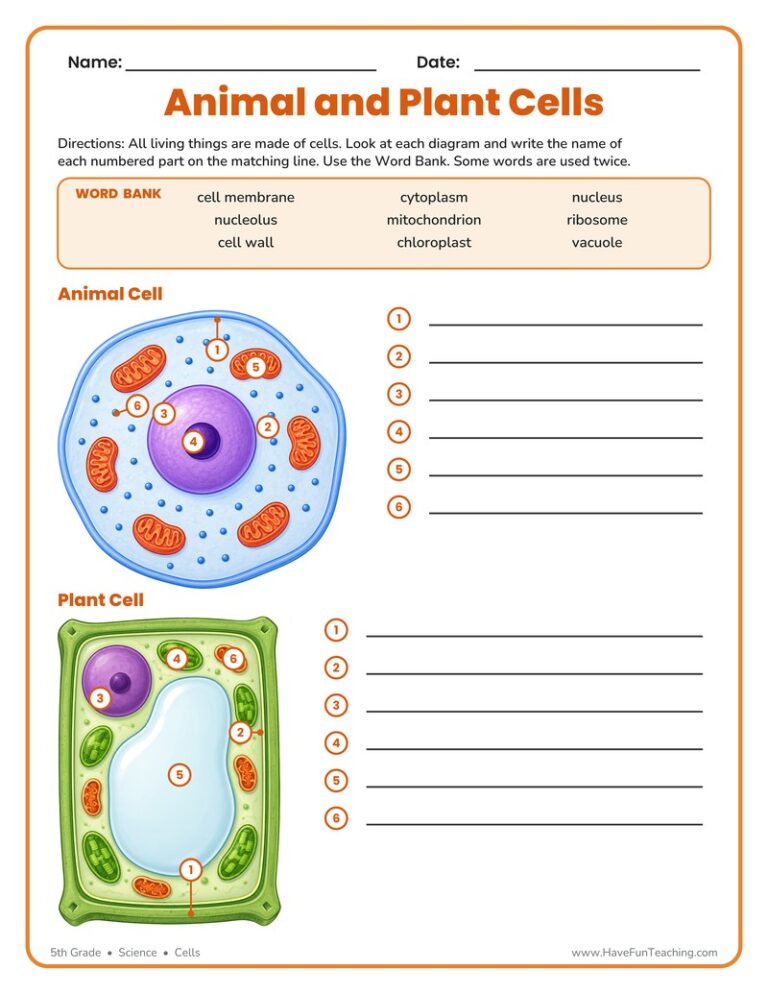
This Animal and Plant Cells Worksheet asks 5th grade students to label the organelles of an animal cell and a plant cell using a word bank. Answer key included for fast, no-prep science review.
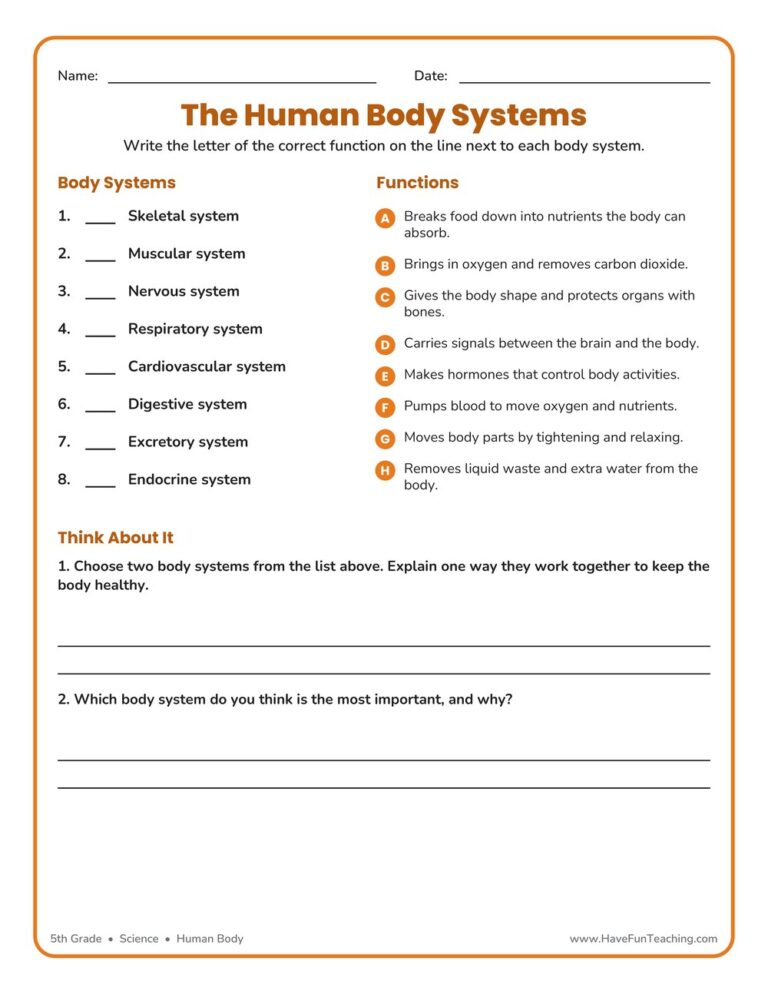
This human body systems worksheet has 5th graders match eight major body systems to their functions and reflect on how they work together. Answer key included for quick, no-prep science review.
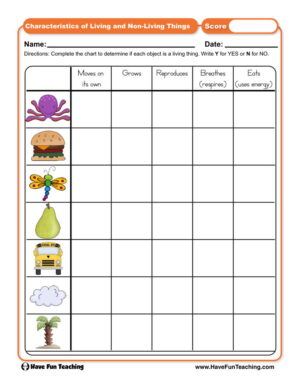
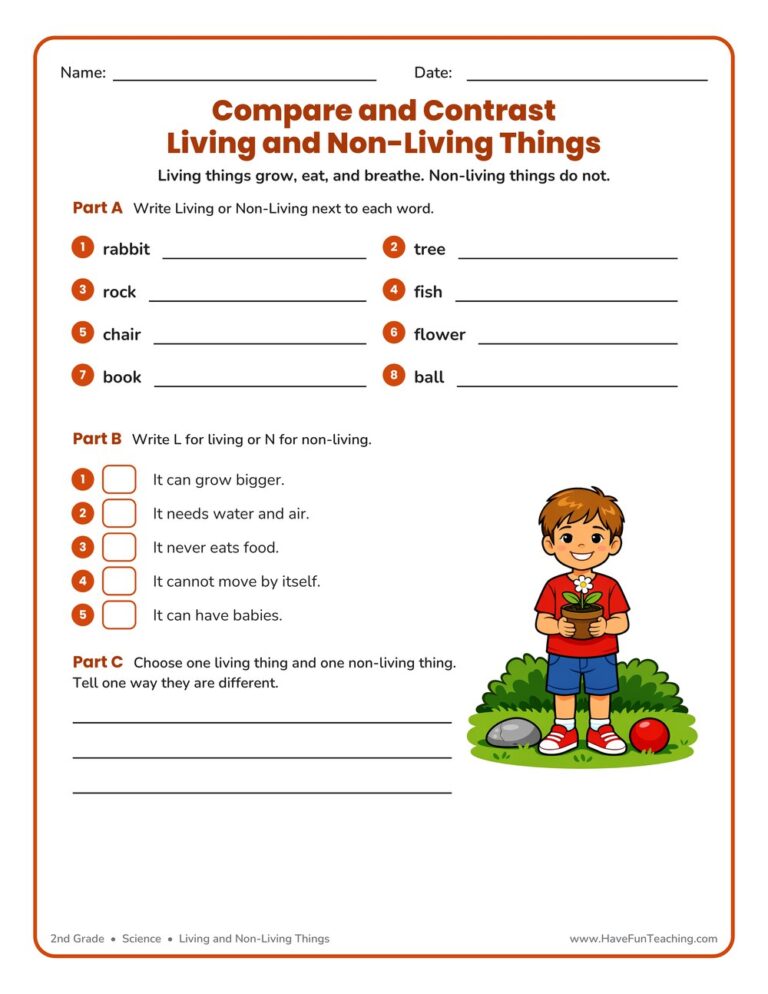
A hands-on characteristics of living and non-living things worksheet for 2nd grade, where students sort words, judge true traits, and compare examples. Includes an answer key for quick, no-prep science practice.
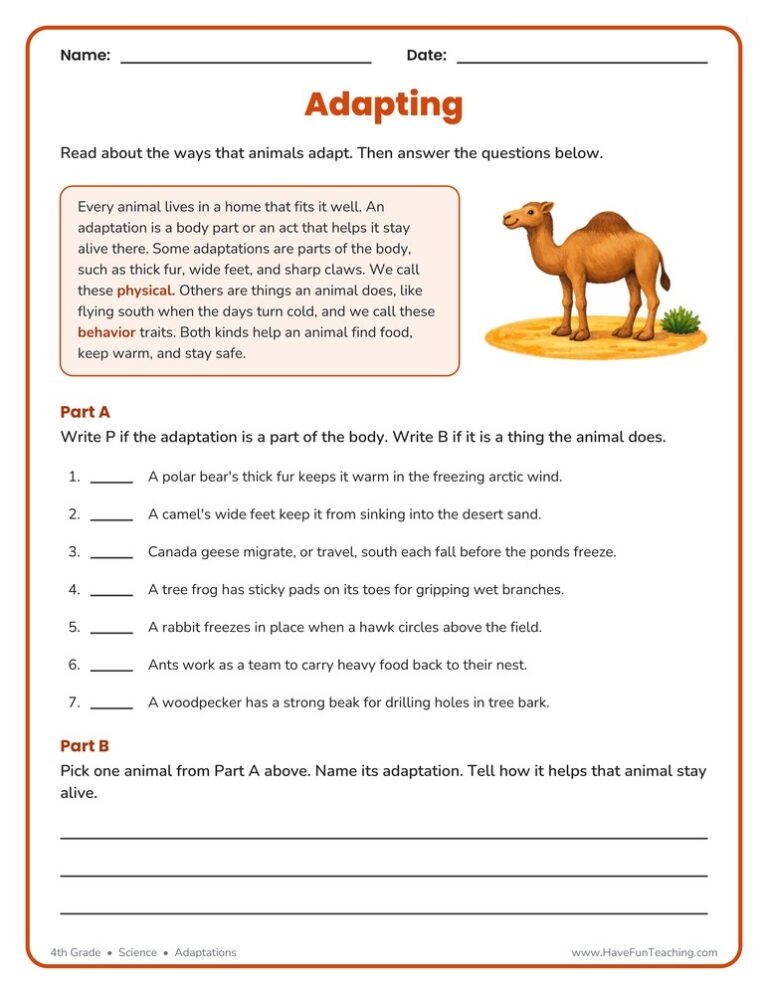
This adaptation worksheet has 4th graders sort seven animal traits into physical and behavioral adaptations, then explain how one helps an animal survive. Answer key included for fast, no-prep life science practice.
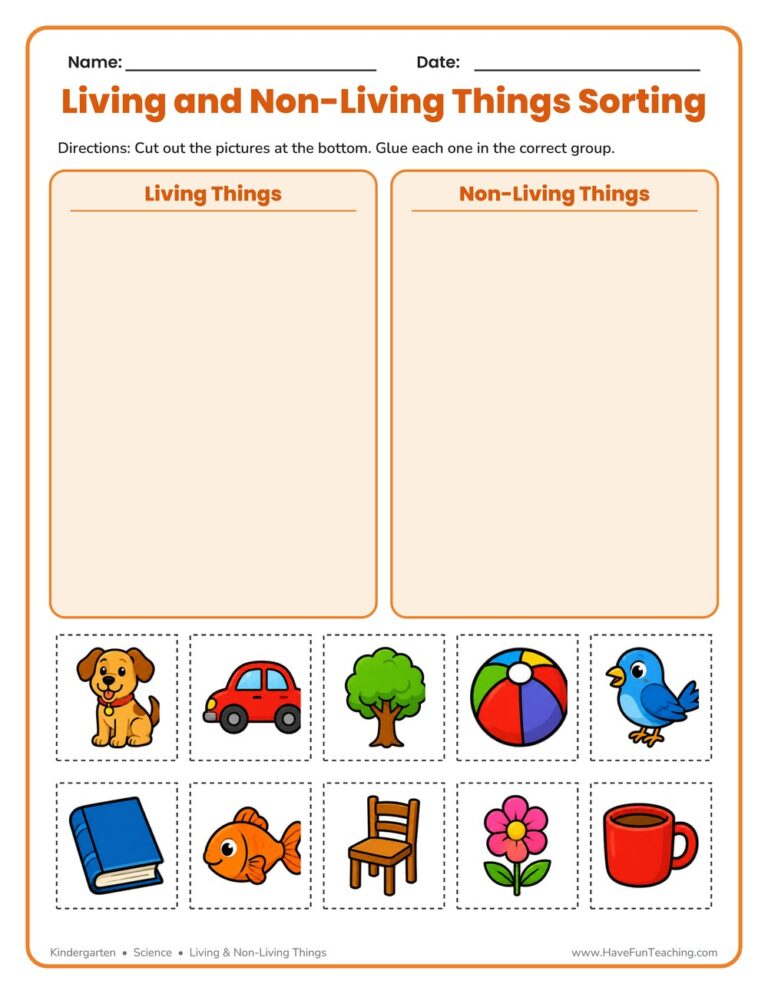
This Living Things and Non Living Things Sorting Worksheet has kindergarten students cut out ten pictures and sort them into living and non-living groups. Answer key included for quick, hands-on science practice.
This Plant Parts We Eat Worksheet helps 1st graders match eight foods to the plant part we eat, using a helpful word box. Includes an answer key for easy, no-prep plant science practice.
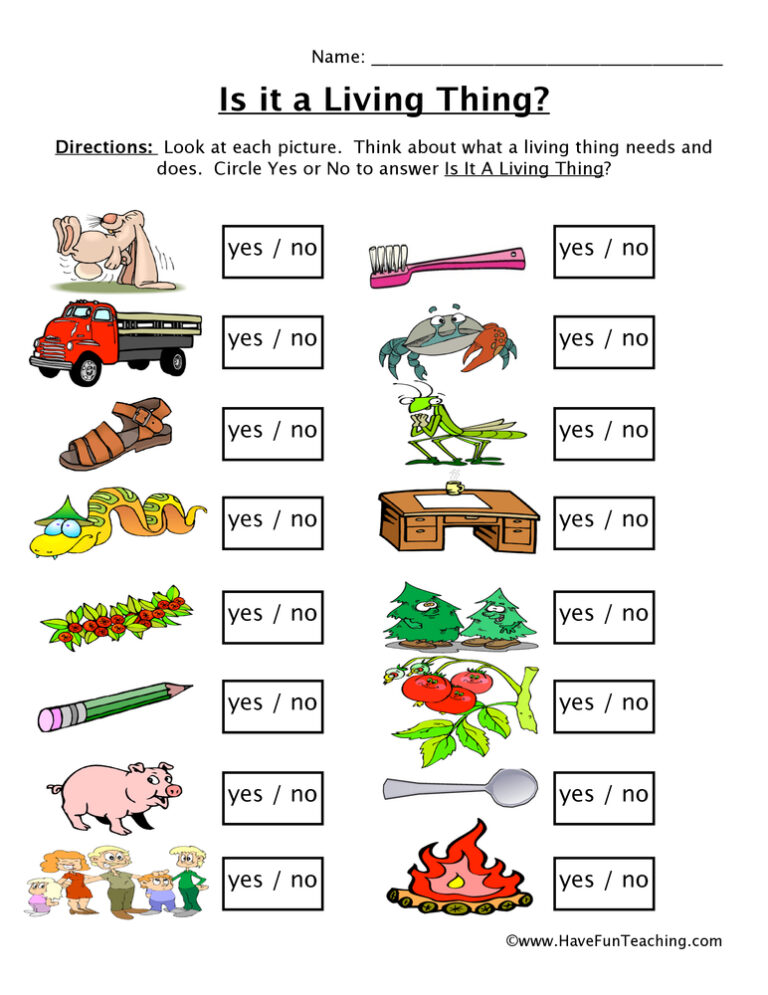
The Is it a Living Thing Worksheet asks 1st grade students to sort six pictures into living and not living and write each answer, with a word box for support and an answer key included.
A living and non-living things sort worksheet where 1st graders label six pictures with L or N and sort four words into two groups. Answer key included for fast, no-prep life science practice.
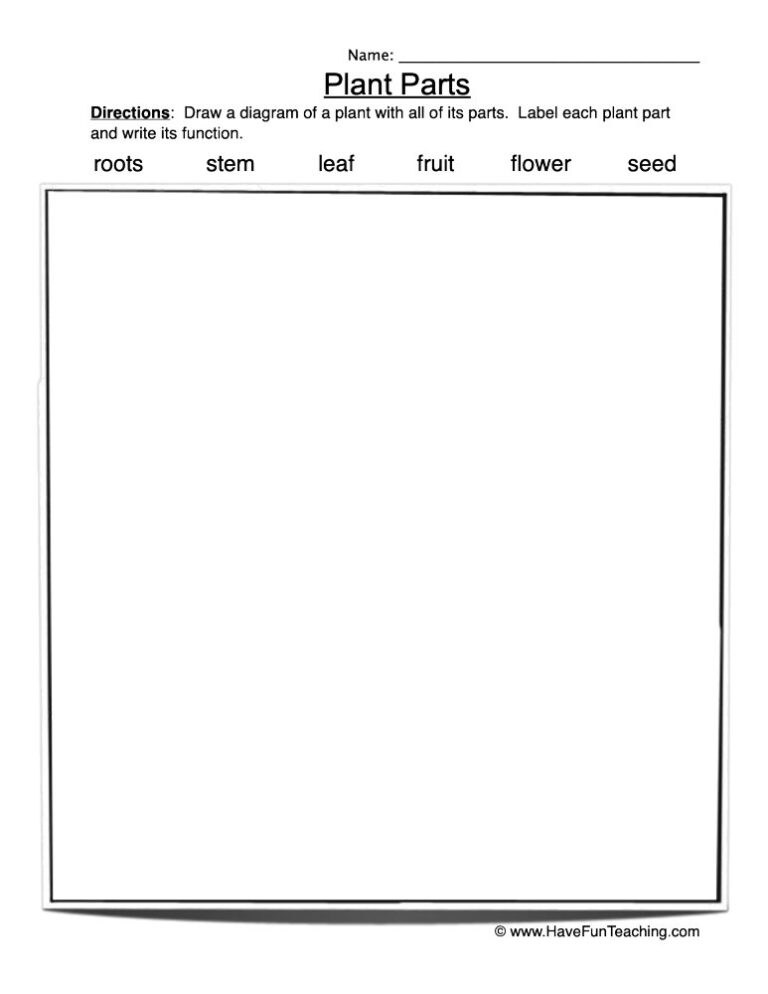
This Plant Parts Drawing Worksheet has 2nd Grade students match each plant part to its job, then draw and label a whole plant. An answer key is included, so checking plant vocabulary is quick and easy.
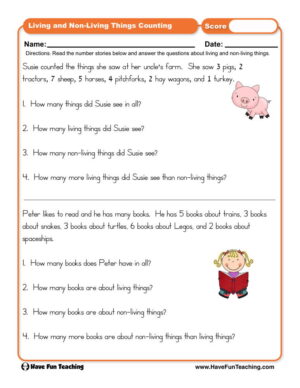
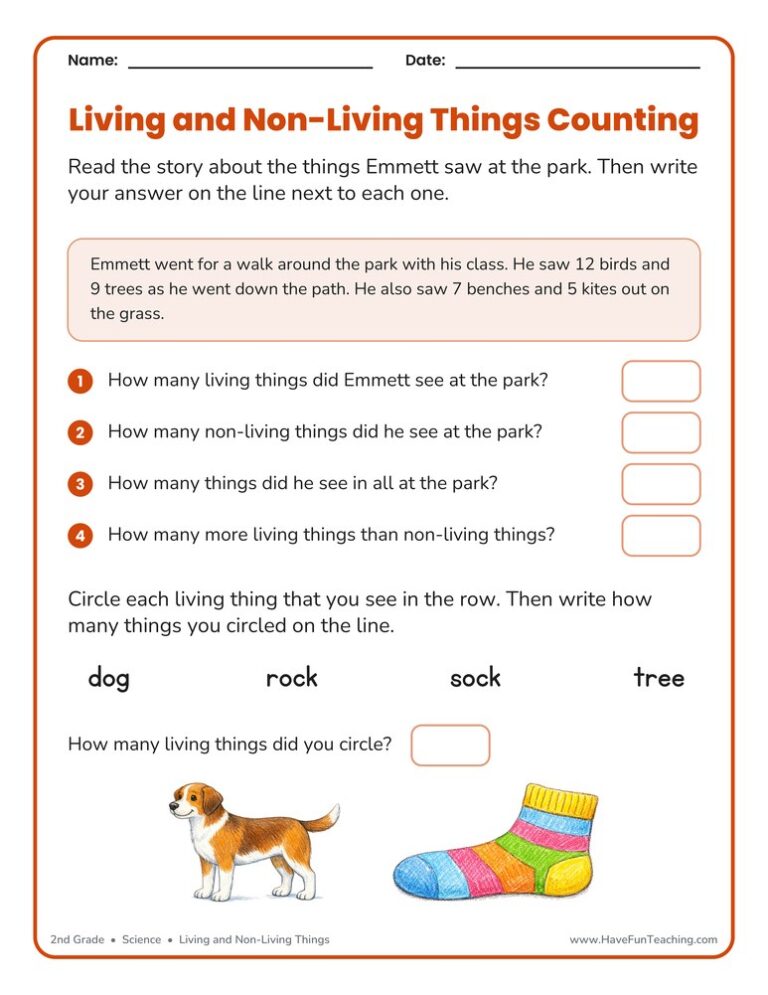
This Living Things and Non Living Things Counting Worksheet gives 2nd grade students a park number story to count, classify and compare, with an answer key included so checking the whole page takes seconds.
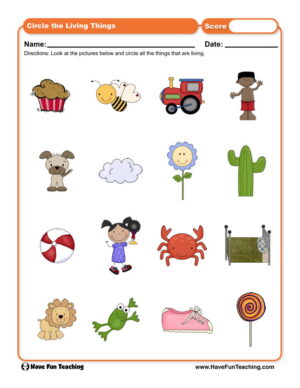
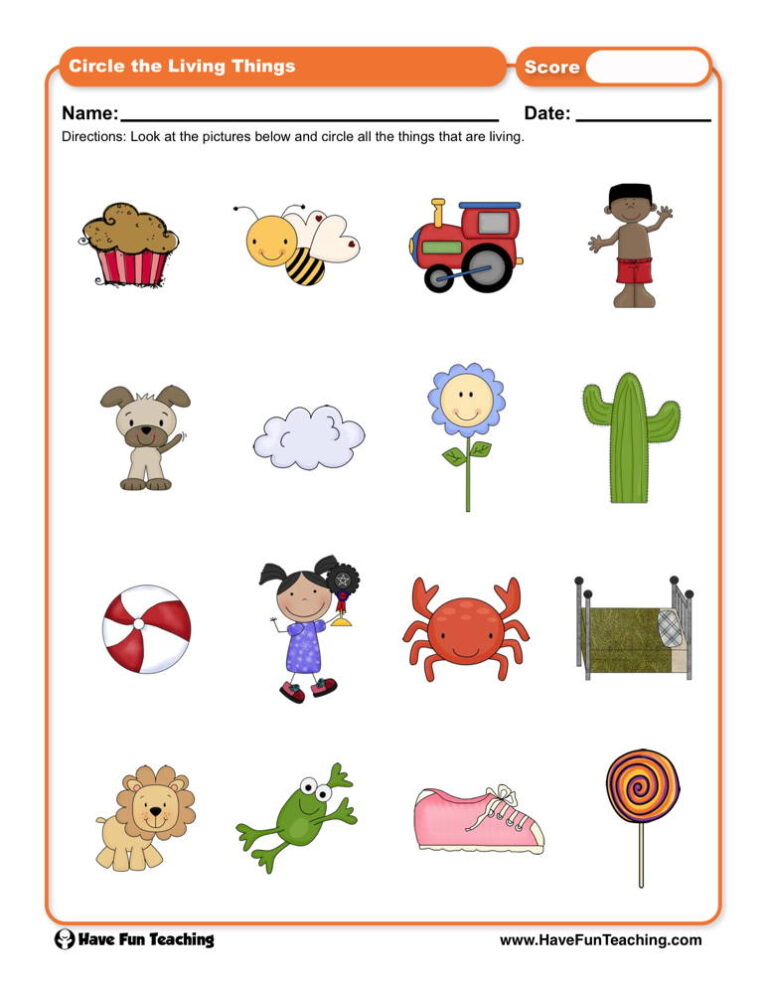
This Circle the Living Things Worksheet asks Kindergarten students to spot the pictures that grow, then classify three more. Answer key included — an easy, picture-based first look at living and non-living things.
The Classifying Living and Nonliving Things Primary Version Worksheet asks Kindergarten students to sort six familiar pictures into living and nonliving groups. An answer key is included, so this hands-on science practice takes no prep at all.
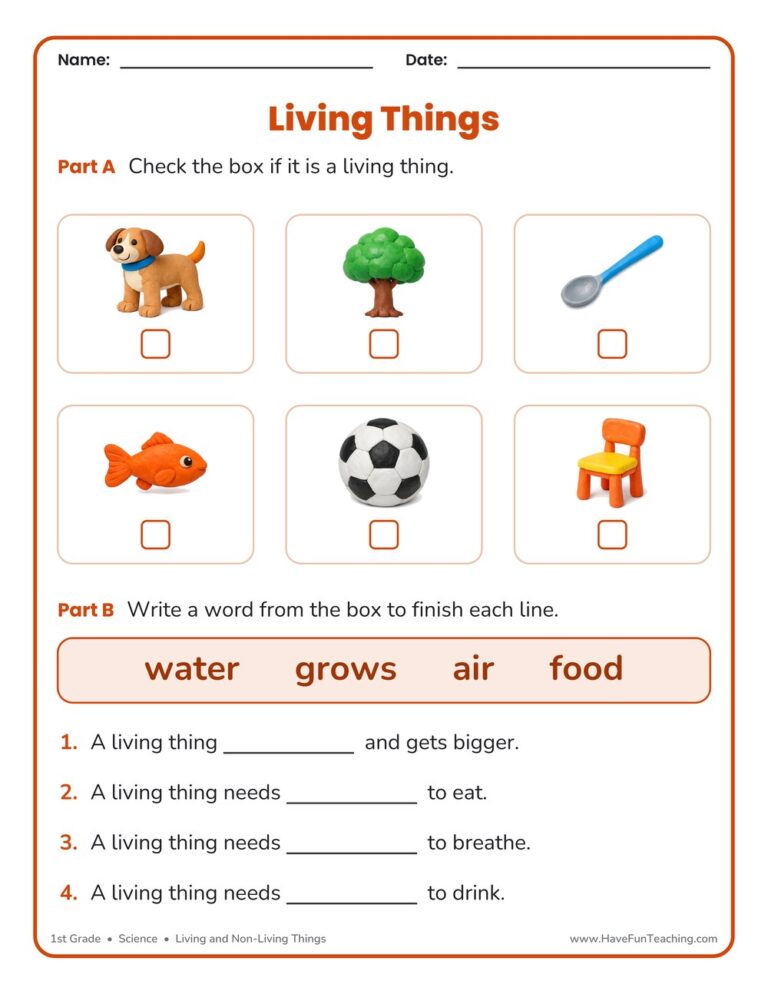
This Describing Characteristics Living Things Worksheet asks first graders to check off six pictures and finish four sentences about what living things need. Answer key included for fast, no-prep science practice.
This sorting characteristics living things worksheet asks 1st graders to read ten words and write each one under Living or Non-Living. An answer key is included, so science practice takes no prep at all.
A categorizing living and non-living things worksheet where 1st graders sort six words into two columns and bubble in living or nonliving for four pictures. Answer key included for fast, no-prep science practice.
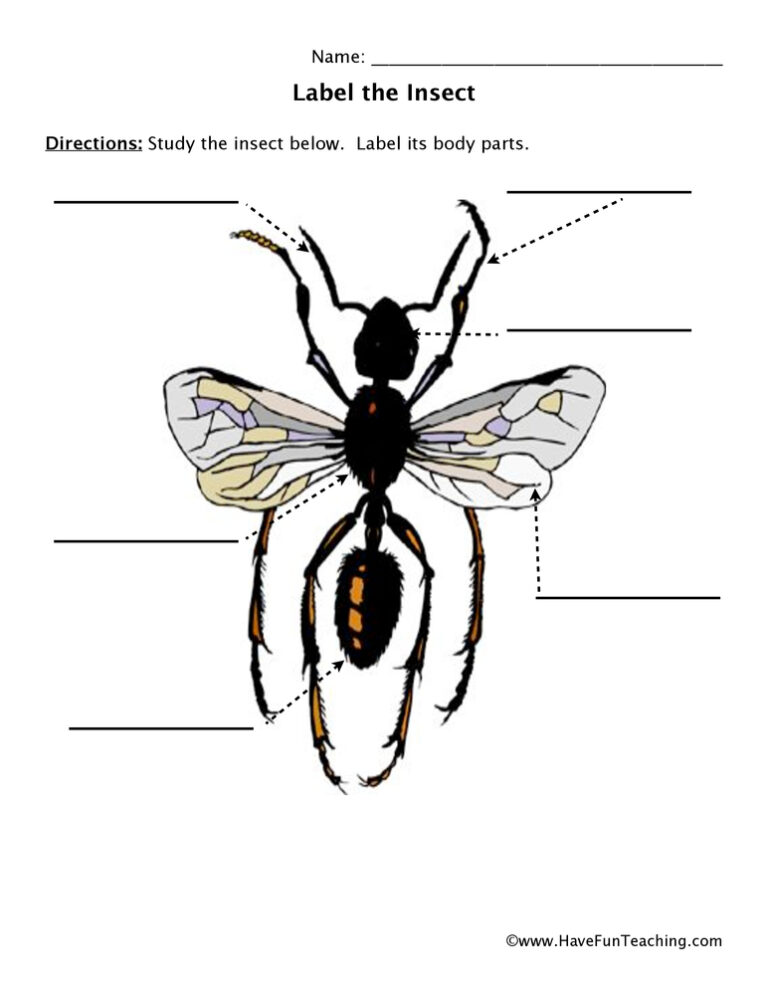
ing Ant Body Parts Worksheet, students label the parts of the ant to build their understanding of an insect's anatomy.
Using this Bird Taxonomy Worksheet, students will be able to write the taxonomy classification for each example of bird.
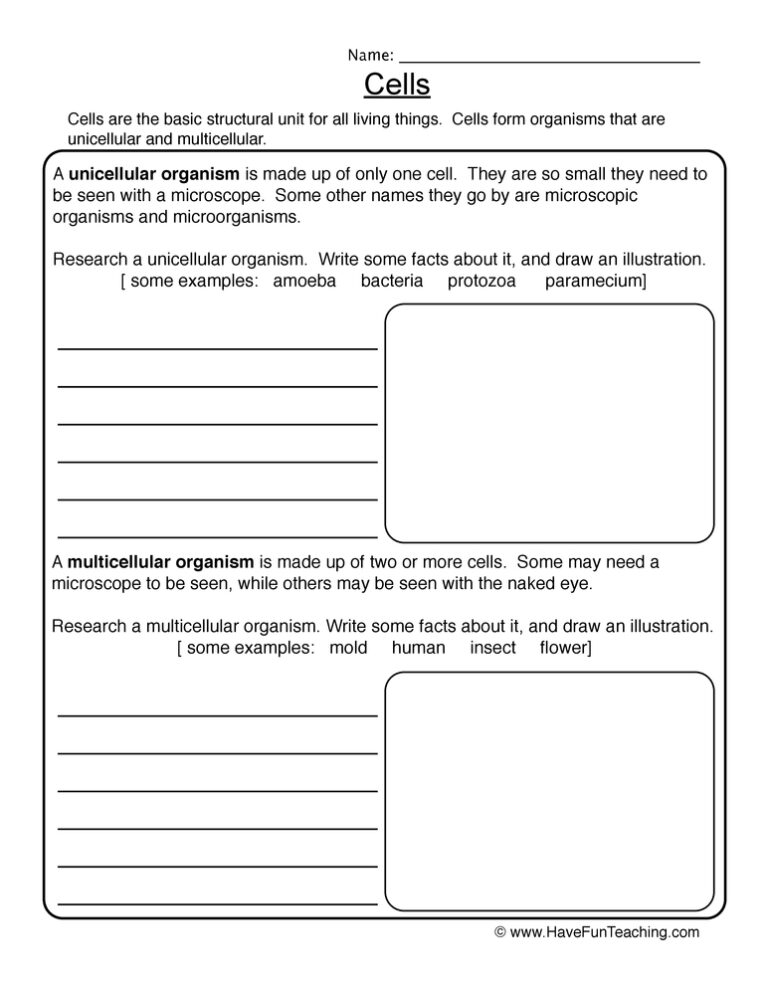
Using the Cells Worksheet, students research Unicellular and multicellular organisms to learn facts and be able to draw each cell.
Using this Boy Body Parts Worksheet, students use a word bank to identify nine major parts on the human body.
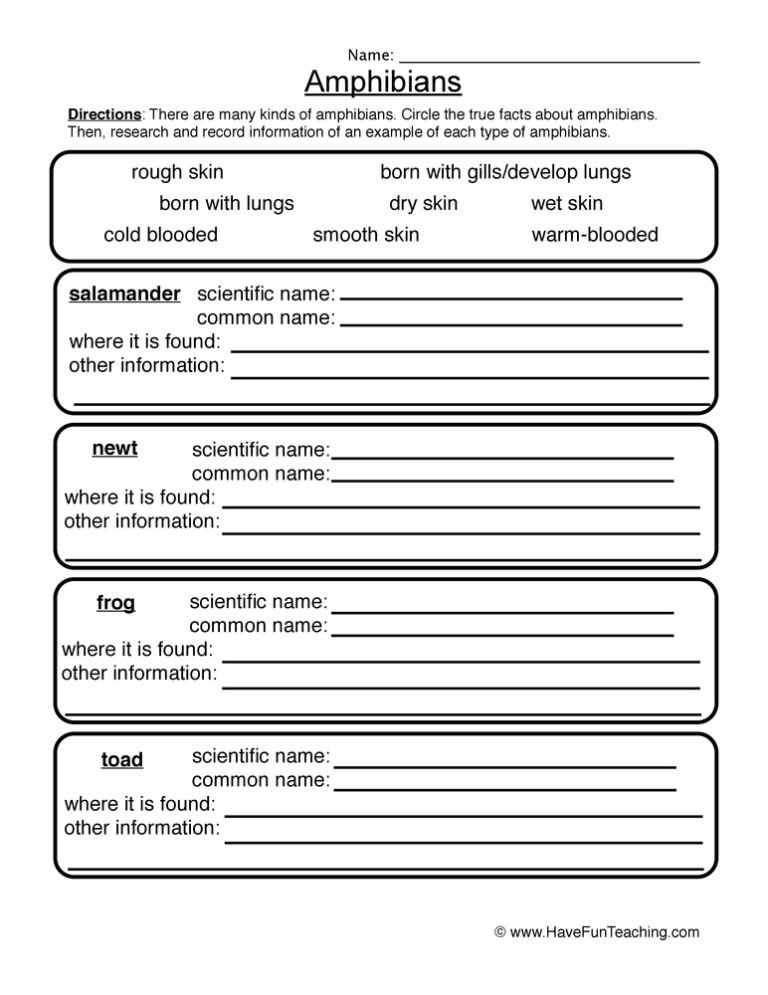
This amphibians worksheet has 3rd graders circle amphibian traits, sort eight animals into amphibian and non-amphibian columns, and explain their thinking. Answer key included for fast, no-prep science practice.