
Skip to content
Start My 3 Free Days $0 today · cancel anytime

States of Matter Worksheets

25 states of matter worksheets. Teacher favorites: Properties of Matter Definitions Worksheet and Physical Changes Matter Worksheet. How teachers use these

States of Matter Worksheets

25 states of matter worksheets. Teacher favorites: Properties of Matter Definitions Worksheet and Physical Changes Matter Worksheet. How teachers use these

Worksheet
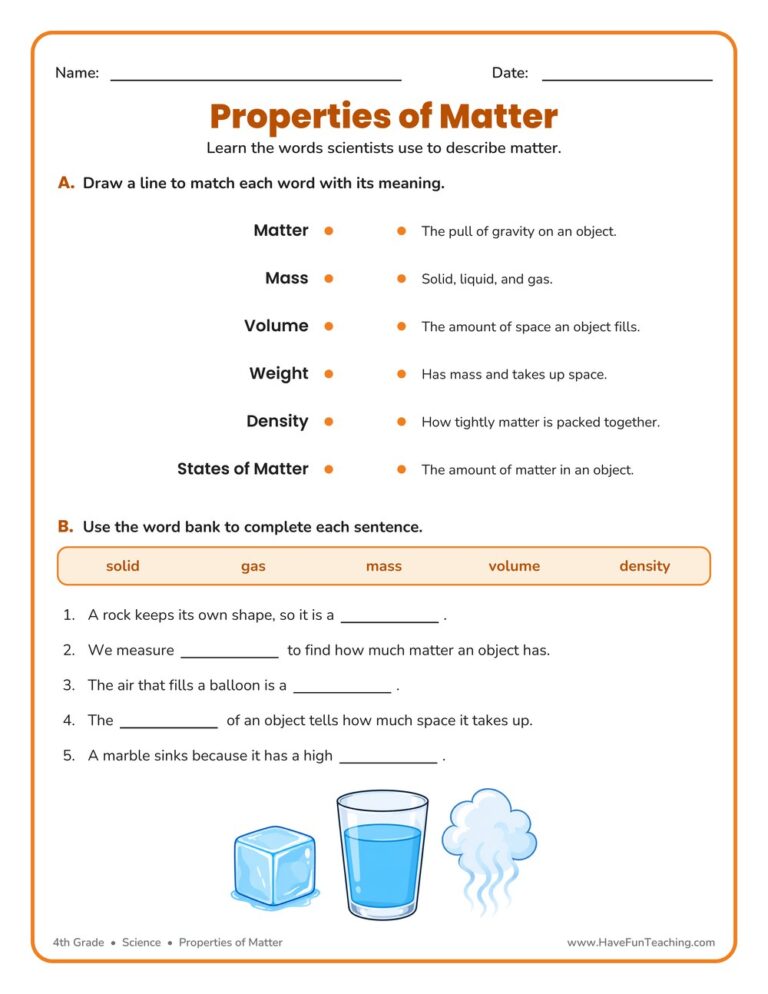
Worksheet4th GradeProperties of Matter Definitions Worksheet

This Properties of Matter Definitions Worksheet helps 4th grade students match key science terms—matter, mass, volume, weight, and density—to their meanings and complete sentences about solids and gases. Answer key included for fast, no-prep science practice.

Worksheet
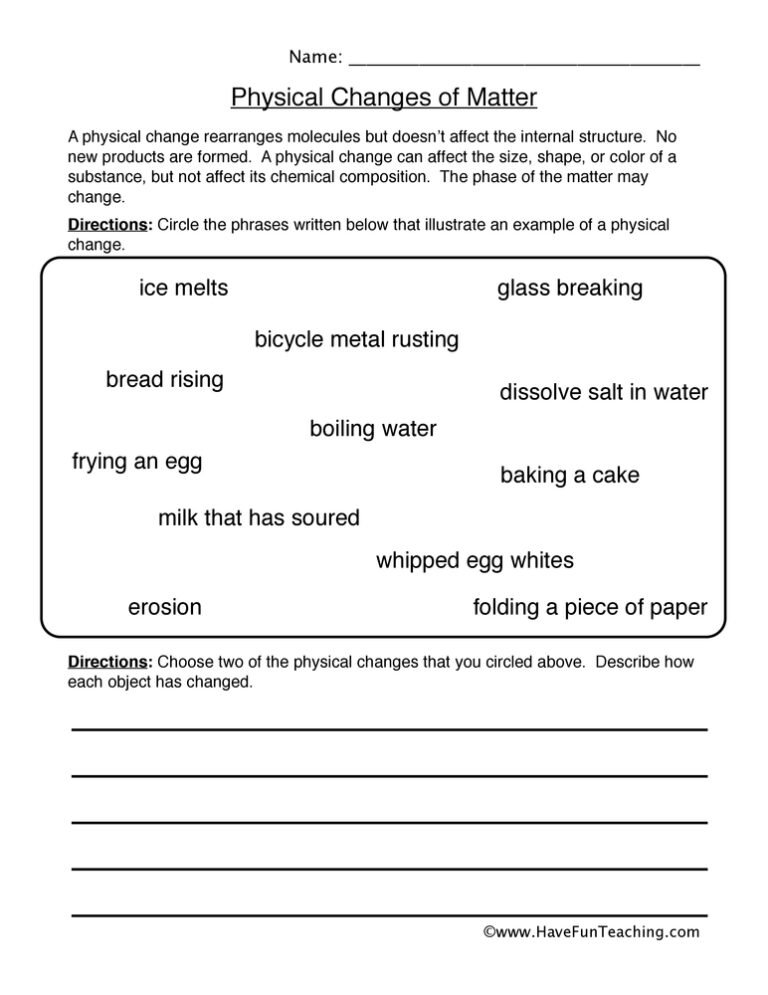
Worksheet5th GradePhysical Changes Matter Worksheet

This physical changes matter worksheet asks 5th Grade students to sort eight everyday changes, label three states of matter, and explain their thinking, with an answer key included for fast grading.

Worksheet
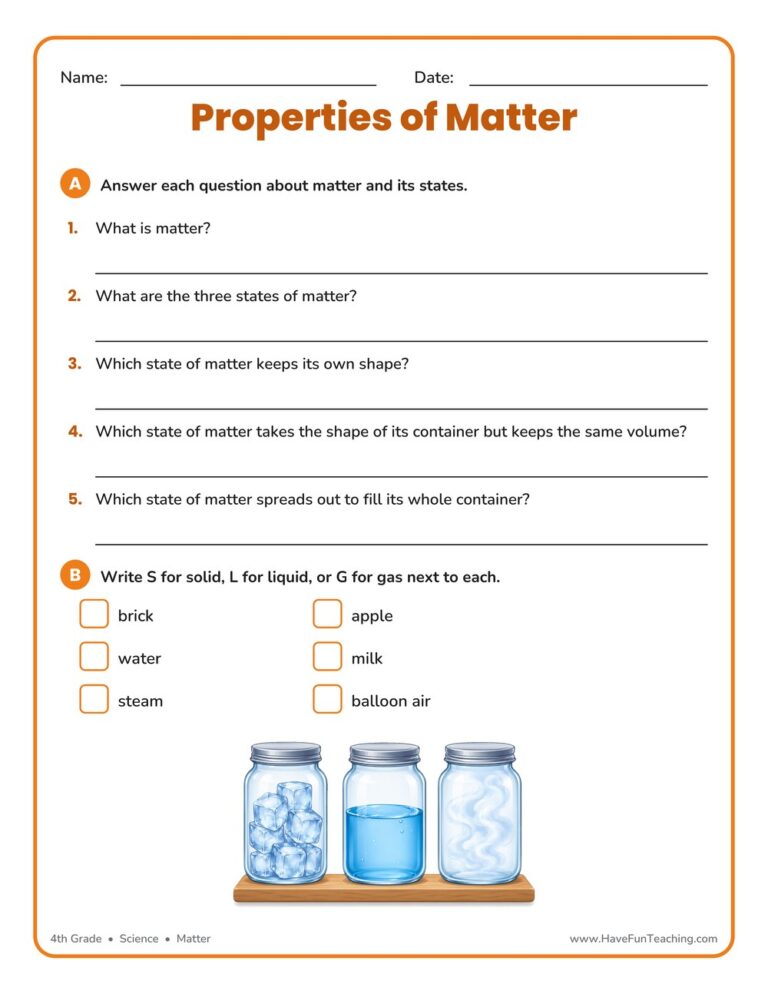
Worksheet4th GradeProperties of Matter Review Worksheet

This 4th Grade Properties of Matter Review Worksheet has students answer key questions about matter and sort everyday objects as solid, liquid, or gas. Answer key included — an easy, no-prep way to review states of matter.

Worksheet
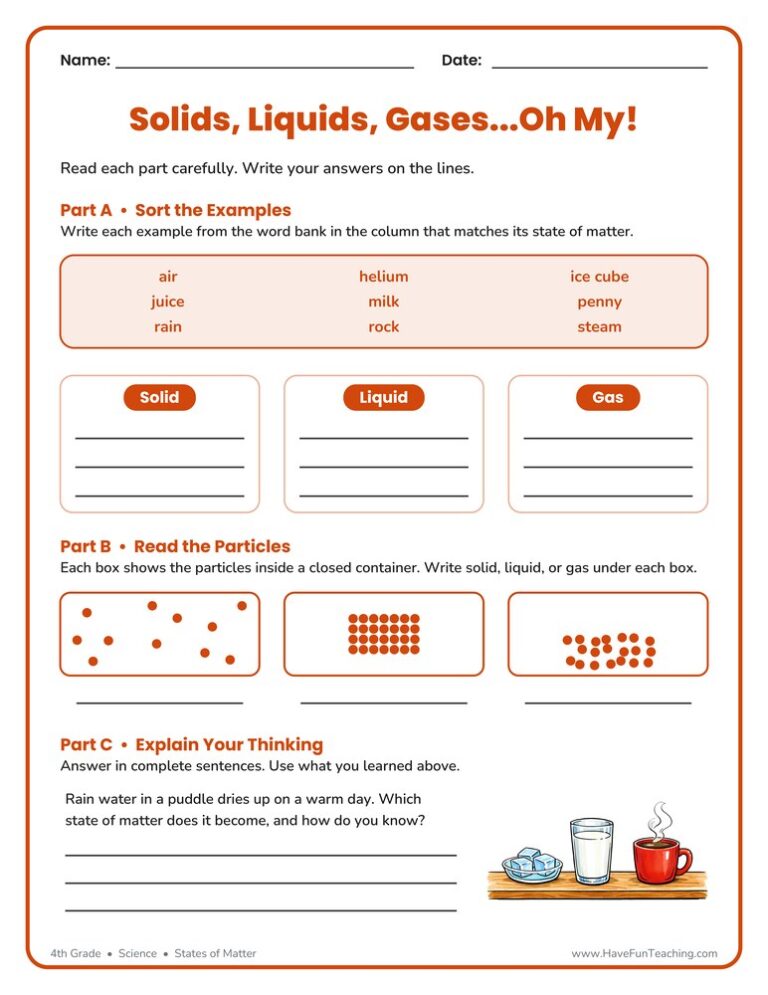
Worksheet4th GradeStates of Matter Examples Worksheet

Sort nine everyday examples, label three particle diagrams, and explain a change of state with this states of matter examples worksheet for 4th grade. An answer key is included, so checking work takes seconds.

Worksheet
Worksheet5th GradeIdentifying States of Matter Worksheet

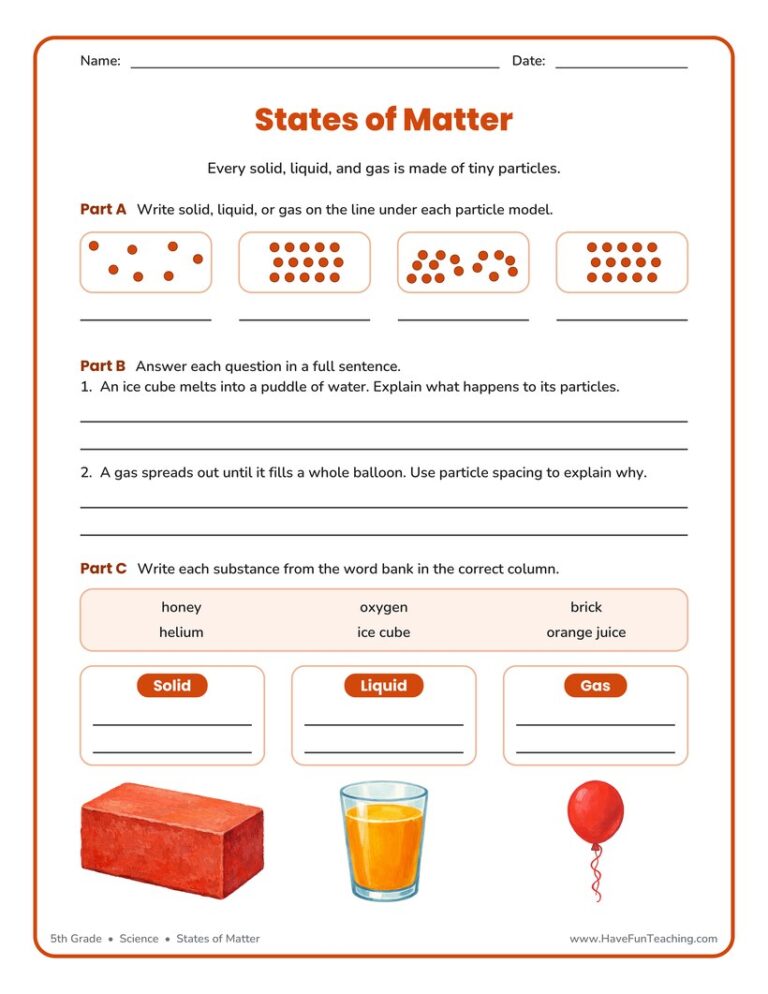
This Identifying States of Matter Worksheet has 5th graders read particle models, explain melting and gas expansion, and sort six everyday substances into solids, liquids, and gases. An answer key is included for fast, confident grading.

Worksheet
Worksheet3rd GradeMany States of Water Worksheet

This many states of water worksheet gives 3rd grade students practice naming solid, liquid, and gas and the changes between them. Answer key included, so checking work takes seconds.

Worksheet
Worksheet5th GradePhysical Changes Examples Worksheet

This Physical Changes Examples Worksheet gives 5th Grade students six sorting items and two written-response questions on physical and chemical change, answer key included, so classifying matter becomes second nature.

Worksheet
Worksheet4th GradeElectricity Worksheet

This Electricity Worksheet pairs a short reading passage with vocabulary and explanation questions that show 4th graders how current, circuits, conductors, and insulators work. Answer key included for fast, no-prep science practice.

Worksheet
Worksheet3rd GradePhysical Properties Matter Worksheet

This physical properties matter worksheet gives 3rd grade students practice naming color, texture, size, shape, and mass, plus states of matter. An answer key is included, so checking work takes seconds.

Worksheet
Worksheet5th GradeChemical Changes Examples Worksheet

This Chemical Changes Examples Worksheet gives 5th graders vocabulary practice, picture sorting, and a written explanation task for telling physical changes from chemical ones. An answer key is included, so checking work takes seconds.

Worksheet
Worksheet5th GradeChemical Changes Matter Worksheet

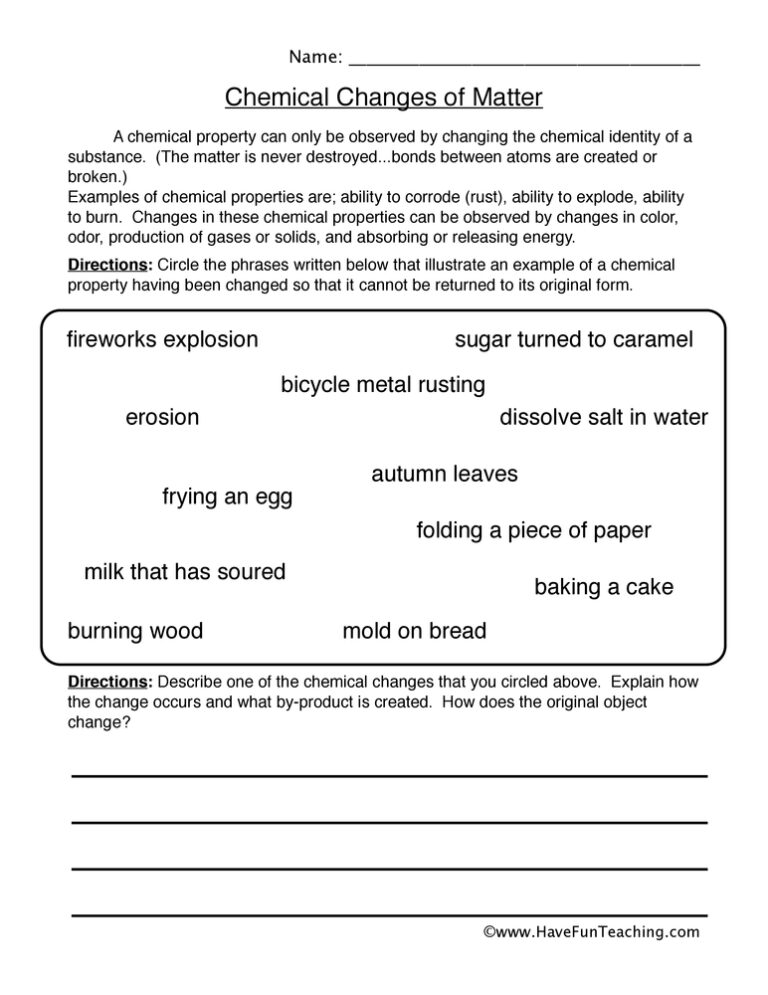
This chemical changes matter worksheet has 5th grade students name the signs of a chemical change and explain their thinking with evidence. An answer key is included for quick, easy checking.

Worksheet
Worksheet5th GradeChemical Properties Matter Worksheet

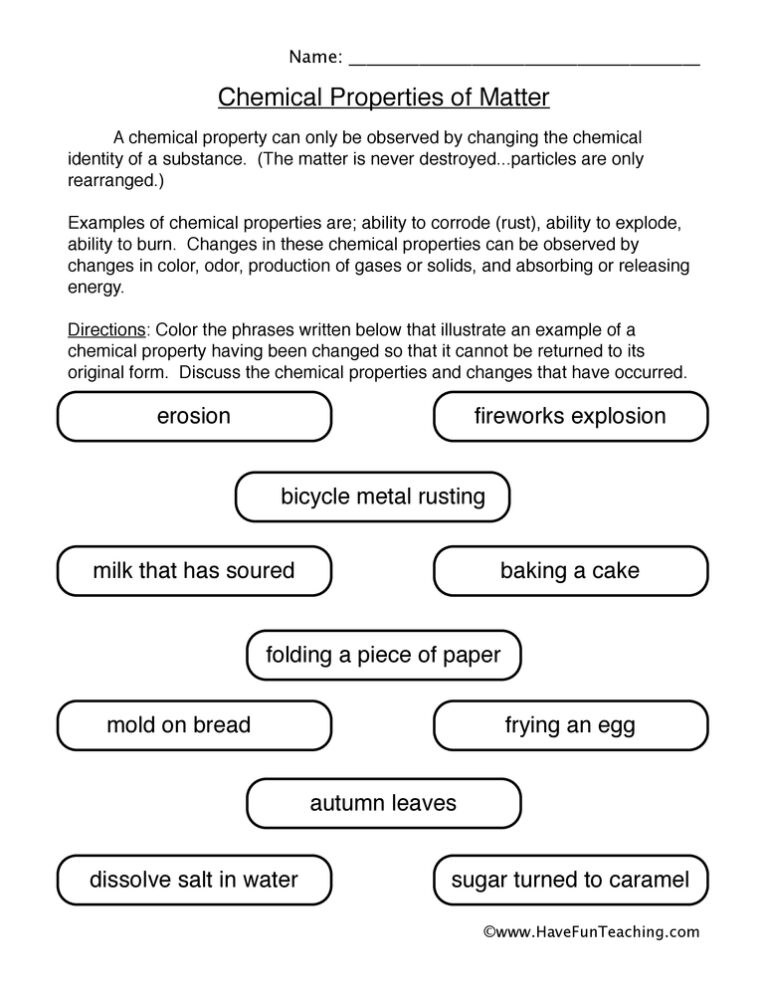
This chemical properties matter worksheet has 5th grade students sort eight everyday events into chemical and physical changes, then explain their reasoning with evidence. An answer key is included for fast, no-prep science practice.

Worksheet
Worksheet4th GradeSolid Liquid Gas Explanation Worksheet

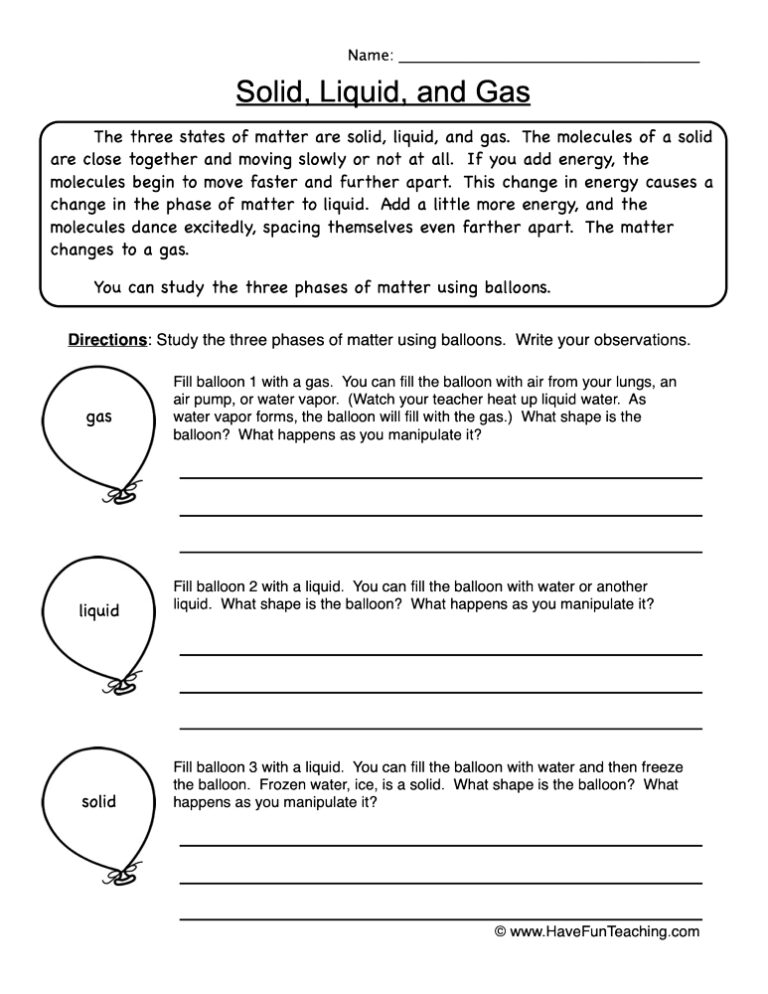
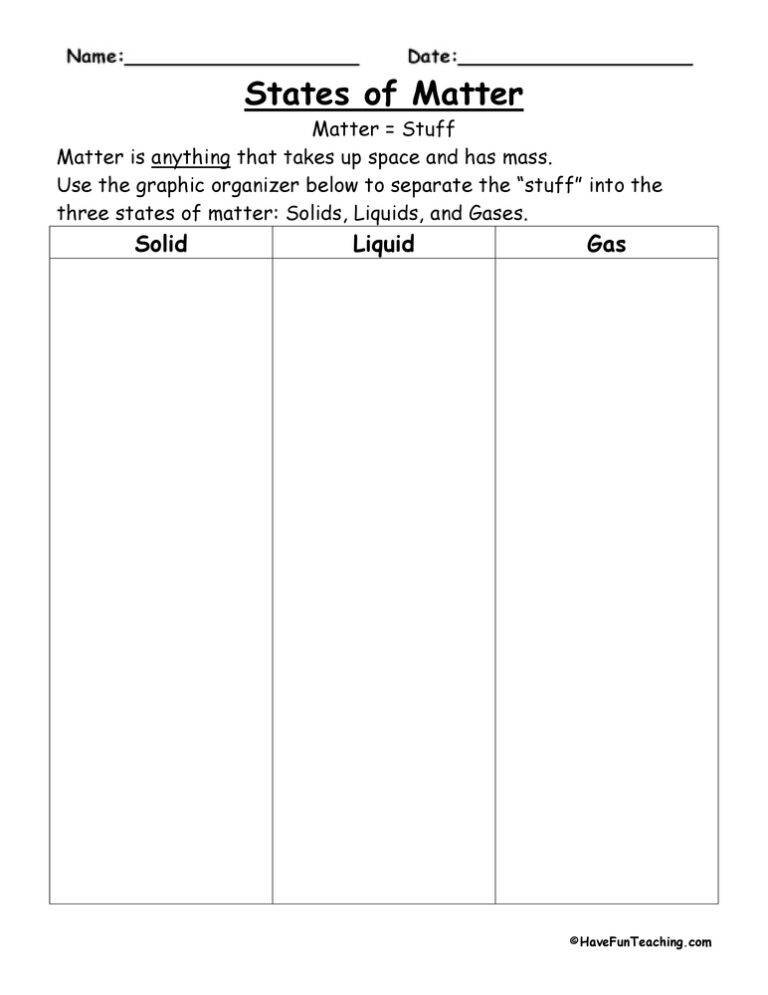
This solid liquid gas explanation worksheet has 4th graders sort nine materials into a three-column chart and name the solid and liquid in four sentences. An answer key is included.

Worksheet
Worksheet5th GradeMatter Worksheet

Use this matter worksheet to help 5th grade students decide what is and is not matter and explain mass, volume, and particles in writing. A full answer key is included.

Worksheet
Worksheet4th GradeMagnetic Earth Worksheet

This Magnetic Earth Worksheet gives 4th Grade students four magnet words and six real-life clues to match, plus an answer key, so magnetism vocabulary sticks long after the lesson ends.

Worksheet
Worksheet3rd GradeStates of Matter Worksheet

A States of Matter worksheet for 3rd grade: students sort nine everyday materials into Solid, Liquid, and Gas columns, then name the solid and the liquid in four sentences. Answer key included for fast, no-prep science practice.

Worksheet
Worksheet4th GradeChemical Changes Observation Worksheet

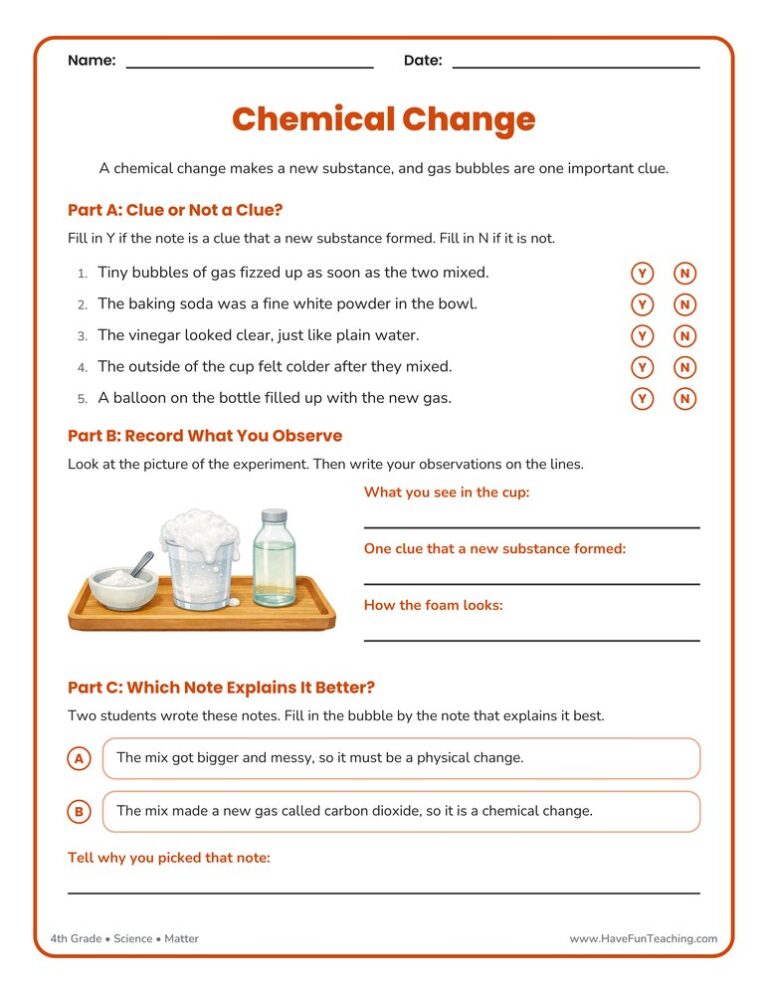
This chemical changes observation worksheet has 4th graders study a baking soda and vinegar reaction, spot the evidence of a new substance, and explain their thinking. An answer key is included.

Worksheet
Worksheet2nd GradeSolid Liquid Gas Worksheet

This solid liquid gas worksheet asks 2nd Grade students to name the state of matter in six everyday examples using a word bank. An answer key is included.

Worksheet
Worksheet3rd GradeWhat are Liquids? Worksheet

A 3rd Grade liquids worksheet that pairs matter vocabulary with real examples like poured syrup and a balloon of air. Answer key included, so students can practice naming solids, liquids and gases with no prep.

Worksheet
Worksheet2nd GradeClassifying List Worksheet

This classifying list worksheet has 2nd grade students sort nine everyday words into solid, liquid, and gas columns. An answer key is included, making it easy to check their thinking about matter.

From our teachers' playbook

Solid, liquid, gas, go!

What do kids learn about states of matter?

Everything around us is matter, and it usually comes in three states. Solids keep their own shape, like a block. Liquids take the shape of their container, like juice in a cup. Gases spread out to fill any space, like air in a balloon. Kids learn that heating and cooling can change matter from one state to another: ice → water → steam. Older kids learn the difference between physical changes and chemical changes. The click comes when kids realize water, ice and steam are all the same stuff!

How we teach states of matter

Matter is perfect for hands-on learning. These moves let kids see, touch and sort it.

Melt it and watch

Put ice cubes in cups around the room: in the sun, in the shade, in a hand. Kids predict which melts first and check every ten minutes. They see solids becoming liquids right in front of them.

Why it works: the U.S. Department of Education's guide for teaching elementary math recommends moving from hands-on objects to drawings to numbers.

Many States of Water WorksheetTry it withMany States of Water WorksheetWorksheetsOpen it →

Sing the states

A matter song gives kids words for what they see. Play it a few times during the unit and add motions: tight fists for solids, wavy hands for liquids, arms flying out for gas.

Why it works: a catchy, repeating tune gives the brain a hook to hang words on, so sung text is remembered better (Wallace, 1994).

Matter SongTry it withMatter SongSongsOpen it →

Sort the room

Kids walk the room and sort what they find into solid, liquid and gas columns. Tricky items like a sponge or toothpaste lead to great debates.

Why it works: pairing a picture with each word gives kids two ways to remember it, a well-tested principle of how people learn (Mayer, 2009).

States of Matter Examples WorksheetTry it withStates of Matter Examples WorksheetWorksheetsOpen it →

States of matter questions

What are the 3 states of matter?

The three main states of matter are solid, liquid and gas. Solids keep their shape, liquids take the shape of their container, and gases spread out to fill a space.

What grade learns states of matter?

Kids usually meet solids, liquids and gases in 2nd grade. They study properties and changes in more depth in 4th and 5th grade.

How do you explain states of matter to a child?

Use water! Ice is a solid, water is a liquid and steam is a gas. Heating and cooling change the state, but it's still water.

What is the difference between a physical and chemical change?

A physical change changes the shape or state but not what something is made of, like melting ice. A chemical change makes a new substance, like baking a cake or burning wood.



