Skip to content
Start My 3 Free Days $0 today · cancel anytime

Reading Comprehension Activities

44 reading comprehension activities. Teacher favorites: Key Details Activity and Main Idea and Details Activity. How teachers use these

Reading Comprehension Activities

44 reading comprehension activities. Teacher favorites: Key Details Activity and Main Idea and Details Activity. How teachers use these

Activity
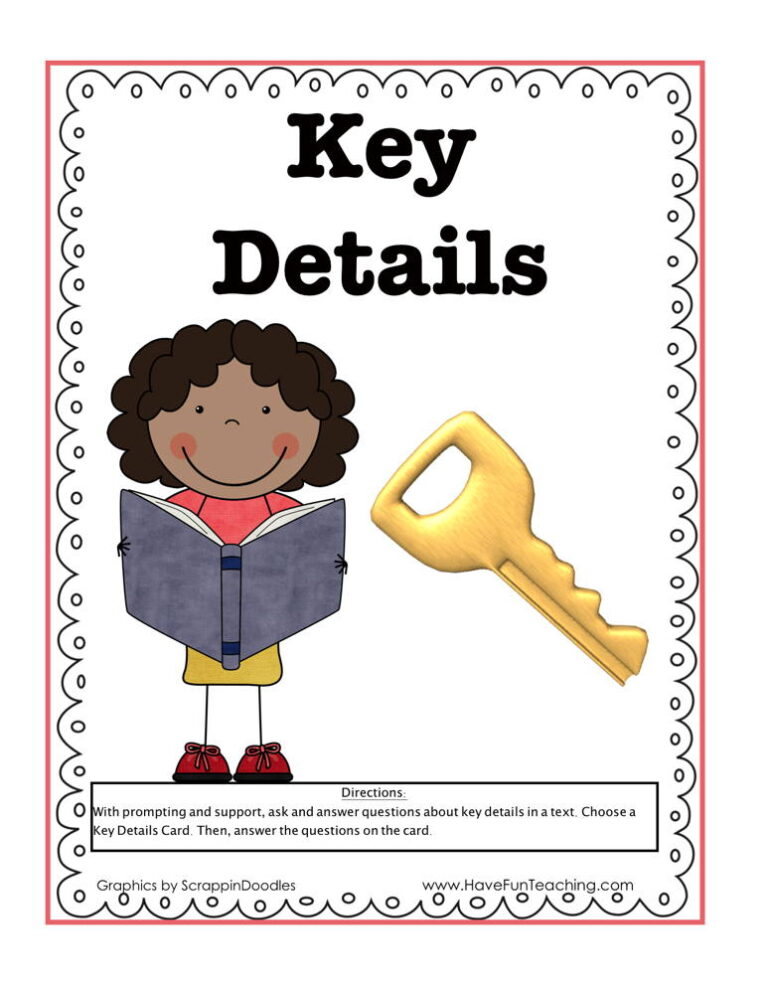
ActivityKindergartenKey Details Activity

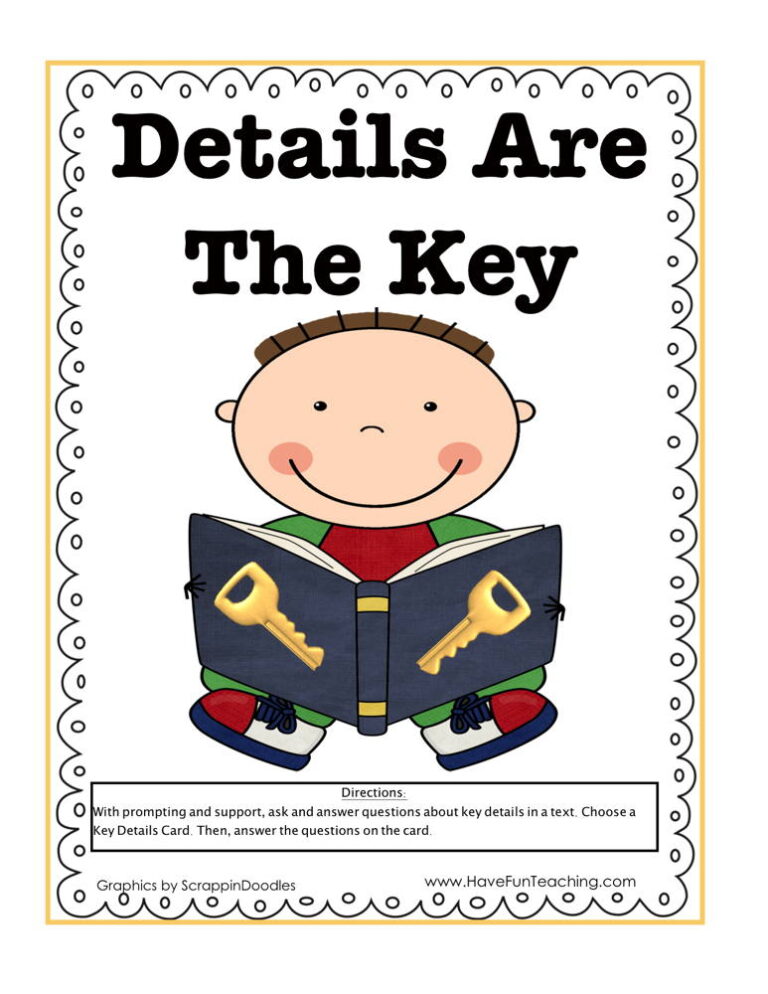
This key details activity gives K through 3rd grade readers 12 question cards to use with any book, plus a recording sheet and practice stories. Answer key included.

Activity
ActivityPreschoolMain Idea and Details Activity

Sort picture cards in this main idea and details activity for PreK to 1st grade. Children match details to Farm, Beach, Birthday and Rain, then practice on a worksheet. Answer key included.

Activity
Activity3rd GradeInference Chains Activity

This inference chains activity has 3rd to 5th grade students match each inference to two supporting clues and build paper chains. Answer key included.

Activity
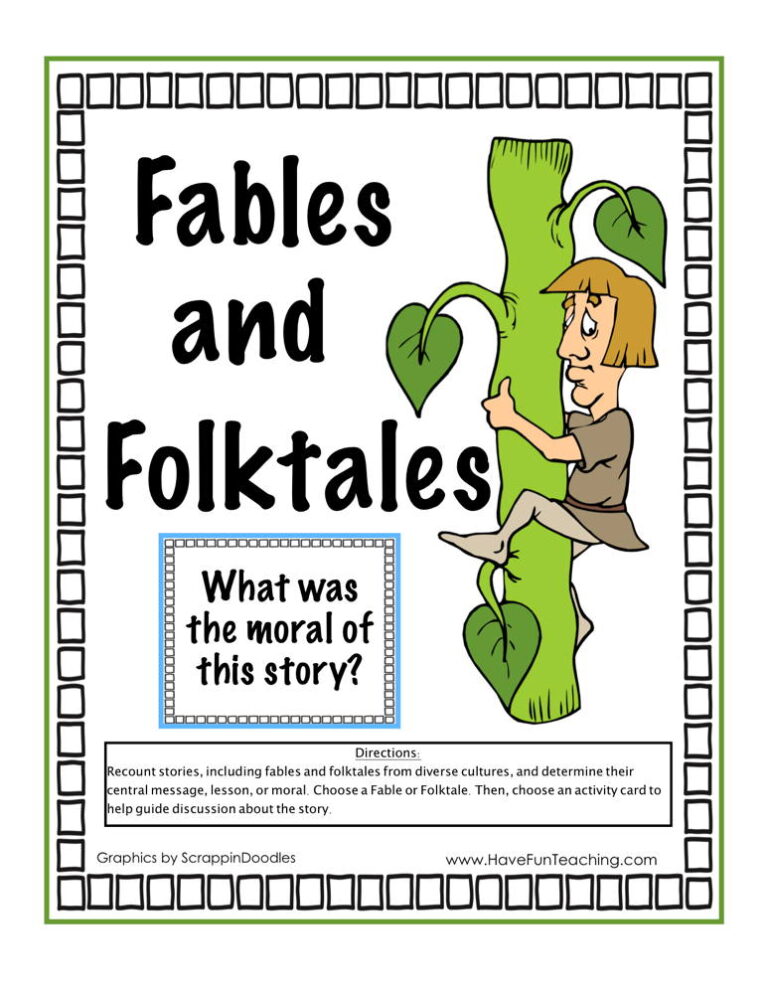
Activity2nd GradeFables and Folktales Activity

Read, retell and find the moral with this fables and folktales activity for 2nd and 3rd grade: story cards, moral cards, talk cards and a Story Map, with an answer key included.

Activity
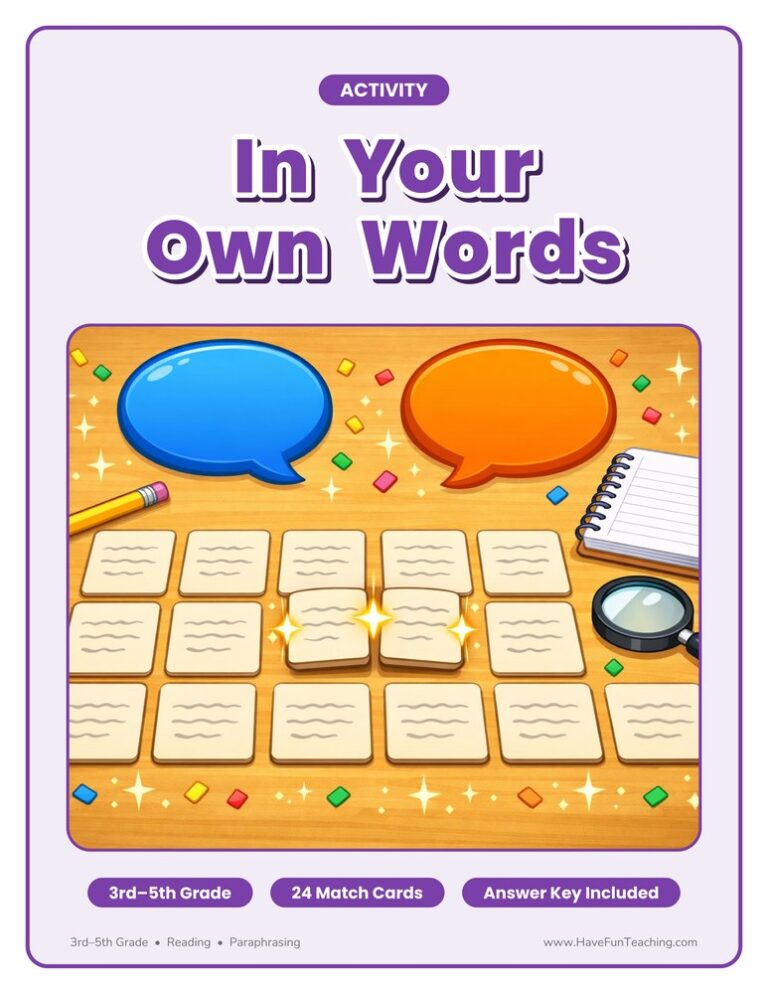
Activity3rd GradeIn Your Own Words Paraphrase Activity

This in your own words paraphrase activity has 3rd to 5th grade students match texts to paraphrase cards and write their own. A practice page and an answer key are included.

Activity
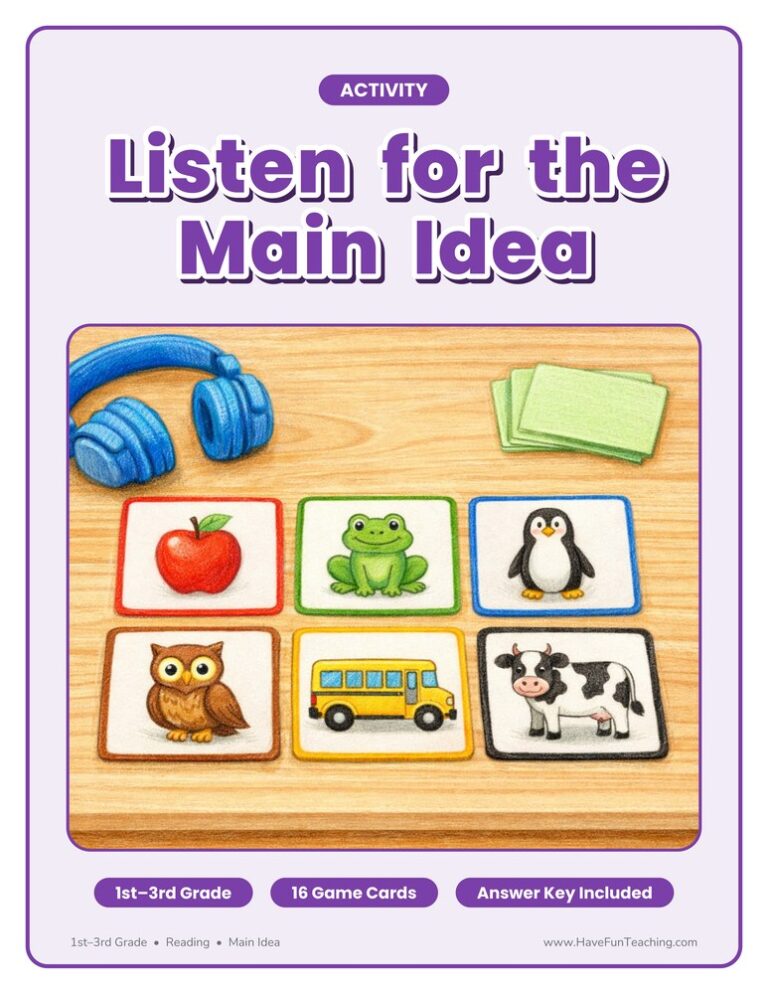
Activity1st GradeListen for the Main Idea Activity

This listen for the main idea activity helps 1st to 3rd grade students hear a short text, name its main idea, and retell a detail, with an answer key included.

Activity
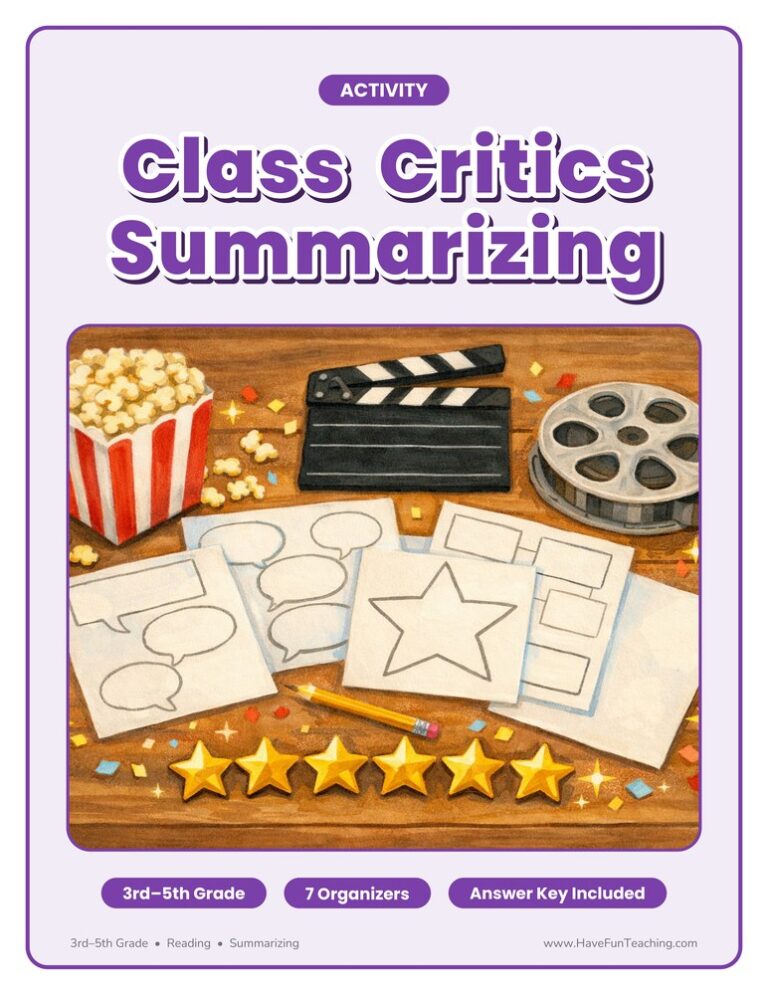
Activity3rd GradeClass Critics Summarizing Activity

This class critics summarizing activity gives 3rd to 5th grade students seven organizers to summarize books, videos, and articles. Answer key included for the model and practice.

Activity
Activity1st GradeFeeling Words Activity

This feeling words activity has 1st to 3rd graders read a story, match clue cards to feeling words, and practice naming how characters feel. An answer key is included.

Activity
Activity2nd GradeWhat's the Moral of the Story Activity

This what's the moral of the story activity helps 2nd and 3rd graders read short fables, retell them, and match each one to its lesson. Answer key included for quick checking.

Activity
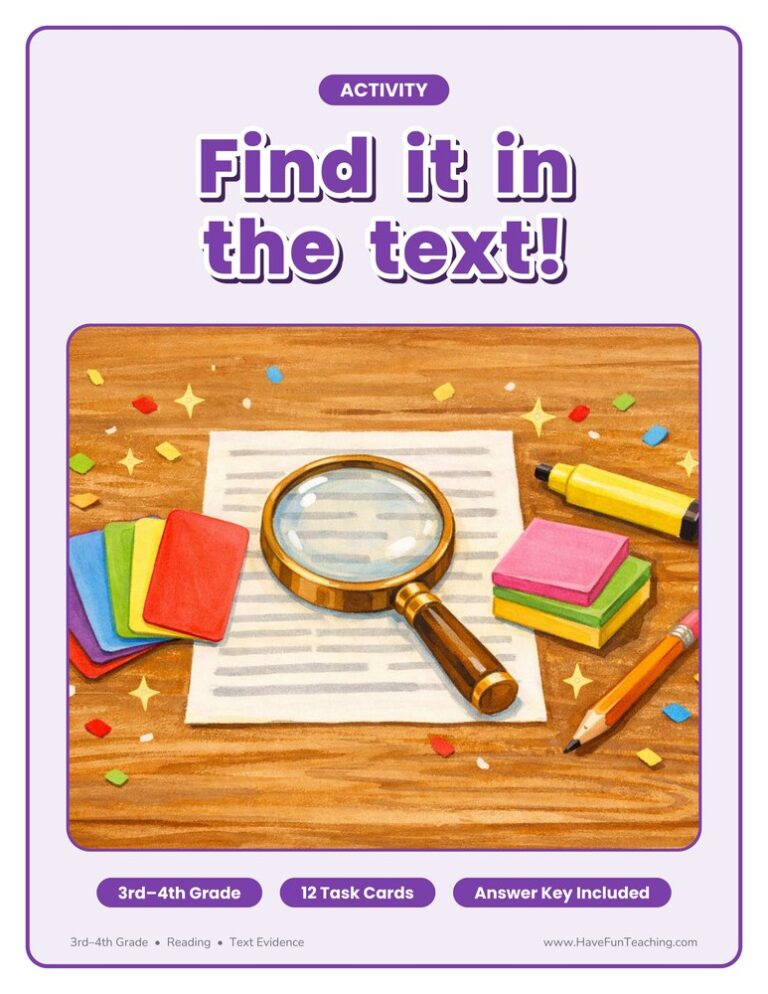
Activity3rd GradeFind It In The Text Activity

This find it in the text activity has 3rd and 4th grade readers answer 12 task-card questions and prove each one with a paragraph number. Answer key included.

Activity
ActivityKindergartenRetelling Using Key Details Activity

This retelling using key details activity helps kindergarten to 3rd grade students sort key events, put them in order, and retell a story, with an answer key included.

Activity
ActivityKindergartenRetelling Stories Activity

This retelling stories activity has Kindergarten to 2nd Grade students order picture and sentence cards, then retell a pool-day story. Answer key included to check every card.

Activity
Activity3rd GradeHurricanes Reading Comprehension Activity

This hurricanes reading comprehension activity has 3rd to 5th grade students read a passage, match vocabulary cards and answer text-based questions. An answer key is included.

Activity
Activity1st GradeFirst Grade Informational Texts Activity

This first grade informational texts activity has eight nonfiction task cards that help 1st grade readers find facts in a text and answer questions. Answer key included for quick checking.

Activity
Activity1st GradeWhat's the Main Idea Activity

This What's the Main Idea Activity helps 1st to 3rd Grade students match short texts to their main ideas and find a supporting detail, with an answer key included.

Activity
Activity3rd GradeOrganize Your Thinking Informational Text Activity

This organize your thinking informational text activity helps students take clear notes on nonfiction. Made for 3rd to 5th Grade, with a practice page and answer key included.

Activity
Activity1st GradeMain Idea and Details Reading Activity

This main idea and details reading activity for 1st and 2nd grade turns reading into a train game: match detail cars to main idea engines. Practice page and answer key included.

Activity
Activity1st GradeWho What When Where Why How Activity

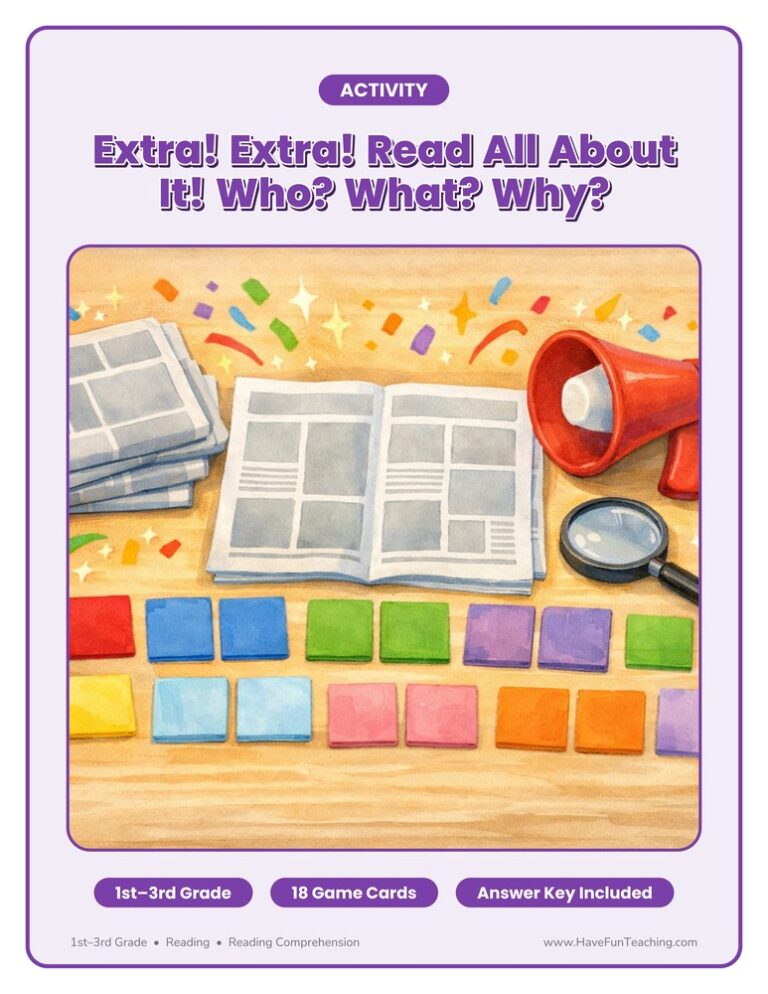
This who what when where why how activity is a newspaper card game for 1st to 3rd grade that builds key detail skills, with a practice page. Answer key included.

Activity
ActivityKindergartenKey Details in a Text Activity

This key details in a text activity helps K-2nd grade readers answer who, what, where, when, why, and how questions with self-checking story cards. Answer key included.

Activity
ActivityKindergartenAfter Reading Discussion Cards Activity

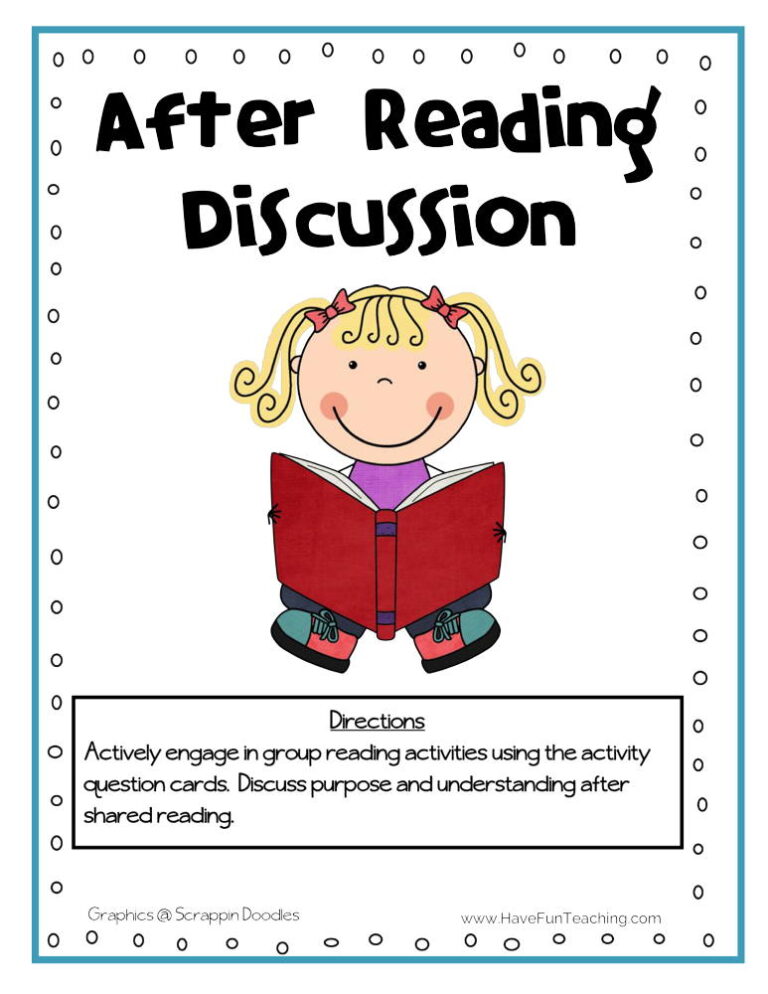
These after reading discussion cards give kindergarten to 3rd grade readers 24 story questions, a spinner and a book talk page for lively group conversations about any book.

From our teachers' playbook

Reading is thinking, and kids can do it!

What do kids learn about reading comprehension?

Reading comprehension is understanding what you read, not just saying the words. Young readers start by retelling a story and naming the characters, setting and big events. In 2nd and 3rd grade they find the main idea, put events in order, and spot cause and effect. Older readers summarize, make inferences and figure out a story's theme. The click comes when kids learn to prove it: "I know Sam was nervous because the story says his hands were shaking."

Our favorite ways to build reading comprehension

Good readers think while they read. These moves teach kids to do that on purpose.

Think out loud

Read a passage like Nervous about Third Grade to the class and stop to say what you're thinking: "Hmm, she keeps checking the clock. I bet she's worried." Kids hear how a strong reader makes guesses and checks them. Then they try it with a partner on the next paragraph.

Why it works: showing first, practicing together, then letting kids try alone is the "gradual release" model teachers have relied on for decades (Pearson and Gallagher, 1983).
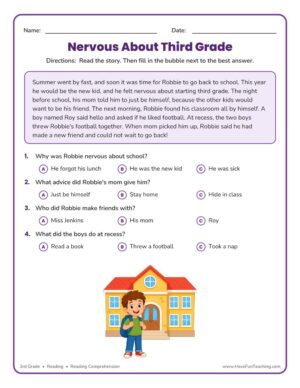
Nervous about Third Grade Reading Comprehension WorksheetTry it withNervous about Third Grade Reading Comprehension WorksheetWorksheetsOpen it →

Prove it with the text

After reading All About Autumn, kids answer each question and underline the sentence that proves their answer. No underline, no credit! It stops guessing and trains kids to go back into the text.

Why it works: a big review of study methods ranked quick self-quizzing among the most powerful ways to remember (Dunlosky and colleagues, 2013).

All About Autumn Reading Comprehension WorksheetTry it withAll About Autumn Reading Comprehension WorksheetAssessmentsOpen it →

Switch between stories and facts

Alternate a fiction passage one day with a nonfiction one like Learning about Mammals the next. Kids have to shift how they read: following characters in one, hunting for facts in the other. That flexibility is what tests and real life ask for.

Why it works: shuffled practice teaches kids to choose the right strategy, not just repeat one, and it improved test scores in research (Rohrer and Taylor, 2007).

Learning about Mammals WorksheetTry it withLearning about Mammals WorksheetWorksheetsOpen it →

Questions parents and teachers ask about reading comprehension

What is reading comprehension?

It is the ability to understand, remember and think about what you read. A child with strong comprehension can retell a story, answer questions about it and explain their answers using the text.

How can I improve my child's reading comprehension?

Read together and talk about it. Ask "What happened first?", "Why do you think she did that?" and "How do you know?" Short, regular conversations about books build comprehension faster than extra worksheets alone.

Why can my child read the words but not understand them?

Some kids put so much effort into decoding that there is nothing left for meaning. Rereading the same passage, building vocabulary and stopping to talk after each page all help free up attention for understanding.

What are the main reading comprehension skills?

Retelling, sequencing, finding the main idea and details, cause and effect, making inferences, comparing texts and identifying the author's purpose. Kids build them step by step from kindergarten through 5th grade.

Are these reading comprehension worksheets printable?

Yes. Each worksheet has a short passage and questions you can print for class, homework or centers, and many include an answer key.