Skip to content
Start My 3 Free Days $0 today · cancel anytime

Writing Worksheets

463 writing worksheets, covering handwriting, prompts, sentences, plus more. How teachers use these

Writing Worksheets

463 writing worksheets, covering handwriting, prompts, sentences, plus more. How teachers use these

Worksheet
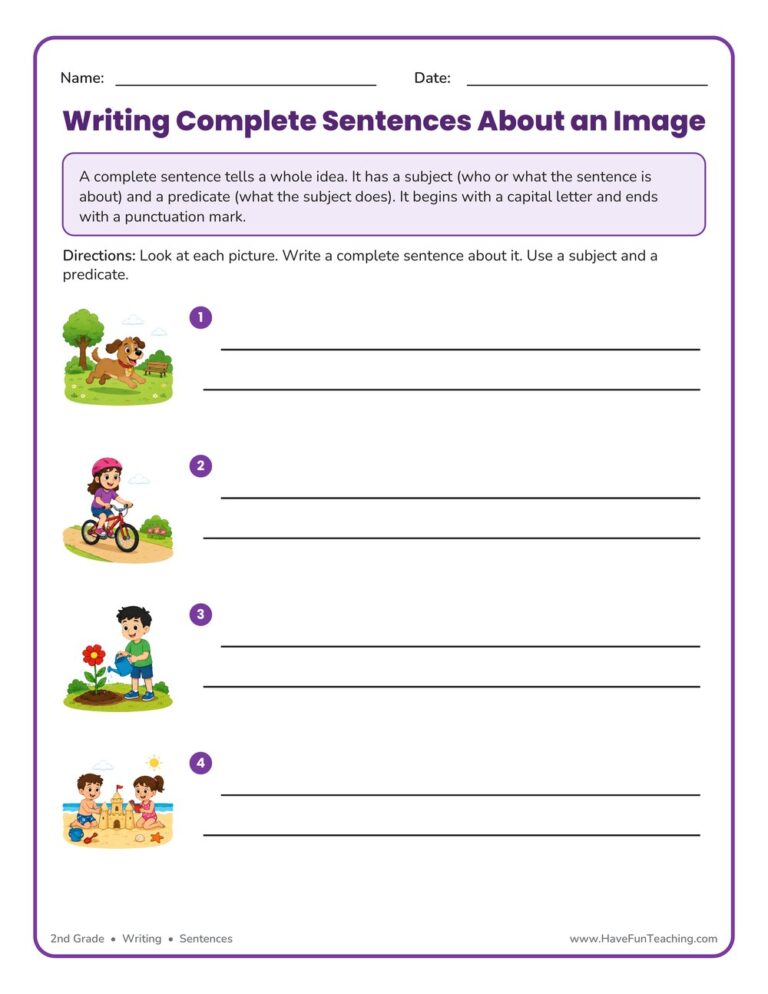
Worksheet2nd GradeWriting Complete Sentences about an Image Worksheet

This Writing Complete Sentences About an Image Worksheet gives 2nd graders four picture prompts to practice building sentences with a subject and predicate. Includes sample answers — great for no-prep grammar and writing practice.

Worksheet
Worksheet2nd GradePossessive Pronouns Worksheet

This possessive pronouns worksheet gives 2nd graders eight sentences for practicing her, its, our, their, and your. An answer key is included, so families and teachers can check the work in seconds.

Worksheet
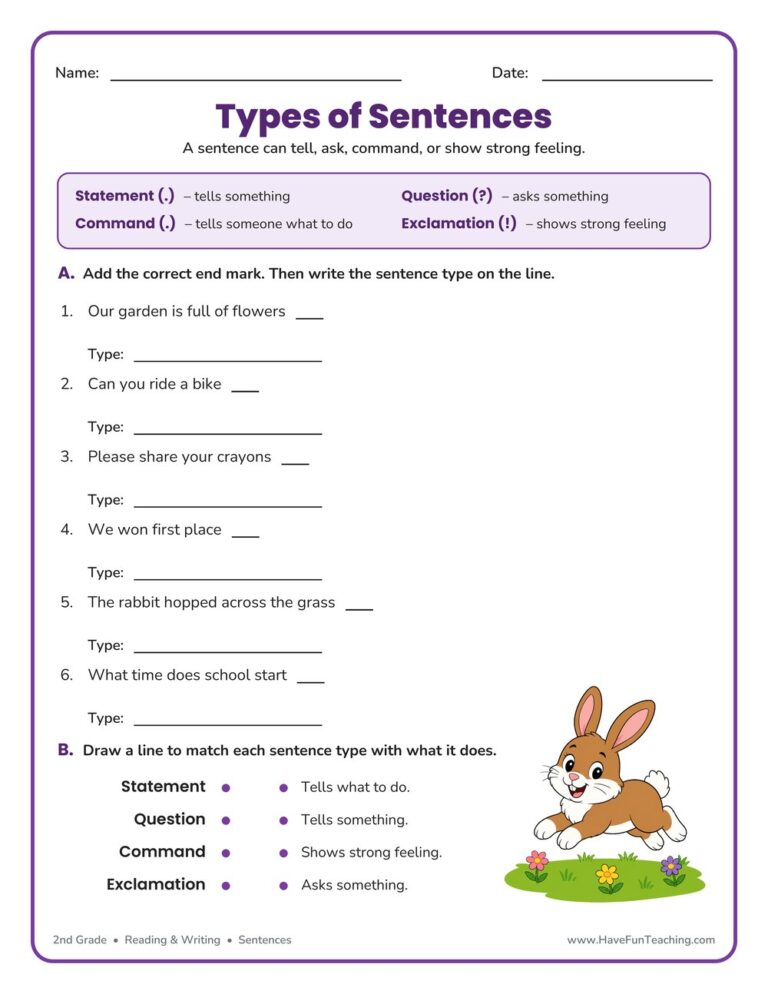
Worksheet2nd GradeTypes of Sentences Worksheet

A types of sentences worksheet that helps 2nd graders add end punctuation and identify statements, questions, commands, and exclamations. Includes a complete answer key—perfect for quick, no-prep grammar practice at home or school.

Worksheet
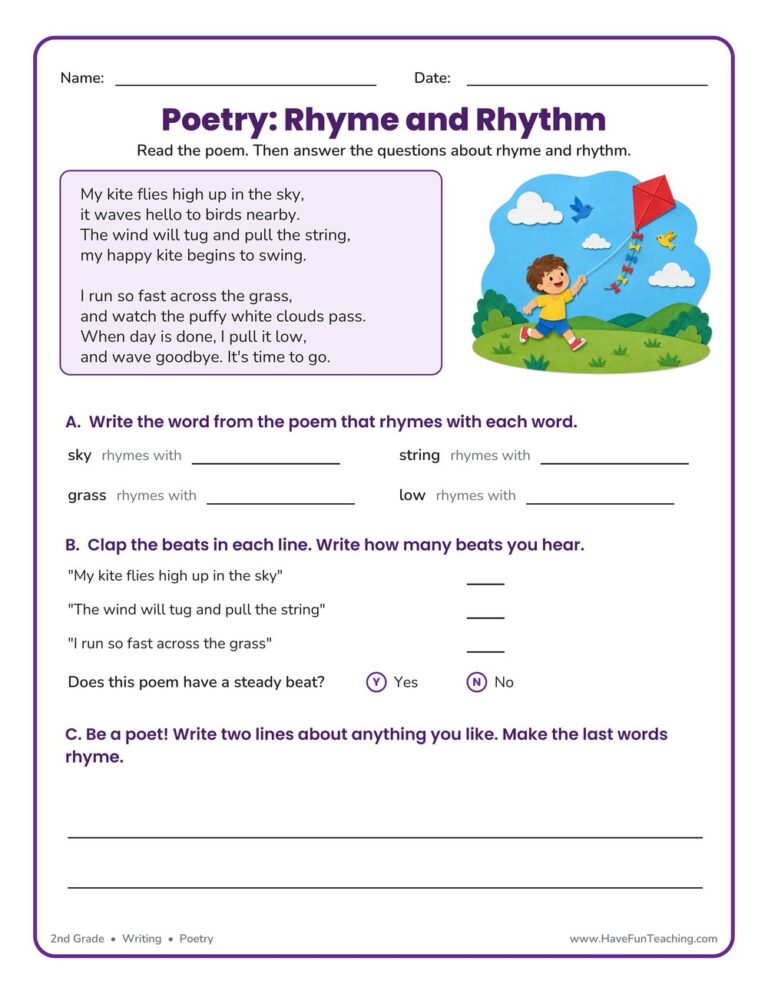
Worksheet2nd GradePoetry Rhyme and Rhythm Worksheet

A kite-themed Poetry Rhyme and Rhythm Worksheet where 2nd graders read a poem, find rhyming words, clap out the beat, and write their own rhyming lines. Includes an answer key for quick, no-prep poetry practice.

Worksheet
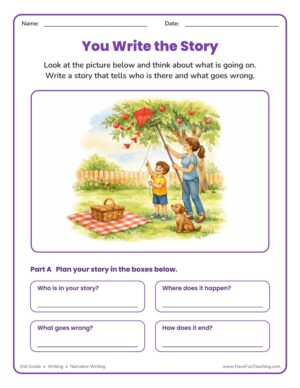
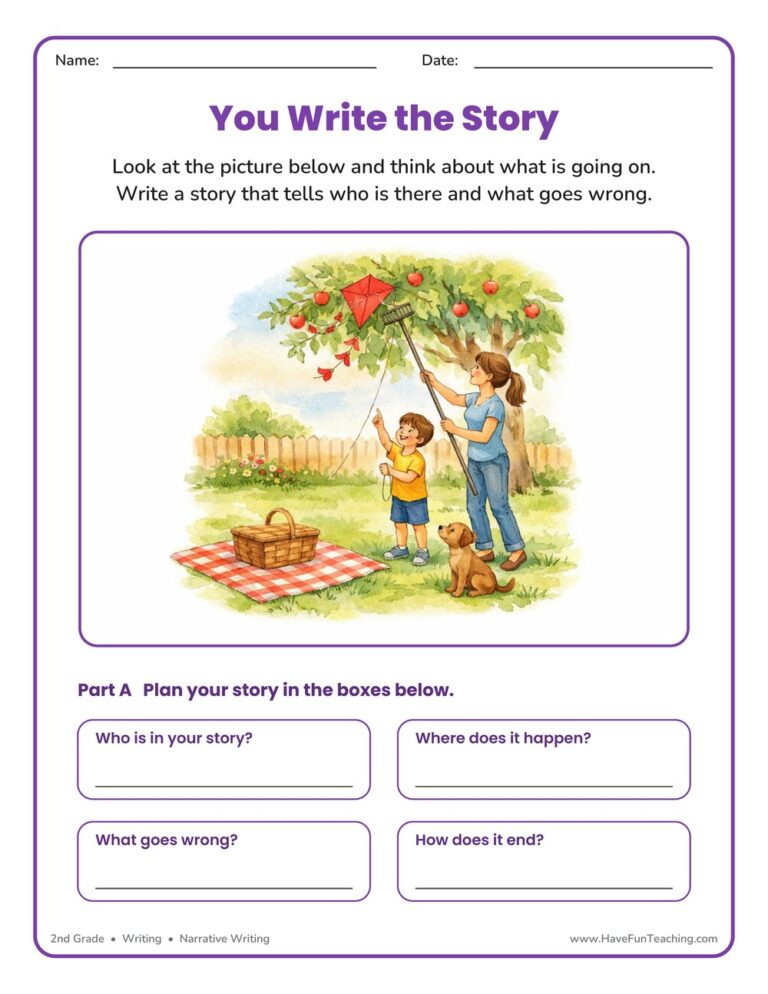
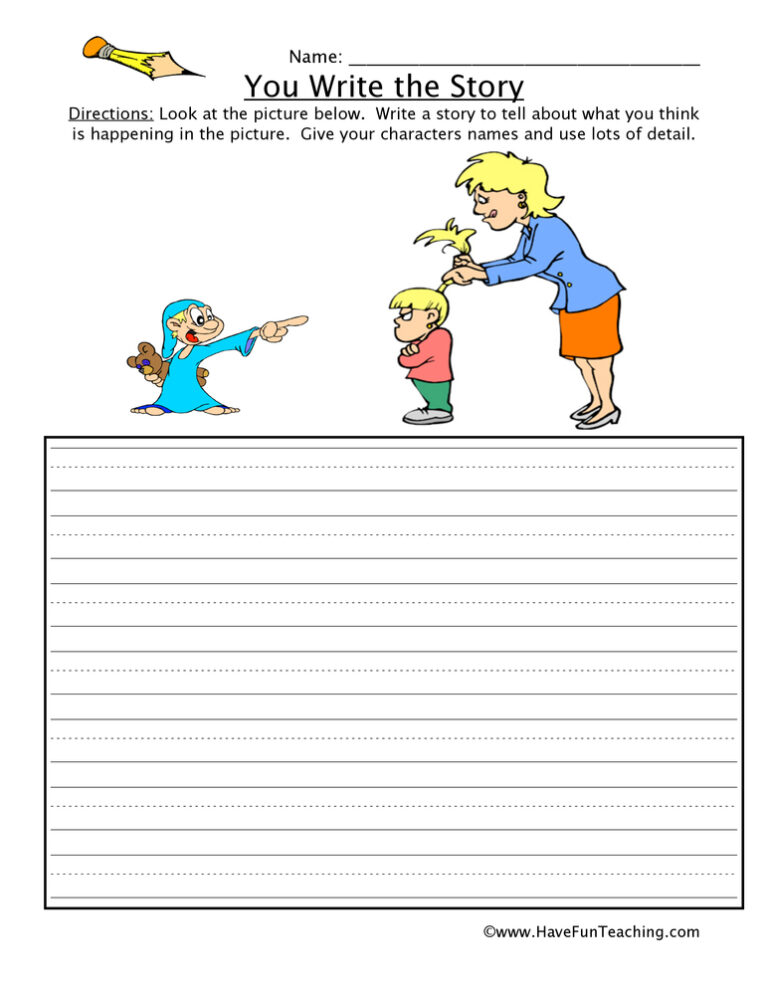
Worksheet2nd GradeYou Write the Story Helping Picture Worksheet

The You Write the Story Helping Picture Worksheet gives 2nd Grade writers a detailed picture, a four-box story planner, and guided beginning, middle, and end lines so every child can draft an original narrative with confidence.

Worksheet
Worksheet2nd GradeWriting Graphic Organizer Worksheet

This Writing Graphic Organizer Worksheet helps 2nd graders plan informative writing by choosing a topic, listing three facts, and adding a closing sentence. A simple, no-prep planning page for confident, organized young writers.

Worksheet
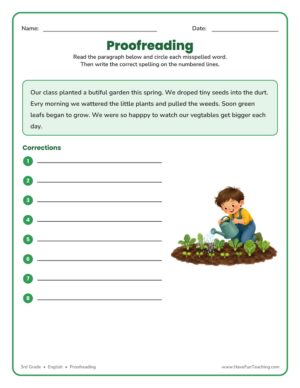
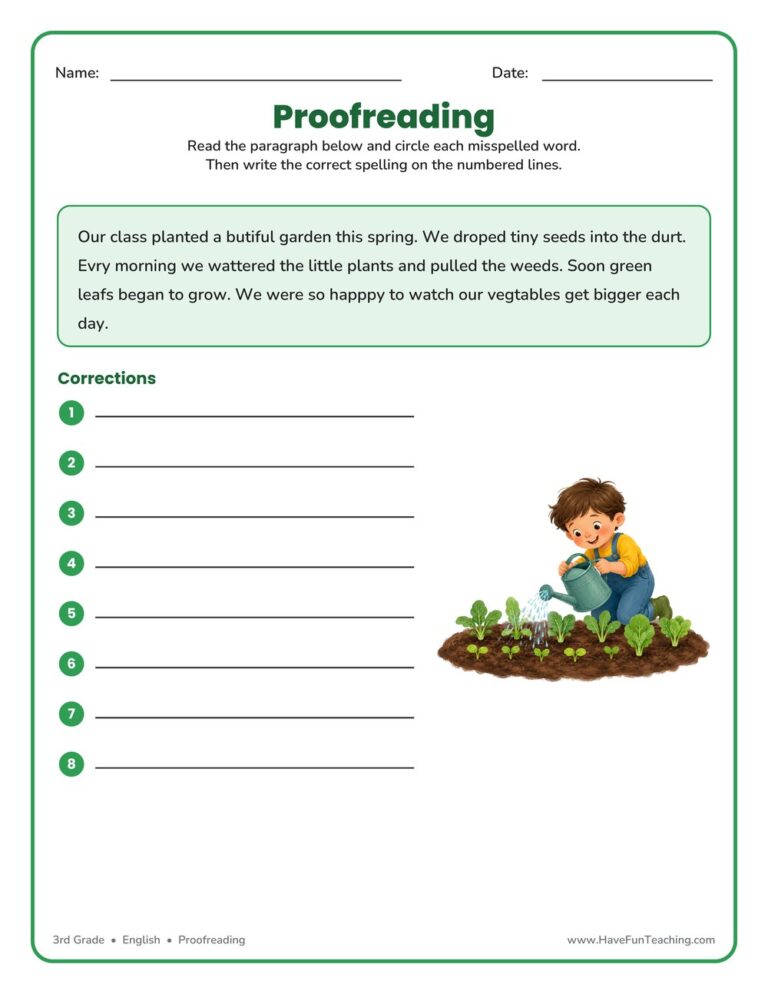
Worksheet3rd GradeProofreading Worksheet

This 3rd grade proofreading worksheet has students hunt for and fix eight misspelled words in a fun garden paragraph. Answer key included — perfect for quick, no-prep spelling and editing practice at home or school.

Worksheet
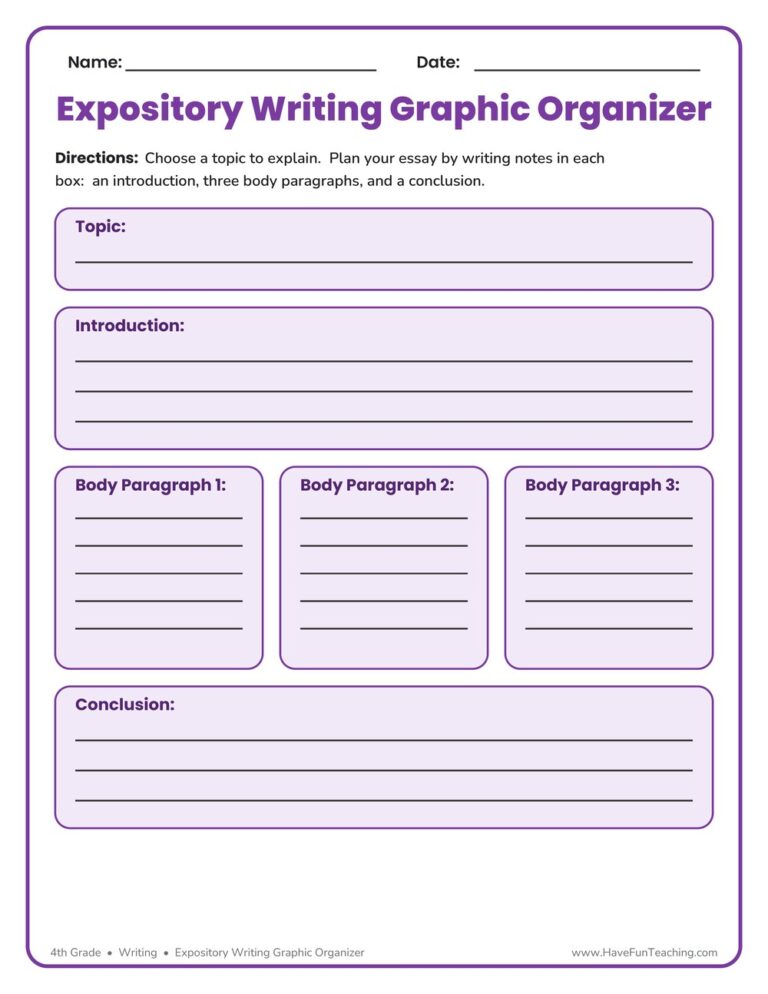
Worksheet4th GradeExpository Writing Graphic Organizer Worksheet

This expository writing graphic organizer worksheet helps 4th grade students plan an informational essay with boxes for a topic, introduction, three body paragraphs, and a conclusion — an easy, no-prep way to organize ideas before drafting.

Worksheet
Worksheet4th GradeMuscular System Research Worksheet

This Muscular System Research Worksheet has 4th graders name the three muscle types, sort voluntary and involuntary actions, and explain their thinking. Answer key included, so checking work takes seconds.

Worksheet
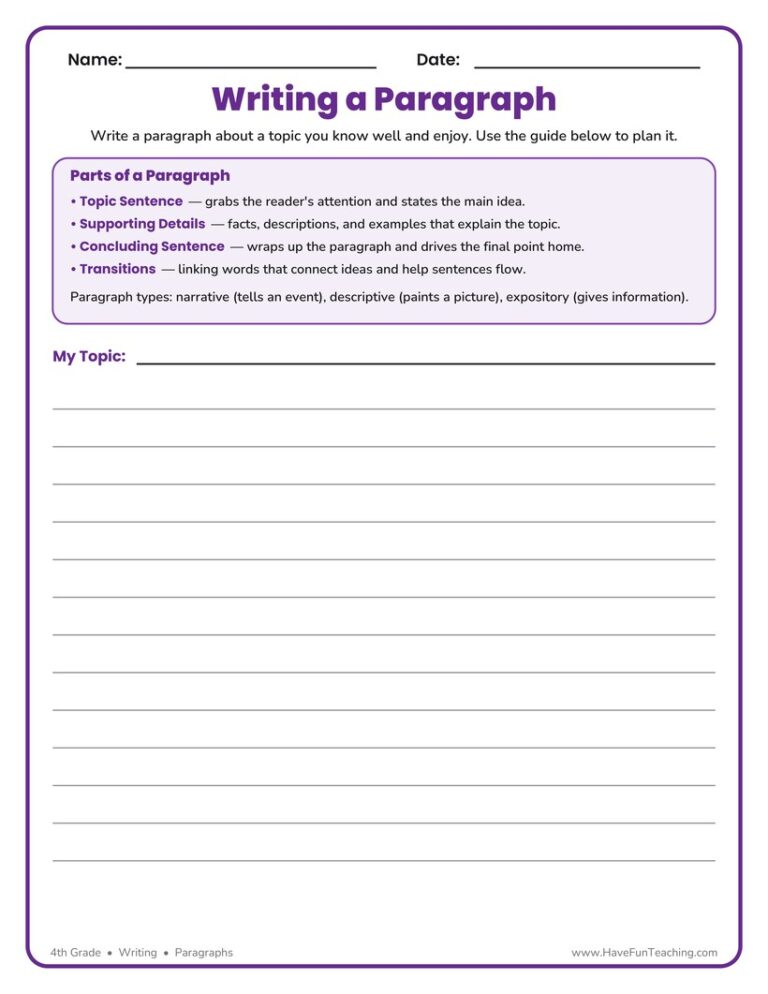
Worksheet4th GradeWriting Paragraphs Worksheet

A guided writing paragraphs worksheet for 4th grade, with a parts-of-a-paragraph reference box and a full page of lined space. Students plan a topic sentence, supporting details, and a conclusion, then write with confidence.

Worksheet
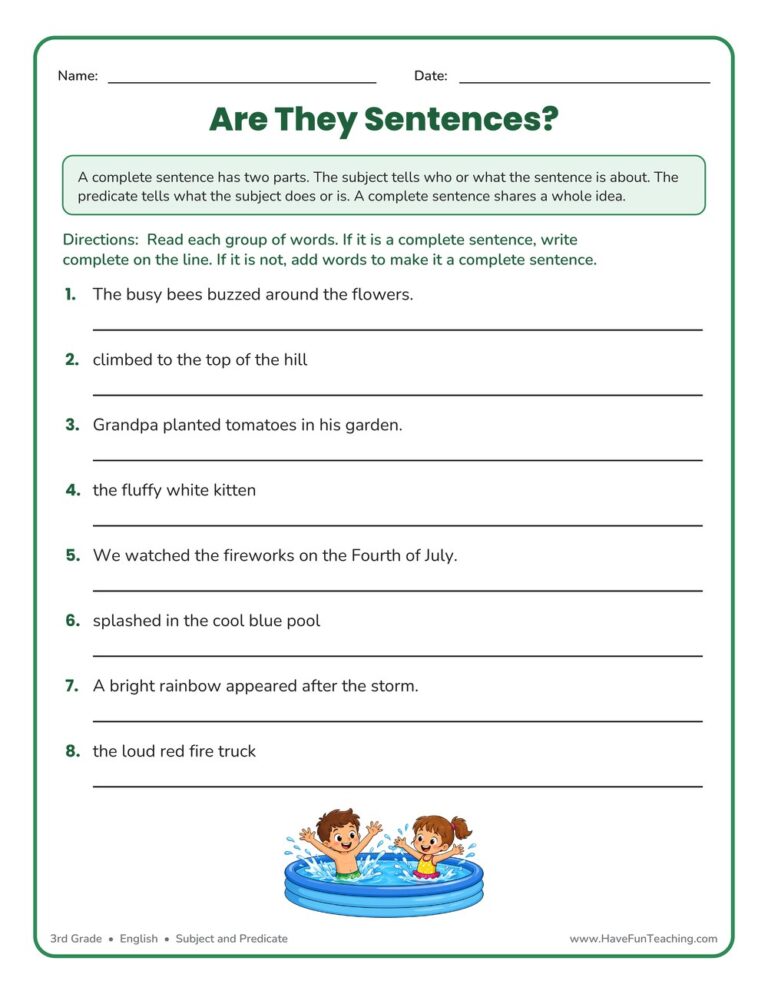
Worksheet3rd GradeCreating Complete Sentences Worksheet

This Creating Complete Sentences Worksheet asks 3rd graders to spot complete sentences and fix fragments by adding a missing subject or predicate. Answer key included — perfect for quick, no-prep grammar practice at home or school.

Worksheet
Worksheet1st GradePumpkin Writing Paper

This pumpkin writing paper worksheet gives 1st grade students a pumpkin patch prompt and ten roomy writing rules, so a reluctant writer always has somewhere to begin in the autumn.

Worksheet
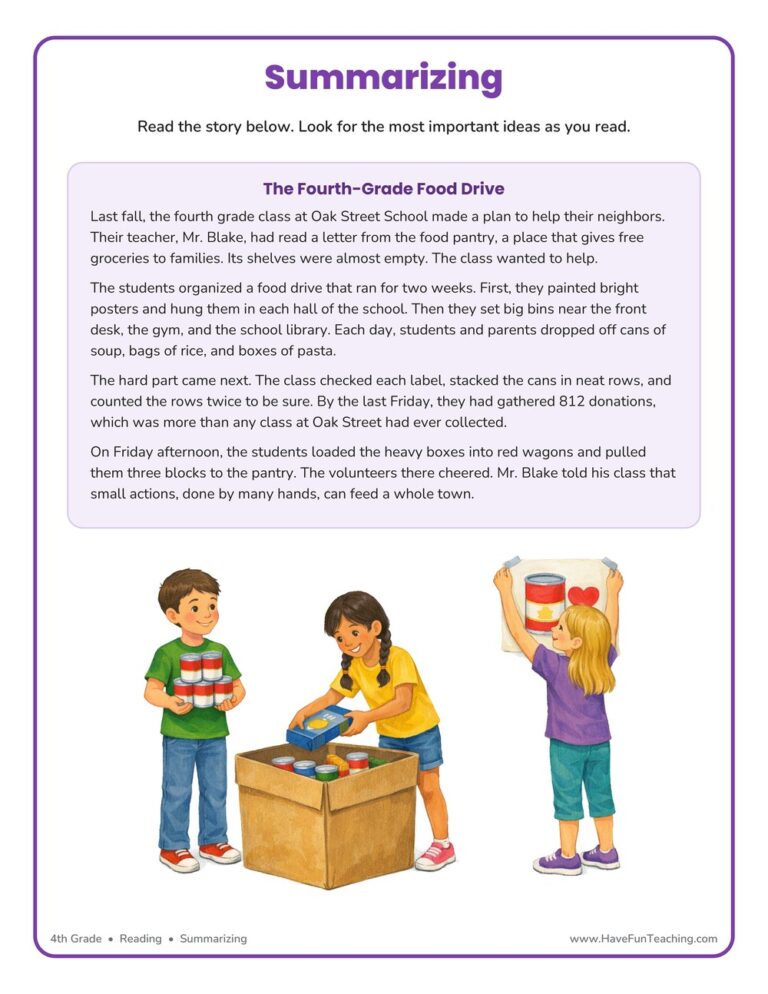
Worksheet4th GradeSummarizing Worksheet

This Summarizing Worksheet asks 4th graders to read an original story, map it on a who, what, where, when, and how organizer, then write a short summary. Answer key included for fast, no-prep practice.

Worksheet
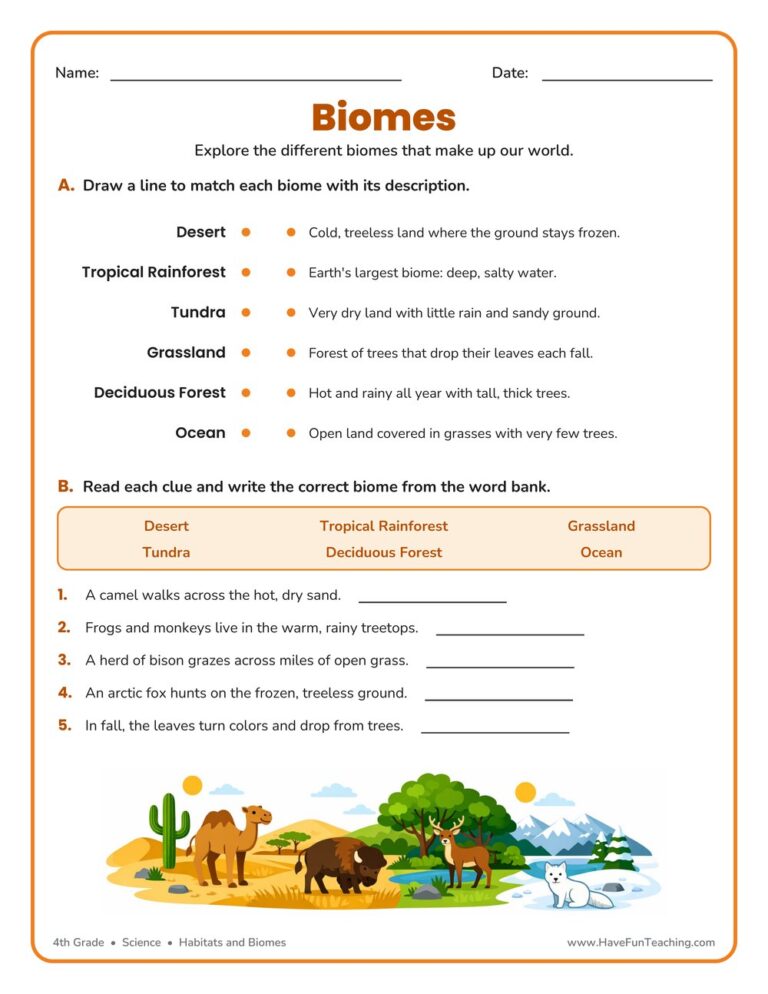
Worksheet4th GradeBiomes Worksheet

This Biomes Worksheet helps 4th grade students match major biomes to their climates and identify each one from real-world clues. Includes an answer key for fast, no-prep science practice at home or school.

Worksheet
WorksheetPreschoolJingle Bells Lyrics

Using Jingle Bells Lyrics, students can follow along with the memorable song in order to know the which words to sing!

Worksheet
Worksheet3rd GradeCompound Predicates Sentences Worksheet

This compound predicates sentences worksheet gives 3rd grade students three levels of practice: underline, combine, and write their own. An answer key is included, so it works for quick grammar review at school or at home.

Worksheet
Worksheet3rd GradeFictional Narrative Worksheet

This Fictional Narrative Worksheet gives 3rd Grade students one page to plan a story from a book they love, with lines for the main idea, four events and a closing statement, so drafting starts easy.

Worksheet
Worksheet2nd GradeYou Write the Story Kids Picture Worksheet

A You Write the Story Kids Picture Worksheet that gives 2nd graders a kite-stuck-in-a-tree picture prompt and eight wide lines to write their own narrative, naming the characters and telling what happens next.

Worksheet
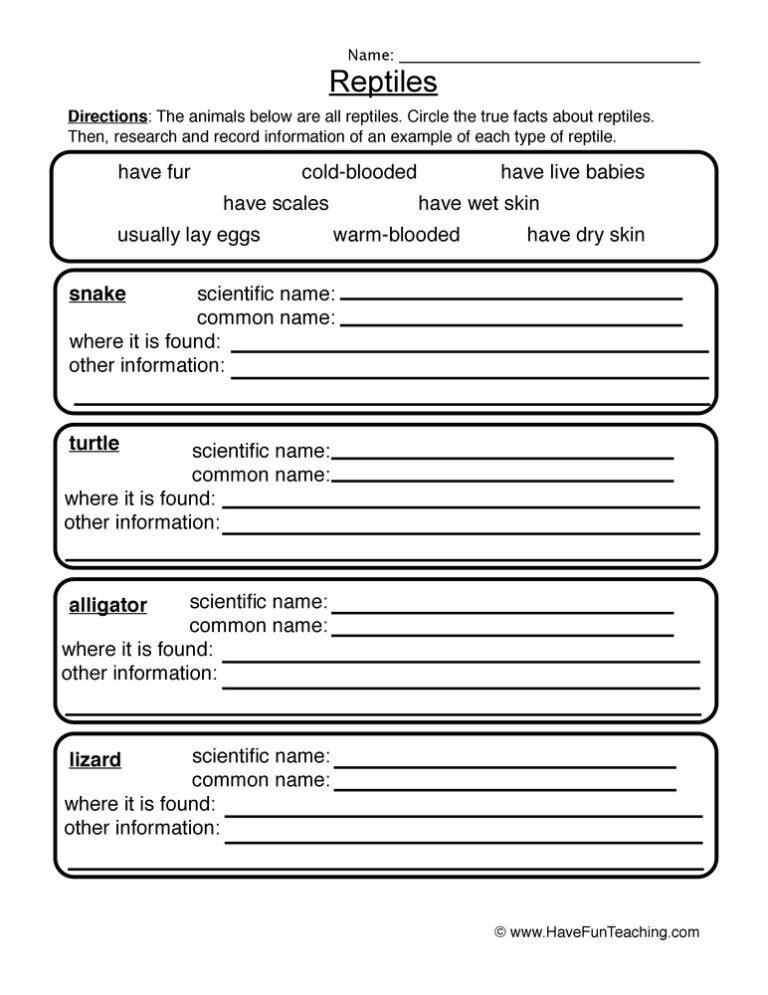
Worksheet3rd GradeReptiles Worksheet

This reptiles worksheet has 3rd Grade students check reptile facts, sort eight animals into reptile and not-a-reptile columns, and explain how a frog differs. An answer key is included, so checking work takes seconds.

Worksheet
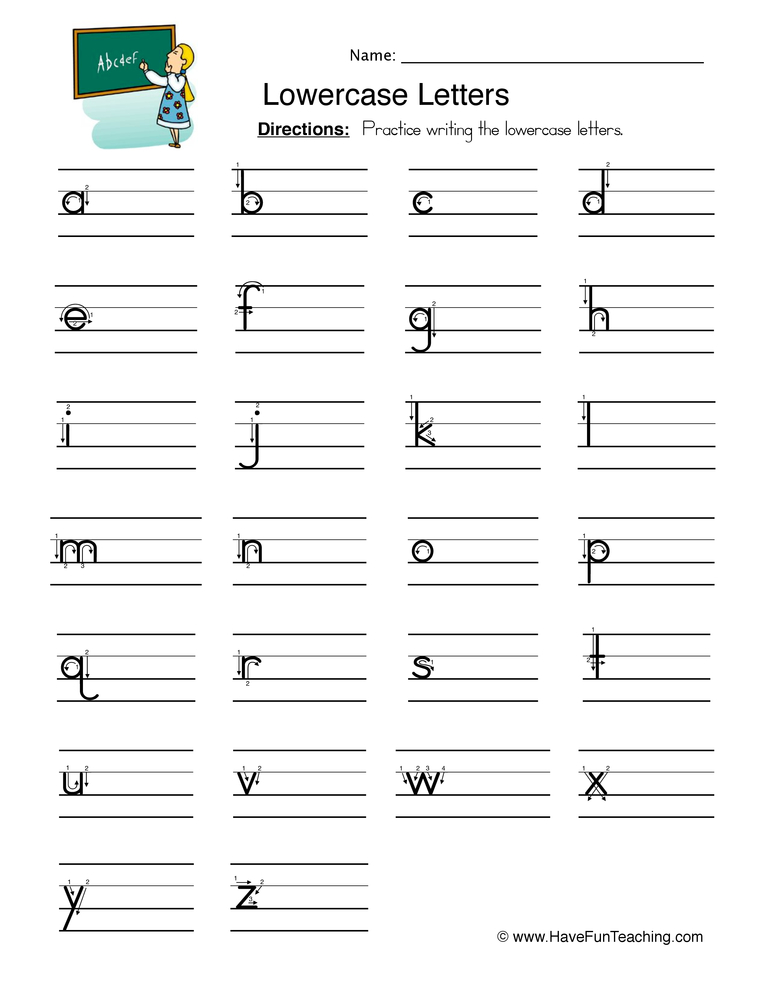
WorksheetKindergartenLowercase Letters Writing Worksheet

This lowercase letters writing worksheet gives Kindergarten students guided lines to trace every lowercase letter from a to z. Answer key included for quick, no-prep alphabet and handwriting practice.

From our teachers' playbook

From first letters to whole stories

What do kids learn in writing?

Writing grows in layers. Little ones start by forming letters and drawing pictures they can label. In 1st and 2nd grade, kids write complete sentences with a capital and an end mark, then string them into short stories with a beginning, middle and end. By 3rd through 5th grade they write real paragraphs: a topic sentence, supporting details and a conclusion, plus opinion, informative and narrative pieces. Along the way they learn that good writers plan, draft, revise and edit. The magic moment is when a child reads their own story aloud and the class laughs in all the right places.

Our favorite ways to teach writing

Kids become writers by watching us write and then writing a little every day. Here's how we do it.

Write in front of them

Write your own short piece on the board and say every thought out loud: "I need a topic sentence. What's my big idea?" Cross things out and fix them. Kids learn that messy first drafts are normal and how real writers decide what to change.

Why it works: handing over the work step by step, from teacher to student, is one of the most widely used teaching frameworks (Pearson and Gallagher, 1983).
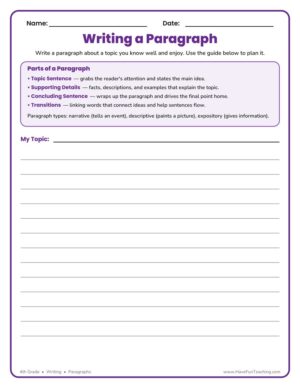
Writing Paragraphs WorksheetTry it withWriting Paragraphs WorksheetWorksheetsOpen it →

Plan before you write

Before drafting, kids fill a simple organizer: main idea in the middle, three details around it. Then each box becomes a sentence. Planning first is the cure for "I don't know what to write!"

Why it works: kids understand an idea best when they touch it, then draw it, then write it, the order the U.S. Department of Education recommends for elementary math.

Writing Graphic Organizer WorksheetTry it withWriting Graphic Organizer WorksheetWorksheetsOpen it →

Start with a picture

Show an interesting picture and ask, "What's happening? What happens next?" Kids talk it through with a partner, then write. Pictures give reluctant writers something to say.

Why it works: pairing a picture with each word gives kids two ways to remember it, a well-tested principle of how people learn (Mayer, 2009).

Writing Complete Sentences about an Image WorksheetTry it withWriting Complete Sentences about an Image WorksheetWorksheetsOpen it →

Writing: your questions

How do I teach a child to write a paragraph?

Teach the parts one at a time: a topic sentence that tells the big idea, two or three detail sentences, and a closing sentence. A simple graphic organizer helps kids plan each part before they write.

What should kids check when editing their writing?

Many teachers use CUPS: Capitals, Usage, Punctuation and Spelling. Have kids read their writing aloud first, then check one thing at a time instead of everything at once.

How can I help a reluctant writer?

Lower the stakes. Let them talk their idea out loud first, use a picture prompt, or give a sentence starter. Short, frequent writing and a real audience, like reading to a sibling, build confidence fast.

What kinds of writing do elementary students learn?

The three big types are narrative (telling a story), opinion (sharing a view with reasons) and informative (teaching about a topic). Kids also write letters, poems, summaries and simple research notes.

How long should kids write each day?

Even ten to fifteen minutes a day makes a big difference. Daily practice matters more than long sessions once a week.