Skip to content
Start My 3 Free Days $0 today · cancel anytime

Sequencing Worksheets (Reading)

50 sequencing worksheets. Teacher favorites: Retelling A Story Worksheet and Sequencing Graphic Organizer. How teachers use these

Sequencing Worksheets (Reading)

50 sequencing worksheets. Teacher favorites: Retelling A Story Worksheet and Sequencing Graphic Organizer. How teachers use these

Worksheet
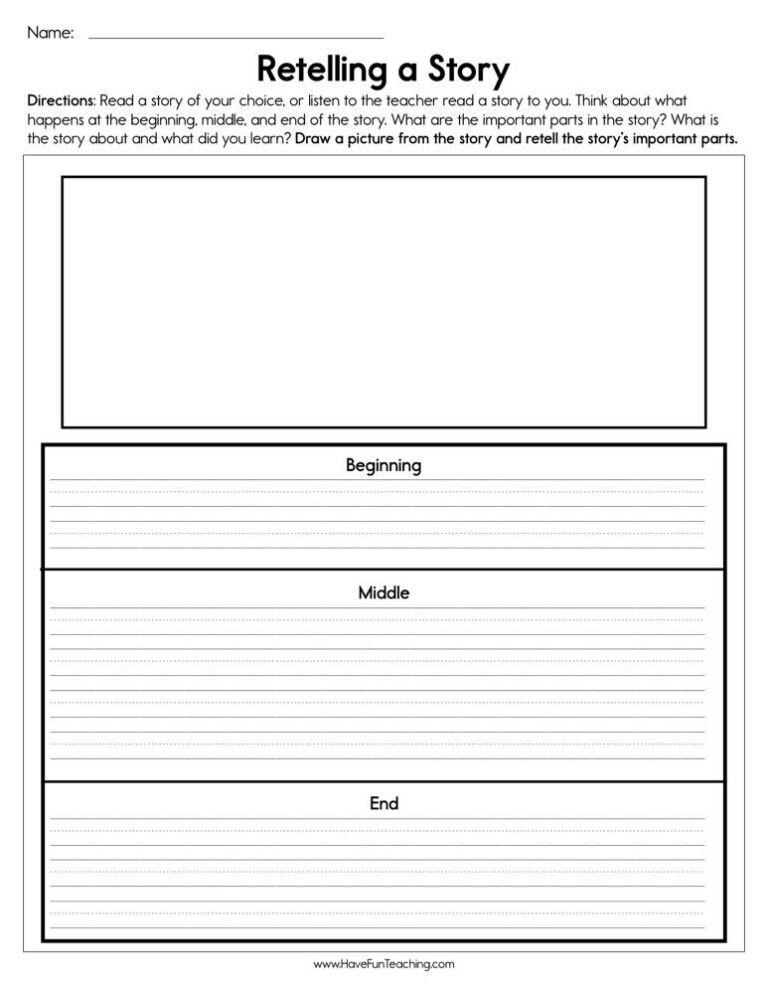
Worksheet1st GradeRetelling A Story Worksheet

This Retelling a Story Worksheet gives 1st Grade readers a short story to sequence and retell in their own words, with a full answer key included, so comprehension practice is ready to print.

Worksheet
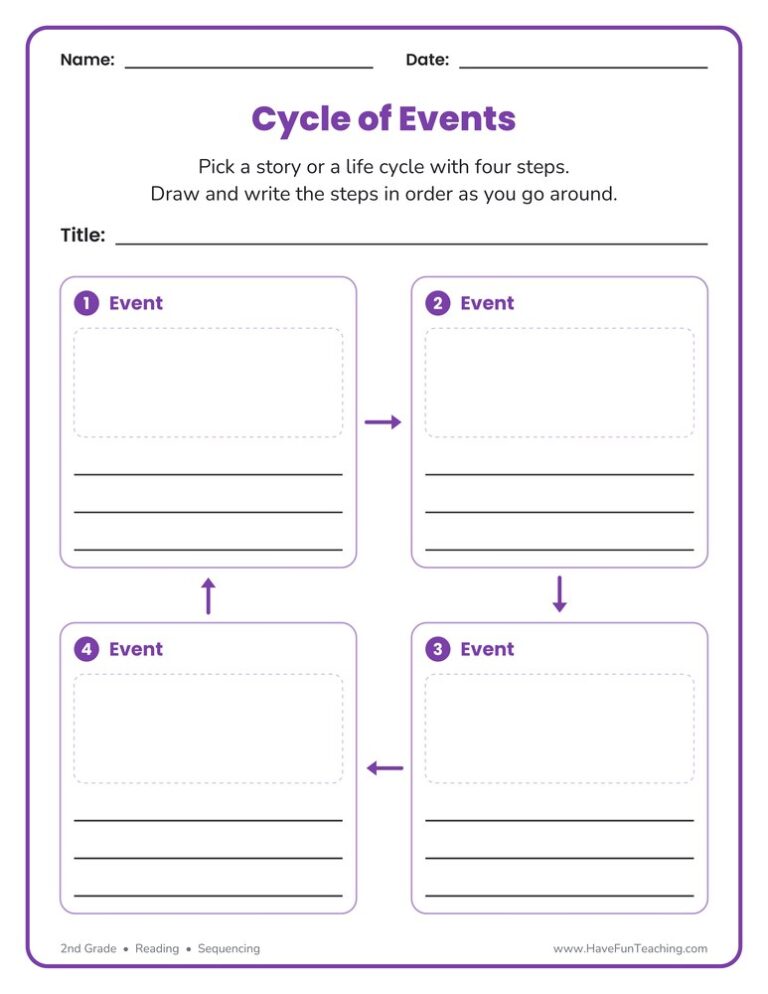
Worksheet2nd GradeSequencing Graphic Organizer

This sequencing graphic organizer worksheet helps 2nd Grade students draw and write the four steps of a story or a life cycle in order, building strong retelling and sequencing skills.

Worksheet
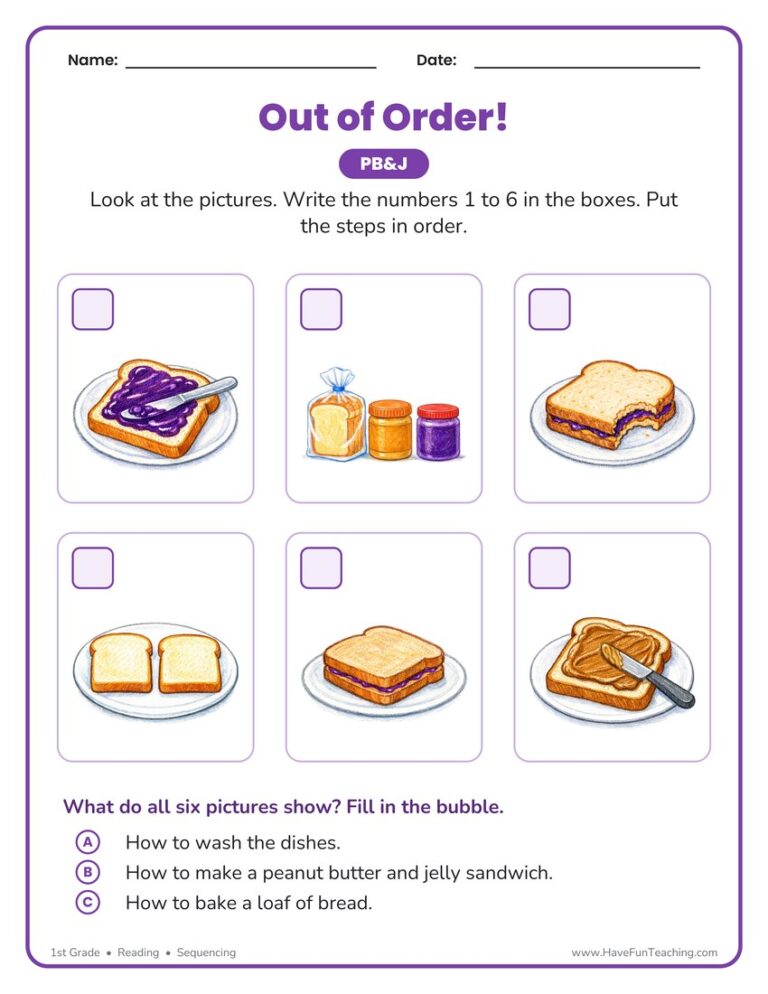
Worksheet1st GradeMaking A Sandwich Sequencing Worksheet

A picture-based Making A Sandwich Sequencing Worksheet that asks 1st graders to number six peanut butter and jelly steps in order, then name what the whole set shows. Answer key included for fast, no-prep retelling practice.

Worksheet
Worksheet1st GradeCarving A Pumpkin Sequencing Worksheet

The Carving A Pumpkin Sequencing Worksheet gives 1st Grade students four out-of-order pictures to number and four order-word sentences to complete, with an answer key, so retelling gets easier.

Worksheet
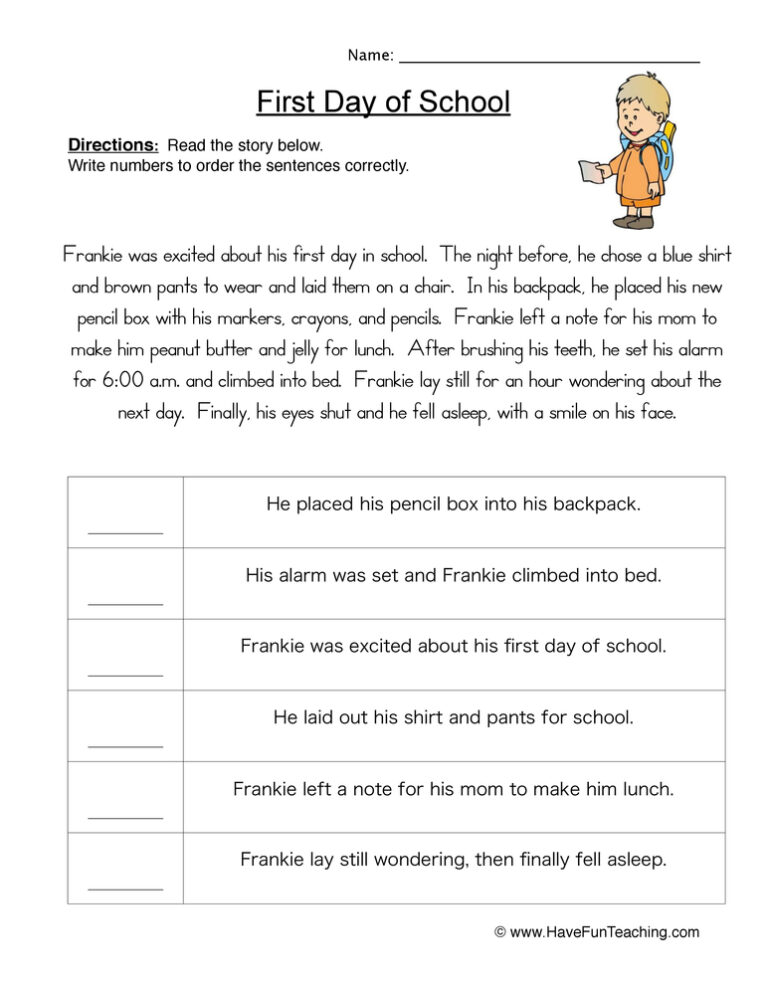
Worksheet2nd GradeStory Plot Order of Events Worksheet

Second graders read a short story about a first day of school, then number six events in order on this story plot order of events worksheet. Answer key included for quick, no-prep sequencing practice.

Worksheet
Worksheet1st GradeBrushing Your Teeth Sequencing Worksheet

This brushing your teeth sequencing worksheet asks 1st graders to number four pictures and four sentences to rebuild a familiar routine. An answer key is included, so checking sequencing practice takes only a moment.

Worksheet
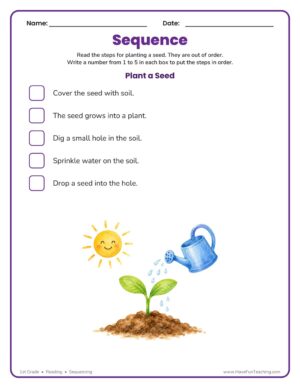
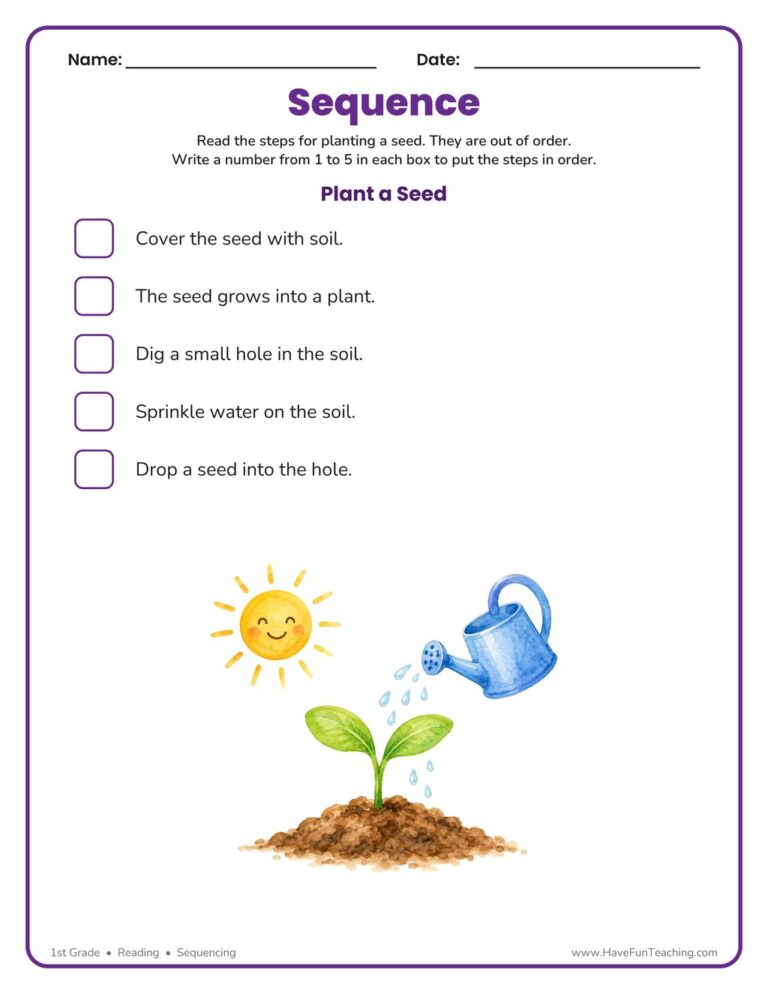
Worksheet1st GradePlant a Seed Sequence Worksheet

The Plant a Seed Sequence Worksheet helps 1st graders put five planting steps in order from first to last. Includes a complete answer key—perfect for quick, no-prep sequencing practice at home or school.

Worksheet
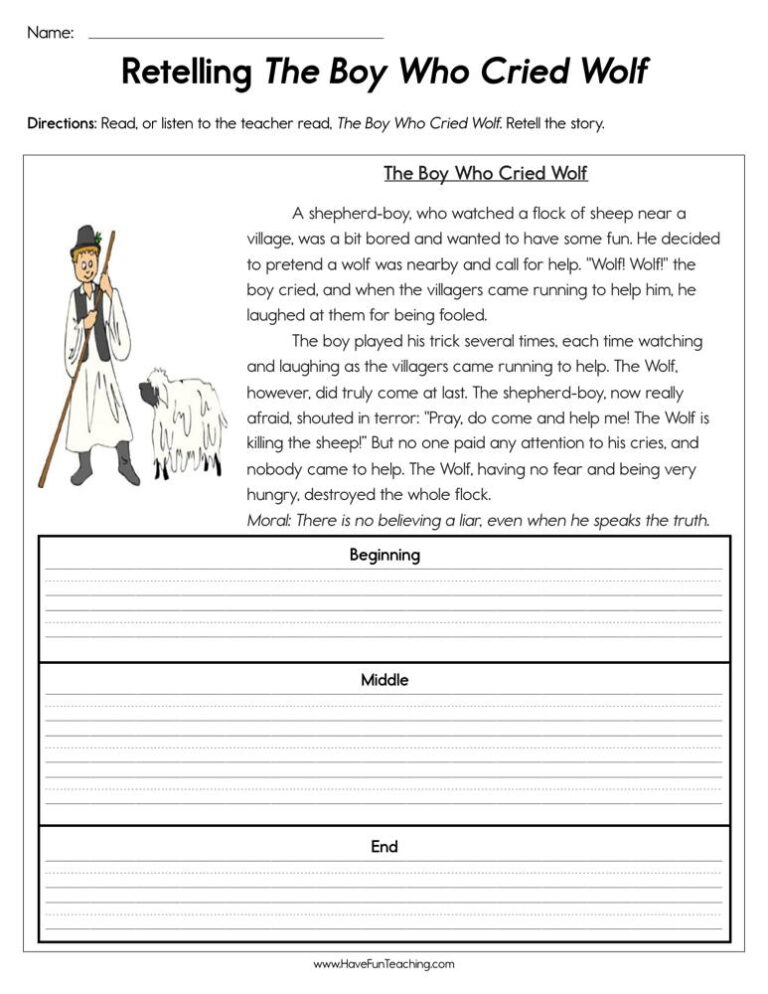
Worksheet2nd GradeRetelling The Boy Who Cried Wolf Worksheet

This Retelling The Boy Who Cried Wolf Worksheet gives 2nd graders an Aesop fable to read, four events to put in order, and beginning, middle, and end boxes to fill in. Answer key included for fast, no-prep retelling practice.

Worksheet
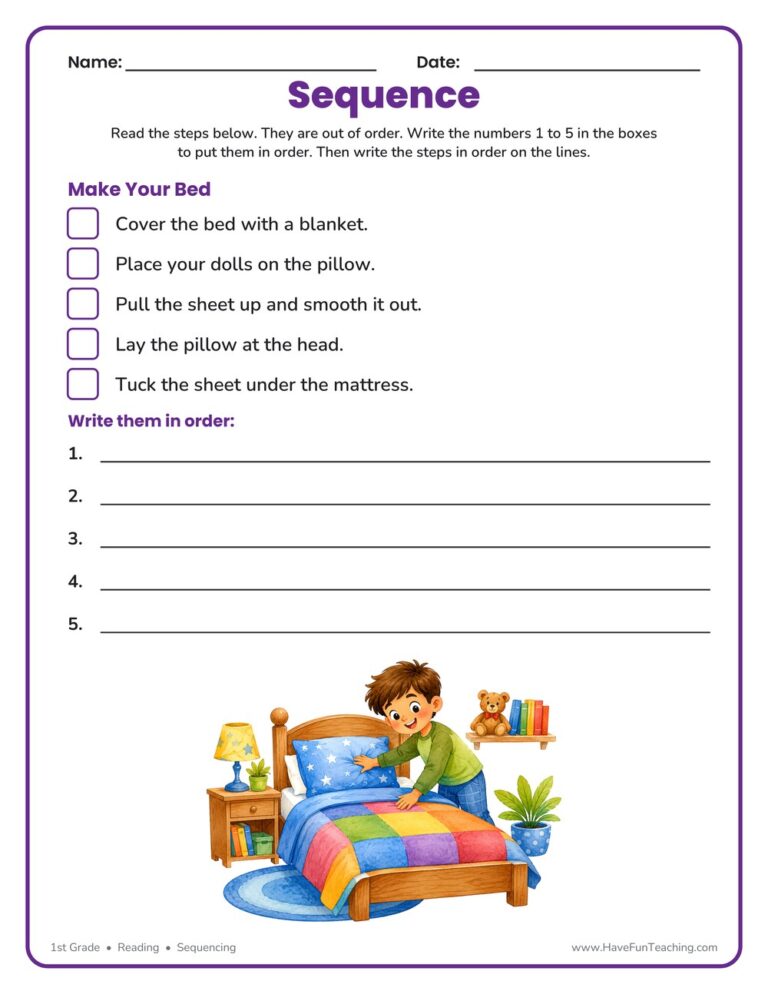
Worksheet1st GradeMaking a Bed Sequence Worksheet

This Making a Bed Sequence Worksheet has 1st graders order five steps, number the boxes 1 to 5, and rewrite them in sequence. Answer key included — a fun, no-prep way to practice sequencing.

Worksheet
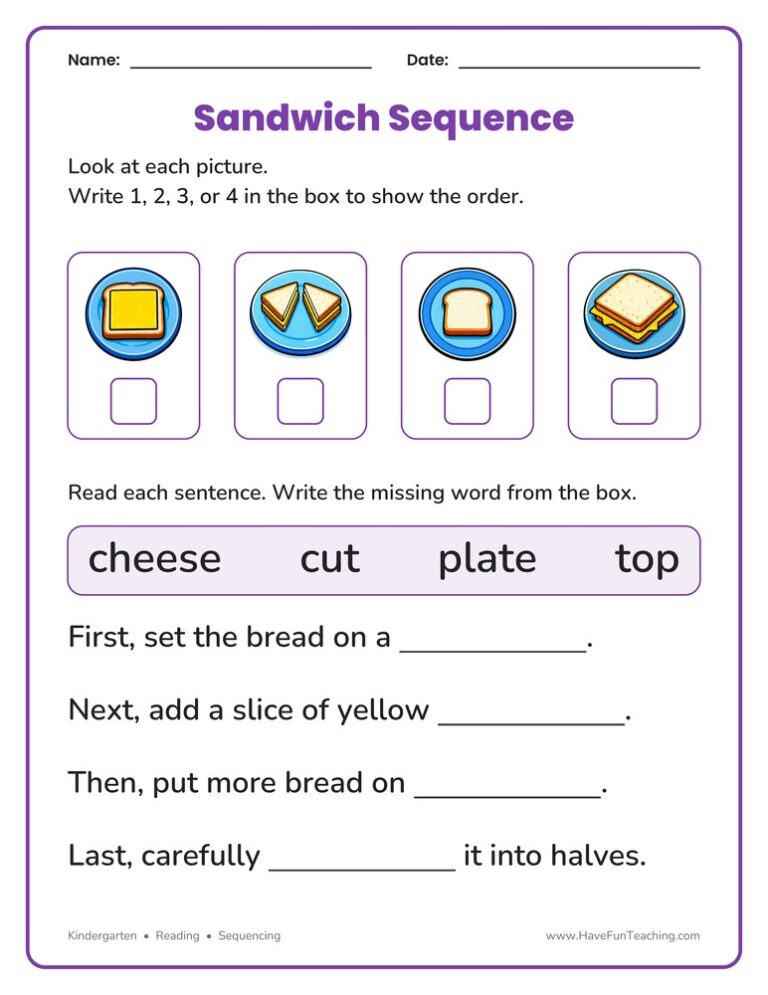
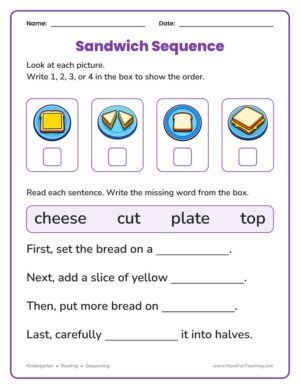
WorksheetKindergartenSequencing Pictures Worksheet

This sequencing pictures worksheet has kindergarten students number four sandwich-making pictures in order and finish four First, Next, Then, Last sentences. An answer key is included to make checking quick.

Worksheet
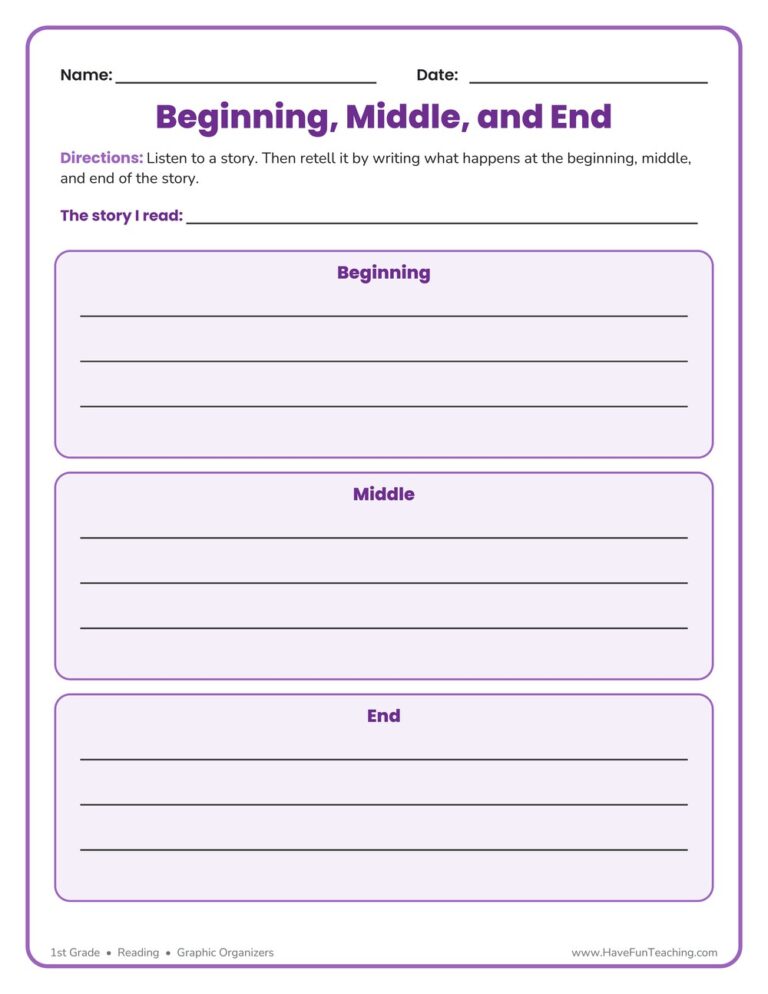
Worksheet1st GradeBeginning, Middle, and End Worksheet

A reusable Beginning, Middle, and End Worksheet that helps 1st graders retell any story in order across three clear sections. Perfect for building sequencing and summarizing skills with every book they read.

Worksheet
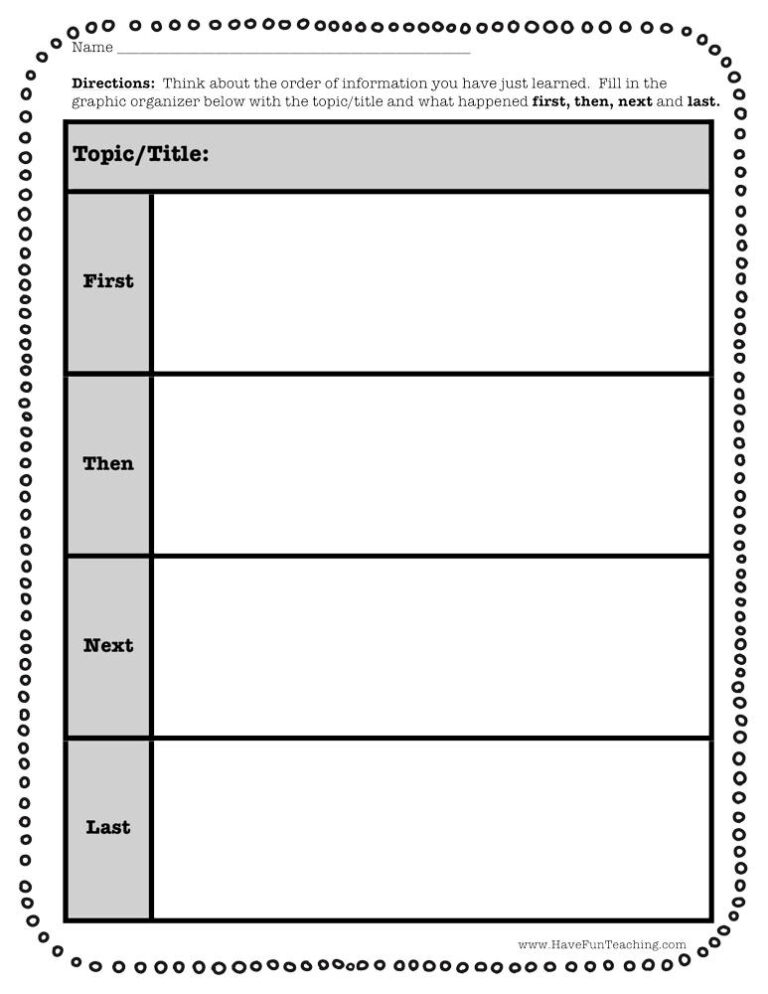
Worksheet3rd GradeFirst Next Then Last Graphic Organizer Worksheet

This first next then last graphic organizer worksheet gives 3rd graders four labeled boxes to retell any story or process in order. A flexible, reusable page for stronger sequencing and clearer writing.

Worksheet
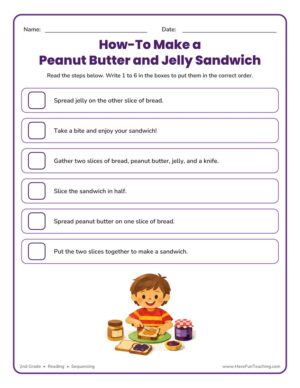
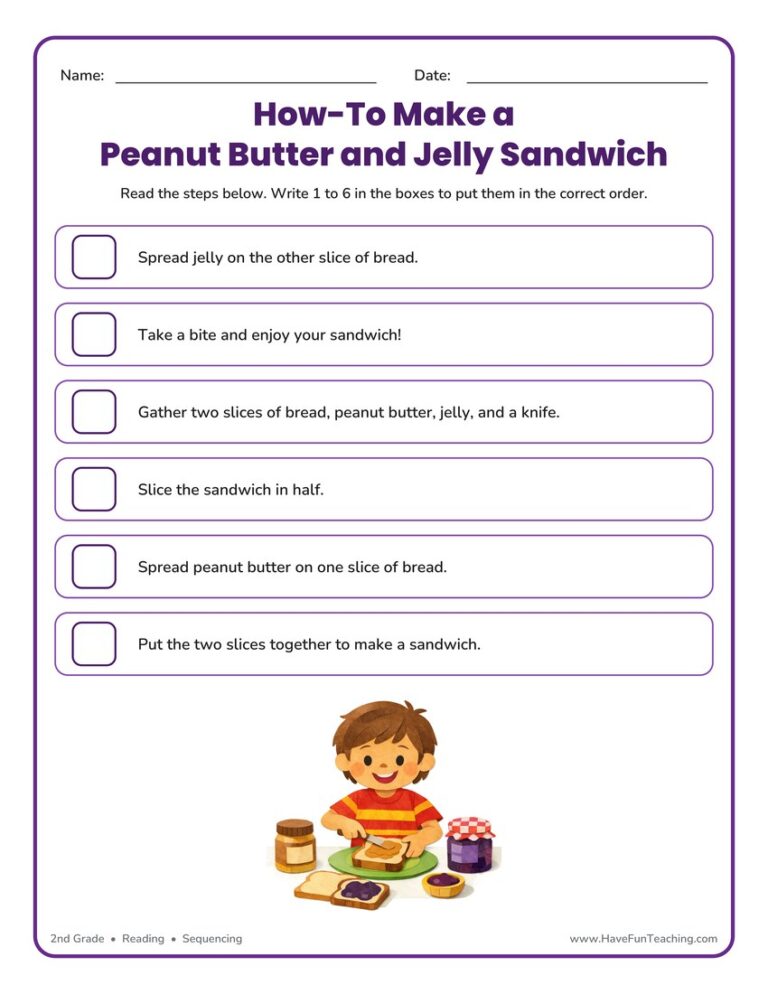
Worksheet2nd GradeHow to Peanut Butter Jelly Sandwich Sequence Worksheet

The How to Peanut Butter Jelly Sandwich Sequence Worksheet has 2nd graders number six mixed-up steps in the correct order. Includes an answer key — a fun, no-prep way to practice sequencing and reading comprehension.

Worksheet
Worksheet2nd GradeSequence of Events Graphic Organizer Worksheet

This Sequence of Events Graphic Organizer Worksheet gives 2nd grade readers a short story and four labeled boxes to retell it in order. An answer key is included, so children can check their own retelling.

Worksheet
Worksheet3rd GradeBeginning, Middle, End Worksheet

A Beginning, Middle, End Worksheet that helps 3rd graders retell one short story in three parts and write a clear summary of each. Includes a complete answer key for quick, no-prep reading practice.

Worksheet
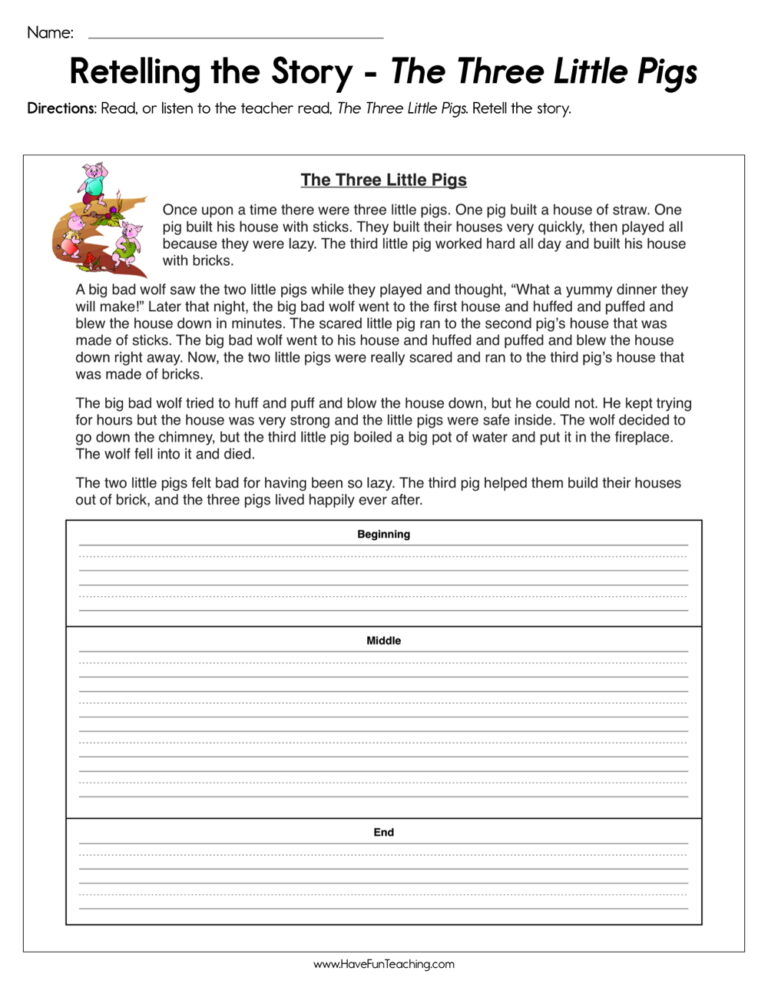
Worksheet1st GradeRetelling the Story The Three Little Pigs Worksheet

This Retelling the Story The Three Little Pigs Worksheet gives 1st graders a short story to read, four events to put in order, and Beginning, Middle, and End retell boxes. Answer key included for fast checking.

Worksheet
Worksheet3rd GradeMorning Routine Sequence Worksheet

A Morning Routine Sequence Worksheet that has 3rd Grade readers number six mixed-up morning events and prove the order with words from the text. Answer key included for fast, no-prep sequencing practice.

Worksheet
Worksheet3rd GradeSt. Patrick's Day How to Catch a Leprechaun Worksheet

This St. Patrick's Day How to Catch a Leprechaun Worksheet has 3rd graders number six mixed-up how-to steps, then plan a trap of their own. Answer key included for fast, no-prep sequencing practice.

Worksheet
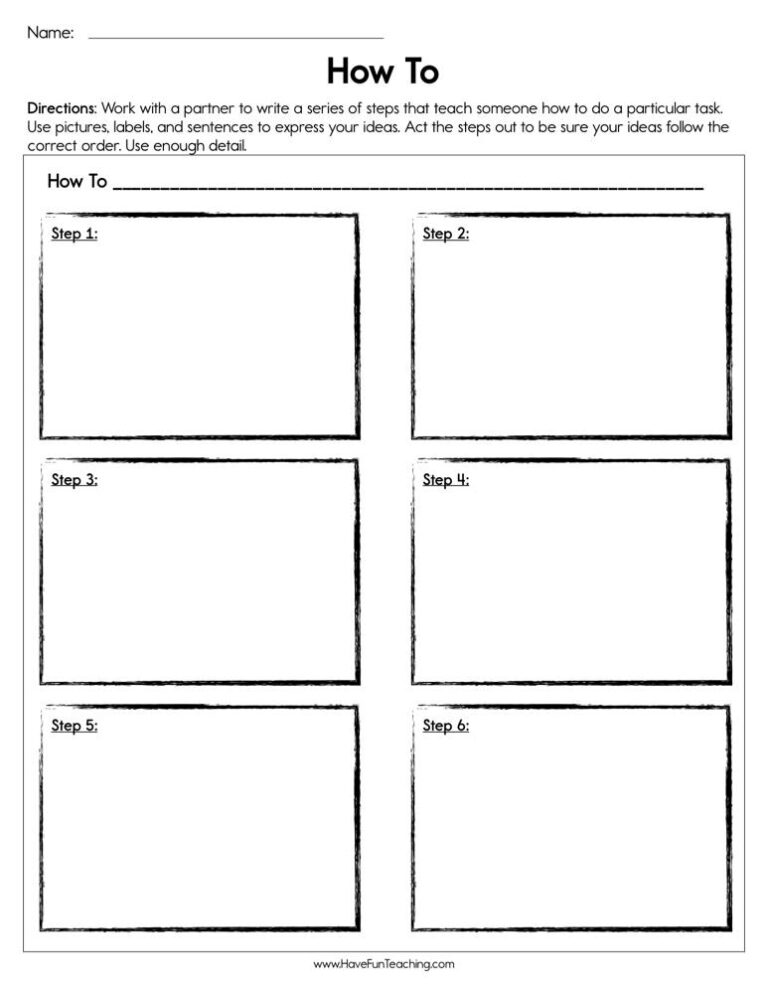
Worksheet2nd GradeHow to Worksheet

This How to Worksheet gives 2nd graders five how-to steps for a pinecone bird feeder printed out of order, two short questions, and an answer key for no-prep practice with sequencing and how-to writing.

Worksheet
Worksheet4th GradeFirst Next Last Graphic Organizer Worksheet

This First Next Last Graphic Organizer Worksheet gives 4th Grade readers one page to map the order of events in any book, from the opening through four middle events to the ending.

From our teachers' playbook

First, next, then, last!

What do kids learn about sequencing?

Sequencing is putting events in the order they happened, and it's the backbone of understanding a story. In kindergarten and 1st grade, kids retell a story's beginning, middle and end and put picture cards in order. In 2nd grade they use transition words like first, next, then and last to retell and to write how-to steps. By 3rd grade and up, they track the plot's order of events and spot chronological order in nonfiction. The click comes when kids realize order matters: eat the sandwich → make the sandwich just doesn't work!

Our favorite ways to teach sequencing

Sequencing sticks when kids can see it, move it and say it. These are our go-to moves.

Four boxes, four words

Give kids a first, next, then, last organizer and have them draw one picture in each box after a read-aloud. Then they retell the story to a partner, pointing to each box and using the transition word. Drawing first makes the retell much easier for young writers.

Why it works: children learn more from words and pictures together than from words alone (Mayer, 2009).

First Next Then Last Graphic Organizer WorksheetTry it withFirst Next Then Last Graphic Organizer WorksheetWorksheetsOpen it →
Cut, mix and order

Hand out picture cards from a familiar routine, all jumbled. Kids cut them apart, put them in order and glue them down. Ask them to explain which clue told them what came first.

Why it works: the U.S. Department of Education's guide for teaching elementary math recommends moving from hands-on objects to drawings to numbers.

Sequencing Pictures WorksheetTry it withSequencing Pictures WorksheetWorksheetsOpen it →

Retell it out loud

After a story, model a short retell for kids using your fingers: one finger for the beginning, two for the middle, three for the end. Then have kids try it with a partner. Keep retells short and in order instead of every single detail.

Why it works: showing first, practicing together, then letting kids try alone is the "gradual release" model teachers have relied on for decades (Pearson and Gallagher, 1983).

Retelling A Story WorksheetTry it withRetelling A Story WorksheetWorksheetsOpen it →

Sequencing questions we hear a lot

What is sequencing in reading?

Sequencing is putting the events of a story or text in the order they happened. It helps kids understand and retell what they read, and it uses words like first, next, then and last.

Why is sequencing important for kids?

Sequencing helps kids follow a story, retell it and understand cause and effect. It also builds the skills they need to write their own stories and how-to steps.

What are sequencing words?

Common sequencing words are first, next, then, after that, finally and last. Older kids also use words like before, during, meanwhile and later.

How do I teach sequencing to kindergarten?

Start with everyday routines kids know, like brushing teeth or getting dressed. Use three or four picture cards and have kids put them in order. Then move to simple stories with a clear beginning, middle and end.